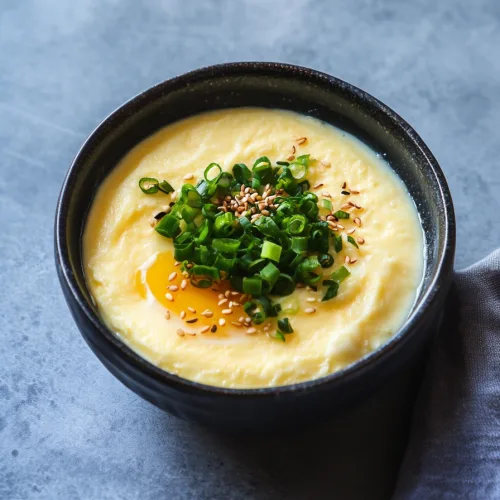
Eggs, water, salted shrimp, sesame oil, and green onion make this soft, fluffy Korean-style steamed egg side dish.
The first time I had Korean steamed eggs, I didn’t really know what to expect. It came to the table in one of those hot little pots, puffed up and steamy, with green onions sprinkled on top like it was trying to look fancy without trying too hard. And honestly? I thought, okay, it’s eggs. Then I took one spoonful and immediately understood why people love it. This Steamed Egg Korean-style Recipe has that quiet kind of comfort. It’s not flashy. It doesn’t need melted cheese or crispy edges or a dramatic sauce situation. It’s just soft, warm, savory, and soothing in a way that sneaks up on you.
This dish is also called gyeran jjim, and if you’ve ever sat down for Korean barbecue, you may have seen it bubbling away beside grilled meat, rice, kimchi, and all those tiny side dishes that somehow make the table feel like a celebration. I always love that moment when the table starts filling up and you think, Wait, did we order all this? Sound familiar? The Korean steamed eggs may look simple next to all the bold, spicy, grilled things, but they have a way of becoming the dish everyone keeps reaching for.
What I love about this Steamed Egg Korean-style Recipe is that it feels gentle. I know that might sound like a funny word for food, but that’s really what it is. Gentle, soft, and calming. The eggs are blended with water and salted shrimp, then cooked slowly until they become fluffy and tender. The sesame oil gives everything a warm, nutty smell, and the green onion adds a little fresh bite at the end. It’s the kind of side dish that makes a meal feel more complete, especially if the rest of the table is spicy, smoky, or rich.
I like making this fluffy Korean steamed egg on nights when dinner needs just one more thing, but I don’t have the energy for a whole extra recipe. You know those nights, right? Rice is cooking, maybe there’s grilled chicken or leftovers, maybe kimchi is already on the table, and something still feels missing. This is the little pot that fixes it. It’s quick, comforting, and ready in about 16 minutes, which feels almost unfair for something that tastes so cozy.

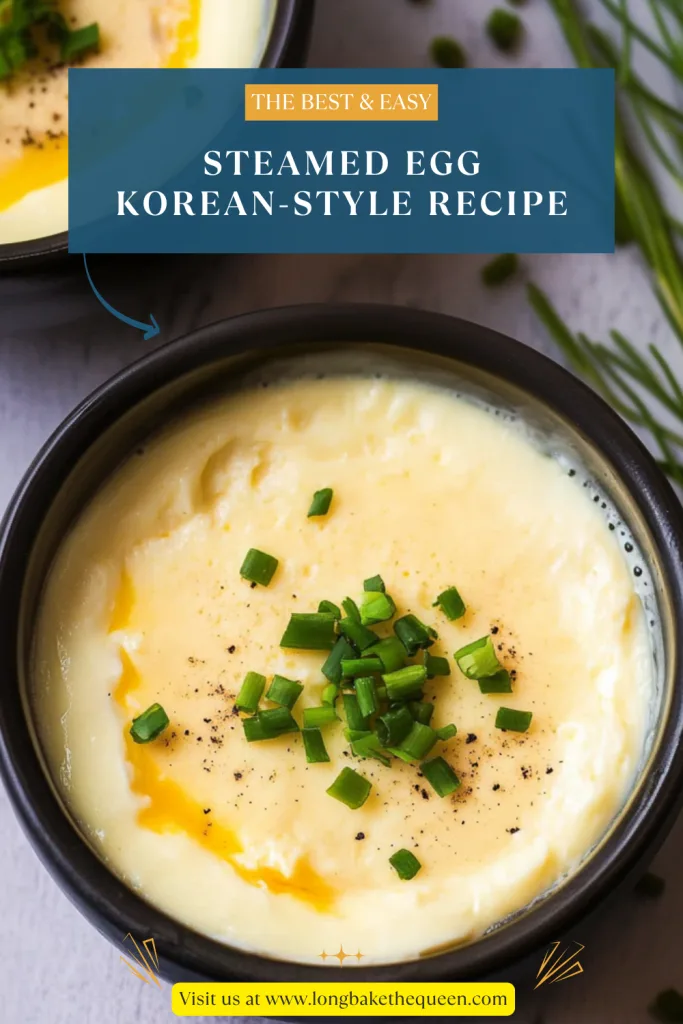
Why you’ll Love this Steamed Egg Korean-style Recipe?
This Steamed Egg Korean-style Recipe is easy to love because it turns a few basic ingredients into something that feels warm and special. Eggs, water, seasoning, sesame oil, and green onion. That’s it. Nothing dramatic. But once it cooks, the texture becomes soft, fluffy, and almost custard-like. Not sweet custard, of course, but that same tender spoonable feeling. It’s not scrambled eggs, and it’s not an omelet. It’s softer than both, almost like a savory egg cloud. A tiny edible cloud. I realize that sounds odd, but once you taste it, you’ll get what I mean.
Another thing I really appreciate about this Korean steamed eggs recipe is how fast it is. The prep takes about 5 minutes, and the cooking time is around 11 minutes. That means you can make it while rice is finishing or while the rest of dinner is coming together. I love side dishes like that. They don’t demand attention like a needy group chat. They just quietly do their job and make the whole meal better.
The flavor is mild, savory, and flexible. Salted shrimp, or saewoojeot, gives this gyeran jjim recipe a more traditional Korean flavor with a salty, briny depth. But if you don’t have salted shrimp, sea salt or fish sauce works too. I actually like that the recipe gives you options, because not every pantry has salted shrimp waiting politely in the fridge. Some days you have the traditional ingredient. Some days you have sea salt and determination. Both can work.
This dish is also wonderful next to bold foods. Spicy kimchi, grilled meats, rich soups, saucy vegetables, rice bowls — they all pair beautifully with Korean steamed egg. It brings balance. It’s like the soft blanket on the table. Maybe that’s a strange comparison, but I stand by it. When the rest of the meal has heat and intensity, this Steamed Egg Korean-style Recipe gives you something calm and comforting between bites.

Ingredient Notes
The ingredients in this Steamed Egg Korean-style Recipe are simple, but because there are only a few, each one really matters. You’re not hiding behind a long list of seasonings here. The eggs create the soft base, the water keeps the texture light, the salted shrimp or seasoning gives it savory flavor, the sesame oil adds aroma, and the green onion brings freshness. It’s a small ingredient list, but it pulls together beautifully when cooked gently.
- Large Eggs: Eggs are the heart of this fluffy Korean steamed egg recipe, so use fresh large eggs if you can. They create that soft, tender texture and mild flavor. Blending the eggs with water helps make the mixture smooth and frothy, which gives the finished dish a lighter feel. If you skip blending and only whisk quickly, it can still work, but the texture may be a little less airy. Not bad, just different. I like the blender method because it makes the eggs smoother with very little effort.
- Water: Water may seem plain, but it’s important. It lightens the eggs and keeps them from turning dense or rubbery. Without enough liquid, the dish can feel more like firm scrambled eggs, and that’s not what we’re going for. In gyeran jjim, the egg-to-liquid ratio is what gives it that soft, spoonable texture. You can use broth instead of water if you want more flavor, but water keeps this version clean, simple, and easy.
- Salted Shrimp, Sea Salt, or Fish Sauce: Salted shrimp, also called saewoojeot, gives the most traditional flavor. It adds saltiness and a deep savory taste that makes the eggs feel more complete. If you don’t have it, sea salt gives a cleaner flavor, while fish sauce adds that briny umami taste. I’d go easy with fish sauce at first, though. It’s one of those ingredients that whispers at one teaspoon and starts shouting if you get too generous.
- Sesame Oil: Sesame oil is used to grease the pot, but it also adds a warm, nutty aroma. It makes the Korean steamed eggs smell cozy before you even take a bite. You only need a light coating because sesame oil can take over if you use too much. It should support the eggs, not announce itself like the main character.
- Green Onion: Green onion adds color, freshness, and a gentle bite. It goes on near the end so it stays bright and doesn’t disappear into the eggs. I also love how it makes the dish look finished. Without it, the steamed egg is still good, but the green onion gives it that little “served at the table” feeling.

How to Make Steamed Egg Korean-style Recipe?
This Steamed Egg Korean-style Recipe is simple, but it does need gentle heat and a little attention. Not fussy attention. Just the kind where you check it, stir slowly, and don’t crank the heat because you’re in a hurry. The goal is soft and fluffy Korean steamed eggs, not dry eggs stuck to the bottom of the pot. If you take it slow, the recipe is very friendly.
Step 1: Blend the eggs, water, and seasoning
Add the eggs, water, and salted shrimp to a blender. Blend until the mixture is smooth, pale yellow, and frothy. If you’re using sea salt or fish sauce instead of salted shrimp, add that instead. The froth is important because it helps the eggs cook up lighter. I always think the mixture looks a little too thin at this stage, but don’t worry. That’s exactly how it should look. The magic happens in the pot.
Step 2: Prepare the pot
Grease an earthenware pot with sesame oil. If you don’t have an earthenware pot, a medium saucepan with a lid works too. I know the little Korean clay pots look beautiful and traditional, but we are not canceling dinner because we don’t have one. Make sure there is about 1 inch of room at the top once you pour in the egg mixture, because the eggs can rise as they cook. If the pot is too full, it may bubble over, and cleaning cooked egg off the stove is not my idea of a peaceful evening.
Step 3: Pour in the egg mixture
Pour the blended egg mixture into the prepared pot. The sesame oil will lightly coat the pot and help prevent sticking while adding flavor. At this point, the mixture will still look thin and foamy. That’s normal. As it heats, it will slowly thicken and puff. This is where gyeran jjim starts to feel a little magical, even though you’ve barely done anything.
Step 4: Simmer gently with the lid on
Place the pot over medium-low heat and cover it with the lid. Let it simmer for about 8 minutes, or until about half of the eggs look cooked. And yes, it’s okay to open the lid and check. Some recipes make lid-lifting sound like a kitchen crime, but here, checking helps. You want the eggs to cook gently without burning underneath. If the heat feels too strong, turn it down a little. Eggs are sensitive little things.
Step 5: Stir slowly
When the eggs are about halfway cooked, stir them slowly a few times. Be gentle here. You are not making scrambled eggs, and this is not the time for aggressive wrist action. Just move the mixture enough to keep the bottom from burning and to help the uncooked egg settle evenly. A few slow stirs make a big difference in keeping this Steamed Egg Korean-style Recipe soft and fluffy.
Step 6: Add the green onions
Sprinkle the chopped green onion over the top. The green onion adds freshness and color, and it makes the dish look more inviting. It’s a small thing, but I love that little pop of green against the yellow eggs. It makes the whole pot look cheerful, which is always nice when dinner is otherwise a little beige.
Step 7: Cover and finish cooking
Close the lid again and simmer for another 2 to 3 minutes, or until the eggs are cooked but still soft and fluffy. The center should be set, but not dry. If the top puffs up, enjoy it while it lasts. Korean steamed eggs have a tiny dramatic moment when they rise, then they settle down like nothing happened. Honestly, relatable.
Step 8: Serve immediately
Serve this Steamed Egg Korean-style Recipe right away while it’s hot, soft, and steamy. It is best fresh, especially when the texture is still fluffy. Spoon it next to rice, Korean barbecue, kimchi, grilled fish, soup, or vegetables. It’s mild enough to go with many meals, but comforting enough to stand out in its own quiet way.
Storage Options
This Steamed Egg Korean-style Recipe is definitely best served fresh. The texture is softest and fluffiest right after cooking, and that’s when it feels most special. But if you do have leftovers, you can still save them. Let the steamed egg cool completely, then transfer it to an airtight container and store it in the refrigerator for up to 2 days. It will firm up after chilling, so it won’t be quite the same as fresh, but it can still be comforting.
To reheat, keep things gentle. You can microwave it in short intervals at lower power, or warm it in a covered saucepan over low heat. Add a tiny splash of water if it seems dry. The main thing is not to overheat it. Eggs can turn rubbery fast, and rubbery steamed egg is a little sad. Still edible, maybe, but not the soft cozy dish we’re aiming for.
I don’t recommend freezing gyeran jjim. The texture usually changes too much after freezing and thawing. It can become watery, grainy, or just not very pleasant. Since this Korean steamed egg recipe takes about 16 minutes from start to finish, it’s much better made fresh when you can. If you want to save time, chop the green onion and measure the ingredients ahead, then blend and cook right before serving.
Variations & Substitutions
This Steamed Egg Korean-style Recipe is simple, but there’s still room to make it your own. Traditional versions often use salted shrimp, but sea salt and fish sauce are easy substitutes. You can use broth instead of water, add tiny vegetables, or even give it a little spicy finish. I personally love the basic version because it’s so soothing, but small changes can be really nice depending on what you’re serving it with.
- Use Broth Instead of Water: Replace the water with anchovy broth, chicken broth, vegetable broth, or dashi-style broth if you want more savory flavor. Broth makes the Korean steamed eggs taste richer and more layered. Just be careful with salt if the broth is already seasoned. It’s easy to accidentally make the eggs too salty.
- Use Fish Sauce Instead of Salted Shrimp: Fish sauce is a good substitute for salted shrimp. It gives the dish a savory, slightly briny flavor. Use about 1 teaspoon, then adjust if needed. I would not pour straight from the bottle with too much confidence. Fish sauce has power. Respect it.
- Make It Vegetarian: Use sea salt instead of salted shrimp or fish sauce. You can also use vegetable broth instead of water for more flavor. The result will be simpler, but still soft, warm, and comforting. It’s a great option if you want a gentle vegetarian side dish.
- Add Small Vegetables: Finely chopped carrots, zucchini, mushrooms, or spinach can be added for color and texture. Keep the pieces very small so they cook quickly and don’t weigh down the eggs. This is a nice way to make the steamed egg feel a little more filling.
- Add More Sesame Flavor: Drizzle a tiny bit of sesame oil over the top before serving if you love that nutty flavor. Just don’t overdo it. Sesame oil can go from cozy to overwhelming pretty fast, like perfume in an elevator.
- Make It Spicy: Add a pinch of gochugaru, Korean red pepper flakes, or a small drizzle of chili oil before serving. This gives the soft eggs a little heat without changing the whole dish. It’s especially good if you’re serving the eggs with plain rice.
- Use a Saucepan Instead of an Earthenware Pot: An earthenware pot is traditional and holds heat well, but a medium saucepan with a lid works fine. Keep the heat medium-low and stir gently so the eggs don’t stick or burn. The pot matters less than the heat control.
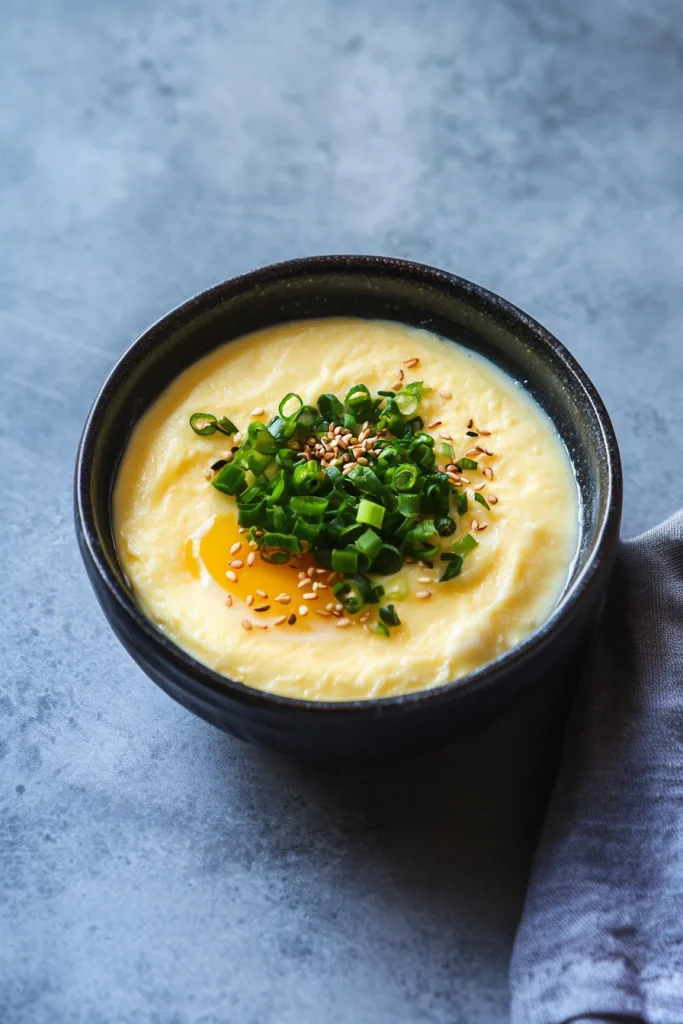
What to Serve With Steamed Egg Korean-style Recipe?
This Steamed Egg Korean-style Recipe is mild, soft, and savory, so it pairs beautifully with bold foods. It’s commonly served with rice and Korean barbecue, but it also works with soups, fish, vegetables, and rice bowls. Think of it as the calming side dish that makes spicy, salty, or smoky foods feel more balanced. Kind of like taking a deep breath between bites.
- Steamed Rice: Rice is the classic pairing. Spoon the soft steamed egg over warm rice and you have something simple, cozy, and satisfying. It’s especially good when you want a gentle meal that still feels filling.
- Korean Barbecue: This gyeran jjim recipe is wonderful with Korean barbecue. The soft eggs balance grilled beef, pork belly, short ribs, or chicken. The contrast between smoky meat and fluffy egg is one of those combinations that just makes sense.
- Kimchi: Kimchi adds crunch, spice, and tang, while the steamed eggs soften those strong flavors. Together, they make a really satisfying bite. It’s a little spicy, a little creamy, a little funky, and somehow very comforting.
- Soup or Stew: Serve Korean steamed eggs with kimchi jjigae, doenjang jjigae, or a simple broth-based soup. The eggs add softness and protein, while the soup brings deeper flavor. It’s a lovely pairing when you want a cozy meal.
- Grilled Fish: Grilled or pan-seared fish works nicely with this fluffy steamed egg dish. The mild eggs balance salty or savory fish without making the meal feel heavy.
- Stir-Fried Vegetables: Spinach, mushrooms, zucchini, bean sprouts, or cabbage are great alongside this dish. The vegetables add texture, while the steamed egg adds warmth and softness.
- Rice Bowls: Add this Korean-style steamed egg as a side for rice bowls with meat, tofu, vegetables, or spicy sauce. It gives the meal a soft and comforting element, especially if the rest of the bowl has bold flavors.
FAQ
Is this Steamed Egg Korean-style Recipe keto?
Yes, this Steamed Egg Korean-style Recipe can be keto-friendly because it is mostly eggs, water, seasoning, sesame oil, and green onion. If you’re following keto closely, check your fish sauce or salted shrimp label to make sure there are no added sugars. Serve it without rice if you want to keep the meal low-carb.
Is Korean steamed egg Whole30?
This recipe can be Whole30-friendly if you use compliant ingredients. Eggs, water, sesame oil, green onion, and sea salt usually work well. If you use salted shrimp or fish sauce, check the label for sugar or non-compliant additives. When in doubt, sea salt is the simplest choice.
Can I make gyeran jjim without salted shrimp?
Yes, you can make gyeran jjim without salted shrimp. Use 1 teaspoon sea salt or 1 teaspoon fish sauce instead. Salt gives a clean and simple flavor, while fish sauce adds more savory depth. Salted shrimp is traditional, but the recipe is still delicious without it.
Why did my steamed eggs turn dense instead of fluffy?
The eggs may have turned dense if the heat was too high, if there wasn’t enough liquid, or if the mixture wasn’t blended well. For fluffy Korean steamed eggs, use medium-low heat, blend the mixture until frothy, and stop cooking once the eggs are set but still soft. Overcooking is usually the sneaky culprit.
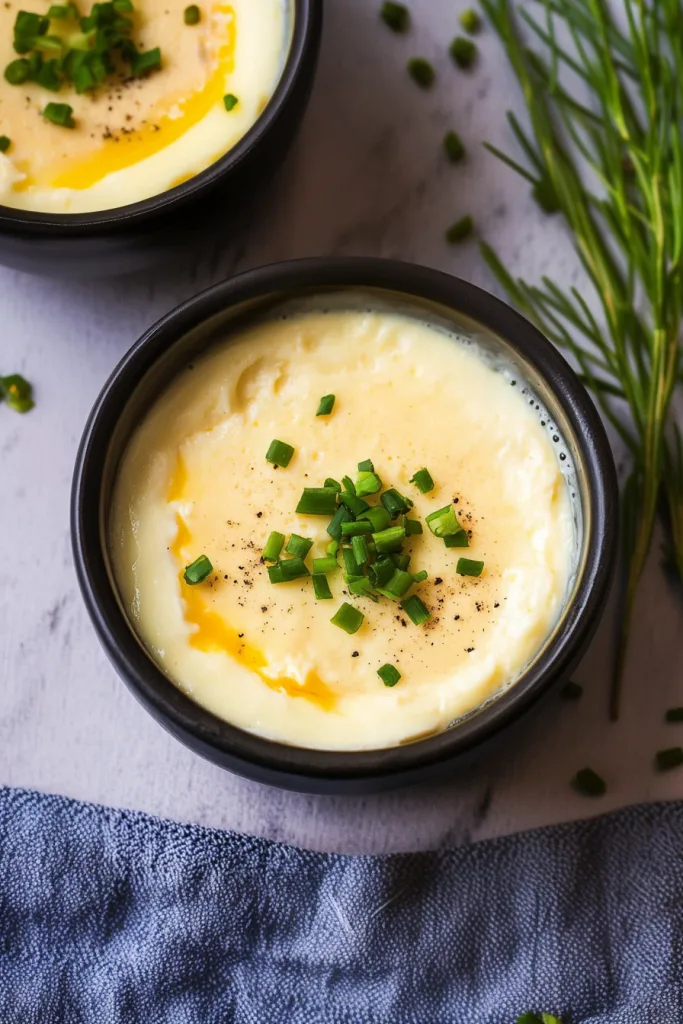
This Steamed Egg Korean-style Recipe is soft, fluffy, savory, and comforting in the simplest way. It’s made with just eggs, water, salted shrimp or seasoning, sesame oil, and green onion, but it feels like more than the sum of its parts. Warm, steamy, and gentle — the kind of side dish that makes a meal feel cared for.
I love this recipe because it doesn’t try too hard. It’s humble, quick, and useful, but still special enough to serve with Korean barbecue, rice, kimchi, soup, or a cozy homemade dinner. Sometimes the quiet dishes are the ones you remember, you know?
Try this Steamed Egg Korean-style Recipe the next time you want a soft, fluffy Korean side dish at home. And when you do, tell me what you served it with — rice, barbecue, kimchi, soup, or something totally your own? Can’t wait to hear what you think.
Steamed Egg Korean-style Recipe
Ingredients
- 4 large eggs
- 1 cup water
- 1½ tsp salted shrimp also known as saewoojeot
- 1 tsp sea salt or fish sauce as an alternative to salted shrimp
- ½ tsp sesame oil
- 1 green onion chopped
Instructions
Prepare the egg mixture.
- Place the eggs, water, and salted shrimp in a blender. Blend until the mixture is smooth, pale yellow, and slightly frothy.
Prepare the cooking vessel.
- Lightly grease an earthenware pot with sesame oil. A medium saucepan with a lid may also be used if an earthenware pot is unavailable.
Add the egg mixture.
- Pour the blended egg mixture into the prepared pot. Leave approximately 1 inch of space at the top to allow the eggs to rise during cooking.
Begin steaming the eggs.
- Place the pot over medium-low heat and cover with a lid. Simmer for approximately 8 minutes, or until about half of the egg mixture is cooked.
Stir gently.
- Open the lid and stir the eggs slowly a few times to prevent burning on the bottom of the pot. Avoid vigorous stirring, as the goal is to maintain a soft and fluffy texture.
Add the green onion.
- Sprinkle the chopped green onion evenly over the partially cooked eggs.
Finish cooking.
- Cover the pot again and continue simmering for 2 to 3 minutes, or until the egg mixture is fully cooked but still soft and fluffy.
Serve.
- Serve immediately while hot. This dish is best enjoyed fresh as a side dish with rice, Korean barbecue, soup, or vegetables.
Notes
Use salted shrimp, sea salt, or fish sauce that is specifically labeled gluten-free.
Check fish sauce labels carefully, as some brands may include wheat-based additives or cross-contamination warnings.
If using broth instead of water, choose a certified gluten-free broth.
Serve with gluten-free sides such as steamed rice, grilled meats, vegetables, kimchi labeled gluten-free, or gluten-free Korean barbecue sauces.