Eggplant, tomatoes, garlic, parsley, cilantro, paprika, cumin, olive oil, salt, water, and white vinegar.
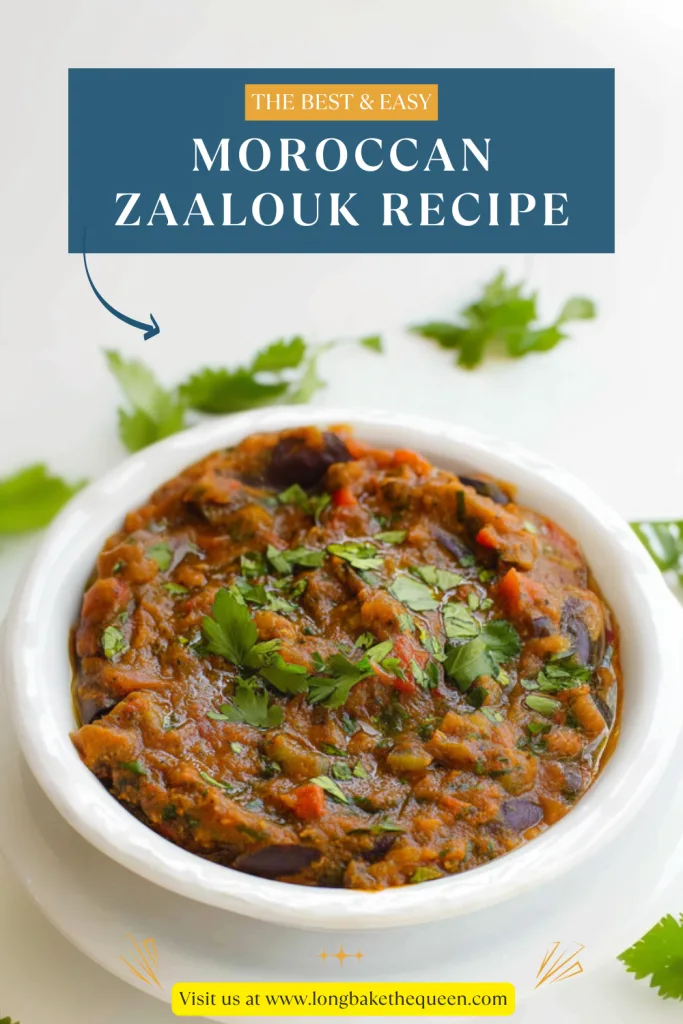
The first time I made this Moroccan Zaalouk Recipe, I had one of those “let’s see what happens” kitchen moments. You know the kind. There’s an eggplant sitting on the counter looking slightly dramatic, a few tomatoes getting softer by the minute, and you’re hoping dinner will somehow pull itself together. I didn’t expect much, honestly. Eggplant and tomatoes can feel a little plain at first glance. But once they started simmering with garlic, paprika, cumin, olive oil, parsley, and cilantro, the whole kitchen changed. It smelled warm, earthy, and cozy, like something much more complicated was happening in the pot.
That’s what I love about zaalouk. It surprises you. This Moroccan eggplant dip starts with simple vegetables, but after 20 minutes of simmering, it turns into something rich, soft, and deeply flavorful. The eggplant breaks down, the tomatoes melt into the mixture, and the spices settle in like they’ve known each other forever. I remember standing by the stove with a piece of toasted bread, just “checking the seasoning.” Very responsible, of course. Then I checked it again. And again. Suddenly the bowl looked a little less full. Sound familiar?
This Moroccan Zaalouk Recipe has that rustic, generous feeling I really like in food. It’s not glossy restaurant food with tweezers and tiny dots of sauce. It’s a scoopable, warm, homey dish that wants bread nearby. It can be a salad, a dip, a side dish, or even a spread for sandwiches and wraps. It’s vegan, but not in a way that feels like it’s trying to prove anything. It’s just eggplant, tomatoes, garlic, herbs, spices, and olive oil doing their job beautifully.
I think this zaalouk salad is especially lovely for slow lunches or relaxed dinners, the kind where bread sits in the middle of the table and everyone keeps reaching for “just one more bite.” It reminds me a little of those meals where nobody is in a rush and the best part is not one single dish, but the whole table together. Toasted bread, olives, grilled lamb, couscous, maybe a little salad on the side. Or, if we’re being real, just a bowl of zaalouk and a spoon. Not traditional table manners, maybe, but sometimes very necessary.

Why you’ll Love this Moroccan Zaalouk Recipe?
This Moroccan Zaalouk Recipe is easy to love because it turns everyday ingredients into something that tastes cozy, bold, and a little bit special. Eggplant can be a tricky vegetable. Sometimes it’s silky and wonderful, and sometimes it acts like a sponge with commitment issues. But here, it cooks down with tomatoes, garlic, cumin, paprika, herbs, and olive oil until it becomes soft and almost creamy. It’s proof that vegetables don’t need to be boring. They just need a little patience and good seasoning.
You’ll also love that this Moroccan eggplant dip is naturally vegan and dairy-free, but it still feels satisfying. I’m always happy when a plant-based dish doesn’t feel like it’s missing something. This one has body from the eggplant, brightness from the tomatoes and vinegar, warmth from the spices, and richness from the olive oil. It’s the kind of dish you can put on a table for everyone, and nobody needs a label or an explanation. They’ll just scoop it up with bread and keep going.
Another beautiful thing about this Moroccan Zaalouk Recipe is how flexible it is. You can serve it warm, room temperature, or cold. Warm zaalouk feels comforting, almost like a soft vegetable stew. Room temperature zaalouk is perfect for mezze-style plates. Cold zaalouk makes a great make-ahead salad or dip. I like recipes that don’t get bossy about serving temperature. Life is already full of rules. Dinner doesn’t always need more.
The flavor balance is what keeps me coming back. The tomatoes bring a little acidity, the eggplant brings that silky base, the garlic adds depth, and the paprika and cumin make it feel warm and earthy. Then the vinegar comes in at the end and wakes everything up. It’s such a small step, but it matters. Without it, the vegan eggplant spread can taste a little too mellow. With it, suddenly everything feels brighter, like opening a window in a warm kitchen.
Ingredient Notes
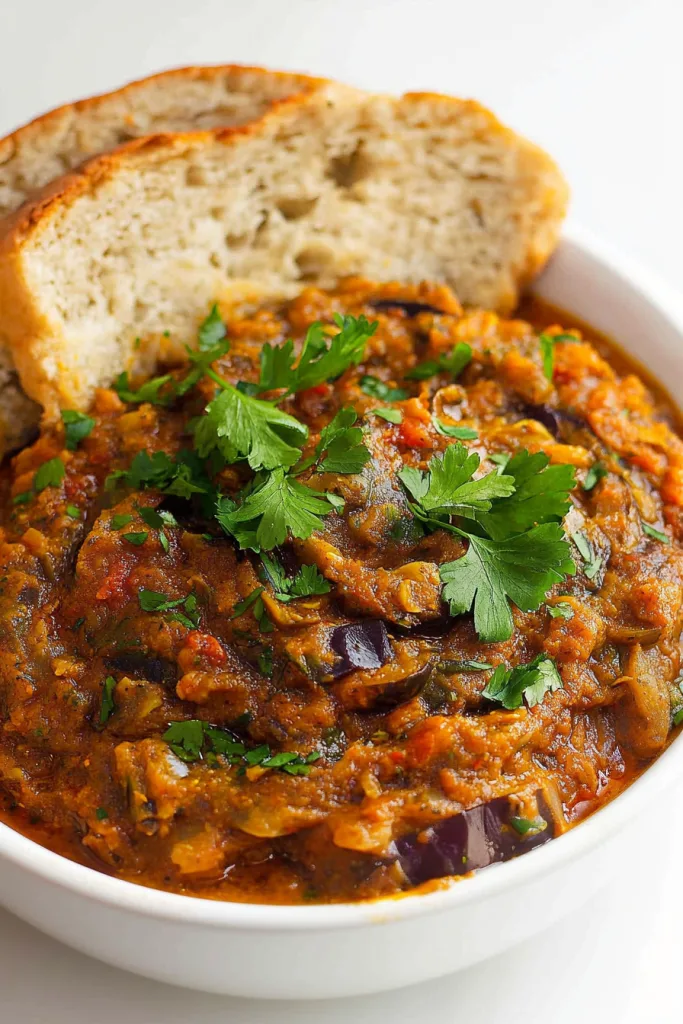
The ingredients in this Moroccan Zaalouk Recipe are simple, but they each bring something important to the pot. Since zaalouk cooks down into a soft dip or salad, the flavors really blend together. Nothing stays separate for long. The eggplant softens, the tomatoes release their juices, the garlic mellows, the spices bloom, and the herbs keep the whole thing from feeling too heavy. It’s a small list, but it works hard.
- Eggplant: Eggplant is the heart of this Moroccan eggplant dip, so it deserves a little attention. Roughly peeling it helps soften the final texture and can reduce some bitterness, but you don’t need to peel it perfectly. A little skin left behind gives the zaalouk a rustic feel, which I actually like. Once the eggplant simmers, it collapses into the tomato mixture and becomes creamy, soft, and perfect for scooping. If you’ve ever been suspicious of eggplant, this recipe might gently change your mind.
- Tomatoes: Ripe tomatoes give this zaalouk salad freshness, moisture, and brightness. Peeling them and removing the seeds helps keep the texture smoother and less watery. I won’t pretend peeling tomatoes is my favorite task. It’s one of those tiny kitchen chores that feels longer than it is. But it does help, especially if you want a thicker, more dip-like zaalouk. If your tomatoes are extra juicy, you may just need to cook the mixture a few minutes longer.
- Garlic: Garlic gives the dish its savory backbone. Four cloves may sound like a lot, but once they simmer with eggplant, tomatoes, and spices, the flavor softens beautifully. It doesn’t taste harsh. It just makes the whole pot smell like something good is definitely happening. Garlic has a way of making even a simple recipe feel more promising, doesn’t it?
- Parsley: Parsley adds freshness and a clean herbal note. Since this Moroccan Zaalouk Recipe is rich and soft, parsley helps lift the flavor. It’s not loud, but it keeps the dip from feeling too heavy. I like it minced finely so it blends into the vegetables instead of sitting on top like confetti.
- Cilantro: Cilantro brings a brighter, slightly citrusy flavor that works really well with cumin and paprika. I know cilantro is one of those love-it-or-hate-it herbs. If you love it, use it proudly. If you don’t, use extra parsley and move on peacefully. No recipe should ruin your mood over cilantro.
- Salt: Salt helps the eggplant and tomatoes taste like themselves, only better. Since the vegetables cook down, the flavors become more concentrated, so it’s smart to start with the recipe amount and taste near the end. Sometimes just one small pinch after cooking makes the whole Moroccan eggplant spread taste more complete.
- Paprika: Paprika adds warmth, color, and a gentle peppery flavor. It gives zaalouk that lovely red-orange tone and helps the tomatoes feel deeper and richer. Sweet paprika works well, but smoked paprika is lovely if you want a slightly smoky flavor. I go back and forth depending on my mood.
- Cumin: Cumin is what gives this Moroccan Zaalouk Recipe that warm, earthy flavor. It pairs so well with eggplant and tomatoes that the dish would feel a little unfinished without it. Cumin is not flashy, but it has quiet confidence. The kind of spice that doesn’t need to shout.
- Olive Oil: Olive oil adds richness and helps the vegetables cook down into something silky and satisfying. A good drizzle on top before serving makes the zaalouk look beautiful and taste even better. I’m not overly strict here. If the dish feels like it wants a touch more olive oil at the end, I usually listen.
- Water: Water helps the vegetables simmer without sticking or burning. The eggplant needs time to soften and break down, and the water gives it that chance. If the pot looks dry before the eggplant is tender, add a splash more. Zaalouk should be thick and scoopable, not scorched and stubborn.
- White Vinegar: White vinegar goes in at the end, and it gives the dish a bright little lift. It cuts through the richness of the olive oil and eggplant, making the final flavor taste fresher. You don’t need much. Just enough to make the flavors pop a little. It’s a small detail, but a good one.
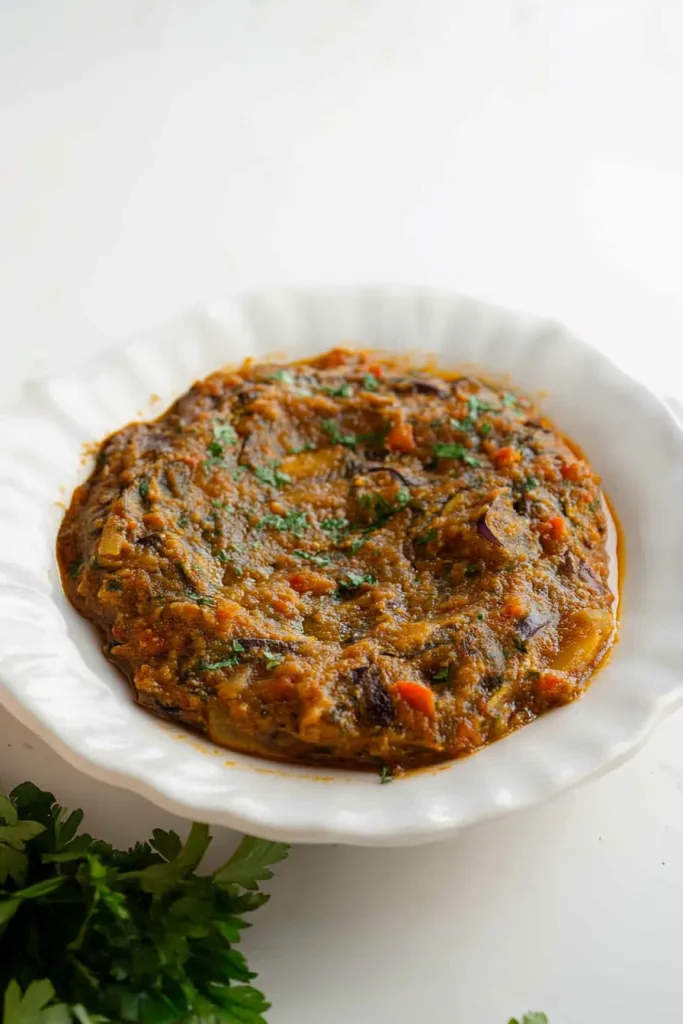
How to Make Moroccan Zaalouk Recipe?
This Moroccan Zaalouk Recipe is wonderfully relaxed. You don’t need to roast, blend, fry, or do anything too fussy. You add almost everything to a pot, simmer until the vegetables soften, stir in vinegar, and mash it to the texture you like. That’s the beauty of it. The pot does most of the work while you hover nearby pretending not to be hungry. The hardest part might be waiting until the eggplant fully breaks down.
Step 1: Prepare the vegetables
Start by roughly peeling the eggplant and chopping it into cubes. Don’t worry about making the pieces perfect. Zaalouk is rustic, and the eggplant is going to soften and break down anyway. Then peel and chop the tomatoes, removing the seeds if you can. This helps the Moroccan eggplant dip stay thick instead of watery. Mince the garlic, parsley, and cilantro so everything blends nicely as it cooks. This step is simple, but it makes the final texture much better.
Step 2: Add everything to the pot
In a medium stock pot, combine the chopped eggplant, chopped tomatoes, minced garlic, parsley, cilantro, salt, paprika, cumin, olive oil, and water. Leave the vinegar out for now. Stir everything together so the vegetables are coated with the spices and herbs. At first, it may look like a mountain of eggplant, and you may wonder if the pot is too full. It probably isn’t. Eggplant shrinks down dramatically, like it suddenly remembers it has somewhere else to be.
Step 3: Bring the mixture to a simmer
Turn the heat to medium-high and bring everything to a simmer. As the pot heats, the tomatoes will release their juices and the eggplant will begin to soften. Stir occasionally so nothing sticks to the bottom. This is the stage where the garlic, paprika, and cumin start smelling warm and inviting. I always think this is when the recipe starts feeling real, like it has officially decided to become dinner.
Step 4: Cover and cook
Cover the pot and let the mixture simmer over medium heat for about 20 minutes, or until the eggplant has broken down and reduced quite a bit. The vegetables should become very soft, and the mixture should start looking thick and cohesive. Check it once or twice and stir gently. If it looks too dry, add a splash of water. If it looks too wet, don’t panic. You can cook it uncovered later for a few minutes.
Step 5: Check the consistency
After 20 minutes, take a look at the texture. The Moroccan Zaalouk Recipe should be soft, thick, and scoopable. If it looks watery, let it cook uncovered for a few extra minutes so the extra liquid can evaporate. If it looks dry, add a small splash of water. This is where you get to choose the final feel. Some people like zaalouk smooth and spreadable. Others like it chunky, more like a cooked eggplant and tomato salad. Both are good.
Step 6: Add the vinegar
Add the white vinegar and stir well. This final splash of acidity brightens the whole dish and keeps it from tasting too heavy. It might feel like a tiny thing, but don’t underestimate it. The vinegar makes the garlic, tomatoes, herbs, and spices taste more awake. Taste the zaalouk after adding it and adjust the salt if needed.
Step 7: Mash to your preferred texture
Use a fork to mash the mixture until it reaches the texture you like. For a smoother vegan eggplant spread, mash it more thoroughly. For a rustic zaalouk salad, leave it a little chunky. I usually land somewhere in the middle. Soft enough to scoop with bread, but not so smooth that it loses all its personality. There’s no single perfect texture here, which is honestly kind of freeing.
Step 8: Serve and garnish
Serve the zaalouk warm, room temperature, or chilled. Spoon it into a bowl and finish with a drizzle of olive oil, a sprinkle of cilantro, and a little paprika if you like. It looks simple but beautiful, especially with that glossy olive oil on top. Serve it with toasted bread, pita, flatbread, lamb, chicken, fish, couscous, rice, or grilled vegetables. Or just stand near the counter with bread and call it “quality control.” I won’t tell.
Storage Options
This Moroccan Zaalouk Recipe stores really well, which makes it perfect for making ahead. Let it cool completely, then transfer it to an airtight container and refrigerate it for up to 4 days. I actually think the flavor gets even better after a few hours, once the garlic, cumin, paprika, tomatoes, and olive oil have had time to settle together. Some leftovers get sad in the fridge. Zaalouk gets more interesting.
You can serve leftover Moroccan eggplant dip cold, at room temperature, or warm. If you want to reheat it, place it in a small saucepan over low heat and stir gently until warm. You can also microwave it in short bursts, stirring between each one. If it thickens too much in the fridge, add a small splash of water or olive oil to loosen it. The texture should stay thick and scoopable, not dry or stiff.
You can freeze zaalouk, but I’ll be honest: the texture may change a little. Eggplant and tomatoes both hold moisture, so after thawing, the dip can become softer than it was fresh. Still, it works. Freeze cooled Moroccan Zaalouk Recipe in a freezer-safe container for up to 2 months. Thaw it overnight in the refrigerator, then reheat gently and stir well. It may not be quite as lively as fresh, but with a little olive oil and a sprinkle of herbs, it comes back nicely.
Variations & Substitutions
This Moroccan Zaalouk Recipe is flexible, and that’s one of the reasons I like it so much. Traditional versions can vary from kitchen to kitchen, so there’s room for small changes. You can make it smoky, spicy, smooth, chunky, brighter, or richer. It depends on what you have, what you like, and honestly, what kind of mood dinner is in. Some nights want spice. Some nights want bread and comfort.
- Roast the Eggplant First: For deeper flavor, roast the eggplant before adding it to the pot. Roasting gives the eggplant a richer, slightly smoky taste. It does add extra time, so I don’t always do it, but when I do, the flavor feels a little more layered. It’s a good option if you love smoky eggplant dishes.
- Use Smoked Paprika: Smoked paprika is an easy way to give this Moroccan eggplant dip a deeper flavor without roasting the eggplant. You can use all smoked paprika or mix it with sweet paprika. I like using half and half when I want smokiness without making the dish taste too intense.
- Add Lemon Juice: Lemon juice can replace white vinegar if you want a fresher, brighter finish. It gives the zaalouk salad a softer citrusy acidity. This version is especially nice with fish, chicken, or a mezze-style platter.
- Make It Spicy: Add cayenne pepper, chili flakes, or a little harissa if you want heat. Harissa works beautifully because it adds both spice and depth. Start small, though. You want the spice to lift the eggplant and tomatoes, not stomp all over them.
- Make It Chunkier: Mash the mixture lightly if you prefer a chunkier zaalouk. This gives it more texture and makes it feel more like a cooked Moroccan eggplant salad than a dip. It’s especially good served as a side dish with grilled meat or rice.
- Make It Smoother: Mash it very well or use an immersion blender for a smoother vegan eggplant spread. Just don’t over-blend unless you want it completely smooth. A little texture is part of what makes zaalouk feel homemade and rustic.
- Use Canned Tomatoes: If fresh tomatoes are not looking great, canned tomatoes can work. Drain them well so the zaalouk doesn’t become watery. Fresh ripe tomatoes are lovely, but canned tomatoes are practical, and sometimes practical wins. Especially on a Tuesday.
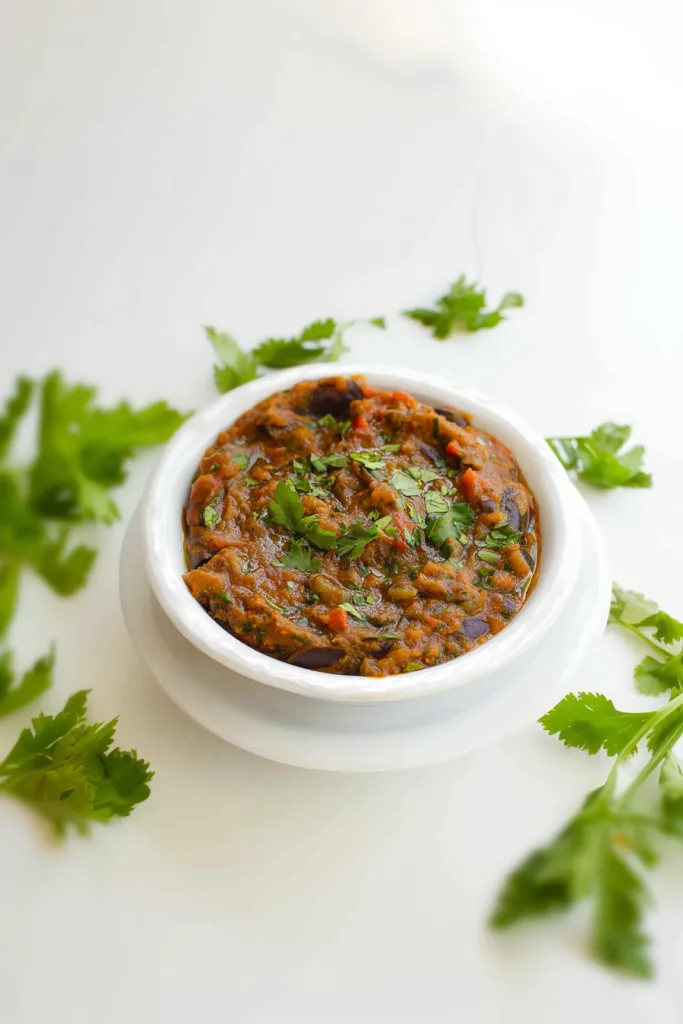
What to Serve With Moroccan Zaalouk Recipe?
This Moroccan Zaalouk Recipe is one of those dishes that can go in several directions. It can be a dip, a salad, a side dish, or a spread. It’s rich and savory, so it pairs well with bread, grilled meat, rice, couscous, vegetables, and mezze-style plates. Really, if you have something warm and scoopable nearby, you’re in business.
- Toasted Bread: Toasted bread is probably my favorite way to serve this Moroccan eggplant dip. The bread gets crisp, the zaalouk is soft and rich, and together they’re just perfect. Add a drizzle of olive oil on top and suddenly it feels like a real appetizer, even if you’re eating it over the sink. Again, no judgment.
- Flatbread or Pita: Warm flatbread, pita, or Moroccan bread is ideal for scooping zaalouk. Tear off a piece and use it like a spoon. It’s simple, hands-on, and honestly more fun than using a fork. Some foods are just meant to be scooped.
- Lamb: Zaalouk pairs beautifully with lamb because the soft, spiced eggplant balances the richness of the meat. Serve it with grilled lamb chops, lamb kebabs, or roasted lamb. The cumin and paprika in the zaalouk work especially well with those deeper meat flavors.
- Chicken: Grilled or roasted chicken is wonderful with this Moroccan Zaalouk Recipe. The dip adds moisture, flavor, and a bright tomato-garlic finish to simple chicken. If the chicken is a little plain, zaalouk fixes that quickly.
- Fish: Serve zaalouk with grilled or pan-seared fish for a lighter meal. The tomatoes, herbs, and vinegar brighten the fish, while the eggplant adds body. It feels fresh but still satisfying.
- Couscous or Rice: Spoon this zaalouk salad over couscous or rice for a simple vegan meal or side dish. The grains soak up the tomato, olive oil, and spice mixture beautifully. Add chickpeas if you want it heartier.
- Mezze Platter: Add zaalouk to a mezze platter with olives, hummus, roasted peppers, cucumbers, bread, and fresh herbs. It brings color, warmth, and Moroccan-inspired flavor to the table. It also makes the spread look like you planned more than you maybe did.
- Eggs: This might sound a little unexpected, but zaalouk is delicious with fried or poached eggs. It becomes a rustic vegetable base, almost like a cousin to shakshuka. Add bread, and you’ve got a very good breakfast or lunch.
FAQ
Can I serve zaalouk warm or cold?
Yes, zaalouk can be served warm, at room temperature, or cold. Warm zaalouk feels cozy and rich, especially with toasted bread. Room temperature zaalouk is great for mezze platters. Cold zaalouk works well as a make-ahead side dish. It’s flexible like that, which makes it very useful.
Do I have to peel the eggplant?
You don’t have to peel all of the eggplant. Roughly peeling it helps create a softer texture and can reduce bitterness, while leaving some skin adds color and a little rustic texture. I like a partial peel because it feels balanced. Not too tough, not too soft.
Can I use canned tomatoes instead of fresh tomatoes?
Yes, canned tomatoes can be used if fresh tomatoes are not available. Drain them well so the Moroccan Zaalouk Recipe does not become too watery. Fresh ripe tomatoes are lovely, but canned tomatoes can be a very helpful shortcut, especially when tomatoes are out of season.
How do I make zaalouk less watery?
If your zaalouk is too watery, cook it uncovered for a few extra minutes so the liquid can evaporate. Stir often to prevent sticking. The finished texture should be thick, soft, and scoopable, not soupy. If it gets too thick, add a tiny splash of water or olive oil.
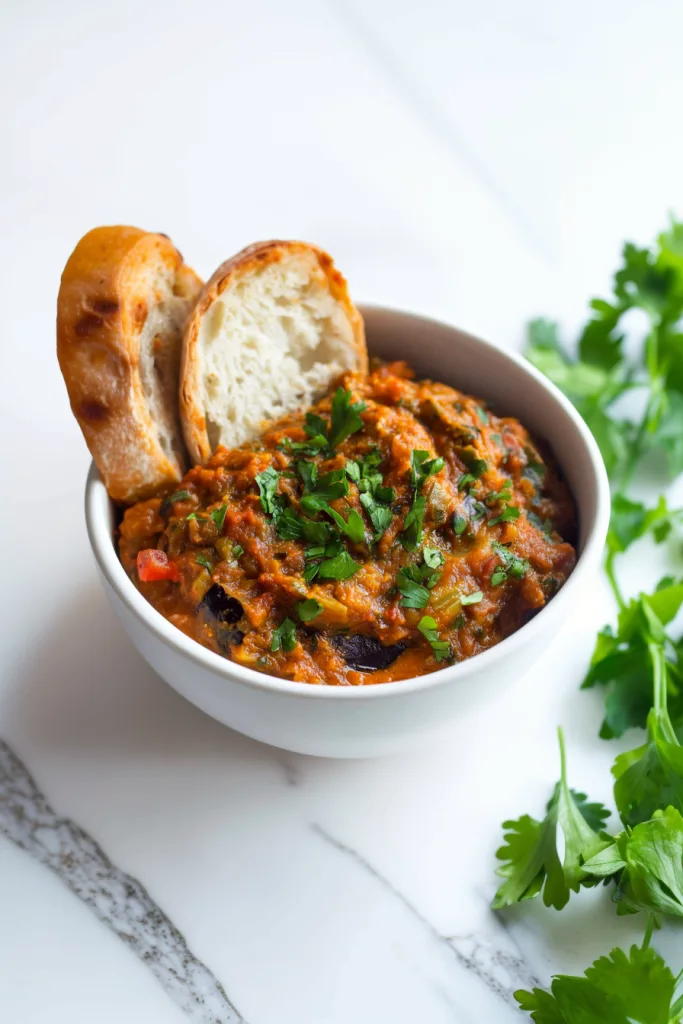
This Moroccan Zaalouk Recipe is warm, savory, simple, and full of flavor. It turns eggplant, tomatoes, garlic, herbs, spices, olive oil, and vinegar into a cozy Moroccan eggplant dip that works as a salad, side dish, or spread. It’s rustic in the best way. Not fussy, not fancy, just really good.
I love this recipe because it makes a meal feel more generous without asking too much from you. Serve it with toasted bread, lamb, chicken, fish, couscous, rice, or a mezze platter, and it fits right in. It has that relaxed, pass-the-bread kind of feeling, which might be my favorite kind of food mood.
Try this Moroccan Zaalouk Recipe the next time you want a flavorful vegan eggplant spread or cozy side dish. And when you do, tell me how you served it — with bread, grilled meat, rice, eggs, or something totally your own? Can’t wait to hear what you think.
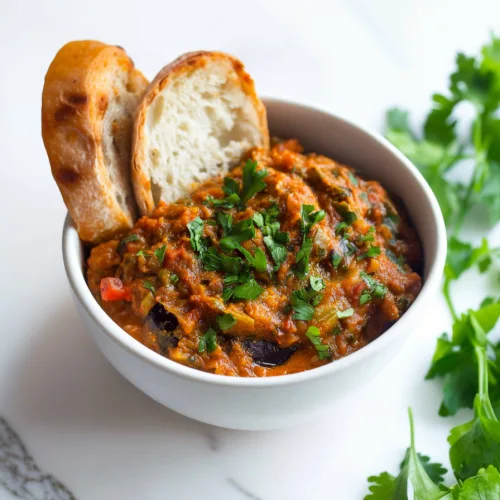
Moroccan Zaalouk Recipe
Ingredients
- 1 large eggplant roughly peeled and chopped into cubes
- 3 ripe tomatoes peeled, seeded, and chopped
- 4 cloves garlic minced
- 2 tbsp fresh parsley minced
- 2 tbsp fresh cilantro minced
- 1 tsp salt
- 2 tsp paprika
- 1 tsp cumin
- 2 tbsp olive oil
- ¾ cup water
- 1 tsp white vinegar
Instructions
Combine the ingredients.
- In a medium stock pot, combine the chopped eggplant, chopped tomatoes, minced garlic, parsley, cilantro, salt, paprika, cumin, olive oil, and water. Reserve the white vinegar for later.
Bring to a simmer.
- Place the pot over medium-high heat and stir the mixture until the ingredients are evenly combined. Bring the mixture to a gentle simmer.
Cook the vegetables.
- Cover the pot and reduce the heat to medium. Simmer for approximately 20 minutes, or until the eggplant has softened, broken down, and reduced significantly.
Check the consistency.
- Remove the lid and stir the mixture. If the zaalouk appears too dry, add a small splash of water and stir to combine. If it appears too watery, continue cooking uncovered for a few minutes until thickened.
Add the vinegar.
- Stir in the white vinegar and mix until fully incorporated.
Mash the zaalouk.
- Using a fork, mash the eggplant and tomato mixture until it reaches the desired consistency. Mash thoroughly for a smoother dip, or leave slightly chunky for a more rustic texture.
Serve.
- Transfer the zaalouk to a serving dish. Serve warm, at room temperature, or chilled with toasted bread. If desired, garnish with a drizzle of olive oil, fresh cilantro, and a light sprinkle of paprika.
Notes
Use pure spices, including paprika and cumin, that are labeled gluten-free to avoid cross-contamination.
Confirm that the white vinegar is gluten-free, especially if using a flavored or specialty variety.
Serve with gluten-free bread, crackers, rice cakes, roasted vegetables, grilled meats, rice, or gluten-free flatbread.
Avoid serving with regular wheat-based bread or pita unless using a certified gluten-free option.