Wonton wrappers, ground pork, prawns, ginger, green onions, soy sauce, Shaoxing wine, sesame oil, chicken broth, bok choy, egg noodles.
The first time I made Traditional Chinese Wonton Soup, I had this sweet little fantasy that every wonton would come out perfectly folded, like the ones you see in restaurant bowls. Neat edges. Cute shape. Very calm and professional. You can probably guess what happened next. My first few wontons looked like tiny wrinkled parcels that had been through a long day. One had too much filling, one had barely any, and one opened up like it had secrets to tell.
But honestly? That’s kind of why I fell in love with making homemade wontons. There’s something very human about it. You stand at the counter with a bowl of pork and prawn filling, a stack of wrappers, and a little bowl of water, and after a few awkward attempts, your hands start to understand the rhythm. Spoon, wet, fold, press, seal. Repeat. It becomes almost peaceful, especially if the kitchen is quiet and nobody is asking, “Is dinner ready yet?” every four minutes.
This Traditional Chinese Wonton Soup reminds me of the kind of meal you eat slowly. The broth is warm and fragrant, the wontons are tender, and the filling has that savory-sweet balance from pork, prawns, ginger, green onions, soy sauce, Shaoxing wine, and toasted sesame oil. It’s cozy, but not heavy. Filling, but still light enough that you don’t feel like you need a nap afterward. Well, unless you add noodles. Then all bets are off.
I also love that this homemade wonton soup feels a little special without being overly fancy. You’re using real ingredients in the filling — no fillers, no strange mystery texture, just pork, shrimp, aromatics, and seasoning. The prawns don’t get mashed into a completely smooth paste either, which I really like. Those tiny chunks give the wontons a better bite. A little texture. A little personality.
And the broth? It’s simple in the best way. Chicken broth gets simmered with smashed garlic, sliced ginger, light soy sauce, sugar, Shaoxing wine, and a little sesame oil. It only needs 5 to 10 minutes to pick up that gentle garlic-ginger flavor. I know some soups require a whole afternoon and a deep emotional commitment, but this one doesn’t. Thank goodness.
Another thing I appreciate about this Traditional Chinese Wonton Soup recipe is that it makes around 50 wontons. That sounds like a lot until you remember the freezer exists. Cook some now, freeze the rest, and future-you gets a cozy bowl of Chinese wonton soup on a tired night with almost no effort. That’s what I call practical magic. Not wand-and-sparkles magic. More like “I didn’t order takeout because I had homemade wontons waiting” magic.
This soup also brings back memories of simple noodle shops, big bowls of broth, scallions floating on top, and that quiet happiness of eating something warm when the day feels a bit too much. Maybe it’s a rainy evening, maybe it’s a busy weeknight, maybe you just want something that tastes like care. Sound familiar? That’s the mood of this soup.
If your first few wontons look funny, let them. If the folds aren’t even, it’s fine. If one has a little extra filling and looks suspiciously plump, congratulations, you made a bonus wonton. Homemade food should have fingerprints on it, not literally of course, but you know what I mean. A little uneven. A little personal. Still delicious.

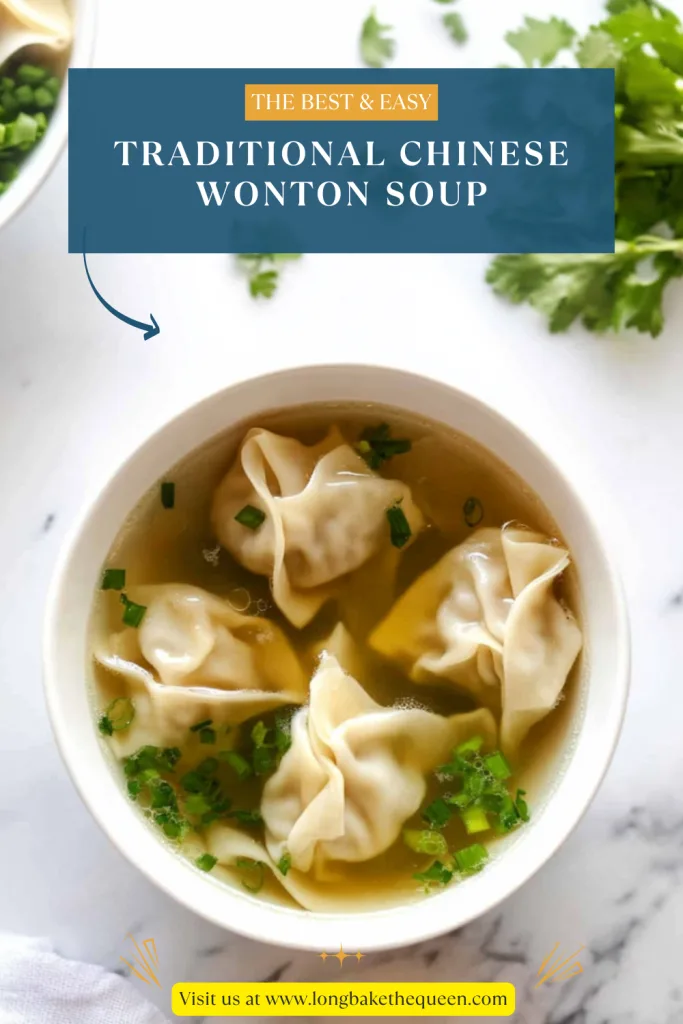
Why you’ll Love this Traditional Chinese Wonton Soup?
You’ll love this Traditional Chinese Wonton Soup because it feels comforting, useful, and genuinely satisfying. It gives you tender homemade wontons, a fragrant broth, and the option to add greens, noodles, scallions, or chili oil depending on your mood. Some days you might want a light bowl with just wontons and broth. Other days you might want the full Chinese wonton noodle soup experience with egg noodles and bok choy. I support both versions.
One of the best parts of this homemade wonton soup recipe is the filling. It’s made with lean pork mince, roughly chopped prawns or shrimp, ginger, green onions, soy sauce, Shaoxing wine, salt, and toasted sesame oil. The pork brings savory richness, while the prawns add sweetness and a slightly bouncy texture. Ginger cuts through everything with warmth, and sesame oil gives that deep nutty smell that somehow makes the kitchen feel like something good is definitely happening.
I also like that the filling isn’t padded out with fillers. It’s just real ingredients, mashed together until fairly smooth but still textured. You don’t want the prawns completely blended into a paste. Small chunks are good. They make each wonton feel more handmade, more interesting, and honestly, a little more generous.
This Traditional Chinese Wonton Soup is freezer-friendly, which makes it more than just one meal. Once you wrap the wontons, you can cook some right away and freeze the rest uncooked. On a busy night, frozen homemade wontons feel like a tiny gift from a more organized version of yourself. I don’t always feel organized, believe me, but a freezer container full of wontons does help the illusion.
The broth is another reason this Chinese wonton soup is so lovable. It’s light but not bland, quick but not boring. Garlic, ginger, soy sauce, Shaoxing wine, sugar, and sesame oil turn simple chicken broth into something warm and aromatic. The sugar doesn’t make it sweet; it just balances the salty and savory flavors. Like a little peacekeeper in the pot.
Wrapping wontons may seem intimidating at first, but it gets easier fast. And I really do mean that. The first few may look odd, maybe even slightly dramatic, but once you get the motion down, it becomes repetitive in a nice way. Do you agree that some kitchen tasks are weirdly relaxing once you stop trying to be perfect?
This Traditional Chinese Wonton Soup recipe also works beautifully for different appetites. Keep it light with vegetables, make it hearty with noodles, or add chili oil if you want a little heat. It’s gentle comfort food, but it still has flavor and character. Not every cozy recipe needs to be heavy or creamy. Sometimes comfort is a clear broth, tender wontons, and scallions floating on top like tiny green confetti.
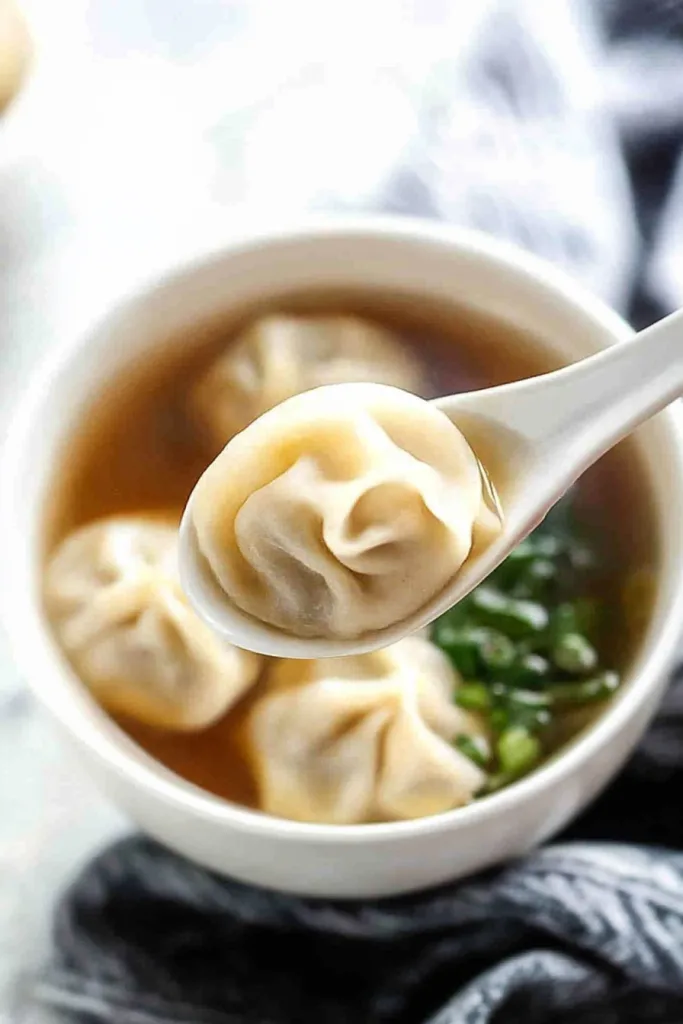
Ingredient Notes
The ingredients for Traditional Chinese Wonton Soup are grouped into a few simple parts: the wonton wrappers, the pork and prawn filling, the broth, and the optional serving extras like greens and egg noodles. It may look like a long list at first, but once you see the pattern, it’s not scary. You’re basically making flavorful little wontons, then serving them in a quick garlic-ginger broth. That’s the whole idea.
- Wonton wrappers: Wonton wrappers are the thin squares used to hold the filling. You’ll need about 50 to 60 wrappers for this recipe. Keep them covered while you work because they dry out quickly. Dry wrappers can crack, and then sealing them becomes a tiny kitchen battle. A clean towel or lid helps keep them soft and flexible.
- Lean pork mince: Lean ground pork gives the filling savory flavor and helps bind everything together. It stays tender when cooked and pairs beautifully with shrimp, ginger, soy sauce, and sesame oil. Pork is a classic choice for Traditional Chinese Wonton Soup because it gives the wontons richness without overwhelming the broth.
- Prawns or shrimp: Peeled prawns or shrimp add sweetness and a slightly springy texture. Roughly chop them instead of turning them into a full paste. Those small pieces give the wonton filling a better bite. I know it seems like a small detail, but texture really matters here.
- Ginger: Fresh ginger brings warmth and brightness to the filling. It also flavors the broth when sliced and simmered with garlic. Ginger is one of those ingredients that makes the soup feel alive, if that makes sense. Without it, the flavor can feel a little flat.
- Shallots or green onions: Finely chopped shallots or green onions add freshness and gentle onion flavor to the filling. If you have leftover white ends, toss them into the broth while it simmers. It’s an easy little way to get more flavor and waste less.
- Light soy sauce: Light soy sauce seasons both the filling and the broth. It adds salty, savory depth without making the soup too dark or heavy. For Chinese wonton soup, light soy sauce is usually the better choice because it keeps the broth balanced.
- Shaoxing wine: Chinese cooking wine, also called Shaoxing wine, adds depth and aroma. It gives the filling and broth that familiar restaurant-style flavor. If you cook Chinese dishes often, it’s worth keeping a bottle around. If not, this recipe might convince you.
- Salt: Salt brings out the flavor of the pork and prawns. Since soy sauce already adds saltiness, you only need a modest amount. Taste and balance matter, especially in the broth.
- Toasted sesame oil: Toasted sesame oil adds rich, nutty aroma to the filling and a small finishing note to the broth. A little goes a long way. Too much sesame oil can take over the whole bowl like an attention-seeking guest, so measure it rather than free-pouring wildly.
- Chicken broth: Chicken broth is the base of the soup. Choose one with good flavor because it carries the whole bowl. A weak broth can make even good wontons feel a little lonely. Homemade broth is lovely, but a good store-bought one works too.
- Garlic: Smashed garlic cloves infuse the broth with gentle savory flavor. They’re removed before serving, so you get the aroma without biting into a big piece of garlic. Practical and polite.
- Sugar: A small amount of sugar balances the soy sauce and Shaoxing wine. It won’t make the soup sweet. It just smooths the edges and helps the broth taste rounded.
- Bok choy or Chinese broccoli: These greens are optional, but they add freshness, color, and a tender-crisp texture. Bok choy gives a gentle sweetness, while Chinese broccoli has a more earthy flavor. Both work beautifully in Traditional Chinese Wonton Soup.
- Dried egg noodles: Egg noodles are optional, but they turn the soup into a more filling wonton noodle soup. Use about 40 to 50 g per person and prepare them according to the packet directions. Noodles make the bowl feel more like a full meal.
- Scallions for serving: Finely chopped scallions add freshness and color at the end. They make the soup look brighter and give each bowl a clean, oniony finish.
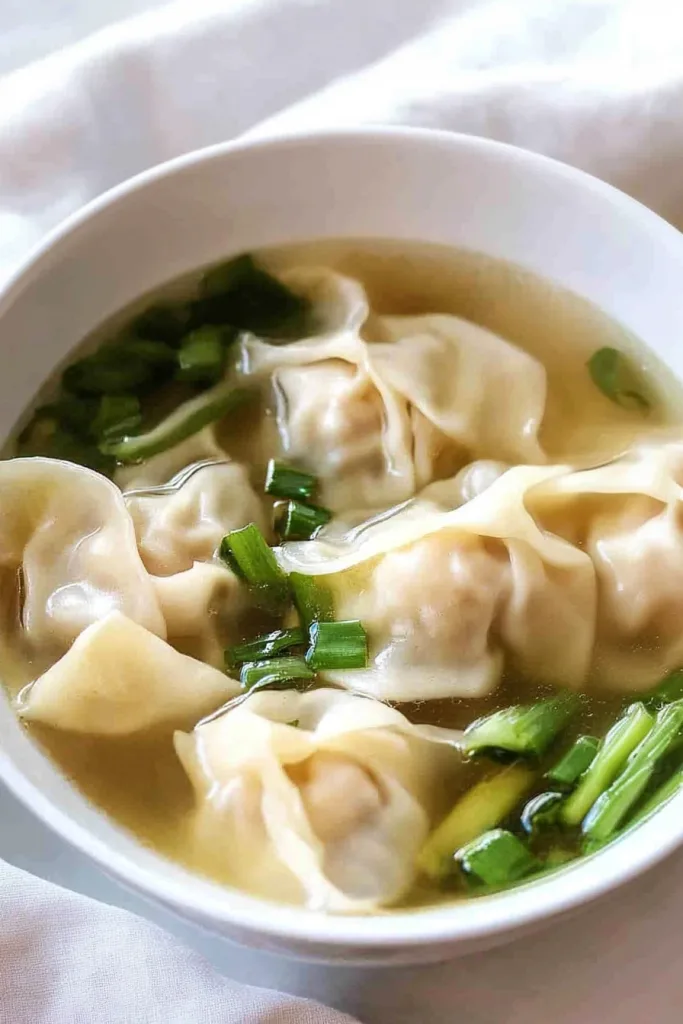
How to Make Traditional Chinese Wonton Soup?
Making Traditional Chinese Wonton Soup has a few steps, but it’s easier than it looks once you get organized. You’ll make the filling, wrap the wontons, cook or freeze them, simmer the broth, prepare any greens or noodles, and then assemble the bowls. It sounds like a lot on paper, but in the kitchen it has a rhythm. Put on music if you want. Or a podcast. Or just enjoy the quiet, if your house allows such luxury.
Step 1: Make the Wonton Filling
Place the pork mince, chopped prawns, grated ginger, green onions, light soy sauce, Shaoxing wine, salt, and toasted sesame oil in a bowl. Use a potato masher to mash the mixture until it becomes fairly smooth, about 20 mashes. You want the pork and shrimp to come together, but don’t turn the prawns into a completely smooth paste. Small chunks are good because they give the wontons texture and a more homemade bite.
Step 2: Set Up the Wonton Wrapping Area
Lay the wonton wrappers on a clean work surface and keep the unused wrappers covered so they don’t dry out. Place a small bowl of water nearby for sealing. If you’re new to wrapping wontons, start with 5 at a time. If you feel confident, work with 15 to 20. No medals are given for wrapping too many at once, and dry wrappers will absolutely humble you.
Step 3: Add the Filling
Use 2 teaspoons to place a small amount of filling in the center of each wrapper. Try not to overfill them. I know it’s tempting to make each wonton extra generous, but too much filling makes them harder to seal and more likely to burst while cooking. A small spoonful is enough. Wontons are delicate little things, even when they’re full of pork and shrimp.
Step 4: Fold and Seal the Wontons
Brush 2 edges of each wrapper lightly with water. Fold the wrapper over the filling and press the edges to seal, gently pushing out any trapped air. Air pockets can make wontons burst in the pot, which is always a tiny heartbreak after you’ve spent time folding them. Press firmly but gently. You’re sealing, not wrestling.
Step 5: Shape the Wontons
Brush a little water on one corner, then bring the corners together and press to seal. This creates the classic wonton shape. Don’t worry if the first few look uneven. Mine did. Most people’s do. Once they’re floating in broth, they’ll look charming and homemade, which is exactly the point.
Step 6: Keep the Wrapped Wontons Covered
Place the wrapped wontons in a container with a lid as you work. This prevents them from drying out while you finish the batch. If the wrappers dry out, they can crack or open during cooking. It’s a simple habit that saves a lot of frustration.
Step 7: Cook the Wontons
Bring a large pot of water to a boil. Add the wontons and cook for about 4 minutes, or until they float and the filling is cooked through. Use a slotted spoon to transfer the cooked wontons directly into serving bowls. Cooking them in water instead of broth keeps the soup broth clearer, since the wrappers release some starch as they cook.
Step 8: Freeze Extra Wontons
To freeze extra wontons, place them uncooked in airtight containers and freeze. Cook them directly from frozen for 6 to 8 minutes. Important note: do not freeze the wontons if you made them with prawns that were already frozen and defrosted. Use fresh prawns if you plan to freeze them. Not the most glamorous rule, but a useful one.
Step 9: Make the Broth
Place the chicken broth, smashed garlic, sliced ginger, light soy sauce, sugar, Shaoxing wine, and sesame oil in a saucepan over high heat. If you have leftover white ends of scallions from the filling, add them too. Cover with a lid and bring the broth to a simmer.
Step 10: Simmer the Broth
Once the broth is simmering, reduce the heat to medium-high and simmer for 5 to 10 minutes. This gives the garlic, ginger, soy sauce, cooking wine, and sesame oil time to flavor the broth. Before serving, remove the garlic and ginger pieces so the broth stays clean and smooth.
Step 11: Blanch the Vegetables
If using bok choy or Chinese broccoli, blanch the greens briefly in the hot broth until just tender. Transfer them to the serving bowls with the cooked wontons. The greens add freshness and color, which makes the soup feel more balanced and complete.
Step 12: Prepare the Noodles
If using dried egg noodles, cook them according to the packet directions. Drain well and place them in the serving bowls with the wontons and vegetables. This turns the soup into a heartier Chinese wonton noodle soup, which is especially nice for dinner.
Step 13: Assemble the Soup
Place the cooked wontons, blanched vegetables, and noodles, if using, in serving bowls. Ladle the hot broth over everything. Finish with chopped scallions and serve immediately. The broth should be fragrant, the wontons tender, and the whole bowl should feel warm, comforting, and made with care.
Storage Options
Traditional Chinese Wonton Soup stores best when you keep the components separate. The broth, wontons, noodles, and vegetables all behave differently once they sit together. Wonton wrappers and noodles love to soak up broth, which means the soup can get soft and a little cloudy if stored fully assembled. Still tasty? Usually yes. Best texture? Not really. Separate storage is the way to go.
- Refrigerating cooked wontons: Store cooked wontons in an airtight container in the refrigerator for up to 2 days. Keep them separate from the broth if possible. Reheat them gently in hot broth or simmering water until warmed through. Don’t boil them aggressively after they’re cooked, or they may become too soft.
- Refrigerating the broth: Store the broth in an airtight container in the refrigerator for up to 3 days. Reheat it in a saucepan until hot, then add the cooked wontons, greens, and noodles just before serving. This keeps the broth clearer and the wontons more delicate.
- Freezing uncooked wontons: Uncooked wontons freeze beautifully and make this homemade wonton soup a great standby meal. Arrange the wontons in airtight containers and cook them straight from frozen for 6 to 8 minutes. No need to thaw them first.
- Important freezing note: Do not freeze wontons if the filling was made with prawns or shrimp that had already been frozen and defrosted. Use fresh prawns if you want to freeze the wontons. It’s a little detail, but it matters for food safety and texture.
- Freezing broth: The broth can be frozen separately for up to 2 months. Let it cool completely before freezing, then store it in freezer-safe containers. Thaw it overnight in the refrigerator and reheat it on the stove.
- Storing noodles: Cooked egg noodles are best eaten fresh, but they can be refrigerated separately for up to 1 day. Toss them with a tiny bit of oil if needed to prevent sticking. Add them to hot broth just before serving.
- Avoid storing assembled soup: Try not to store fully assembled Traditional Chinese Wonton Soup with wontons and noodles sitting in the broth. The wrappers and noodles will absorb liquid and soften. It may still taste comforting, but the texture won’t be as good as freshly assembled soup.
Variations & Substitutions
This Traditional Chinese Wonton Soup is flexible once you understand the basics. You need a flavorful filling, thin wrappers, and a warm broth. From there, you can adjust the protein, greens, noodles, spice level, and broth depending on what you like. I’d try to keep the ginger, light soy sauce, Shaoxing wine, and toasted sesame oil if possible because they give the soup its familiar flavor, but there’s still room to make the recipe fit your kitchen.
- Use all pork: If you don’t have prawns or shrimp, you can make the filling with all ground pork. The wontons will be more savory and less sweet, but still delicious. This is a good option if seafood isn’t your thing or if you’re working with what’s already in the fridge.
- Use all shrimp: For a lighter wonton, use all chopped shrimp instead of pork and shrimp. The filling will be sweeter, more delicate, and a little bouncier. Just avoid turning the shrimp into a completely smooth paste unless you prefer that texture.
- Use ground chicken: Ground chicken can replace pork for a lighter version of Traditional Chinese Wonton Soup. Since chicken is leaner, the filling may be slightly less juicy. A little extra sesame oil or some finely chopped shrimp can help improve the texture.
- Use ground turkey: Ground turkey can work too, especially dark meat turkey. White meat turkey may be a bit dry, so I’d be cautious with that. It’s not impossible, just not my first choice if you want juicy wontons.
- Skip the noodles: For a lighter bowl of Chinese wonton soup, leave out the egg noodles and serve the wontons with broth, scallions, and greens. It still feels satisfying, just cleaner and lighter.
- Add more vegetables: Bok choy and Chinese broccoli are lovely, but napa cabbage, spinach, choy sum, mushrooms, snow peas, or baby corn can also work. Add delicate greens near the end so they stay fresh and tender.
- Use vegetable broth: Chicken broth gives the soup a classic savory base, but vegetable broth can be used if needed. The flavor will be lighter, so you may want to add a little extra ginger, garlic, soy sauce, or scallion ends to build more depth.
- Make it spicy: Add chili oil, white pepper, or chili crisp before serving. This gives the soup a little heat and makes it feel extra cozy. I’m not saying chili oil fixes everything, but in a bowl of wonton soup, it comes pretty close.
- Add mushrooms: Finely chopped shiitake mushrooms can be added to the filling for extra flavor. They bring an earthy note that works beautifully with pork, shrimp, ginger, and soy sauce.
- Use homemade broth: If you have homemade chicken broth, use it. A good broth makes Traditional Chinese Wonton Soup taste even more comforting. Store-bought broth works, though, especially when you’re trying to get dinner on the table without turning it into a whole production.
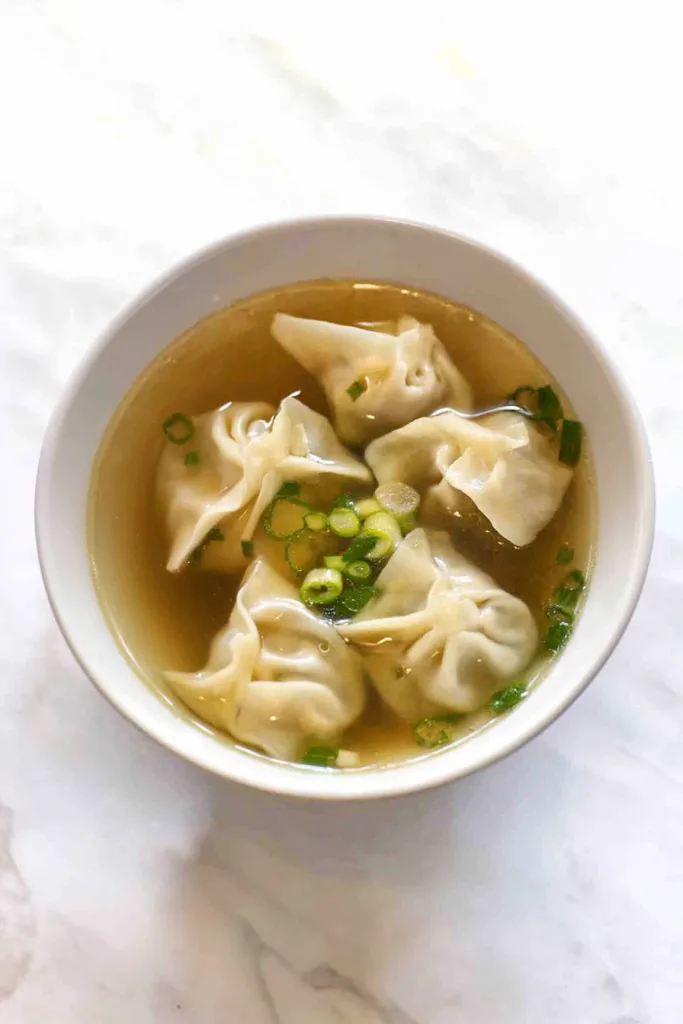
What to Serve With Traditional Chinese Wonton Soup?
Traditional Chinese Wonton Soup can be a starter, a light lunch, or a full dinner depending on how you serve it. If you add noodles and greens, it can easily stand on its own. If you’re making a bigger meal, pair it with simple sides that add crunch, freshness, or a little extra substance without overpowering the soup. The wontons deserve their moment, after all.
- Steamed bok choy: Bok choy is a natural pairing for Traditional Chinese Wonton Soup. It’s tender, fresh, and mild, so it works beautifully with the fragrant broth. You can add it to the bowl or serve extra on the side.
- Chinese broccoli: Chinese broccoli, or gai lan, has a slightly earthy, gently bitter flavor that balances the savory soup. Serve it blanched or lightly stir-fried with garlic for a simple side.
- Spring rolls: Crispy spring rolls add crunch next to the soft wontons and warm broth. That contrast makes the meal more fun. Soft soup plus crispy side? Always a good idea.
- Fried rice: A small bowl of fried rice turns the meal into something more filling. Egg fried rice, vegetable fried rice, chicken fried rice, or shrimp fried rice all pair nicely with Chinese wonton soup.
- Steamed rice: Plain steamed rice is simple and comforting. It’s especially nice if you’re serving wonton soup as part of a homestyle dinner with a few shared dishes.
- Cucumber salad: A cool cucumber salad adds crunch and freshness. It balances the warm broth and savory wontons, especially if you add a little vinegar or sesame flavor.
- Dumplings: Serve this soup with pan-fried or steamed dumplings if you want a dumpling-heavy meal. Is that too many dumplings? I’m not sure I believe in that concept.
- Stir-fried vegetables: Stir-fried vegetables with garlic or ginger add color and texture. Keep the seasoning simple so the soup stays the focus of the meal.
- Chili oil: Chili oil is a great table condiment for anyone who likes heat. Add a small spoonful to the bowl, or let everyone add their own. It gives homemade wonton soup a spicy little kick.
- Hot tea: Jasmine tea, green tea, or oolong tea pairs beautifully with this soup. It keeps the meal warm, balanced, and soothing. Very cozy, very calm, at least until someone asks for seconds.
FAQ
How do I keep wontons from falling apart?
Do not overfill the wrappers, press out trapped air, and seal the edges firmly with water. Also keep the wrapped wontons covered so the wrappers don’t dry out. A good seal matters more than a perfect fold.
Why cook wontons in water instead of broth?
Cooking wontons in water keeps the broth clearer. Wonton wrappers release starch as they cook, and that starch can make the broth cloudy if the wontons are cooked directly in the soup. It’s an extra pot, yes, but it helps the final bowl look and taste cleaner.
Can I use store-bought frozen wontons?
Yes, store-bought frozen wontons can be used if you need a shortcut. Homemade wontons have fresher flavor and better texture, but frozen wontons can still make a quick and comforting Chinese wonton soup.
Can I make the broth stronger?
Yes. Simmer the broth a little longer with garlic, ginger, and scallion ends for deeper flavor. You can also add a splash more soy sauce or a tiny drizzle of sesame oil. Add gradually, though, because soy sauce and sesame oil can take over quickly.
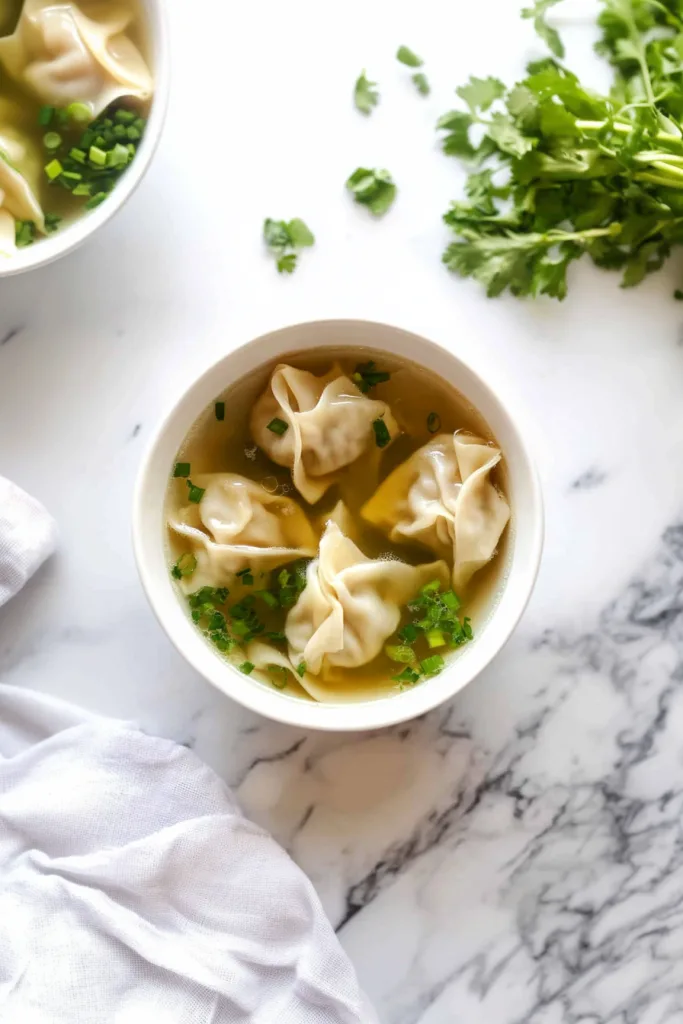
This Traditional Chinese Wonton Soup is warm, fragrant, comforting, and full of homemade flavor. The pork and prawn wontons are tender and savory, the broth is infused with garlic and ginger, and the optional noodles and greens make it as light or hearty as you want. It’s the kind of soup that feels gentle but still satisfying.
Make this homemade Traditional Chinese Wonton Soup when you want something cozy, freezer-friendly, and worth the little bit of hands-on folding. Would you keep yours simple with wontons and broth, or go all in with noodles, bok choy, scallions, and chili oil? Can’t wait to hear what you think!
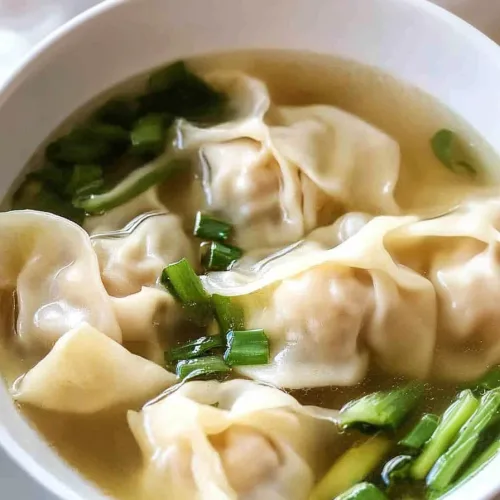
Traditional Chinese Wonton Soup
Ingredients
Wontons
- 50 –60 wonton wrappers
Wonton Filling
- 200 g / 7 oz lean pork mince also known as ground pork
- 200 g / 7 oz peeled prawns or shrimp roughly chopped
- 1 tbsp fresh ginger finely grated
- 2 shallots or green onions finely chopped, about 5 tbsp
- 1 tbsp light soy sauce
- 2 tbsp Chinese cooking wine also known as Shaoxing wine
- 1/2 tsp salt
- 2 tbsp toasted sesame oil
Broth for 2 Servings
- 3 cups / 750 ml chicken broth
- 2 garlic cloves smashed
- 1/3 inch / 1 cm piece fresh ginger sliced
- 1 1/2 tbsp light soy sauce
- 2 tsp sugar
- 1 1/2 tbsp Chinese cooking wine also known as Shaoxing wine
- 1/4 –1/2 tsp sesame oil
To Serve
- Finely chopped shallots or scallions
- Bok choy quartered, optional
- Chinese broccoli cut into 10 cm / 4 inch lengths, optional
- 40 –50 g / 1.5–1.75 oz dried egg noodles per person optional
Instructions
Prepare the Wontons
- Place the lean pork mince, chopped prawns or shrimp, grated ginger, chopped shallots or green onions, light soy sauce, Chinese cooking wine, salt, and toasted sesame oil in a large mixing bowl.
- Use a potato masher to mash the filling mixture until fairly smooth, approximately 20 mashes.
- Do not mash the prawns or shrimp into a complete paste. Small pieces should remain for texture.
- Place the wonton wrappers on a clean work surface.
- Use 2 teaspoons to place a small amount of filling in the center of each wonton wrapper.
- If you are new to wrapping wontons, work in batches of 5 wrappers. If experienced, work in batches of 15–20 wrappers.
- Brush 2 edges of each wrapper lightly with water.
- Fold the wrapper over the filling and press the edges firmly to seal.
- Press out any trapped air while sealing to prevent the wontons from opening during cooking.
- Brush a small amount of water on one corner of the folded wonton.
- Bring the corners together and press firmly to seal.
- Place the wrapped wontons in a covered container as you work to prevent them from drying out.
Cook the Wontons
- Bring a large pot of water to a boil.
- Add the wontons to the boiling water.
- Cook for approximately 4 minutes, or until the wontons float and the filling is fully cooked.
- Remove the cooked wontons with a slotted spoon.
- Transfer the wontons directly into serving bowls.
Freeze Extra Wontons
- To freeze, place uncooked wontons in airtight containers.
- Freeze until ready to use.
- Cook frozen wontons directly from the freezer for 6–8 minutes.
- Do not freeze wontons if the filling was prepared with prawns or shrimp that had previously been frozen and defrosted.
Prepare the Broth
- Place the chicken broth, smashed garlic cloves, sliced ginger, light soy sauce, sugar, Chinese cooking wine, and sesame oil in a saucepan.
- Add any leftover white ends of shallots or scallions, if available.
- Place the saucepan over high heat.
- Cover with a lid and bring the broth to a simmer.
- Reduce the heat to medium-high.
- Simmer for 5–10 minutes to allow the flavors to infuse.
- Remove and discard the garlic, ginger, and scallion ends before serving.
Prepare Vegetables and Noodles
- If using bok choy or Chinese broccoli, blanch the vegetables briefly in the hot broth until just tender.
- Transfer the blanched vegetables to the serving bowls.
- If using dried egg noodles, prepare them according to the package directions.
- Drain the noodles thoroughly.
- Place the cooked noodles in the serving bowls with the wontons and vegetables.
Assemble the Soup
- Ladle the hot broth over the cooked wontons, vegetables, and noodles.
- Garnish with finely chopped shallots or scallions.
- Serve immediately while hot.
Notes