Thai Red Curry Chicken Recipe made with chicken thighs, red curry paste, onion, garlic, ginger, coriander stem, lemongrass, fish sauce, brown sugar, bell pepper, zucchini, coconut milk, stock, lemon juice, and Thai basil.
I have a real weakness for dinners that taste like takeout but still let me stay home in soft pants. This Thai Red Curry Chicken Recipe is exactly that kind of meal. It’s creamy, fragrant, a little spicy, full of vegetables, and somehow it feels special even though it comes together in about 30 minutes. That’s my favorite kind of kitchen magic, honestly. The kind where you didn’t work too hard but dinner still looks like you cared a lot.
The first time I made Thai red curry at home, I remember standing over the skillet wondering if I was doing it “right.” Red curry paste can feel a little mysterious if you haven’t cooked with it much. It sits there looking bold and serious, and then the second it hits the hot oil with onion, garlic, ginger, and coriander stem, everything changes. The smell blooms immediately. Warm, spicy, savory, a little citrusy. It’s the kind of smell that makes someone wander into the kitchen and ask, “Ohhh, what’s that?” Sound familiar?
I think that’s why I love this Thai Red Curry Chicken Recipe so much. It gives you that restaurant-style flavor without turning dinner into a huge project. There’s no complicated technique here, but there are a few small things that matter. Cooking the curry paste for a couple of minutes before adding the coconut milk is one of them. It wakes up the flavor. I know that sounds a little dramatic, but it really does. If you just stir curry paste into liquid, it can taste flat. When you cook it first, the sauce gets deeper and richer. Kind of like how toast is better than plain bread when butter is involved. Same idea, different dinner.
This Thai red curry chicken also has that sweet, salty, creamy, fresh balance that makes Thai-inspired food so satisfying. The coconut milk gives the sauce its silky richness. The fish sauce adds that savory depth that tastes much better than it smells straight from the bottle. The brown sugar rounds out the heat. The lemon juice brightens everything at the end. And the Thai basil? That’s the little fresh finish that makes the whole pan feel alive.
I’ll admit, I’ve made the mistake of adding vegetables too early before. The zucchini got soft. Too soft. Like it had lost all hope. So now I add the bell pepper and zucchini close to the end, just when the chicken is almost cooked and the sauce has reduced a bit. That way, the vegetables stay tender but still have a little crunch. It’s a small thing, but it makes this creamy Thai red curry chicken taste fresher and less heavy.
And then there’s jasmine rice. I don’t want to be bossy, but this curry really does belong with jasmine rice. The rice soaks up the coconut red curry sauce perfectly, and every spoonful feels cozy and satisfying. I’ve eaten it with plain rice too, and it’s still lovely. But jasmine rice has that soft floral aroma that just fits. Like they were meant to sit next to each other in the bowl.
This Thai chicken curry recipe is one of those meals I’d make when I want something comforting but not boring. It’s warm and creamy, but the herbs and lemon juice keep it from feeling too rich. It’s also colorful, which helps on those nights when dinner has been looking a little beige lately. We’ve all been there. Beige dinner season is real.


Why you’ll Love this Thai Red Curry Chicken Recipe?
You’ll love this Thai Red Curry Chicken Recipe because it gives you big flavor without a long cooking time. It’s quick enough for a weeknight, but it still feels like something you’d be happy to serve to friends. The sauce is creamy from full-fat coconut milk, bold from red curry paste, and bright from lemon juice and Thai basil. It tastes layered, but the steps are simple. That’s a very nice combination.
One thing I really like about this easy Thai red curry chicken is how the flavor builds from the start. The onion, garlic, ginger, coriander stem, and red curry paste cook together before anything creamy goes in. That little bit of sizzling time helps the curry paste become more fragrant and less raw-tasting. It’s not a hard step, but it makes the whole dish taste more finished. Almost like you gave the sauce a head start.
The chicken thighs are another reason this recipe works so well. Boneless chicken thighs stay tender in the sauce and don’t dry out as easily as chicken breast. I’m not against chicken breast, but in a curry like this, thighs feel a little more forgiving. And honestly, I appreciate forgiving ingredients on a busy night. Not every dinner needs to test my patience.
The vegetables add color and texture, which makes this Thai red curry with chicken and vegetables feel balanced. Red bell pepper adds sweetness and brightness, while zucchini softens just enough to soak up some sauce. Adding them near the end keeps them from turning mushy. That little crunch is nice, especially with the creamy coconut sauce.
The sauce is probably the best part. Full-fat coconut milk makes it rich and silky. Fish sauce gives it depth. Brown sugar adds balance. Lemongrass gives it that fresh, citrusy perfume. Thai basil adds a final herbal note that feels almost fancy, even if you’re eating it while standing in the kitchen with your bowl. No judgment. I’ve done it.
This Thai Red Curry Chicken Recipe also feels flexible. You can make it spicier, milder, heavier on vegetables, or more saucy if that’s your thing. I usually lean toward extra sauce because rice deserves a good life. Do you agree?
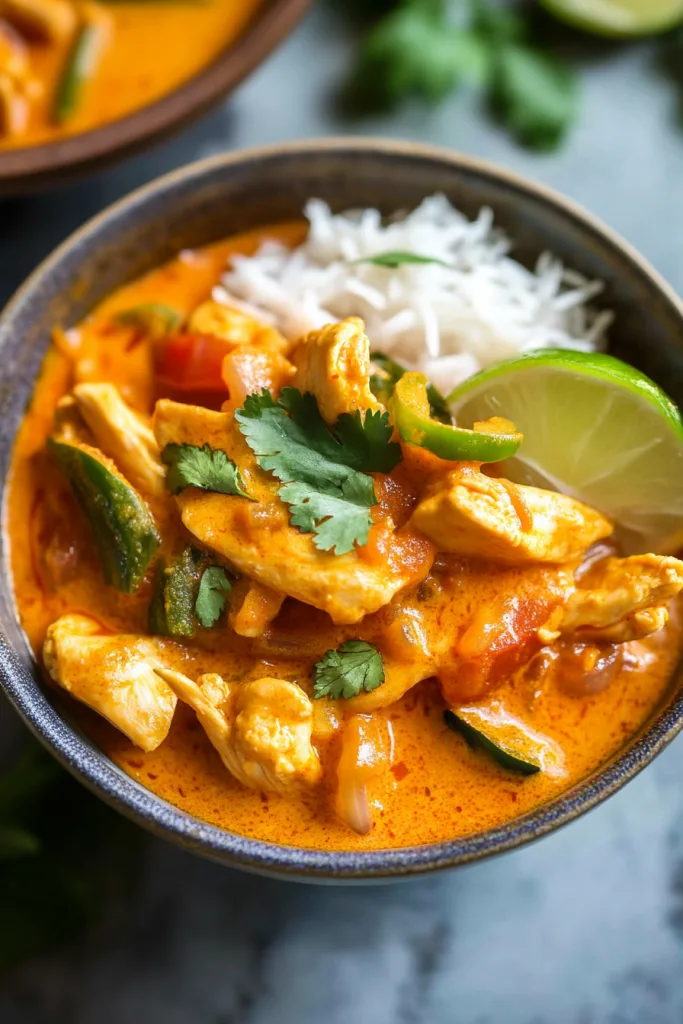
Ingredient Notes
The ingredients in this Thai Red Curry Chicken Recipe are all about balance. Thai-style curry usually hits several notes at once: creamy, salty, sweet, spicy, bright, and fresh. That sounds like a lot, but the ingredients do most of the work for you. Once they’re in the pan together, they make sense.
- Boneless chicken thighs: Chicken thighs are a great choice because they stay juicy and tender while simmering in the curry sauce. Since they’re cut into thin strips, they cook quickly and absorb flavor well. You can use chicken breast, but I’d watch it closely because it can dry out faster.
- Oil: Oil helps cook the onion, garlic, ginger, and curry paste. It also helps the red curry paste release its flavor. A neutral oil is best so the curry flavors can shine.
- Red curry paste: Red curry paste is the main flavor base of this Thai Red Curry Chicken Recipe. Different brands vary in heat and saltiness, so you may need to adjust a little. Cooking it for a few minutes before adding coconut milk makes the sauce taste deeper and more aromatic.
- Onion: Onion adds sweetness and body to the curry. It softens quickly and helps create a flavorful base.
- Garlic: Garlic brings savory flavor and makes the curry smell amazing from the beginning. It works so well with ginger and curry paste.
- Ginger: Ginger adds warmth and freshness. It helps keep the coconut sauce from feeling too heavy.
- Coriander stem: Coriander stems are full of flavor and bring a bright, citrusy note to the curry base. If you usually toss the stems, this is your little reminder not to. They’re useful.
- Lemongrass: Lemongrass gives the sauce a fresh lemony fragrance. The stalk simmers in the curry and is removed before serving. It’s there for flavor, not chewing. Please don’t chew the lemongrass unless you enjoy regret.
- Fish sauce: Fish sauce adds salty, savory depth. It smells strong on its own, yes, but in the curry it blends beautifully. It’s one of those ingredients that makes everything taste fuller.
- Light brown sugar: Brown sugar balances the heat and saltiness. It doesn’t make the curry sweet like dessert. It just rounds the edges.
- Red bell pepper: Red bell pepper adds color, crunch, and mild sweetness. It makes the curry look bright and inviting.
- Zucchini: Zucchini cooks quickly and soaks up the sauce nicely. Add it near the end so it stays tender-crisp instead of mushy.
- Full-fat coconut milk: Full-fat coconut milk gives this creamy Thai red curry chicken its rich texture. It also softens the heat from the curry paste.
- Stock or water: Stock adds a little more flavor, while water keeps the sauce lighter. Either one works, so use what you have.
- Lemon juice: Lemon juice brightens the curry at the end. Lime juice works too, and it’s actually a lovely swap if you have it.
- Thai basil: Thai basil has a fresh, slightly peppery flavor. Add it at the end so it keeps its aroma and doesn’t disappear into the sauce.
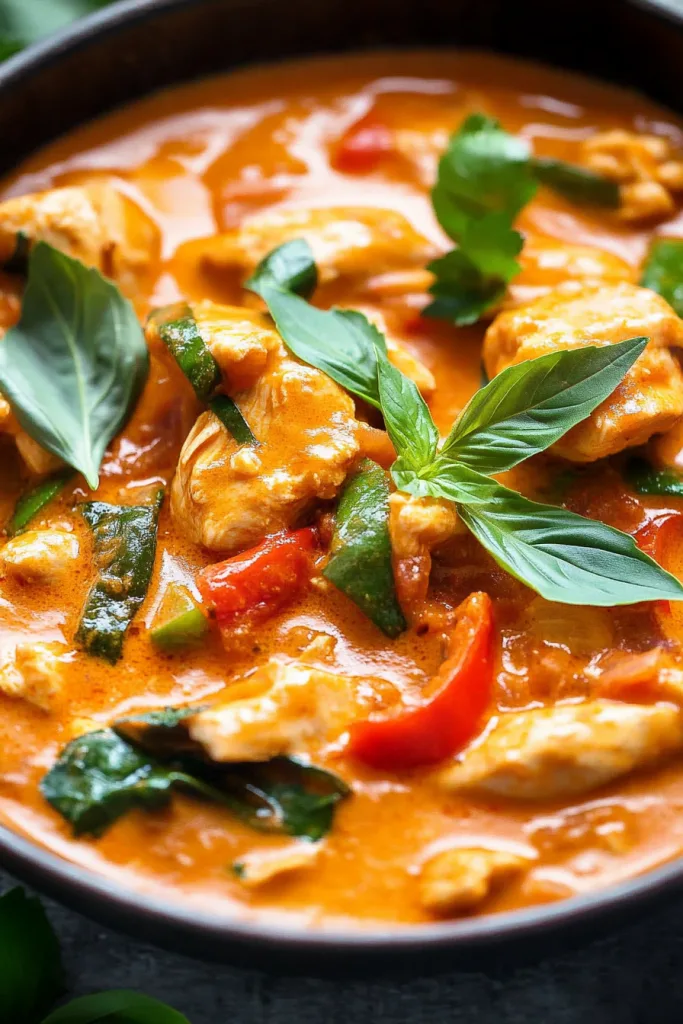
How to Make Thai Red Curry Chicken Recipe?
Making this Thai Red Curry Chicken Recipe is easy once you follow the right order. You build the curry base first, then add the coconut milk and seasonings, then simmer the chicken, then add the vegetables near the end. It’s not hard. It just needs a little attention so the sauce tastes rich and the vegetables don’t overcook.
Step 1: Heat the oil.
Start by heating the oil in a skillet over medium heat. You want it hot enough to cook the onion, garlic, and ginger, but not smoking. If the oil is too hot, the garlic can burn quickly, and burned garlic has a way of making everything taste a little grumpy.
Step 2: Sauté the onion, garlic, and ginger.
Add the sliced onion, minced garlic, and minced ginger. Cook for about 1 minute, just until everything smells fragrant. The onion should begin to soften, but it doesn’t need to brown deeply. This is just the beginning of the flavor base.
Step 3: Add the red curry paste and coriander stem.
Stir in the red curry paste and minced coriander stem. Cook for 2 to 3 minutes, stirring often, until the paste smells rich and the oil starts to appear slightly around the sides. This step is important because it helps the curry paste develop deeper flavor.
Step 4: Add the coconut milk and stock.
Pour in the full-fat coconut milk and stock or water. Stir well until the curry paste blends into the liquid and the sauce becomes smooth and creamy. The color should turn a beautiful reddish-orange, which is always a good sign.
Step 5: Add the seasonings and lemongrass.
Add the fish sauce, brown sugar, and lemongrass stalk. Stir everything together and bring the sauce to a gentle boil. Then reduce the heat and let it simmer for 2 to 3 minutes. This gives the lemongrass time to release its fresh flavor.
Step 6: Add the chicken.
Add the thinly sliced chicken thighs to the sauce. Stir to coat the chicken, then let it simmer for 7 to 8 minutes. The chicken should cook gently in the sauce and stay tender. Try not to boil it aggressively; gentle simmering is better.
Step 7: Add the vegetables.
When the chicken is nearly cooked and the sauce has reduced to the consistency you like, add the red bell pepper and zucchini. Stir gently so the vegetables are coated in the sauce.
Step 8: Cook until tender-crisp.
Cook for about 2 more minutes, just until the vegetables are cooked but still have a little crunch. This keeps the curry fresh and colorful. Zucchini especially cooks fast, so don’t wander too far.
Step 9: Remove the lemongrass.
Take out the lemongrass stalk before serving. It has done its job by flavoring the sauce, and now it can retire peacefully.
Step 10: Add Thai basil.
Stir in the roughly torn Thai basil leaves. Add them at the end so they stay fresh and fragrant. This little finishing step makes the curry taste brighter.
Step 11: Finish and serve.
Add the lemon juice to brighten the sauce. Serve the curry hot over jasmine rice, and garnish with extra Thai basil or fresh coriander leaves if you like. A little extra herb on top makes it feel fresh and pretty.
Storage Options
This Thai Red Curry Chicken Recipe makes lovely leftovers, which is always a bonus. The sauce may thicken a little in the fridge, but that’s easy to fix with a splash of stock, water, or coconut milk. Curry leftovers are one of those things that can make lunch feel much more exciting than it had any right to be.
Let the curry cool completely before storing it. Transfer it to an airtight container and refrigerate for up to 4 days. If you’re serving it with jasmine rice, store the rice separately. Rice will soak up the sauce if it sits in the same container, and while that’s not the worst thing in the world, it can make leftovers a little dry.
To reheat on the stovetop, place the curry in a saucepan over medium-low heat. Stir gently and add a splash of liquid if the sauce has thickened too much. Warm it until the chicken is heated through, but try not to boil it hard. Chicken thighs are forgiving, but even they have limits.
For microwave reheating, use a microwave-safe bowl and cover it loosely. Heat in short intervals, stirring between each one. Add a little liquid if needed. It may not be quite as perfect as fresh from the skillet, but it still makes a very good meal.
You can freeze this Thai red curry chicken, though I’ll be honest, zucchini gets softer after freezing. If texture matters a lot to you, freeze the curry without the zucchini or add fresh vegetables when reheating. The sauce and chicken freeze well for up to 2 months.
To reheat from frozen, thaw the curry overnight in the refrigerator first. Warm it gently and stir well. If the coconut milk looks slightly separated at first, don’t panic. It usually comes back together with gentle heat and stirring.
Variations & Substitutions
This Thai Red Curry Chicken Recipe is flexible, which is one of the reasons I like keeping red curry paste around. Once you have the sauce base, you can change the protein, adjust the vegetables, or play with the spice level. Keep the coconut milk, curry paste, fish sauce, and Thai basil if you can, because those are the flavor anchors.
- Use chicken breast: Chicken breast works if that’s what you have. Slice it thinly and cook it just until done. It can dry out more easily than thighs, so keep an eye on it.
- Use shrimp: Shrimp is wonderful in Thai red curry. Add it near the end because it cooks very quickly. Overcooked shrimp gets rubbery, and nobody wants that.
- Use tofu: Firm tofu makes a good meat-free version. I like to pan-fry it first so it has better texture, then add it to the curry sauce.
- Change the vegetables: Green beans, broccoli, carrots, mushrooms, snap peas, baby corn, or eggplant can work well. Add firmer vegetables earlier and softer ones closer to the end.
- Make it spicier: Add extra red curry paste or sliced Thai chilies if you like more heat. Start small, though, because curry paste can vary a lot by brand.
- Make it milder: Use less curry paste or add more coconut milk. This makes the sauce creamier and less spicy. It’s a good option if you’re cooking for kids or spice-sensitive friends.
- Use lime juice instead of lemon juice: Lime juice works beautifully in this Thai chicken curry recipe and gives it a more classic bright finish.
- Use vegetable stock: Vegetable stock works well if you’re making a tofu version or want to keep the sauce lighter.
- Add more herbs: Fresh coriander leaves, extra Thai basil, or even a few mint leaves can make the curry taste fresher and brighter.
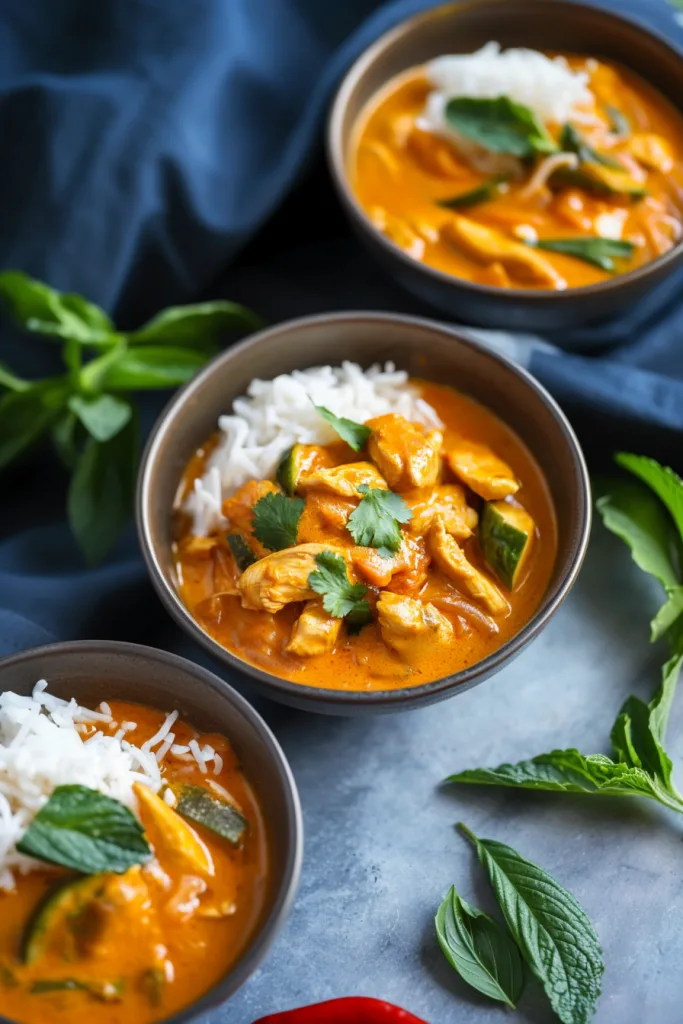
What to Serve With Thai Red Curry Chicken Recipe?
This Thai Red Curry Chicken Recipe is saucy and full of flavor, so you want sides that soak up the sauce or balance the richness. I usually keep the sides simple because the curry already has a lot going on. No need to make dinner compete with itself.
- Jasmine rice: Jasmine rice is my favorite pairing. It’s fragrant, fluffy, and perfect for soaking up the coconut red curry sauce.
- Steamed rice: Plain steamed rice works well too. It’s simple, easy, and lets the curry be the main event.
- Coconut rice: Coconut rice adds extra richness and mild sweetness. If you love creamy flavors, this is a beautiful pairing.
- Rice noodles: Rice noodles turn the curry into a cozy noodle bowl. Just spoon the curry over cooked noodles and add herbs on top.
- Cauliflower rice: Cauliflower rice is a lighter option that still works with the creamy sauce. It won’t soak up sauce quite the same way, but it’s still good.
- Thai cucumber salad: A crisp cucumber salad adds cool freshness and balances the coconut milk. It’s especially nice if the curry is spicy.
- Spring rolls: Fresh or crispy spring rolls make a fun side dish. They’re also great if you’re serving this curry for guests.
- Steamed vegetables: Broccoli, green beans, bok choy, or snow peas add more vegetables without distracting from the curry.
- Fresh herbs and lime wedges: Extra Thai basil, coriander, and lime wedges make each bowl taste brighter right before serving.
FAQ
Is Thai Red Curry Chicken Recipe spicy?
It depends on your red curry paste. Some brands are mild, and some are fiery enough to make you rethink your choices. Use less paste for a milder curry or add more coconut milk to soften the heat.
Is this curry dairy free?
Yes, this curry is naturally dairy free as long as your curry paste and stock are dairy free. Coconut milk gives the sauce its creamy texture.
Why is my curry sauce too thin?
It may need to simmer longer. Let it cook uncovered for a few extra minutes so the sauce reduces. Full-fat coconut milk also helps make the sauce thicker and richer.
Why did my vegetables get mushy?
They probably cooked too long. Add zucchini and bell pepper near the end so they stay tender-crisp.
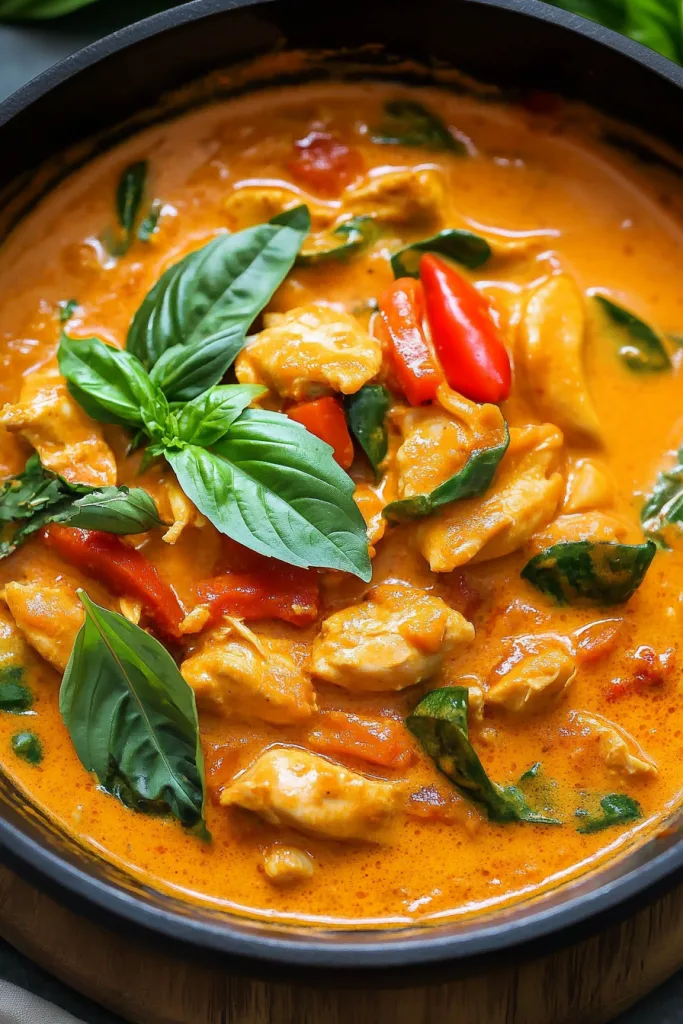
This Thai Red Curry Chicken Recipe is creamy, colorful, comforting, and bright all at once. It has tender chicken thighs, red curry paste, coconut milk, lemongrass, Thai basil, bell pepper, and zucchini in a sauce that tastes like it took much longer than it did. That’s always a win in my kitchen.
Make this Thai Red Curry Chicken Recipe when you want dinner to feel cozy but still fresh, quick but not boring, and saucy enough to make jasmine rice very necessary. Can’t wait to hear what you think — are you serving it with rice, noodles, or extra basil on top?
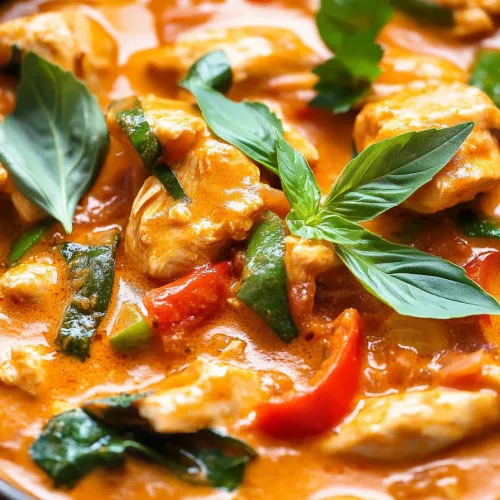
Thai Red Curry Chicken Recipe
Ingredients
- 500 g boneless chicken thighs cut into thin strips
- 2 tbsp oil
- 4 tbsp red curry paste
- 1/2 onion sliced
- 1/2 tbsp garlic minced
- 1 tsp ginger minced
- 1/2 tbsp coriander stem minced
- 1 stalk lemongrass
- 2 tsp fish sauce
- 1/2 tbsp light brown sugar
- 1 red bell pepper cut into wedges
- 1 c zucchini cut into pieces
- 1 1/2 c full-fat coconut milk
- 1/2 c stock or water
- 2 tsp lemon juice
- 8 to 10 Thai basil leaves roughly torn
- Fresh coriander leaves optional, for garnish
- Additional Thai basil optional, for garnish
Instructions
Heat the oil.
- Heat the oil in a skillet over medium heat.
Sauté the aromatics.
- Add the sliced onion, minced garlic, and minced ginger. Sauté for approximately 1 minute, or until fragrant.
Cook the curry paste.
- Add the red curry paste and minced coriander stem. Sauté for 2 to 3 minutes, stirring frequently, until the mixture becomes aromatic and the oil begins to separate slightly at the sides.
Add the coconut milk and liquid.
- Pour in the coconut milk and stock or water. Stir until the curry paste is fully incorporated into the liquid.
Season the sauce.
- Add the fish sauce, light brown sugar, and lemongrass stalk. Stir well and bring the mixture to a gentle boil.
Simmer the curry base.
- Reduce the heat and simmer for 2 to 3 minutes to allow the flavors to develop.
Add the chicken.
- Add the thinly sliced chicken thighs to the sauce. Stir to coat the chicken evenly.
Cook the chicken.
- Simmer for 7 to 8 minutes, or until the chicken is almost fully cooked.
Add the vegetables.
- Add the red bell pepper and zucchini when the chicken is nearly cooked and the sauce has reduced to the desired consistency.
Cook the vegetables.
- Continue cooking for approximately 2 minutes, or until the vegetables are just tender but still slightly crisp.
Remove the lemongrass.
- Remove and discard the lemongrass stalk before serving.
Add the Thai basil.
- Stir in the torn Thai basil leaves.
Finish the curry.
- Add the lemon juice and stir gently to combine.
Serve.
- Serve the Thai red curry chicken hot over jasmine rice. Garnish with additional Thai basil and fresh coriander leaves, if desired.
Notes