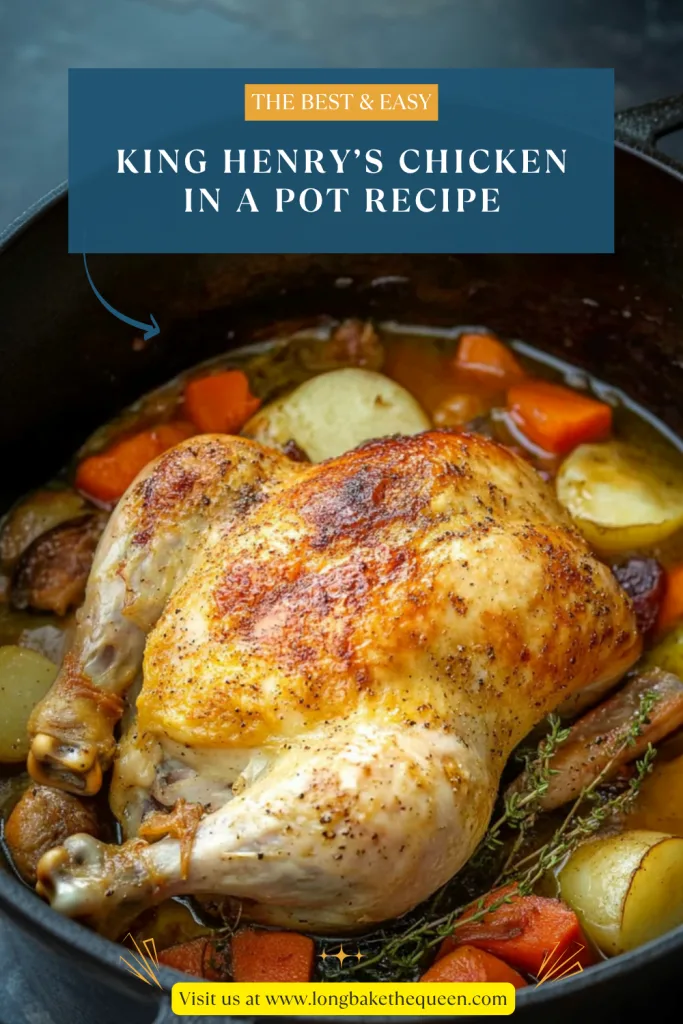
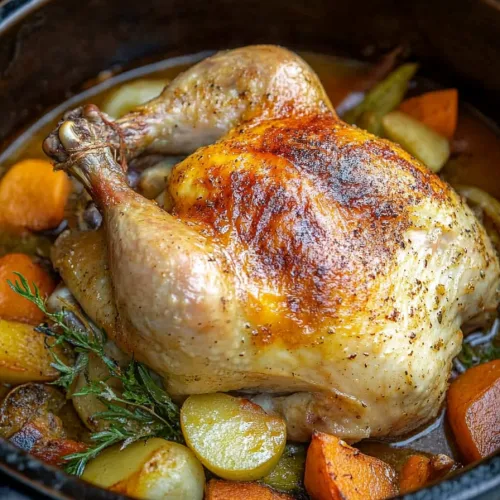
Whole chicken, chicken broth, white wine, leeks, celery, carrots, garlic, pearl onions, herbs, butter, and potatoes make a cozy roast chicken dinner.
There’s something about a whole chicken roasting in a pot that feels a little old-world, isn’t there? Like you should be wearing an apron, humming in the kitchen, and pretending your counter isn’t covered in carrot peels. This King Henry’s Chicken in a Pot Recipe has that kind of charm. It’s simple, rustic, and comforting, but it still feels like something you’d proudly bring to the table. Not flashy. Not modern and fussy. Just a good chicken dinner with broth, wine, vegetables, herbs, and potatoes doing exactly what they’re supposed to do.
The first time I made a chicken in a pot like this, I remember thinking it sounded almost too plain. A whole chicken, some broth, a splash of white wine, leeks, celery, carrots, garlic, pearl onions, thyme, tarragon… and that’s dinner? But then the oven did its thing. The kitchen started smelling warm and savory, the kind of smell that makes people wander in and ask, “How much longer?” even though they can clearly see you’re busy. The chicken came out tender, the vegetables softened into all that broth and wine, and the potatoes were just sitting there waiting to be covered in sauce. Honestly, it felt like the kind of meal that has been making families happy for a very long time.
What I love most about this King Henry’s Chicken in a Pot Recipe is that it doesn’t try too hard. Some dinners feel like they’re trying to impress you with a long ingredient list and three different sauces. This one? It’s calmer than that. It’s a whole chicken cooked with honest ingredients until everything tastes rich, herby, and comforting. It reminds me of Sunday dinners, old cookbooks with splattered pages, and those meals where everyone gets quiet for the first few bites because the food is just doing its job. Sound familiar? That’s the kind of comfort I’m talking about.

Why you’ll Love this King Henry’s Chicken in a Pot Recipe?
The biggest thing that makes this King Henry’s Chicken in a Pot Recipe special is the way the chicken cooks in broth and wine. Instead of sitting dry on a roasting tray, the chicken starts in a covered pot with liquid underneath, which helps keep the meat moist while building a beautiful savory sauce. The butter rubbed over the skin adds richness, the wine adds a little brightness, and the chicken broth keeps everything grounded and comforting. Then, when it’s time to serve, you spoon that warm pot liquid over the chicken, vegetables, and potatoes. And really, that sauce is where so much of the magic lives.
Another reason I love this chicken in a pot recipe is that the vegetables aren’t just filler. Leeks, celery, carrots, garlic, and pearl onions roast around the chicken and soak up all those savory juices. They become tender, sweet, and flavorful, almost like they’ve been gently braising while the chicken finishes roasting. I always feel like vegetables are at their best when they’ve been given something good to absorb. Here, they get broth, wine, herbs, garlic, butter, and chicken drippings. That’s a pretty nice little situation for a carrot, if you ask me.
This King Henry’s Chicken in a Pot Recipe also has that classic “bring the whole thing to the table” feeling. You can carve the chicken and plate everything neatly, or you can serve the bird whole on a platter surrounded by vegetables and potatoes with the sauce on the side. Either way, it feels generous. It’s the kind of dinner that works for a cozy family meal, a Sunday supper, or even a small gathering when you want something comforting but not overly complicated. It looks impressive, but it doesn’t ask you to hover over the stove all day. And honestly, I appreciate any recipe that lets the oven do the heavy lifting.
Ingredient Notes
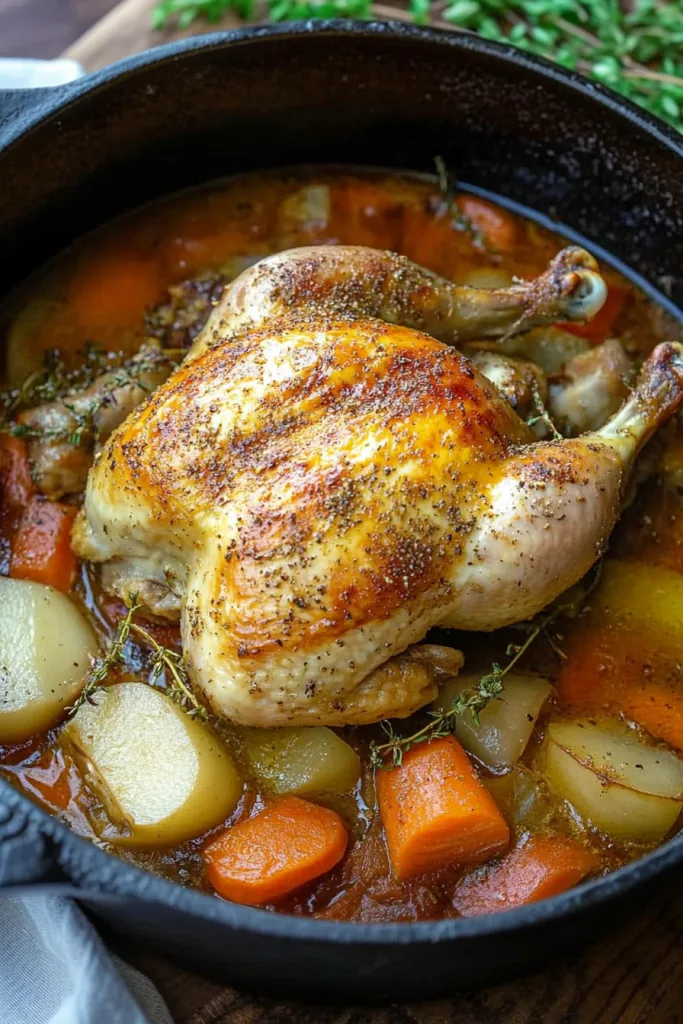
Before you start, let’s walk through the ingredients. This King Henry’s Chicken in a Pot Recipe is made with simple, classic things: chicken, broth, wine, vegetables, herbs, butter, and potatoes. Nothing strange. Nothing you have to search for in a specialty aisle while questioning your life choices. But when these ingredients cook together, they create that deep, cozy flavor that makes the whole meal feel a little more special than the ingredient list suggests.
- Whole chicken: A 3-pound whole chicken is the star of this recipe, and it gives you both white and dark meat, which is nice if your table has opinions. Mine always does. Make sure the giblets are removed before cooking. The whole bird roasts gently in the pot, and the bones help flavor the broth and wine mixture underneath. I like using a whole chicken here because it feels traditional and comforting, like the kind of dinner someone’s grandmother would nod at approvingly.
- Chicken broth: Chicken broth forms the base of the sauce. It keeps the chicken moist while it cooks and becomes the liquid you spoon over the finished meal. Since the broth plays such a big role, use one that tastes good. Low-sodium broth is helpful if you want more control over the salt, especially because you’ll also season the chicken and vegetables.
- White wine: White wine adds brightness and depth to the pot. It keeps the sauce from feeling too heavy and gives the chicken a slightly more layered flavor. You don’t need anything fancy, just a dry white wine you’d be okay drinking. If you prefer not to cook with wine, extra chicken broth works too. The flavor will be softer, but still very good.
- Butter: Butter is rubbed over the chicken before roasting, and it adds richness while helping the skin brown. Room temperature butter spreads more easily, so don’t skip that little detail if you can help it. Butter has a way of making simple food feel a little luxurious, even when the rest of the recipe is wonderfully humble.
- Salt and pepper: Salt and pepper keep the seasoning classic. This dish gets flavor from broth, wine, vegetables, garlic, and herbs, so you don’t need a big spice blend. Still, season the chicken well. A roast chicken that isn’t seasoned enough can taste a little sleepy, and nobody came here for sleepy chicken.
- Leeks: Leeks add a soft, mild onion flavor. Use the white and light-green parts only, and rinse them well because leeks are sneaky little dirt collectors. Once they cook, they become tender and almost silky. They give this King Henry’s Chicken in a Pot Recipe a gentle sweetness that feels a bit more elegant than regular onion.
- Celery: Celery adds savory flavor and helps build that classic roast-dinner base. It’s not the loudest ingredient in the pot, but it matters. Cut it into 2-inch pieces so it holds up during cooking instead of disappearing completely. Celery is the quiet helper here, and I respect that.
- Carrots: Carrots bring sweetness, color, and heartiness. As they roast with the chicken and pot liquid, they soak up the broth, wine, garlic, and herbs. They turn tender and flavorful, and they make the plate look warm and inviting. Simple, yes, but very necessary.
- Garlic cloves: Whole garlic cloves mellow as they cook. They become soft and sweet instead of sharp. They flavor the broth and vegetables without taking over the dish. And if one ends up on your plate, please mash it into a potato or spread it onto a piece of bread. Trust me, it’s a tiny reward.
- Pearl onions: Pearl onions add sweetness and that lovely rustic look. They soften as they roast and pair beautifully with the leeks, carrots, and chicken. They make the pot feel a little more special, like this dinner has somewhere nice to be, even if you’re eating in slippers.
- Olive oil: Olive oil coats the vegetables before they go into the pot. It helps the salt and pepper cling and keeps the vegetables from drying out as they roast. You don’t need much, just enough to lightly dress everything.
- Fresh tarragon: Tarragon adds a delicate herbal note, slightly sweet and a little different from the usual roast chicken herbs. It gives this King Henry’s Chicken in a Pot Recipe a subtle, almost old-fashioned flavor. One sprig is enough because tarragon can get bossy if you use too much.
- Fresh thyme: Thyme is classic with roast chicken. It’s earthy, cozy, and smells like proper dinner. It works so well with the broth, wine, garlic, and vegetables. If tarragon is the interesting guest, thyme is the dependable friend who always shows up with something useful.
- New or fingerling potatoes: The potatoes are cooked separately until fork tender, then served alongside the chicken and vegetables. New or fingerling potatoes are creamy and hold their shape well. Once that savory pot liquid gets poured over them, they become one of the best parts of the meal. I know the chicken is the star, but the potatoes are definitely trying to steal the scene.
How to Make King Henry’s Chicken in a Pot Recipe?
This King Henry’s Chicken in a Pot Recipe sounds grand, but it’s actually very doable. You roast the chicken first with broth and wine, then add the vegetables and herbs so they cook until tender without turning to mush. The potatoes are cooked separately, which keeps the pot from getting too crowded. At the end, everything comes together with that savory sauce from the bottom of the pot. It’s classic, cozy, and honestly not as fussy as the name might make it sound.
Step 1: Preheat the Oven and Prepare the Pot
Start by preheating your oven to 450°F. In a large Dutch oven or deep oven-safe pot, combine the chicken broth and white wine. This liquid sits under the chicken while it roasts, keeping the meat moist and creating the sauce you’ll spoon over everything later. It may look simple at first, but once the chicken, herbs, and vegetables start cooking, that liquid becomes full of flavor.
A Dutch oven is ideal here because it holds heat well and gives everything room to cook. If you don’t have one, use a deep oven-safe pot. Just make sure it’s big enough for the chicken, vegetables, and liquid. If the pot is too small, you’ll end up with vegetables stacked too high and broth threatening to bubble over. And cleaning the oven after a broth spill? No thank you. Not today.
Step 2: Butter and Season the Chicken
Pat the chicken dry if needed, then rub the softened butter over the skin. Season generously with salt and pepper. Tie the legs together with kitchen string, then place the chicken into the pot with the broth and wine. It already starts looking like something special at this point, even before the oven does its work.
The butter helps the skin brown and adds richness, while the salt and pepper season the chicken simply. Tying the legs helps the bird cook evenly and keeps it looking neat. Is it absolutely glamorous? Not really. But it does make the finished chicken look a little more put together, which is nice when you bring it to the table.
Step 3: Roast the Chicken Covered
Cover the pot and bake the chicken for 30 minutes. This covered roasting time traps moisture inside the pot and gives the chicken a gentle, flavorful start. The broth and wine heat up underneath, the butter begins melting over the chicken, and the whole thing starts building that cozy roast-chicken flavor.
This step is one of the reasons I like this chicken in a pot method. It’s more forgiving than roasting a chicken dry from start to finish. The covered pot helps protect the meat from drying out too quickly. If you’ve ever roasted a chicken and worried the breast meat would turn dry before the rest was done, sound familiar? This method helps with that.
Step 4: Prepare the Vegetables
While the chicken begins roasting, add the leeks, celery, carrots, garlic cloves, pearl onions, and olive oil to a large bowl. Sprinkle with salt and pepper, then toss everything together until the vegetables are lightly coated. They don’t need to be swimming in oil. Just a nice light coating is enough.
This vegetable mix is what turns the recipe into a full dinner. The leeks and onions bring sweetness, the carrots add color, the celery brings savory depth, and the garlic quietly flavors everything. Tossing them before adding them to the pot helps them roast better and keeps the seasoning spread evenly. Little step, big payoff.
Step 5: Add the Vegetables and Herbs
After the chicken has roasted covered for 30 minutes, carefully remove the pot from the oven. Add the prepared vegetables around the chicken, then add the fresh tarragon and thyme. Return the pot to the oven, this time uncovered, so the chicken can brown and the vegetables can soften in all that broth and wine.
Adding the vegetables after the first roast keeps them from overcooking too early. They’ll still get plenty of time to become tender, but they won’t completely fall apart. The herbs perfume the whole pot, and this is usually the moment when the kitchen starts smelling like you really know what you’re doing. Even if you were winging it ten minutes ago. We’ve all been there.
Step 6: Roast Until the Chicken Is Done
Bake uncovered for another 35 to 45 minutes, or until the chicken reaches an internal temperature of 165°F. Use a meat thermometer and check the thickest part of the breast or thigh without touching the bone. The vegetables should be tender, and the chicken should look beautifully roasted.
If the chicken starts browning too quickly, loosely cover it with foil. Ovens can be moody, and chickens don’t all behave exactly the same. That’s okay. The goal is tender meat, cooked vegetables, and a flavorful sauce at the bottom of the pot. Don’t rush it. Roast chicken is one of those meals that rewards a little patience.
Step 7: Cook the Potatoes
While the chicken finishes cooking, steam or boil the halved new or fingerling potatoes until fork tender. Season them with salt and pepper. Keeping the potatoes separate gives you better control over their texture and keeps the pot from becoming overcrowded.
Once the potatoes are cooked, they’re ready to serve with the chicken and vegetables. They may seem plain at first, but once you spoon the broth-wine sauce over them, they become something else entirely. The potatoes soak up that savory liquid beautifully. Honestly, I could make a meal out of the potatoes and sauce alone, but I’ll behave.
Step 8: Rest, Carve, and Serve
Remove the chicken from the pot and let it rest for a few minutes before carving. This helps the juices settle so the meat stays tender. Carve the chicken into pieces and serve it with the roasted vegetables and potatoes. Spoon the liquid from the pot over each serving, and please don’t be shy with it.
You can also serve the chicken whole on a platter, surrounded by the vegetables and potatoes, with the remaining sauce on the side. That version looks beautiful and old-fashioned in the best way. Either way, the sauce is important. It’s full of chicken flavor, wine, broth, garlic, herbs, and everything good that happened in the pot. Don’t let it go to waste.
Storage Options
If you have leftovers from this King Henry’s Chicken in a Pot Recipe, let the chicken, vegetables, potatoes, and sauce cool completely before storing. Place everything in airtight containers and refrigerate for up to 3 to 4 days. I like storing the chicken with a little of the cooking liquid because it helps keep the meat moist, especially when reheating. Dry leftover chicken is a small sadness we can avoid.
To reheat, warm the chicken and vegetables gently in a covered skillet or baking dish with some of the pot liquid. You can also microwave individual portions in short intervals, but go easy. Chicken breast especially can dry out if reheated too aggressively. Gentle heat is better. Think cozy warm-up, not blast furnace.
You can freeze the cooked chicken and sauce for up to 2 months, though the vegetables and potatoes may soften after thawing. If possible, freeze the chicken separately from the vegetables and potatoes. Leftovers can also become soup, chicken pot pie filling, sandwiches, chicken salad, or a simple chicken-and-potato hash. Honestly, the leftovers might be one of the quiet perks of making a whole chicken in the first place.
Variations & Substitutions
One thing I really like about this King Henry’s Chicken in a Pot Recipe is that it feels traditional, but it still gives you room to adjust. You can skip the wine, change the herbs, swap vegetables, or use chicken pieces instead of a whole chicken. The heart of the dish is simple: chicken, broth, aromatics, herbs, vegetables, and a little oven time. Once you understand that, you can make it fit your kitchen without losing the cozy charm.
- Skip the wine: If you don’t cook with wine, replace it with more chicken broth. The sauce will be a little less bright, but still savory and comforting. You can add a squeeze of lemon near the end if you want a little freshness. It won’t be exactly the same, but it will still be a lovely chicken in a pot recipe.
- Use different herbs: Tarragon and thyme are wonderful here, but rosemary, sage, parsley, or bay leaf can also work. Rosemary gives a stronger, woodsy flavor, while sage makes the dish feel even more old-fashioned. Just don’t overdo the stronger herbs. A little goes a long way, and nobody wants the chicken tasting like it got lost in a forest.
- Change the vegetables: Parsnips, turnips, mushrooms, fennel, or rutabaga can be added or swapped in. Root vegetables are especially good because they hold up well during roasting. Cut everything into similar-sized pieces so it cooks evenly. If you’re using softer vegetables, add them later so they don’t collapse completely.
- Use chicken pieces: If a whole chicken feels like too much, bone-in chicken thighs or leg quarters can work. They may cook faster, so check the internal temperature earlier. Bone-in pieces still bring good flavor and are easier to serve. It changes the presentation, but not the comfort.
- Add lemon: A few lemon wedges or strips of lemon zest can brighten the pot. Lemon pairs beautifully with thyme, tarragon, and roast chicken. It adds freshness without making the recipe feel too modern or sharp. Just enough brightness to wake everything up.
- Make the sauce richer: If you want the sauce a little richer, whisk a small pat of butter into the pot liquid after removing the chicken and vegetables. You can also simmer the liquid on the stovetop for a few minutes to reduce it slightly. This makes the flavor stronger and gives the sauce a smoother finish.
- Turn leftovers into soup: Leftover chicken, vegetables, potatoes, and sauce make a wonderful soup. Add more broth, shred the chicken, chop the vegetables smaller, and warm everything together. It’s basically a second cozy meal hiding inside the first one. I love when leftovers have a plan.
What to Serve With King Henry’s Chicken in a Pot Recipe?
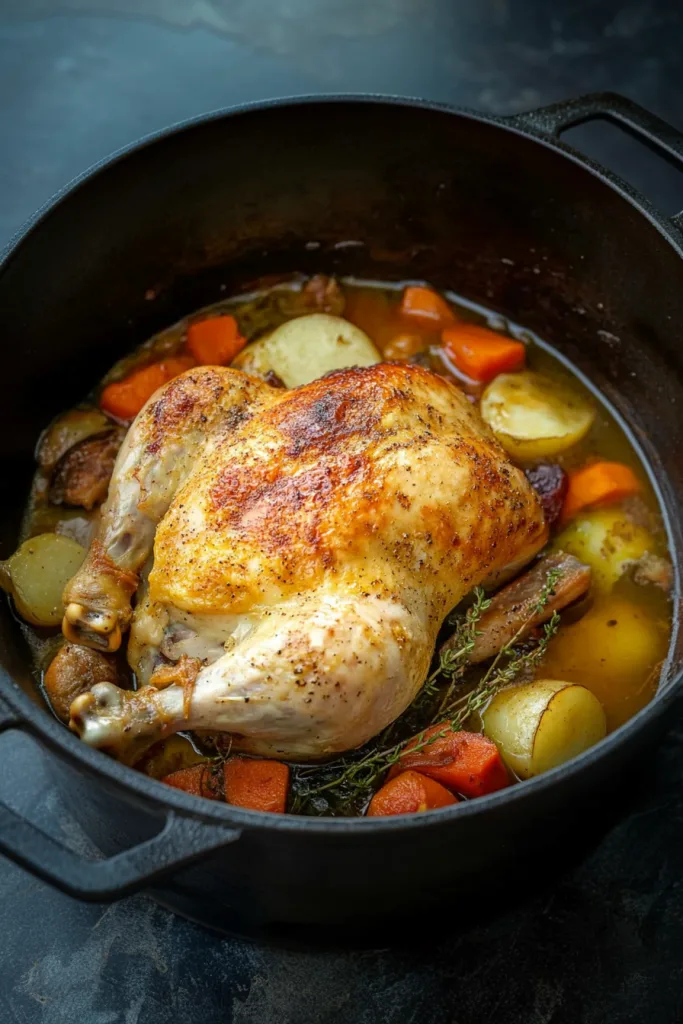
This King Henry’s Chicken in a Pot Recipe already gives you chicken, vegetables, potatoes, and sauce, so you don’t need much else. But if you want to round out the table, simple sides work best. Since the meal is savory, herby, and comforting, I like serving it with bread, greens, or something fresh to balance the richness. Nothing too complicated. This chicken already has main-character energy.
- Crusty bread: Crusty bread is one of the best sides for this recipe because it soaks up the pot sauce beautifully. A warm baguette, sourdough, or rustic country loaf would be perfect. That broth-wine sauce is too good to leave behind, and bread makes sure none of it goes to waste.
- Simple green salad: A fresh green salad adds brightness to the table. Lettuce, cucumber, radishes, and a light vinaigrette work well. The crisp texture balances the tender chicken and vegetables. It’s simple, but it keeps the meal from feeling too heavy.
- Steamed green beans: Green beans are classic with roast chicken. Add a little butter, salt, pepper, and lemon if you want them extra nice. They add color and a fresh bite without competing with the chicken.
- Buttered peas: Peas are sweet, simple, and old-fashioned in a way that fits this recipe beautifully. They pair well with carrots, potatoes, chicken, and the savory pot liquid. Plus, buttered peas take almost no effort, and I always appreciate a side dish that doesn’t make demands.
- Rice or egg noodles: If you want something extra to catch the sauce, rice or egg noodles are both great. Spoon the pot liquid over the top and let it soak in. This is especially nice if you want to stretch the meal or make it even more filling.
- Roasted asparagus: Roasted asparagus adds a slightly elegant touch. It pairs nicely with thyme and tarragon and keeps the plate fresh. It’s simple enough not to distract from the chicken, but still feels like you tried a little.
- Apple or pear salad: A salad with sliced apples or pears, greens, walnuts, and vinaigrette would be lovely with this King Henry’s Chicken in a Pot Recipe. The fruit adds a little sweetness and freshness, which works beautifully next to the savory chicken and vegetables.
FAQ
Can I make King Henry’s Chicken in a Pot Recipe without wine?
Yes, you can make King Henry’s Chicken in a Pot Recipe without wine. Just replace the white wine with more chicken broth. The sauce will be a little less bright, but still savory and comforting. If you want to bring back a bit of freshness, add a squeeze of lemon juice near the end or serve the chicken with lemon wedges. It’s a simple swap and still works well.
What kind of pot should I use?
A Dutch oven is the best choice because it holds heat well and has enough room for the chicken, vegetables, and liquid. A deep oven-safe stock pot can also work. Just make sure the pot is large enough so the broth doesn’t bubble over and the vegetables aren’t packed too tightly. Crowded vegetables cook unevenly, and nobody wants one carrot tender and another still acting suspiciously crunchy.
Can I cook the potatoes in the same pot?
You can cook the potatoes in the same pot, but the recipe cooks them separately so they don’t overcrowd the chicken and vegetables. Cooking them separately also gives you better control over their tenderness. If you do add them to the pot, use small halved potatoes and make sure there is enough room for everything to cook evenly.
Can I make this recipe ahead of time?
Yes, you can make this King Henry’s Chicken in a Pot Recipe ahead of time and reheat it gently. Store the chicken with some of the sauce so it stays moist. For the best texture, carve the chicken before storing, then reheat it covered at a low temperature. Add extra pot liquid over the top before serving so it doesn’t dry out.
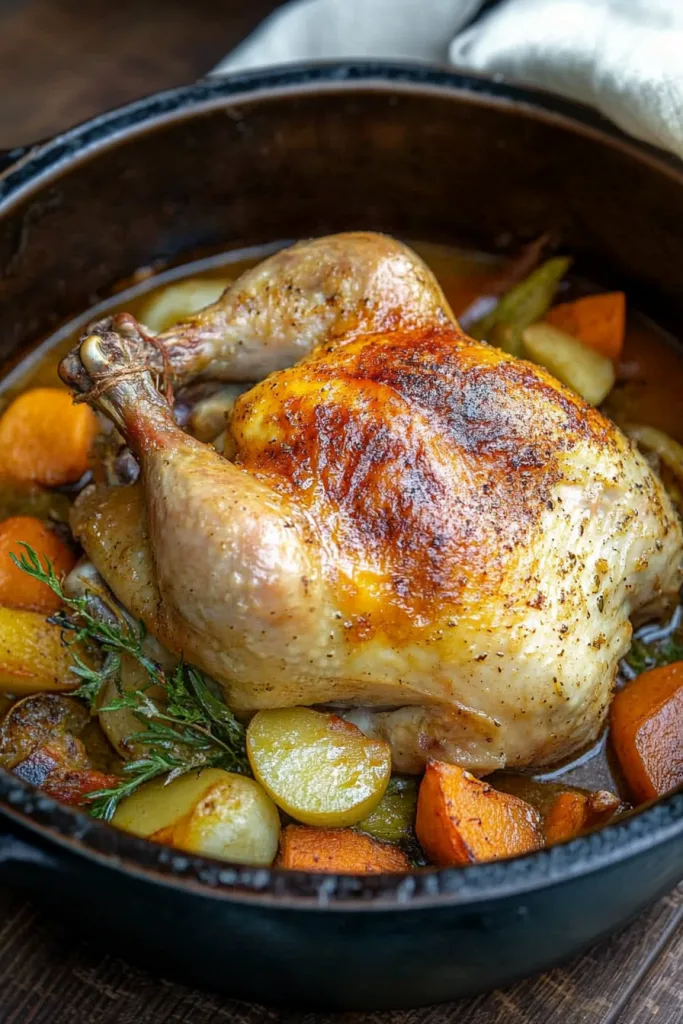
This King Henry’s Chicken in a Pot Recipe is the kind of dinner that feels timeless in the best way. A whole chicken, simple vegetables, broth, wine, herbs, and potatoes come together into something warm, rustic, and deeply comforting. It’s not loud or complicated. It doesn’t need to be. It just tastes like a proper home-cooked meal.
I love that it feels special enough for Sunday dinner but still simple enough for a cozy family night. The chicken is tender, the vegetables are soft and flavorful, the potatoes are ready for that beautiful sauce, and the whole thing makes the kitchen smell like dinner is actually going to fix the day a little. Maybe not completely, but a little.
So tell me — would you serve this King Henry’s Chicken in a Pot Recipe with crusty bread, extra potatoes, or a simple green salad? I’d love to know how you’d make this old-fashioned chicken dinner your own.
King Henry’s Chicken in a Pot Recipe
Ingredients
- 1 ½ c chicken broth
- ⅓ c white wine
- 1 whole chicken about 3 pounds, giblets removed
- 1 tbsp butter room temperature
- Salt and black pepper to taste
- 2 leeks white and light-green parts only, halved and cut into 2-inch pieces
- 2 celery stalks cut into 2-inch pieces
- 5 carrots cut into 2-inch pieces
- 5 garlic cloves whole
- 12 pearl onions
- 1 tbsp olive oil
- 1 sprig fresh tarragon
- 1 sprig fresh thyme
- 1 pound new potatoes or fingerling potatoes halved
Instructions
Step 1: Prepare the Oven and Cooking Liquid
- Preheat the oven to 450°F.
- In a large Dutch oven or deep oven-safe stock pot, combine the chicken broth and white wine.
Step 2: Prepare the Chicken
- Pat the chicken dry with paper towels, if needed.
- Rub the room-temperature butter evenly over the skin of the chicken.
- Season the chicken generously with salt and black pepper.
- Tie the chicken legs together with kitchen string.
- Place the chicken in the Dutch oven or stock pot with the broth and wine.
Step 3: Roast the Chicken Covered
- Cover the pot with a lid.
- Transfer the pot to the preheated oven and bake for 30 minutes.
Step 4: Prepare the Vegetables
- While the chicken is roasting, place the leeks, celery, carrots, garlic cloves, and pearl onions in a large bowl.
- Drizzle the vegetables with olive oil.
- Season with salt and black pepper to taste.
- Toss until the vegetables are evenly coated.
Step 5: Add the Vegetables and Herbs
- Carefully remove the pot from the oven after the initial 30 minutes of covered roasting.
- Add the prepared vegetables around the chicken.
- Place the fresh tarragon and fresh thyme into the pot.
- Return the pot to the oven, uncovered.
Step 6: Finish Roasting
- Bake uncovered for 35 to 45 minutes, or until the chicken reaches an internal temperature of 165°F.
- Check the temperature at the thickest part of the breast or thigh, avoiding contact with the bone.
- The vegetables should be tender, and the chicken should be fully cooked.
Step 7: Cook the Potatoes
- While the chicken finishes roasting, steam or boil the halved new or fingerling potatoes until fork tender.
- Season the cooked potatoes with salt and black pepper.
Step 8: Rest and Carve
- Remove the chicken from the pot and allow it to rest briefly before carving.
- Carve the chicken into serving pieces.
Step 9: Serve
- Serve the carved chicken with the roasted vegetables and cooked potatoes.
- Spoon the cooking liquid from the pot over each serving.
- Alternatively, remove the kitchen string and serve the chicken whole on a platter surrounded by the vegetables and potatoes. Serve any remaining sauce on the side.
Notes