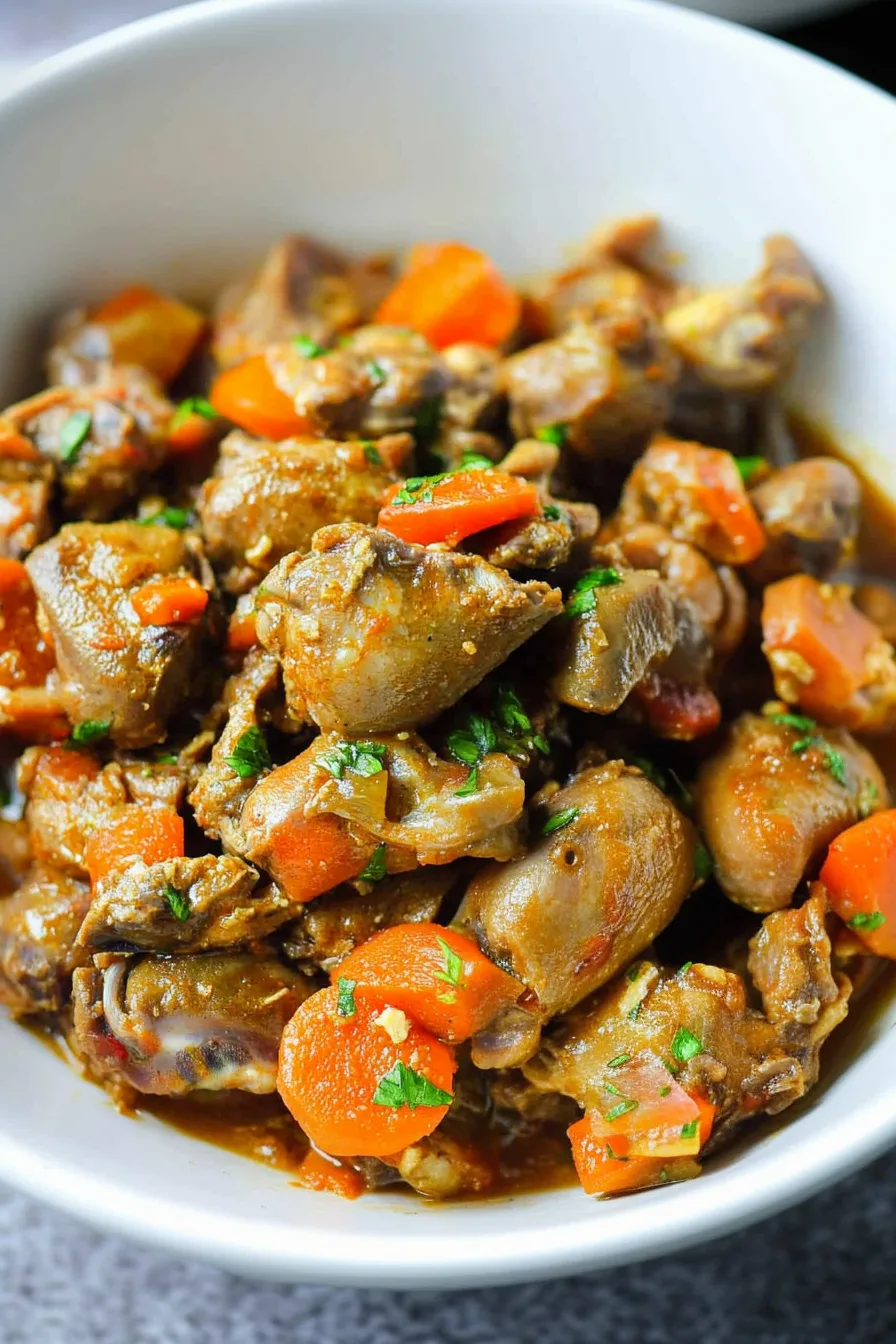
Stewing beef, Guinness, mushrooms, onion, garlic, tomato paste, carrots, potatoes, bay leaves, thyme, and parsley.
I have a real soft spot for dinners that make the whole house smell like someone has been lovingly cooking all afternoon. Guinness Beef Stew is exactly that kind of meal. It’s rich, hearty, a little rustic, and the kind of stew that makes people wander into the kitchen “just to check” what’s going on. You know what I mean, right? Nobody is just checking. They’re sniffing around for dinner clues.
The first time I made Guinness Beef Stew, I remember being surprised by how comforting the whole process felt. Browning the beef, softening the onions and garlic, pouring that dark Guinness into the hot skillet and scraping up all those browned bits — it felt old-fashioned in the best way. Like the kind of recipe you make when the weather is cold, the day has been long, and you need a bowl of something that says, okay, sit down, you’re fed now.
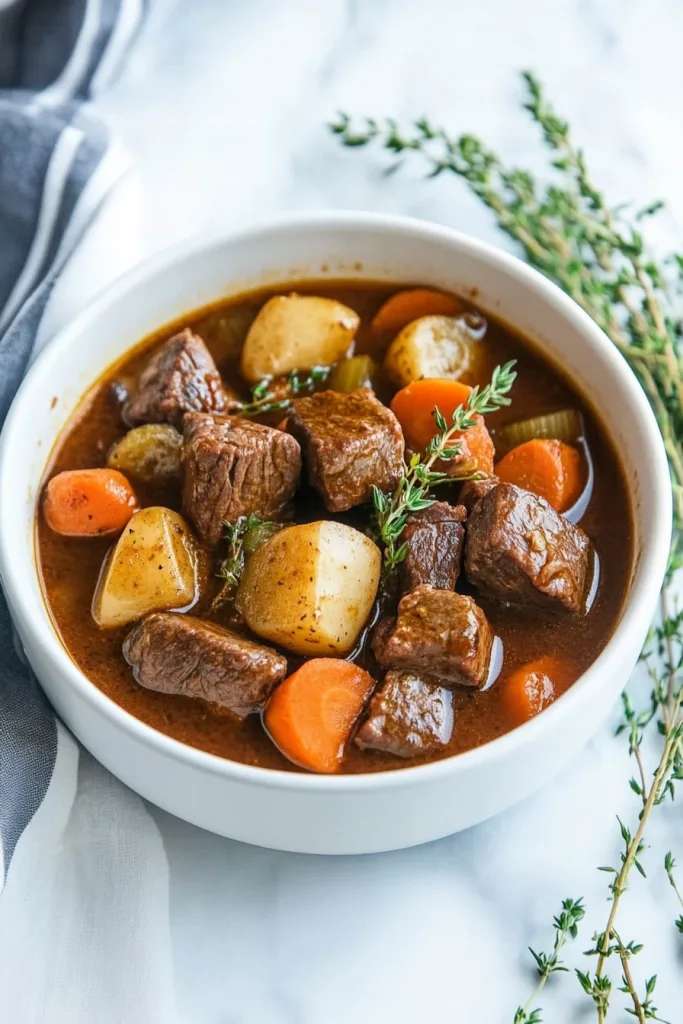
And honestly, this isn’t a delicate little stew. It’s not trying to be light or fancy. It’s beef, potatoes, carrots, mushrooms, garlic, herbs, tomato paste, and Guinness all simmered together until everything turns tender and rich. The Guinness gives the broth this deep, malty flavor that feels cozy and bold without tasting too much like beer. It’s more like a dark, savory gravy that got a little personality.
What I love most about this Guinness Beef Stew is the slow simmer. You can’t rush it, and maybe that’s the point. The beef needs time to soften, the potatoes need time to soak up the broth, and the flavors need time to settle into each other. Some recipes are all about speed. This one is about patience, warmth, and maybe sneaking a little taste from the pot when nobody’s looking. Sound familiar?

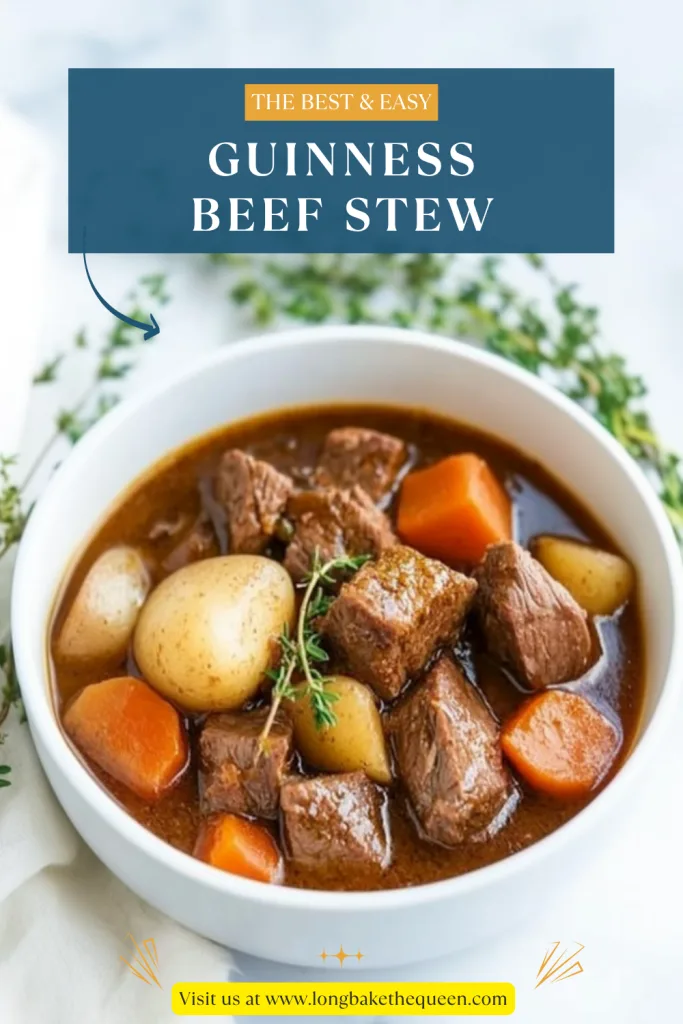
Why you’ll Love this Guinness Beef Stew?
This Guinness Beef Stew is the kind of comfort food that feels deeply satisfying from the first spoonful. The beef is coated in seasoned flour, browned until it gets those savory edges, then simmered with Guinness, vegetables, and herbs until it becomes tender. That browning step takes a few extra minutes, yes, but it’s worth it. It gives the stew that deep flavor you just can’t fake by tossing everything straight into the pot.
The Guinness is really what makes this stew special. It adds richness, depth, and a slightly malty taste that blends beautifully with the tomato paste, onions, garlic, mushrooms, carrots, potatoes, bay leaves, and thyme. If you’re worried the stew will taste too much like beer, I get it. But after simmering for a few hours, the sharpness softens and turns into something savory and cozy. More “warm Irish-style stew” than “pint glass in a bowl,” thankfully.
I also love how filling this Irish beef stew with Guinness is. You’ve got tender beef, hearty potatoes, sweet carrots, earthy mushrooms, and that thick, flavorful broth all in one bowl. It’s basically a full meal, though I will always vote for crusty bread on the side because that broth deserves to be soaked up properly. Leaving it behind feels almost rude.
And the leftovers? Oh, they’re good. Like most stews, this Guinness stew recipe tastes even better the next day. The flavors deepen, the broth thickens a little, and everything becomes even more comforting. It’s one of those meals where making extra feels less like planning and more like doing your future self a favor.
Ingredient Notes
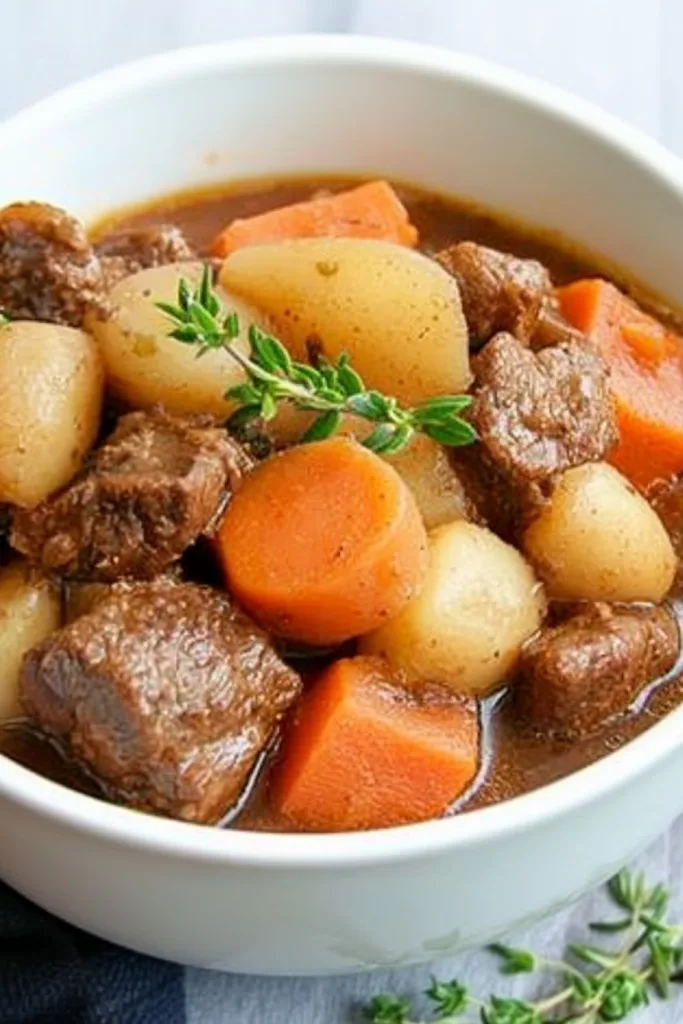
Before you make Guinness Beef Stew, let’s talk about the ingredients. This is a simple, hearty recipe, but every ingredient brings something to the pot. The beef gives it body, Guinness adds that dark richness, mushrooms bring earthiness, potatoes and carrots make it filling, and the herbs help everything taste slow-cooked and cozy.
- Stewing beef: Stewing beef is perfect for Guinness Beef Stew because it becomes tender after simmering low and slow. Trim off any fat or gristle, then cut the meat into 2-inch cubes. Bigger chunks hold up well during the long cooking time and make the stew feel rustic and hearty. If the beef still feels tough after a while, don’t panic. It usually just needs more time. Stew meat is stubborn before it becomes wonderful.
- Vegetable oil: Vegetable oil helps coat the beef and gives it a good sear in the skillet. Browning the beef is one of those steps that might feel tempting to skip, especially if you’re hungry, but try not to. That browned crust builds so much flavor in the finished Guinness stew. It’s one of those “small effort, big reward” moments.
- Flour: Flour helps the seasoning cling to the beef and also thickens the stew as it cooks. It gives the broth more body without making it heavy or gloopy. You want the stew to feel rich and spoon-coating, not like paste. There’s a line, and we are staying on the cozy side of it.
- Salt, black pepper, and cayenne: Salt and pepper season the beef right from the beginning, which helps flavor the whole pot. The cayenne adds just a tiny touch of warmth. It doesn’t make the stew spicy, so don’t worry. It’s more like a quiet little spark in the background.
- Onion: Onion adds sweetness and depth to this Guinness Beef Stew. As it cooks with the garlic and tomato paste, it softens into the base of the broth. You may not notice onion in every spoonful, but it helps the stew taste fuller and more savory.
- Fresh mushrooms: Mushrooms bring an earthy flavor that works beautifully with beef and Guinness. They soak up the broth and make the stew taste even richer. If you love a hearty, old-school stew, mushrooms fit right in like they were always meant to be there.
- Garlic: Six crushed garlic cloves may sound like a lot, but in a big pot of Irish beef stew, it mellows as it cooks. The garlic gives the broth a deep savory flavor without taking over. It’s bold at first, then softens into the background like a good supporting actor.
- Tomato paste: Tomato paste gives the stew richness, color, and a little acidity. Dissolving it in water makes it easier to stir into the skillet. It also balances the Guinness and beef, so the broth tastes deep instead of flat.
- Guinness: Guinness is the key ingredient in this Guinness Beef Stew. It gives the broth that dark, malty, slightly bitter depth that makes the stew feel special. As it simmers, the flavor smooths out and blends with the beef, vegetables, and herbs. Two bottles make the stew bold and rich, so this is definitely a cozy, full-flavored bowl.
- Baby carrots: Baby carrots add sweetness and color. They soften nicely during the long simmer but usually hold their shape well. You can use regular carrots if you prefer, but baby carrots keep the prep easy, and I’m never mad about less chopping.
- Potatoes: Potatoes make the stew hearty and satisfying. Cut them into chunks so they don’t disappear into the broth. They soak up that Guinness-beef flavor and turn soft and comforting. Honestly, potatoes in stew are always doing the most, and I appreciate them for it.
- Bay leaves: Bay leaves add a subtle herbal flavor that helps round out the broth. You won’t necessarily taste them directly, but they make the stew feel more complete. Just remember to take them out before serving. Biting into a bay leaf is not the cozy experience we’re going for.
- Fresh thyme: Fresh thyme adds earthy, savory flavor that works so well with beef, mushrooms, potatoes, and Guinness. It gives the stew that slow-simmered, home-cooked feel. If you only have dried thyme, you can use it, but fresh thyme is lovely here.
- Parsley: Chopped parsley goes on at the end for freshness. After all that rich, dark stew, a little green makes the bowl look brighter and taste a bit fresher. It’s a small garnish, but it helps.
How to Make Guinness Beef Stew?
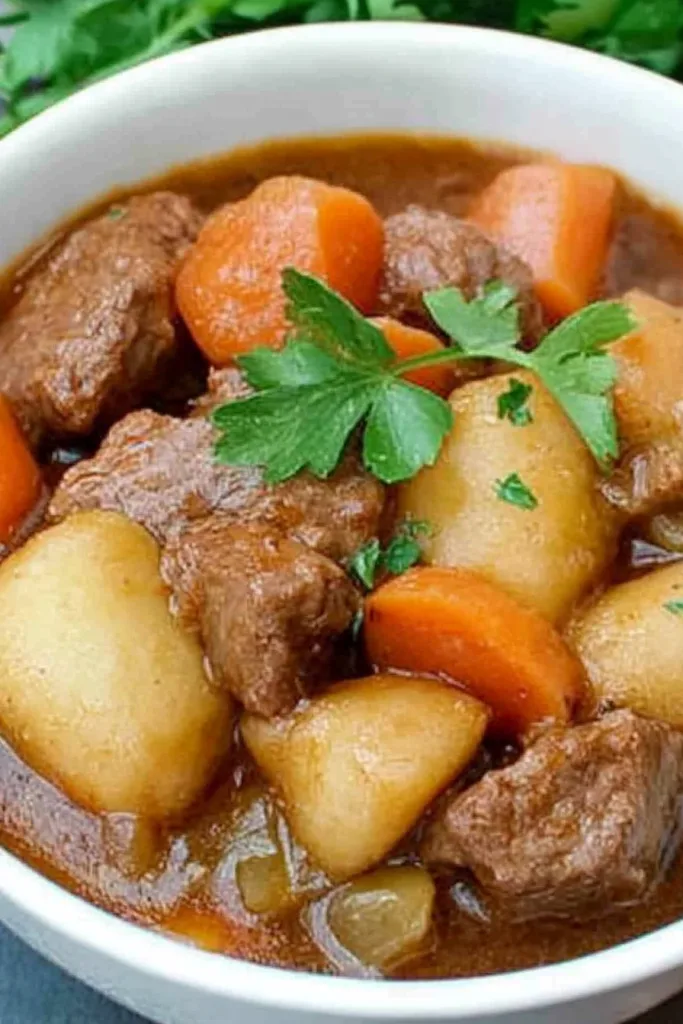
Making Guinness Beef Stew is all about building flavor slowly. You season the beef, brown it well, soften the onions and garlic, use Guinness to pull up all those tasty browned bits, then simmer everything until the beef is tender. It’s not difficult, but it does ask for time. And honestly, good stew usually does.
Step 1: Prepare the beef
Trim the stewing beef of any fat or gristle, then cut it into 2-inch cubes. Place the beef in a large bowl and toss it with 1 tablespoon of vegetable oil. This helps the seasoned flour stick to the meat. Try to keep the pieces fairly even so they cook at the same pace. Nothing too perfect, though. This is stew, not a ruler competition.
Step 2: Season the flour
In a small bowl, combine the flour, salt, freshly ground black pepper, and a pinch of cayenne. Sprinkle this mixture over the beef and toss until the pieces are coated. This step adds flavor right to the meat and helps thicken the broth later. It’s simple, but it matters.
Step 3: Brown the beef
Heat the remaining 2 tablespoons of vegetable oil in a large skillet over high heat. Brown the beef on all sides. Try not to crowd the skillet, because crowded beef steams instead of browns, and browned beef is where the good flavor starts. If you need to work in batches, do it. I know it takes a little longer, but it pays off in the final stew.
Step 4: Add onion, garlic, and tomato paste
Reduce the heat, then add the chopped onion, crushed garlic, and tomato paste dissolved in water to the skillet. Cover and cook gently for about 5 minutes. This gives the onion and garlic time to soften and lets the tomato paste deepen a little. At this point, the kitchen should start smelling pretty amazing. That’s when you know dinner is heading in the right direction.
Step 5: Transfer everything to a pot
Transfer the beef mixture from the skillet to a large pot. Scrape in the onions, garlic, tomato paste, and every bit of juice you can get. Don’t leave flavor behind. That’s basically kitchen law.
Step 6: Deglaze the skillet with Guinness
Pour one bottle of Guinness into the skillet and bring it to a boil. Stir and scrape the bottom of the pan to loosen all the caramelized meat juices. This step is often called deglazing, but really it just means rescuing the delicious browned bits stuck to the pan. Pour that Guinness mixture over the beef in the pot.
Step 7: Add the rest of the ingredients
Pour in the second bottle of Guinness. Add the baby carrots, sliced mushrooms, potato chunks, bay leaves, and thyme. Stir everything together and adjust the seasoning if needed. It will look hearty already, but it still needs that slow simmer to turn into tender, rich Guinness Beef Stew.
Step 8: Simmer low and slow
Cover the pot and simmer over low heat for 2 to 3 hours, or until the beef is tender. Stir now and then, and check the liquid level as it cooks. The beef should become soft enough to break apart with a fork, and the potatoes and carrots should be tender. This is the part where patience does the heavy lifting.
Step 9: Garnish and serve
Remove the bay leaves and thyme stem before serving. Taste the stew and add more salt or pepper if needed. Sprinkle chopped parsley over the top and serve hot. And please, please have crusty bread nearby. That Guinness broth is too good to leave at the bottom of the bowl.
Storage Options
Guinness Beef Stew stores beautifully, and honestly, it might taste even better the next day. Let the stew cool completely, then transfer it to airtight containers. Store it in the refrigerator for up to 4 days.
To reheat, warm the stew gently in a pot over medium-low heat, stirring occasionally. You can also microwave individual portions, but stovetop reheating keeps the texture a little nicer. If the stew thickens too much in the fridge, add a splash of beef broth, water, or even a little extra Guinness while reheating.
You can also freeze this Guinness stew for up to 3 months. Let it cool completely, then place it in freezer-safe containers. Thaw overnight in the refrigerator before reheating. The potatoes may soften a bit after freezing, but the flavor will still be rich and comforting.
Variations & Substitutions
This Guinness Beef Stew is hearty and classic as written, but stew is forgiving. You can add more vegetables, lighten the Guinness flavor, thicken the broth, or even swap the beef for lamb if you want a more Irish-inspired twist. It’s flexible, which is one of the reasons stew has survived every busy kitchen and cold-weather dinner table.
- Use beef broth with Guinness: If you want a milder Guinness flavor, use one bottle of Guinness and replace the second bottle with beef broth. You’ll still get that deep stout flavor, but it won’t be quite as bold. This is a good option if you’re serving someone who is unsure about beer in stew.
- Add celery: Chopped celery adds classic stew flavor and works nicely with the onion, carrots, and potatoes. Add it with the onions and garlic so it has time to soften and blend into the broth.
- Use different potatoes: Yukon Gold potatoes, red potatoes, or russet potatoes can all work in this Irish beef stew with Guinness. Yukon Golds hold their shape and taste buttery. Russets break down more and can help thicken the broth.
- Add peas: Stir in frozen peas during the last 10 minutes of cooking for a little sweetness and color. They don’t need much time, just enough to warm through. Plus, they make the stew look a little brighter.
- Make it thicker: If you like a thicker stew, simmer it uncovered for the last 20 to 30 minutes. You can also mash a few potato chunks into the broth, or stir in a cornstarch slurry. I usually like the potato trick because it feels rustic and doesn’t require another little bowl. Fewer dishes, always.
- Add Worcestershire sauce: A splash of Worcestershire sauce adds savory depth and works beautifully with beef and Guinness. It’s optional, but it gives the broth a little extra something. You may not know exactly why it tastes better, but you’ll notice.
- Use lamb instead of beef: For a more traditional Irish-inspired feel, use lamb stew meat instead of beef. The flavor is richer and slightly different, but it pairs beautifully with Guinness, potatoes, carrots, and thyme.
What to Serve With Guinness Beef Stew?
Guinness Beef Stew is rich, hearty, and deeply savory, so it pairs best with simple sides that can soak up the broth or balance the meal. You don’t need anything fussy. This stew already brings plenty to the table.
- Crusty bread: Crusty bread is perfect for soaking up the dark, flavorful broth. A warm slice dragged through the bottom of the bowl? That’s not optional in my house. That’s the grand finale.
- Irish soda bread: Irish soda bread is a natural pairing for Guinness Beef Stew, especially for St. Patrick’s Day or an Irish-inspired dinner. It’s simple, hearty, and perfect beside a bowl of stew.
- Mashed potatoes: Yes, there are already potatoes in the stew. But serving it over mashed potatoes? I’m not against it. Extra potatoes rarely ruin comfort food. This is dinner, not a spreadsheet.
- Colcannon: Colcannon, made with mashed potatoes and cabbage or kale, is cozy and classic. It makes the meal feel even more hearty and Irish-inspired.
- Buttered noodles: Buttered noodles are soft, simple, and great for catching the broth. This is a nice option if you want to stretch the stew a little further or serve it to kids who love noodles with everything.
- Roasted vegetables: Roasted parsnips, Brussels sprouts, cabbage, or carrots make a nice side. They add more vegetables without fighting the rich flavor of the stew.
- Green salad: A crisp green salad with a bright vinaigrette helps balance the richness of the stew. Sometimes a fresh bite beside a heavy bowl is exactly what you need.
FAQ
Does Guinness Beef Stew taste like beer?
It has a malty richness from the Guinness, but it does not taste like drinking beer. As the stew simmers, the flavor becomes deeper, softer, and more savory.
Can I make Guinness Beef Stew ahead of time?
Yes. This stew is excellent made ahead because the flavors deepen as it sits. Store it in the refrigerator and reheat gently before serving.
What kind of beef is best for Guinness Beef Stew?
Stewing beef or chuck roast cut into chunks works best because it becomes tender after slow simmering.
Can I make this stew without Guinness?
Yes. You can replace the Guinness with beef broth, though the flavor will be different. Add a little Worcestershire sauce or extra tomato paste for more depth.
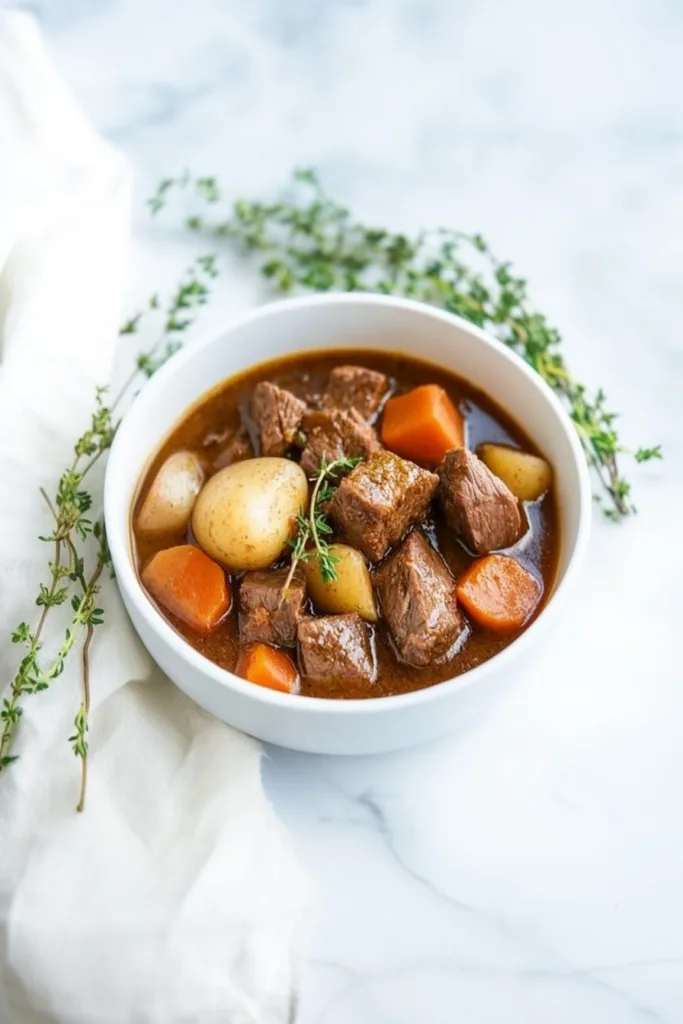
This Guinness Beef Stew is rich, rustic, and full of slow-simmered comfort. With tender beef, Guinness, mushrooms, onion, garlic, carrots, potatoes, tomato paste, thyme, and bay leaves, it’s the kind of meal that feels perfect for cold nights, Sunday dinner, St. Patrick’s Day, or anytime you want something hearty and homemade.
So grab a big pot, let the stew simmer low and slow, and don’t forget the bread for soaking up that broth. And when you make this Guinness Beef Stew, I’d love to know — are you serving it with crusty bread, Irish soda bread, mashed potatoes, or just a spoon and a very quiet corner?
Guinness Beef Stew
Ingredients
- 2 lb stewing beef
- 3 tbsp vegetable oil divided
- 2 tbsp flour
- 3 tsp salt
- 1 tsp freshly ground black pepper
- Pinch of cayenne pepper
- 1 large onion coarsely chopped
- 2 c fresh mushrooms sliced
- 6 garlic cloves crushed
- 2 tbsp tomato paste dissolved in 4 tbsp water
- 2 bottles Guinness
- 1/2 bag baby carrots
- 4 potatoes cut into chunks
- 2 bay leaves
- 1 sprig fresh thyme
- Chopped parsley for garnish
Instructions
- Trim the stewing beef of any excess fat or gristle.
- Cut the beef into 2-inch cubes.
- Place the beef in a large bowl.
- Add 1 tablespoon of vegetable oil and toss until the beef is lightly coated.
- In a small bowl, combine the flour, salt, freshly ground black pepper, and cayenne pepper.
- Sprinkle the flour mixture over the beef.
- Toss until the beef pieces are evenly coated.
- Heat the remaining 2 tablespoons of vegetable oil in a large skillet over high heat.
- Add the beef to the skillet.
- Brown the beef on all sides, working in batches if necessary to avoid overcrowding.
- Reduce the heat.
- Add the chopped onion, crushed garlic, and tomato paste dissolved in water to the skillet.
- Cover and cook gently for 5 minutes.
- Transfer the beef mixture from the skillet to a large pot.
- Pour 1 bottle of Guinness into the skillet.
- Bring the Guinness to a boil.
- Stir and scrape the bottom of the skillet to loosen the caramelized meat juices.
- Pour the Guinness mixture over the beef in the large pot.
- Add the second bottle of Guinness to the pot.
- Add the baby carrots, sliced mushrooms, potato chunks, bay leaves, and fresh thyme.
- Stir until the ingredients are evenly combined.
- Taste and adjust the seasoning if needed.
- Cover the pot.
- Simmer over low heat for 2 to 3 hours, or until the beef is tender.
- Stir occasionally during cooking.
- Remove the bay leaves and thyme stem before serving.
- Garnish with chopped parsley.
- Serve hot.
Notes