Beef chuck, orzo pasta, tomatoes, red onion, tomato paste, red wine, stock, olive oil, paprika, bay leaves, allspice, and nutmeg.
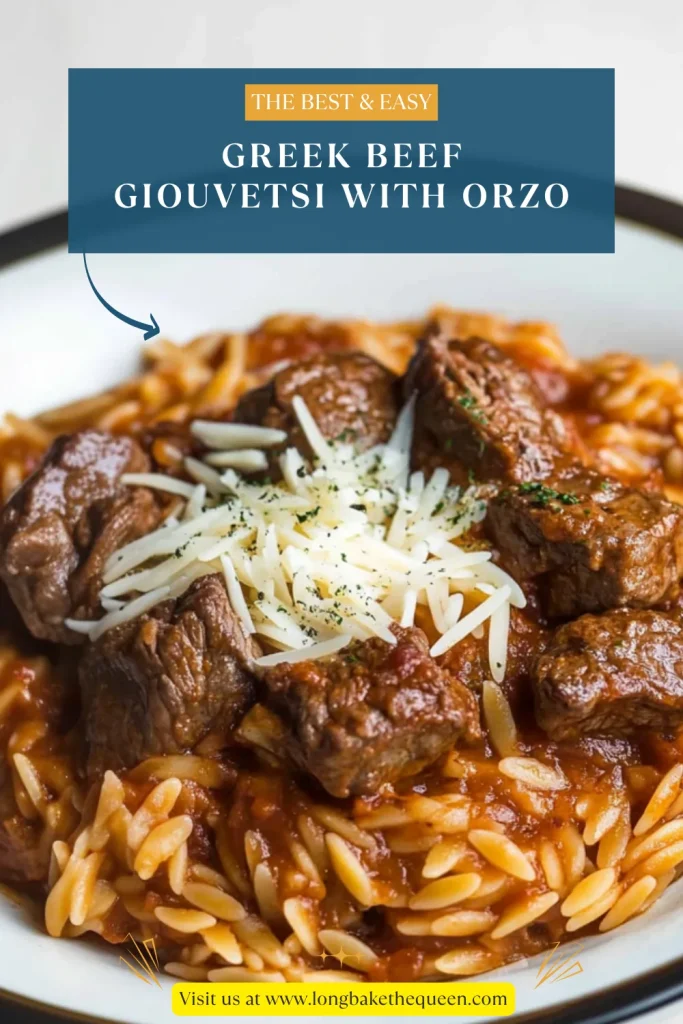
Some meals feel like they were made for slow evenings, a hungry table, and that moment when you lift the lid off the pan and everyone suddenly appears in the kitchen. This Greek Beef Giouvetsi With Orzo is one of those meals. It’s rich, saucy, comforting, and made with tender beef, orzo pasta, blended tomatoes, red wine, stock, sweet paprika, bay leaves, allspice, nutmeg, and a little grated Kefalotyri cheese if you want that salty finish on top.
This Greek Beef Giouvetsi With Orzo is made on the stovetop, which I really appreciate because sometimes turning on the oven feels like one step too many. The beef simmers until tender, the tomato sauce gets deep and glossy, and then the orzo cooks right in the sauce until it becomes thick and almost risotto-like. Not exactly risotto, obviously, but it has that same creamy, spoonable, “one more bite” feeling.
I love dishes like this because they feel generous. You don’t need a million sides or a complicated presentation. Just bring the pan to the table, add cheese, maybe tear some bread, and let everybody scoop their portion. It’s rustic, cozy, and honestly a little dramatic in the best way. Orzo does have a flair for drama once it starts absorbing sauce.
I’ve always had a soft spot for tomato-based beef dishes, especially the kind that simmer long enough to make the kitchen smell like someone really knows what they’re doing. This Greek Beef Giouvetsi With Orzo reminds me of the meals I love most: simple ingredients, a little patience, and a sauce that slowly turns into something richer than you expected. You know that kind of dinner? The one that makes you hover near the stove with a spoon, pretending you’re “checking the seasoning” again.
The first time I made a stovetop beef giouvetsi, I honestly thought it would taste like a basic beef stew with pasta. Nice, but maybe not special-special. Then the orzo went in. That tiny pasta started soaking up the tomato sauce, beef juices, stock, wine, and paprika, and the whole pan turned thick and glossy. I remember thinking, Oh, okay, now I get it. It wasn’t just beef with pasta. It was almost creamy without cream, saucy without being watery, and hearty without needing much else.
There’s something very comforting about the way this dish cooks. First you season the beef with allspice and nutmeg, which sounds a little unexpected if you’re not used to it. Then you brown the meat, soften the onion, caramelize the tomato paste, pour in the wine, and let the sauce do its slow simmering thing. It’s not fast food. It’s take your time, dinner is coming food. And some days, that’s exactly what I want.
I also like that this Greek Beef Giouvetsi With Orzo recipe feels connected to those big family-style Mediterranean meals where food lands in the middle of the table and nobody is too worried about perfect plating. Maybe there’s salad. Maybe bread. Maybe someone adds too much cheese. It all works. It’s the kind of meal that feels better when shared, even if “shared” just means you and tomorrow’s leftovers.
And let’s be real, orzo is a little needy. It sticks if you ignore it. It thickens if you walk away too long. It keeps absorbing sauce like it has a personal mission. But that’s also what makes this homemade giouvetsi so good. You give it a few stirs, a little extra water if needed, and it rewards you with that rich, glazy texture that clings to every bite. Worth it? I think so.

Why you’ll Love this Greek Beef Giouvetsi With Orzo?
- It has that deep, slow-cooked flavor without feeling too fussy. This Greek Beef Giouvetsi With Orzo builds flavor in layers, and that’s what makes it taste so comforting. The beef is seasoned with salt, pepper, allspice, and nutmeg, then browned in olive oil until it gets those flavorful edges. The red onion softens in the same pan, the tomato paste caramelizes, and the red wine lifts all those browned bits from the bottom. By the time the tomatoes, stock, bay leaves, and sweet paprika join in, the sauce already has a strong, cozy base. It tastes like you took your time, because you did, but not in a stressful way.
- The orzo cooks right in the sauce and becomes beautifully glossy. One of the best things about Greek Beef Giouvetsi With Orzo is that the orzo doesn’t cook separately in plain water. It goes straight into the beefy tomato sauce and absorbs all that flavor while it softens. As it cooks, the orzo releases starch and helps turn the sauce thick, glossy, and almost risotto-like. I say “almost” because I don’t want the risotto police coming for me, but you get the idea. It’s saucy, rich, and spoonable. Do you agree that pasta cooked in sauce just tastes better?
- The beef becomes tender and hearty. Beef chuck, chuck roll, or flatiron cut works well here because these cuts can handle a longer simmer. They start firm, but after cooking slowly in the tomato sauce, they become tender and full of flavor. This is one of those recipes where the clock matters, but your fork matters more. If the beef isn’t tender yet, give it more time. It’s not being difficult, exactly. It’s just on beef time, which is apparently its own schedule.
- It’s made on the stovetop. Traditional giouvetsi is often baked, but this version is cooked on the stovetop, and I like that for everyday cooking. You can watch the sauce, stir the orzo, and add a splash of water if things get too thick. It feels a little more hands-on, but in a helpful way. No oven dish, no extra juggling, no wondering if the pasta is drying out somewhere behind a closed oven door. Just one pan, one burner, and you standing there looking very capable.
- The sauce is thick, glazy, and full of comfort. This isn’t a thin tomato sauce that slides sadly around the plate. The blended tomatoes, tomato paste, beef juices, stock, and orzo starch come together into a sauce that clings to the beef and pasta. That texture is a big part of why this Greek beef and orzo pasta feels so satisfying. It’s not quite stew, not quite pasta, not quite risotto. It’s somewhere in the middle, which honestly might be the best place to be.
- The warm spices give it personality. The allspice and nutmeg may seem like tiny additions, but they add warmth and depth to the beef. Sweet paprika gives the sauce gentle flavor and a beautiful color, while bay leaves add that slow-simmered background note. None of the spices overpower the dish. They just make it taste more layered and a little more special. Like the difference between a plain sweater and the cozy sweater you reach for every time. Same idea, but better.
- It feels like a complete meal in one pan. This Greek Beef Giouvetsi With Orzo recipe gives you tender beef, pasta, and rich tomato sauce all together. You can add a salad or bread on the side, and grated Kefalotyri cheese on top is lovely, but the dish itself is already hearty enough to stand alone. I love that. Some nights I don’t want to coordinate three side dishes and pretend I’m hosting a cooking show. I just want a warm bowl of something good.
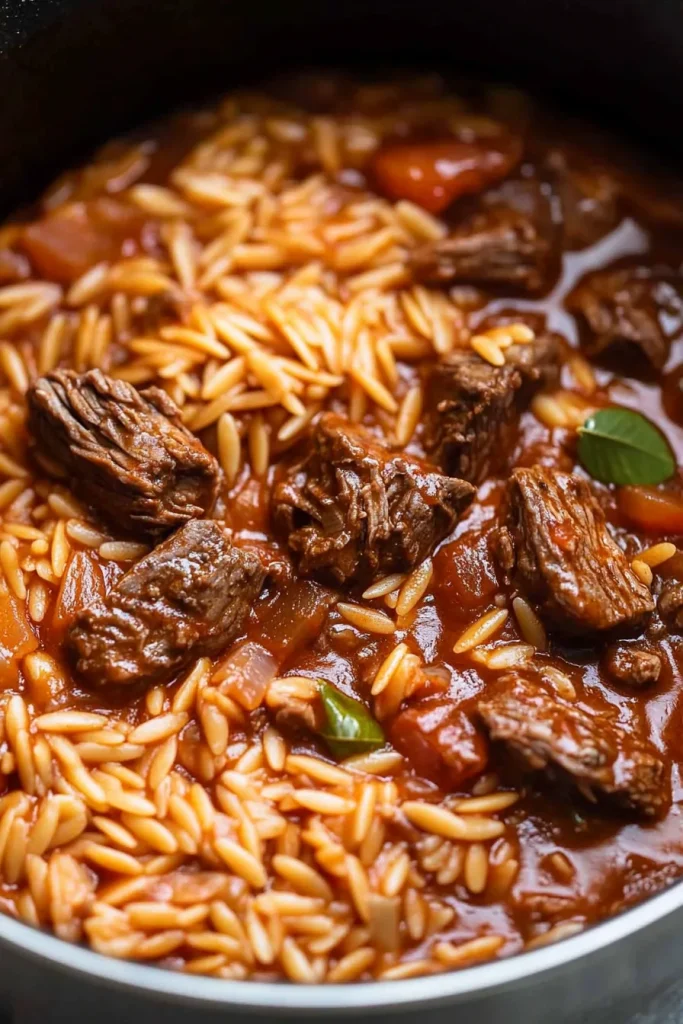
Ingredient Notes
The ingredients for Greek Beef Giouvetsi With Orzo are simple, but they come together in a way that feels rich and very comforting. The beef gives the dish its hearty base, the tomatoes and tomato paste make the sauce, the red wine adds depth, and the orzo turns everything thick and glossy. The warm spices are small but important, and if you add grated Kefalotyri cheese at the end, it gives the dish that salty, bold finish that makes you want another forkful.
- Beef Chuck, Chuck Roll, or Flatiron Cut: The beef is the heart of this Greek Beef Giouvetsi With Orzo, so you want a cut that can become tender with simmering. Beef chuck, chuck roll, or flatiron cut works beautifully. Cut the beef into about 3 cm or 1.2-inch cubes so it cooks evenly and still feels hearty. Pat the meat dry before seasoning it, even though it’s one of those small steps that feels easy to skip. Dry beef browns better. Wet beef steams, and steamed beef is not exactly the golden, flavorful dream we’re going for.
- Ground Allspice: Allspice gives the beef a warm background flavor. You only need 1/4 teaspoon, so it doesn’t take over the dish. It just adds depth and that little something that makes the sauce feel more Greek-inspired and cozy. If you smell it straight from the jar, it might seem like it belongs in something sweet, but in this beef giouvetsi, it works quietly in the background. Kind of sneaky, but in a good way.
- Salt and Pepper: Salt and pepper season the beef before browning and help balance the sauce later. I like seasoning in layers here because the dish changes as it cooks. The stock adds flavor, the tomatoes reduce, and cheese may go on top at the end, so it’s smart not to overdo the salt too early. Taste near the end and adjust. It’s a simple thing, but it makes the difference between “pretty good” and “oh, that’s nice.”
- Nutmeg: A pinch of nutmeg adds warmth to the beef and sauce. I know nutmeg in a savory beef dish can sound a little odd if you mostly use it in baking, but it belongs here. Just a pinch is enough. You’re not trying to make the dish taste sweet. You’re adding a soft, warm note that makes the flavor feel deeper. Tiny pinch, big behind-the-scenes energy.
- Olive Oil: Olive oil is used to brown the beef and start the flavor base. It helps the meat develop color and keeps things moving in the pan. Since this is a Greek-inspired dish, olive oil feels very natural here. Once the beef browns, the oil also helps carry those flavors into the onion and tomato paste. Nothing fancy, just useful and delicious.
- Red Onion: Minced red onion adds sweetness and depth to the tomato sauce. It cooks after the beef, picking up the browned bits from the pan as you stir. That’s where a lot of flavor hides, so don’t rush past it. The onion softens quickly and blends into the sauce instead of standing out. It’s one of those ingredients you might not notice directly, but you’d miss it if it wasn’t there.
- Tomato Paste: Tomato paste is a major flavor builder in this Greek Beef Giouvetsi With Orzo recipe. Cooking it for 1 to 2 minutes helps caramelize it, which makes the tomato flavor deeper, sweeter, and less sharp. I always think tomato paste needs a minute to wake up in the pan. Straight from the can, it’s a little harsh. After cooking, it becomes rich and concentrated. A small step, yes, but very worth it.
- Red Wine: Red wine helps deglaze the pan, which means it loosens all the browned bits stuck to the bottom after the beef and tomato paste cook. You only need 40 ml, so it’s not a wine-heavy dish, but it adds depth and a bit of acidity. Let it cook for about a minute so the alcohol evaporates. If you don’t cook with wine, use extra stock instead. The flavor will be a little different, but the dish will still be warm, saucy, and satisfying.
- Whole Peeled Canned Tomatoes: Blended whole peeled tomatoes make the main tomato base for the sauce. You can use fresh tomatoes if they’re ripe and flavorful; just remove the stems and blend them the same way. I do like canned tomatoes here because they’re consistent, especially when fresh tomatoes are pale and disappointing. We’ve all bought those sad tomatoes at least once, right? Canned tomatoes often save the day.
- Beef or Vegetable Stock: Stock adds savory flavor and gives the beef enough liquid to simmer until tender. Beef stock makes the dish richer and meatier, while vegetable stock keeps it a little lighter. Either works. Since the orzo absorbs plenty of liquid later, use a stock you like the taste of. If the stock is bland, the sauce has to work harder, and nobody wants tired sauce.
- Sweet Paprika: Sweet paprika adds gentle warmth, color, and a rounded flavor to the sauce. It’s not spicy, so don’t worry about heat here. It helps the tomato sauce look richer and taste more complete. I love paprika in dishes like this because it doesn’t shout, but it gives everything a warmer tone. Very quiet-supporting-actor energy.
- Bay Leaves: Bay leaves simmer in the sauce and add subtle depth. They aren’t loud, and you probably won’t taste them directly, but they help the sauce feel more complete. Just remove them if you find them before serving. Bay leaves are excellent in the pot, but nobody wants one hanging out on their fork like a surprise bookmark.
- Orzo Pasta: Orzo is what makes Greek Beef Giouvetsi With Orzo so special. It looks like rice, but it cooks like pasta, and it absorbs the tomato-beef sauce beautifully. As it simmers, it releases starch and helps create that thick, glossy texture. Stir occasionally so it doesn’t stick to the bottom. Orzo is delicious, but it is absolutely the type to cause trouble if ignored.
- Kefalotyri Cheese: Grated Kefalotyri cheese is optional, but it gives the finished dish a salty, sharp topping that works beautifully with the rich tomato sauce. If you can’t find Kefalotyri, Parmesan or Pecorino can work too. It won’t be exactly the same, but it will still be good. Cheese usually knows how to help. It’s one of its better qualities.
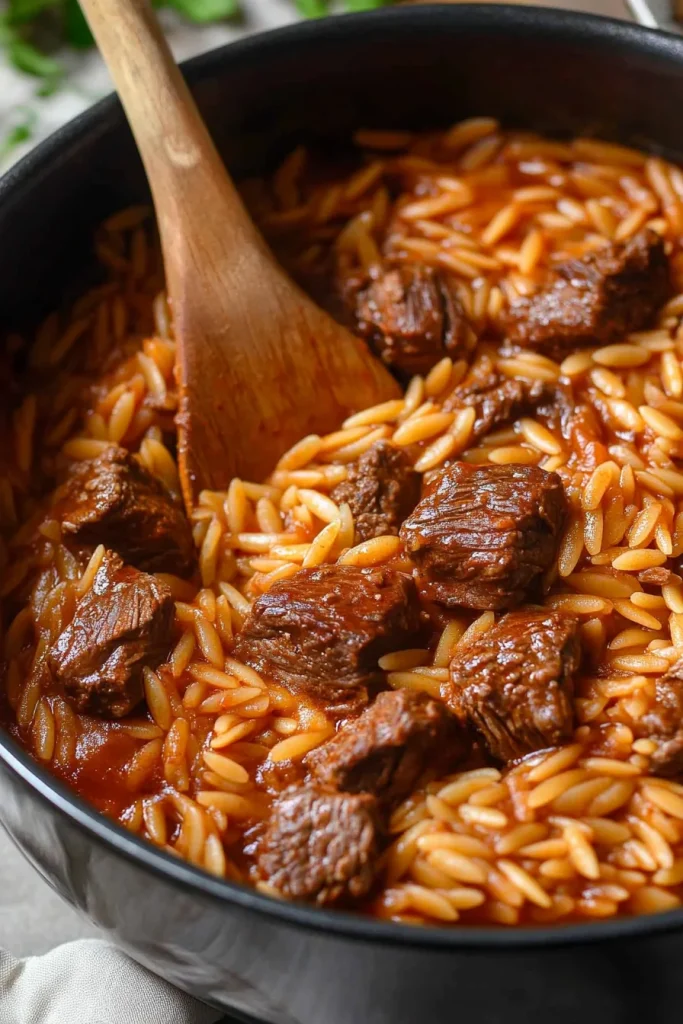
How to Make Greek Beef Giouvetsi With Orzo?
Making Greek Beef Giouvetsi With Orzo is about building flavor slowly, then letting the orzo finish the dish by soaking up the sauce. You’ll blend the tomatoes, season and brown the beef, cook the onion and tomato paste, deglaze with wine, simmer the beef until tender, then add the orzo and extra water. It’s not hard, but it does ask you to pay attention now and then. Stirring occasionally is part of the charm. Or so I tell myself.
- Blend the tomatoes. Add the canned whole peeled tomatoes to a small food processor or blender and pulse until smooth. If you’re using fresh tomatoes, remove the stems first and blend them the same way. This gives the sauce a smooth base that can coat the beef and orzo evenly. If a few small tomato pieces remain, don’t panic. This is a rustic dish, not a tomato sauce exam.
- Season the beef. Pat the beef cubes dry with paper towels, then season them with salt, pepper, ground allspice, and a pinch of nutmeg. Rub the seasoning all over the meat so every piece gets flavor. This step feels simple, but it matters. The dry surface helps the beef brown, and the seasoning starts building flavor before the meat even hits the pan. Good dinner starts early, apparently.
- Brown the meat. Heat the olive oil in a sauté pan over medium-high heat. Add the beef and brown it on all sides. If the pan is crowded, brown the beef in batches instead of piling it all in at once. Crowded beef steams, and we want browned edges because browned edges mean flavor. This is the first real “oh, this is going to be good” moment in the recipe.
- Cook the onion. Reduce the heat to medium and stir in the minced red onion. Cook for about 1 minute, stirring with a wooden spoon and scraping the bottom of the pan as you go. The onion softens and starts lifting those flavorful browned bits from the pan. This step may not look dramatic, but it’s doing important work. A lot of good cooking is like that, honestly.
- Caramelize the tomato paste. Add the tomato paste and cook, stirring constantly, for 1 to 2 minutes. The paste should darken slightly and smell richer. This quick cooking step makes the sauce taste deeper and less sharp. I know it’s tempting to rush, but give tomato paste its minute in the spotlight. It performs better after warming up.
- Deglaze with red wine. Pour in the red wine and stir, scraping the bottom of the pan to loosen anything stuck there. Let it cook for about 1 minute so the alcohol evaporates. The wine adds depth and helps bring all those browned flavors into the sauce. If you’re skipping wine, use extra stock and scrape the pan the same way. The scraping is the important part. Very glamorous, I know.
- Add tomatoes, stock, water, and spices. Stir in the blended tomatoes, then pour in the stock along with 2 cups of boiling water. Add the bay leaves and sweet paprika. Once the sauce starts to simmer, cover the pan and reduce the heat to low. Now the beef begins to soften and the sauce starts becoming rich and fragrant. This is where the house starts smelling like a proper meal is on the way.
- Simmer until the beef is tender. Let the beef simmer for about 1 hour, or until it feels tender enough. The exact time may vary depending on the cut and size of the beef pieces. Stir occasionally and check the liquid level. If the sauce looks too thick or dry, add a small splash of water. You want a gentle simmer, not a pan of beef trying to weld itself to the bottom. We’ve all had a close call.
- Add more water and the orzo. Once the beef is tender, add 2 extra cups of boiling water, season with salt and pepper, and stir in the orzo. Cover again and simmer for about 20 minutes, stirring occasionally so the pasta doesn’t stick. This is when Greek Beef Giouvetsi With Orzo turns from beef in tomato sauce into that thick, glossy, comforting dish. The orzo absorbs the sauce quickly, so keep an eye on it. It’s small, but it has ambition.
- Adjust the texture and let it rest briefly. If the orzo is still too firm, add about 1/4 cup more water, then remove the pan from the heat. Let it sit for 1 to 2 minutes so the orzo can finish absorbing the liquid. This short rest helps the sauce become glazy and thick. Serve it right away if you can, because orzo keeps absorbing sauce as it sits. It does not understand moderation.
- Serve with grated cheese. Spoon the Greek Beef Giouvetsi With Orzo into bowls or plates and top with grated Kefalotyri cheese if desired. The cheese melts slightly over the warm orzo and adds a salty finish that really works with the tomato sauce and beef. Serve it hot and saucy. This is not one of those dishes that wants to stand around waiting for everyone to find their fork.
Storage Options
This Greek Beef Giouvetsi With Orzo stores nicely, but the orzo will keep absorbing sauce as it sits. That means leftovers usually become thicker the next day. It’s normal. Add a splash of water, stock, or tomato sauce when reheating, and it will loosen up again. The flavor often gets even better after resting, though the texture becomes softer. Leftovers are still delicious, just a little more relaxed than day one.
- Refrigerator: Store leftover Greek Beef Giouvetsi With Orzo in an airtight container in the refrigerator for up to 3 to 4 days. Let it cool slightly before storing, but don’t leave it sitting out too long. When reheating, add a splash of beef stock, vegetable stock, or water to loosen the sauce. Stir gently as it warms so the orzo doesn’t break apart too much. It may be thicker than fresh, but that can be fixed with a little liquid and patience.
- Freezer: You can freeze this dish, but the orzo may soften after thawing. For the best texture, freeze the beef and sauce before adding the orzo, then cook fresh orzo when reheating. If you freeze the finished Greek beef giouvetsi, store it in a freezer-safe container for up to 2 months. It will still taste good, but the orzo will be softer and the dish may be thicker. Not bad. Just not quite the same as fresh.
- Reheating on the Stovetop: Reheat the giouvetsi in a pan over low to medium-low heat with a splash of water or stock. Stir gently until warmed through, adding more liquid as needed. Avoid high heat because orzo can stick quickly once the sauce thickens. Low and slow works best here. The dish already did the dramatic cooking part the first time. Reheating should be peaceful.
- Reheating in the Microwave: Place a portion of Greek Beef Giouvetsi With Orzo in a microwave-safe bowl and add a small splash of water or stock. Cover loosely and heat in short intervals, stirring between each one. This helps the dish warm evenly and keeps the orzo from drying out. Add grated cheese after reheating if you want leftovers to feel a little more special. Leftovers deserve nice things too.
- Make-Ahead Tip: If you want to make this dish ahead, simmer the beef and sauce until the meat is tender, then store that part separately. Add the orzo and extra boiling water when you’re ready to serve. This gives you the best texture because the orzo will be freshly cooked and saucy instead of overly thick from sitting. Yes, it’s one extra step, but it makes a difference. Sometimes the slightly annoying option is the right one.
Variations & Substitutions
This Greek Beef Giouvetsi With Orzo is rich and cozy as written, but it can handle a few changes. Real kitchens are rarely perfect, right? Maybe you don’t have red wine, maybe your tomatoes are fresh, maybe Kefalotyri is nowhere to be found, or maybe you want to add vegetables. As long as you keep the heart of the dish—tender beef, tomato sauce, warm spices, and orzo—you’ll still end up with a comforting Greek-inspired dinner.
- Use a different beef cut. Beef chuck, chuck roll, and flatiron cut are all good choices, but another stewing beef cut can work too. Choose a cut that becomes tender with simmering instead of a very lean cut that may dry out. If the beef still feels firm after an hour, keep simmering and check again. This is one of those moments where the recipe gives a time, but the beef gets the final vote. Annoying? A little. True? Yes.
- Use fresh tomatoes instead of canned. Fresh tomatoes can be used if they’re ripe and flavorful. Remove the stems and blend them until smooth before adding them to the pan. If your fresh tomatoes are watery or bland, canned tomatoes may give you a better sauce. I know fresh sounds better, but sometimes canned tomatoes are the dependable friend who actually shows up.
- Skip the wine if needed. If you don’t cook with wine, replace the red wine with extra beef or vegetable stock. You can still deglaze the pan by scraping up the browned bits after adding the liquid. The flavor will be a little less deep and tangy, but still delicious. If you want a tiny bit of brightness, add a small splash of vinegar or lemon juice. Small, though. We’re not making salad dressing.
- Use vegetable stock. Beef stock gives this Greek Beef Giouvetsi With Orzo recipe a richer, meatier flavor, but vegetable stock can work if that’s what you have. It makes the sauce slightly lighter while still keeping it savory. Since the orzo absorbs so much liquid, the stock matters. Use one that tastes good enough to sip, or at least one that doesn’t make you frown.
- Try a different cheese. Kefalotyri cheese is a great topping, but Parmesan or Pecorino can work if Kefalotyri is hard to find. They both add salty, sharp flavor that tastes good with tomato sauce and beef. The cheese is optional, but I do think it makes the dish feel finished. I’m biased, though. Cheese and I are usually on the same side.
- Add vegetables. You can add diced carrots, celery, mushrooms, or bell peppers to the sauce. Add firm vegetables when cooking the onion so they have time to soften. Mushrooms are especially nice because they pair well with beef and tomatoes. Just don’t add so many vegetables that the sauce disappears. The sauce is important. The sauce is the whole little universe here.
- Make it spicier. This stovetop Greek Beef Giouvetsi With Orzo is warmly seasoned, not spicy. If you want a little heat, add a pinch of red pepper flakes with the sweet paprika. Keep it gentle so the tomato, beef, bay leaves, and warm spices still shine. A little heat can be nice, but too much will turn the dish into something else entirely.
- Use another small pasta. Orzo is ideal because it absorbs the sauce and creates that thick, glossy texture. But if you don’t have orzo, another small pasta can work. Cooking time and liquid needs may change, so stir often and add water as needed. Still, if you can use orzo, I would. It really understands this dish better than the rest of us.
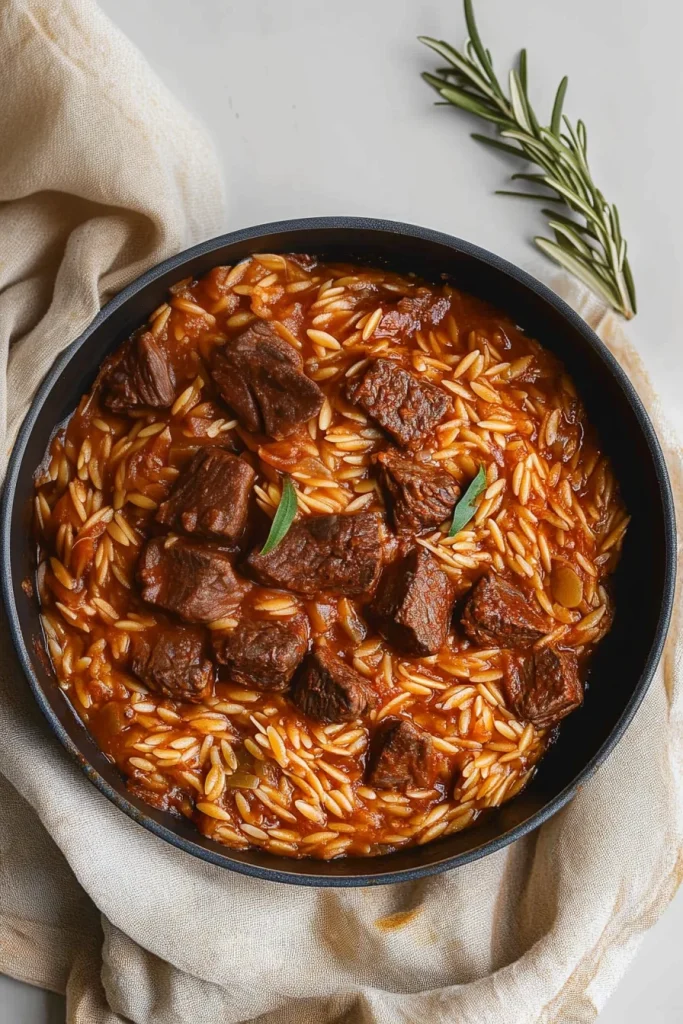
What to Serve With Greek Beef Giouvetsi With Orzo?
This Greek Beef Giouvetsi With Orzo is hearty enough to serve on its own, but a few simple sides make it feel like a full Greek-inspired meal. Since the dish is rich with beef, tomato sauce, red wine, and orzo, it pairs well with fresh, tangy, crunchy, or simple sides. Think Greek salad, bread, roasted vegetables, tzatziki, olives, or lemon wedges. Nothing too complicated. Let the giouvetsi stay in the spotlight.
- Greek Salad: A fresh Greek salad is one of the best sides for Greek Beef Giouvetsi With Orzo. Cucumbers, tomatoes, red onion, olives, feta, and oregano bring crunch and brightness to the table. The salad helps balance the rich beef and glossy tomato sauce. Plus, it makes the whole meal feel colorful and fresh, which is nice when the main dish is deep, saucy, and wonderfully cozy.
- Crusty Bread: Crusty bread is perfect for scooping up the thick tomato sauce. Use sourdough, rustic bread, warm pita, or whatever good bread you have. This dish is saucy, and there will absolutely be delicious bits left on the plate. Bread solves that problem beautifully. Edible cleanup. Very smart. Very appreciated.
- Tzatziki: Tzatziki adds cool, creamy freshness with yogurt, cucumber, garlic, and herbs. It contrasts nicely with the warm beef and tomato sauce. A spoonful on the side makes the meal feel brighter and a little lighter. It’s not required, but if you’re going for a Greek-inspired dinner spread, tzatziki fits right in.
- Roasted Vegetables: Roasted zucchini, eggplant, peppers, carrots, or onions pair beautifully with homemade Greek Beef Giouvetsi With Orzo. Their sweetness and browned edges work well with the tomato sauce and beef. Keep them simple with olive oil, salt, pepper, and oregano. They don’t need to compete. They just need to show up and be delicious.
- Steamed Greens: Spinach, kale, Swiss chard, or other greens add freshness and color. A squeeze of lemon over the greens makes them even better next to the rich orzo. This is a nice option when you want something simple and green without making a whole salad. Sometimes dinner just needs a leafy sidekick.
- Feta Cheese: If you don’t have Kefalotyri, feta cheese on the side can add salty, tangy flavor. It won’t melt into the dish the same way, but it pairs nicely with tomatoes, beef, paprika, and olive oil. Use a light hand because feta has a strong personality. Delicious, yes, but definitely not shy.
- Greek Olives: A small bowl of olives makes a simple and flavorful side. Their salty, briny flavor cuts through the richness of the beef and orzo. Serve them with bread and salad for a relaxed Mediterranean-style meal. It looks like you made an effort, even if the olives came straight from a jar. We love that kind of effort.
- Lemon Wedges: Lemon wedges are a simple finishing touch that can brighten the whole dish. A small squeeze over the beef and orzo helps balance the richness of the sauce. Don’t drown it, just a little squeeze. Like opening a window in a warm kitchen. Fresh, bright, and suddenly everything feels lighter.
FAQ
Can I make Greek Beef Giouvetsi With Orzo without wine?
Yes, you can replace the red wine with extra beef or vegetable stock. The wine adds depth and helps deglaze the pan, but stock still works well. If you want a little brightness, you can add a tiny splash of vinegar or lemon juice. Keep it subtle, though, because the tomato sauce is still the main flavor.
Why does the orzo stick to the bottom?
Orzo releases starch and absorbs liquid quickly, so it can stick if the sauce gets too thick or if you don’t stir it enough. Stir occasionally after adding the orzo and add a splash of boiling water if needed. Orzo is tiny, but it has big “please pay attention to me” energy.
What cheese is best for Greek Beef Giouvetsi With Orzo?
Kefalotyri cheese is a wonderful choice because it is salty, firm, and often used in Greek cooking. If you can’t find Kefalotyri, Parmesan or Pecorino can work too. The cheese is optional, but it adds a sharp, salty finish that tastes beautiful with the tomato sauce and beef.
How do I know when the beef is tender enough?
The beef is tender when you can easily pierce it with a fork and it no longer feels tough or chewy. The recipe simmers for about 1 hour, but some cuts may need more time. If the beef still feels firm, keep simmering. The beef will get there eventually. It just likes to be dramatic.
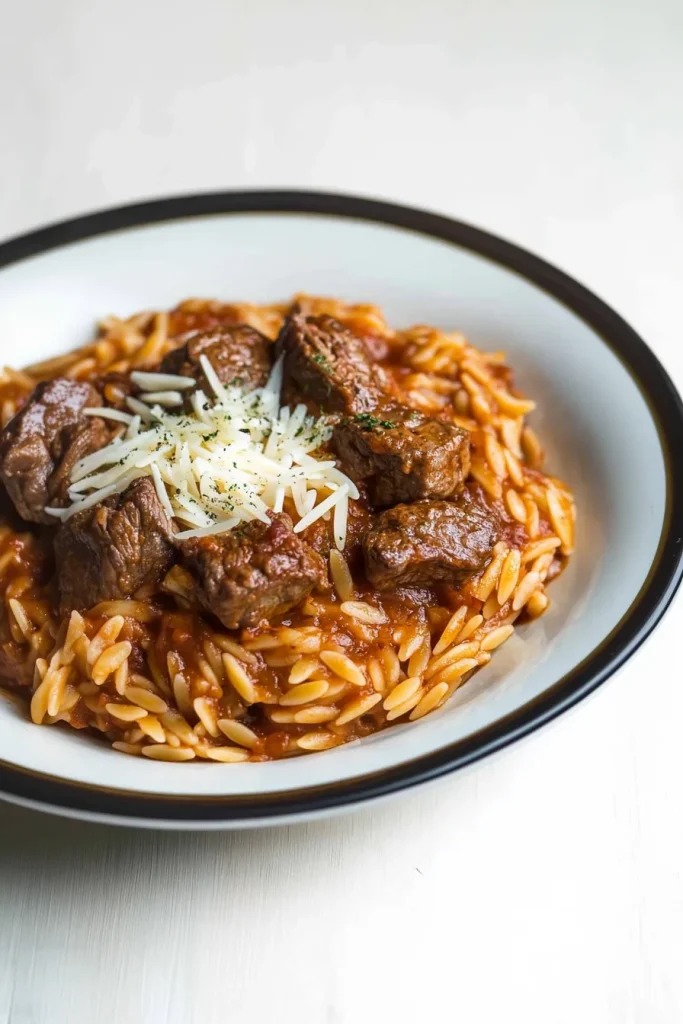
This Greek Beef Giouvetsi With Orzo is rich, saucy, hearty, and full of cozy Mediterranean flavor. Tender beef, glossy tomato sauce, red wine, sweet paprika, bay leaves, allspice, nutmeg, and orzo all come together in one stovetop dish that feels rustic, generous, and deeply comforting.
Make this homemade Greek Beef Giouvetsi With Orzo when you want a dinner that tastes slow-cooked without feeling too fancy or complicated. Serve it with grated Kefalotyri cheese, Greek salad, crusty bread, roasted vegetables, olives, or a little squeeze of lemon. Would you serve yours with extra cheese, warm bread, a crisp salad, or all of the above? Can’t wait to hear what you think!
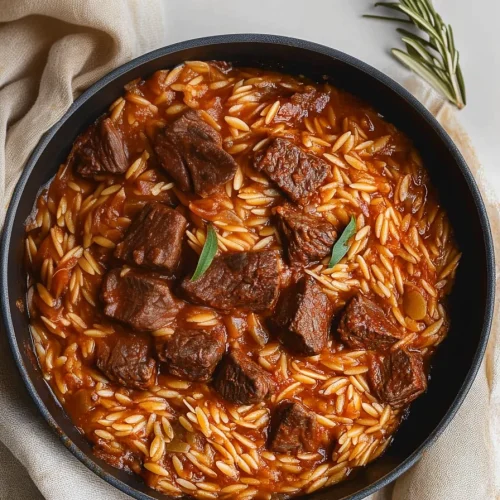
Greek Beef Giouvetsi With Orzo
Ingredients
- 550 g beef chuck chuck roll, or flatiron cut, cut into 3 cm cubes
- 1/4 tsp ground allspice
- Salt to taste
- Black pepper to taste
- Pinch of ground nutmeg
- 2 tbsp olive oil
- 50 g red onion minced
- 2 tsp tomato paste
- 40 ml red wine
- 180 g whole peeled canned tomatoes or fresh tomatoes
- 250 ml beef or vegetable stock
- 1 tsp sweet paprika
- 2 dried bay leaves
- 200 g orzo pasta
- 4 cups boiling water divided, plus more as needed
- Grated Kefalotyri cheese for serving, optional
Instructions
- Place the canned whole peeled tomatoes in a small food processor or blender.
- Pulse until the tomatoes are smooth. If using fresh tomatoes, remove the stems first, then blend until smooth.
- Pat the beef cubes dry with paper towels.
- Season the beef with salt, black pepper, ground allspice, and a pinch of nutmeg.
- Rub the seasonings evenly over all sides of the meat.
- Heat the olive oil in a sauté pan over medium-high heat.
- Add the seasoned beef to the pan.
- Brown the beef on all sides, working in batches if necessary to avoid overcrowding the pan.
- Reduce the heat to medium.
- Add the minced red onion to the pan.
- Cook for about 1 minute, stirring with a wooden spoon and scraping the bottom of the pan.
- Add the tomato paste.
- Cook for 1 to 2 minutes, stirring constantly, until the tomato paste darkens slightly and begins to caramelize.
- Pour in the red wine.
- Stir well, scraping the bottom of the pan to deglaze.
- Cook for about 1 minute, allowing the alcohol to evaporate.
- Stir in the blended tomatoes.
- Add the beef or vegetable stock.
- Pour in 2 cups of boiling water.
- Add the sweet paprika and dried bay leaves.
- Stir to combine.
- Bring the mixture to a simmer.
- Cover the pan with a lid.
- Reduce the heat to low.
- Simmer for about 1 hour, or until the beef is tender.
- Add the remaining 2 cups of boiling water to the pan.
- Season with additional salt and black pepper to taste.
- Add the orzo pasta.
- Cover the pan again.
- Continue simmering for about 20 minutes, stirring occasionally to prevent the orzo from sticking to the bottom of the pan.
- If the orzo remains too firm, add about 1/4 cup additional water as needed.
- Remove the pan from the heat.
- Allow the dish to rest for 1 to 2 minutes, as the orzo will continue absorbing liquid and the sauce will thicken.
- Remove and discard the bay leaves before serving.
- Serve immediately with grated Kefalotyri cheese, if desired.
Notes