Noodles, sesame oil, soy sauce, Chinese rice vinegar, Chinese sesame paste, peanut butter, sugar, ginger, garlic, chile-garlic paste, cucumber, green onion.
I have a soft spot for recipes that feel like they were made for tired days. Not bad days exactly, just those slightly chaotic ones where the fridge is half full, your brain is half working, and dinner needs to happen before everyone starts opening cabinets like lost raccoons. Cold Sesame Noodles are one of those recipes for me. They’re quick, creamy, tangy, nutty, a little spicy if you want them to be, and somehow comforting without being heavy.
The first time I really fell for Cold Sesame Noodles, it was after a long day when takeout sounded tempting but also, weirdly, too much effort. You know when even deciding what to order feels like a whole committee meeting? I had noodles, sesame oil, soy sauce, peanut butter, ginger, garlic, and a cucumber that was very much on its last good day. So I made a quick sesame sauce, tossed everything together, and honestly, I remember standing at the counter eating a few forkfuls before I even put it in a bowl. Not my most elegant moment. But a delicious one.
That’s the beauty of this Cold Sesame Noodles recipe. It feels inspired by those classic Chinese takeout sesame noodles, but it’s easy enough to make at home in about 10 minutes. The sauce has Chinese sesame paste for that deep toasted flavor, peanut butter for creaminess, soy sauce for savory depth, rice vinegar for tang, sugar for balance, and fresh ginger and garlic for that little wake-up kick. Then you can add chile-garlic paste, chile crisp, or chile oil depending on how dramatic you want dinner to be.
I like that these Chinese-inspired sesame noodles are served cold or at room temperature, because that makes them useful in so many situations. Quick lunch? Yes. Summer dinner when the kitchen already feels too warm? Definitely. Meal prep? Absolutely. Potluck side dish? Sure. Midnight fridge snack eaten with a fork directly from the container? I mean, I’m not officially recommending it, but I understand.
And the cucumber. Please don’t skip the cucumber if you can help it. That cool crunch against the creamy sesame peanut sauce is what keeps the whole bowl from feeling too rich. It’s fresh, crisp, and kind of necessary, in my opinion. The green onion adds brightness too, and if you sprinkle on sesame seeds or a little chile crisp, suddenly this simple bowl of cold sesame peanut noodles looks like you had a plan all along. Sound familiar?

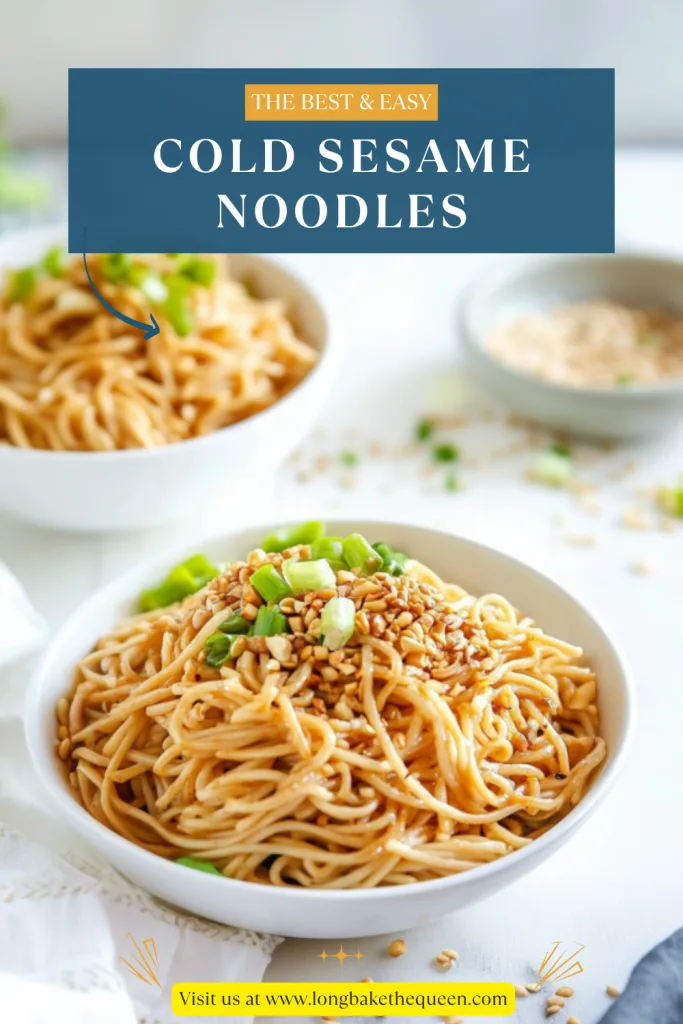
Why you’ll Love these Cold Sesame Noodles?
You’ll love Cold Sesame Noodles because they deliver big flavor with very little effort. The noodles cook quickly, the sauce comes together in one bowl, and everything gets tossed together in minutes. It’s the kind of recipe that feels almost too easy for how good it tastes. Creamy, savory, tangy, nutty, a little spicy, and cool enough to feel refreshing.
One of the best things about this Cold Sesame Noodles recipe is the speed. It takes about 10 minutes, which is faster than most delivery orders and, honestly, faster than deciding where to order from. The noodles boil for a few minutes, the sauce gets whisked together while they cook, and then the whole thing comes together with cucumber and green onion. No long simmer. No complicated prep. No “why did I start this recipe at 7:30 p.m.?” regret.
The flavor is what makes these Chinese sesame noodles so craveable. The sesame paste gives the sauce a deep, toasted nuttiness. Peanut butter makes it creamy and smooth. Soy sauce adds salt and umami, rice vinegar brings brightness, sugar softens the edges, and ginger and garlic make it taste fresh and bold. Then the chile-garlic paste, chile crisp, or chile oil adds heat. Not necessarily a lot of heat, unless you want that. Just enough to make the noodles feel alive.
I also love how flexible these Cold Sesame Noodles are. You can keep them simple with cucumber and green onion, or you can load them up with shredded carrots, cabbage, edamame, tofu, shrimp, chicken, sesame seeds, or chopped peanuts. Some days I want the clean, simple version. Other days I want the “I found five things in the fridge and they’re all going in” version. Both are good. Maybe not equally pretty, but still good.
Another reason this recipe is a keeper is that it works cold, chilled, or at room temperature. That makes it perfect for lunchboxes, picnics, meal prep containers, summer dinners, and potlucks where nobody wants to fight over oven space. These cold sesame peanut noodles are the kind of dish that quietly gets better after sitting a little, though you may need to loosen the sauce with a splash of water or sesame oil before serving.
Ingredient Notes
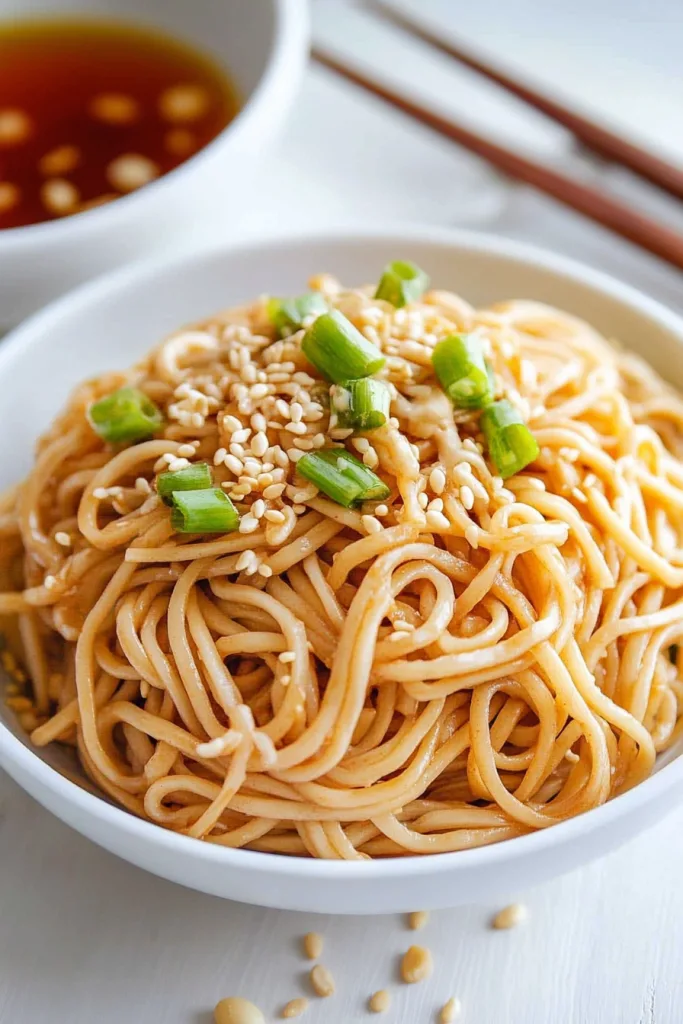
The ingredients for Cold Sesame Noodles are simple, but they each bring something important to the bowl. Since this recipe comes together quickly and the sauce isn’t cooked, every ingredient matters. The noodles create the base, sesame oil adds aroma, sesame paste and peanut butter make the sauce creamy, soy sauce and vinegar balance it, and the fresh ginger, garlic, and chile bring the personality.
- Noodles: Fresh noodles are my favorite for Cold Sesame Noodles because they cook quickly and have a nice chewy bite. Frozen noodles also work well, and if you only have spaghetti, soba, ramen, udon, or rice noodles, those can work too. The main thing is to avoid overcooking them. You want noodles that are tender but still firm enough to hold up after rinsing and tossing. Mushy noodles in sesame sauce? Not tragic, but not the dream.
- Sesame oil: Sesame oil gives these Chinese-inspired sesame noodles their warm, nutty aroma. A splash helps keep the rinsed noodles from sticking together, and the rest goes into the sauce for extra flavor. It’s one of those ingredients that makes the kitchen smell like something good is about to happen.
- Soy sauce: Soy sauce gives the sauce its savory, salty base. It balances the richness of the sesame paste and peanut butter. If you prefer less salt, use low-sodium soy sauce and adjust as needed. I usually start modest and taste, because salty noodles are hard to walk back.
- Chinese rice vinegar: Chinese rice vinegar adds tang and brightness. Without it, the sauce can taste a little too rich or heavy. With it, the whole bowl perks up. It’s like a tiny splash of fresh air in the sauce.
- Chinese sesame paste: Chinese sesame paste is one of the key ingredients in classic Cold Sesame Noodles. It’s thick, rich, and deeply nutty because it is typically made from toasted sesame seeds. It has a stronger, toastier flavor than tahini, so if you can find it, it’s worth using.
- Smooth peanut butter: Peanut butter adds creaminess and helps the sauce cling to the noodles. Smooth peanut butter blends best and gives the sauce that silky texture. I wouldn’t use chunky here unless you’re okay with a less smooth sauce, which could be fine, just a different vibe.
- Granulated sugar: Sugar balances the soy sauce, vinegar, garlic, ginger, and chile. It doesn’t make the noodles taste sweet like dessert. It just rounds everything out so the sauce tastes smooth instead of sharp.
- Fresh ginger: Freshly grated ginger adds warmth, brightness, and a little zing. Since the sauce is not cooked, fresh ginger really shows up. It gives the Cold Sesame Noodles a lively flavor that dried ginger just doesn’t quite match.
- Garlic: Minced garlic adds boldness. Because the sauce stays cold, the garlic tastes fresh and punchy. If you love garlic, you’ll probably enjoy the full amount. If you’re cautious, start with a little less. Garlic has confidence.
- Chile-garlic paste, chile crisp, or chile oil: This is where you control the heat. Chile-garlic paste adds spice and extra garlic flavor, chile crisp adds texture and crunch, and chile oil gives smooth heat. Use what you like and adjust to taste. Some days call for gentle warmth; other days call for chile crisp drama.
- Cucumber: Cucumber adds cool crunch, which is so good with the creamy sesame sauce. Cut it into thin sticks so it mixes easily with the noodles. It makes the dish feel lighter and fresher.
- Chopped green onion: Green onion adds color, freshness, and a mild onion bite. It’s simple, but it really helps finish the bowl. A sprinkle of green onion makes Cold Sesame Noodles look brighter and taste fresher.
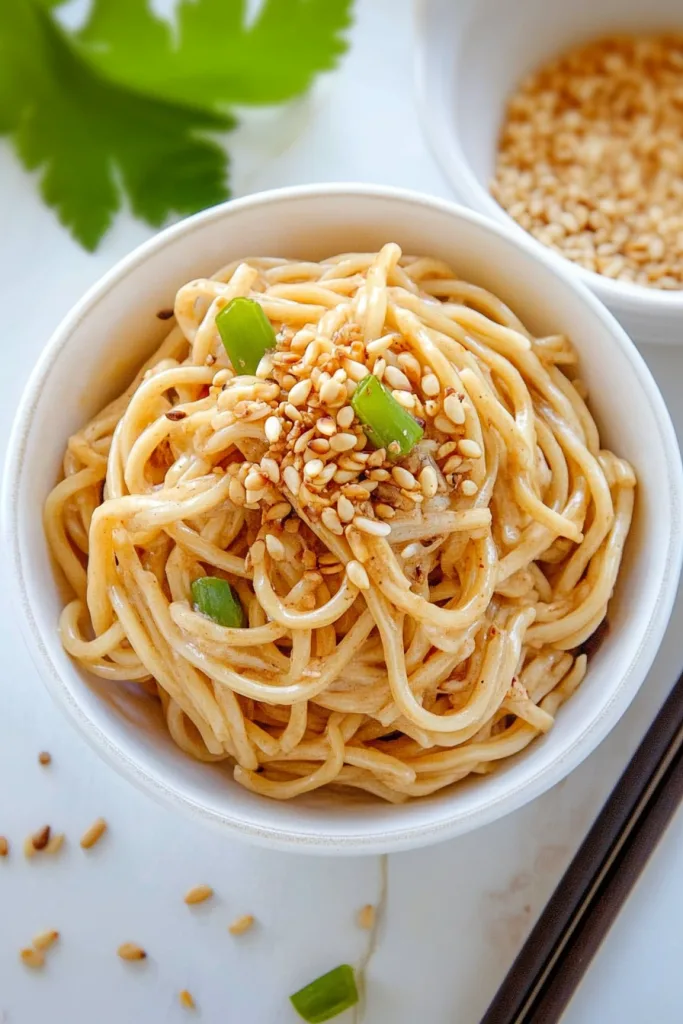
How to Make Cold Sesame Noodles?
Making Cold Sesame Noodles is quick and very doable, even if your brain is still catching up with the day. You’ll cook the noodles, rinse them cold, toss them with sesame oil, whisk the sauce, combine everything, and add toppings. The two big things to remember are simple: don’t overcook the noodles, and don’t panic if the sauce looks thick at first. It will come together.
Step 1: Cook the Noodles
Bring a large pot of water to a boil and add the noodles. Cook them for about 5 minutes, or until they are just tender and still a little al dente. Fresh or frozen noodles can cook quickly, so keep an eye on them. You want noodles that can hold their texture after being rinsed and tossed with the sesame sauce.
Step 2: Drain and Rinse With Cold Water
Drain the noodles in a colander and rinse them well with cold water. This stops the cooking and cools the noodles down quickly. It also rinses away extra starch, which helps prevent clumping. Since these are Cold Sesame Noodles, this cold rinse is not just a suggestion. It’s basically the recipe doing its job.
Step 3: Toss the Noodles With Sesame Oil
Once the water has drained, add the noodles back to the pot or place them in a large bowl. Toss them with a splash of sesame oil. This helps keep the noodles loose and glossy while adding that nutty sesame aroma. If the noodles stick together, gently separate them with tongs or clean hands. No need to wrestle them.
Step 4: Whisk the Sesame Sauce
In a medium bowl, add the remaining sesame oil, soy sauce, Chinese rice vinegar, Chinese sesame paste, peanut butter, sugar, grated ginger, minced garlic, and chile-garlic paste. Whisk until smooth and fully combined. At first, the sesame paste and peanut butter may look thick and stubborn. Keep whisking. It usually smooths out with a little patience and elbow grease.
Step 5: Adjust the Sauce Texture
If the sauce is too thick, add a small splash of cold water, one tablespoon at a time, until it becomes creamy and pourable. The exact thickness can depend on your sesame paste and peanut butter. You want the sauce to coat the noodles, not sit on them like frosting. Creamy sauce, yes. Noodle cement, no.
Step 6: Toss the Noodles With the Sauce
Pour the sesame sauce over the cooled noodles and toss well. Use tongs if you have them, lifting and turning until every strand is coated. This is the moment when the Cold Sesame Noodles start looking glossy, creamy, and very hard not to taste-test. Taste-testing is allowed. Encouraged, maybe.
Step 7: Add the Cucumber and Green Onion
Add the cucumber sticks and gently toss, or arrange them on top if you want the bowl to look pretty. Sprinkle with chopped green onion and any other toppings you like. Sesame seeds, chile crisp, cilantro, shredded carrots, chopped peanuts, tofu, or edamame all fit nicely here.
Step 8: Serve Cold or at Room Temperature
Serve the Cold Sesame Noodles right away, or chill them briefly before serving. They’re delicious cold or at room temperature. If they sit for a while and the sauce thickens, add a splash of water, sesame oil, or soy sauce and toss again. Easy fix.
Storage Options
Cold Sesame Noodles store well, which makes them a great meal prep recipe. The only thing to remember is that the noodles will absorb some of the sauce as they sit. That doesn’t ruin anything; it just means you may need to refresh them before serving. A splash of water or sesame oil usually brings everything back to life.
- Refrigerator: Store leftover Cold Sesame Noodles in an airtight container in the refrigerator for up to 3 to 4 days. Keep them chilled until ready to serve. The flavor often gets even better after a few hours because the sauce settles into the noodles.
- Before serving leftovers: If the noodles seem dry or clumpy, add a small splash of cold water, sesame oil, or soy sauce and toss well. Start with a little so the sauce doesn’t get too thin. You want creamy noodles, not noodle soup. Different recipe.
- Make-ahead option: You can make the sesame sauce ahead and store it separately in the refrigerator for up to 4 days. Cook and rinse the noodles when you’re ready to serve, then toss everything together. This gives the freshest texture.
- Storing toppings: If you’re making Cold Sesame Noodles ahead, store cucumber, green onion, and other fresh toppings separately. Add them right before serving so they stay crisp and bright. Cucumber that has been sitting too long in sauce can get a little tired.
- Freezer: Freezing is not recommended. Cooked noodles can become mushy after thawing, and the sesame sauce may separate. This dish is best fresh or refrigerated.
- Meal prep tip: Portion the noodles into containers and keep extra toppings on the side. Add chile crisp, green onion, cucumber, or sesame seeds just before eating for the best texture.
Variations & Substitutions
This Cold Sesame Noodles recipe is flexible, which is part of why I love it. You can change the noodles, adjust the spice, add protein, or toss in whatever crisp vegetables you have around. The sauce is the heart of the dish, and it works with a lot of different add-ins. Maybe not everything in your fridge, but a surprising amount.
- Use different noodles: Fresh Chinese noodles are great, but spaghetti, linguine, soba, udon, ramen, or rice noodles can work too. The texture will change, but the sesame sauce is forgiving. Use what you have and cook it just until tender.
- Make it spicier: Add more chile-garlic paste, chile crisp, or chile oil if you like heat. Start small and build. It’s much easier to add spice than to recover from Cold Sesame Noodles that suddenly feel like a challenge on a food show.
- Make it milder: Reduce or skip the chile-garlic paste for a milder version. You can serve chile oil or chile crisp on the side so everyone can adjust their own bowl. This is especially helpful if you’re feeding people with very different spice opinions.
- Use tahini: If you can’t find Chinese sesame paste, tahini can work. The flavor will be lighter and less toasted, but it still gives the sauce creaminess. Add a little extra sesame oil if you want more nuttiness.
- Skip the peanut butter: For a stronger sesame flavor or a peanut-free version, leave out the peanut butter and use more Chinese sesame paste. If cooking for allergies, check labels carefully and watch for cross-contact.
- Add protein: Shredded chicken, grilled shrimp, crispy tofu, edamame, sliced egg, or leftover pork can turn Cold Sesame Noodles into a more filling meal. Keep the protein simple so the sauce stays the main flavor.
- Add more vegetables: Shredded carrots, bell peppers, cabbage, snap peas, bean sprouts, or extra cucumber work well. Crisp vegetables balance the creamy sauce and make the bowl feel fresher.
- Make it vegan: Use egg-free noodles and check that your sugar and sauces are vegan-friendly. Most of the ingredients can be plant-based, but labels are always worth a quick look.
- Make it sweeter or tangier: Add a little more sugar if you like a softer, slightly sweeter sauce, or add more rice vinegar if you like extra tang. Taste as you go because small changes can shift the whole sauce.
- Add sesame seeds: Toasted sesame seeds make an easy garnish and add extra nutty flavor. They also make the bowl look finished, which is nice when dinner took only 10 minutes.
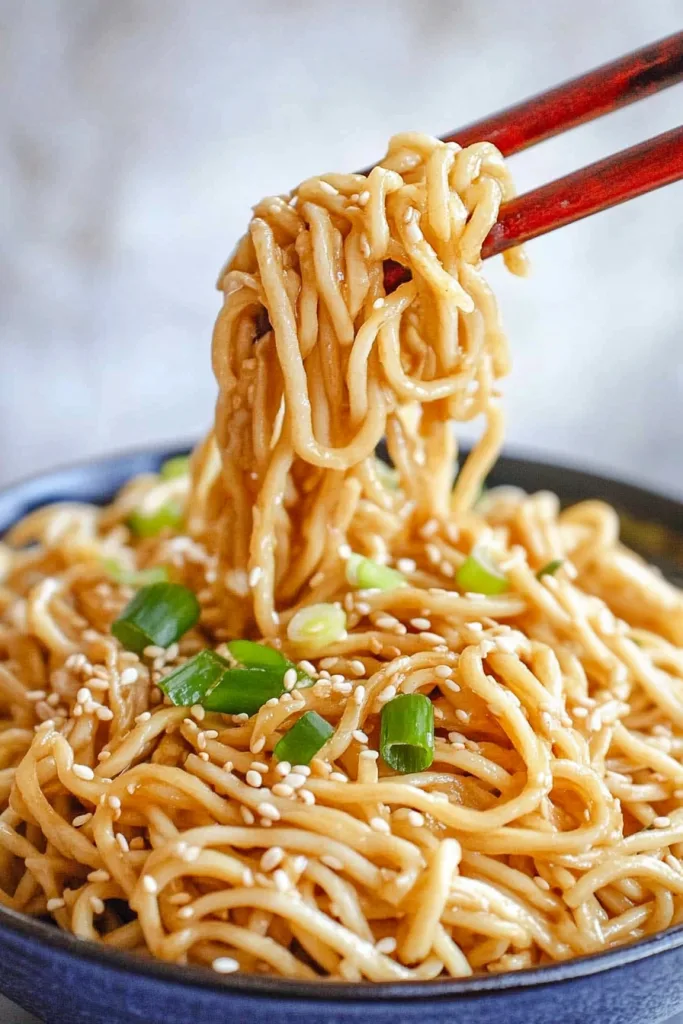
What to Serve With Cold Sesame Noodles?
Cold Sesame Noodles can be a main dish, side dish, lunch, picnic meal, or takeout-inspired dinner at home. Since the noodles are creamy, nutty, and tangy, they pair well with crisp vegetables, simple proteins, dumplings, spring rolls, and cool drinks. Basically, anything fresh, crunchy, or lightly savory gets along well with them.
- Dumplings: Dumplings and Cold Sesame Noodles are a wonderful match. Pork, chicken, shrimp, or vegetable dumplings all work. Add soy sauce, chile oil, or your favorite dipping sauce on the side and you’ve got a takeout-style dinner without the delivery wait.
- Spring rolls: Fresh spring rolls add crunch, herbs, and brightness. The cool vegetables pair nicely with the creamy sesame noodles. This combo feels especially good in warm weather.
- Grilled chicken: Simple grilled chicken makes the noodles more filling without overpowering the sauce. Slice it thin and serve it on top or alongside the noodles.
- Crispy tofu: Crispy tofu is a great plant-based option. The crunchy edges and mild flavor are perfect with the creamy sesame sauce. Add a little chile crisp on top and it’s very satisfying.
- Cucumber salad: A light cucumber salad with rice vinegar, sesame oil, and a pinch of sugar keeps the meal cool and refreshing. Is it cucumber with more cucumber? Yes. Does it work? Also yes.
- Steamed edamame: Edamame adds protein, color, and freshness. Sprinkle it with salt, sesame seeds, or chili flakes for a simple side.
- Asian-inspired slaw: A crunchy cabbage slaw with carrots, green onion, and sesame dressing pairs beautifully with Cold Sesame Noodles. It adds texture and makes the meal feel more complete.
- Egg rolls: Crispy egg rolls bring a hot, crunchy contrast to the cold noodles. That hot-and-cold mix is fun, and the savory filling works well with the sesame sauce.
- Iced tea: Unsweetened iced tea, green tea, jasmine tea, or even a lightly sweet iced tea pairs nicely with the rich sesame sauce. A cold drink keeps the meal refreshing.
- Fresh fruit: Orange slices, pineapple, mango, or watermelon add juicy sweetness next to the savory noodles. This is especially nice for summer lunches or picnic-style meals.
FAQ
Can I make Cold Sesame Noodles without peanut butter?
Yes, you can leave out the peanut butter and use extra Chinese sesame paste instead. The sauce will taste more sesame-forward and less peanutty.
What can I use instead of Chinese sesame paste?
Tahini can be used if Chinese sesame paste is unavailable, but the flavor will be lighter and less toasted. Add a little extra sesame oil if you want more nutty flavor.
Why did my sauce get too thick?
The sauce can thicken because sesame paste and peanut butter are dense, and the noodles absorb sauce as they sit. Add cold water one tablespoon at a time and toss until the sauce becomes creamy again.
Can I add meat or protein?
Yes. Shredded chicken, grilled shrimp, crispy tofu, edamame, sliced egg, or leftover pork all work well with Cold Sesame Noodles. Adding protein turns the dish into a more filling meal.
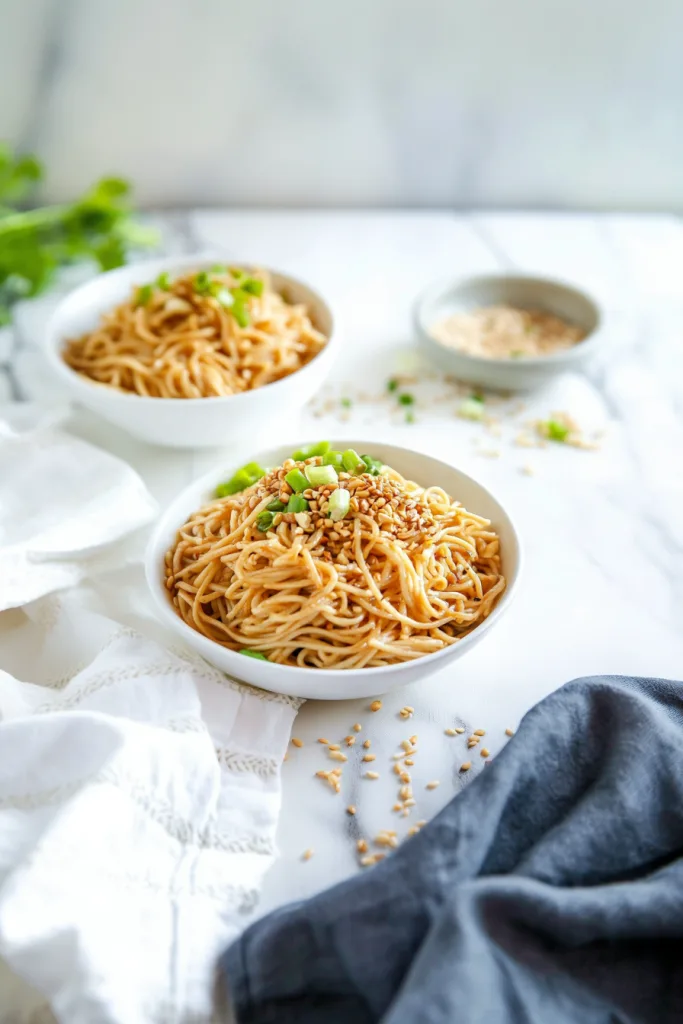
Cold Sesame Noodles are creamy, tangy, nutty, refreshing, and honestly so useful to have in your back pocket. In just 10 minutes, you can make tender noodles tossed with sesame oil, soy sauce, rice vinegar, Chinese sesame paste, peanut butter, ginger, garlic, chile-garlic paste, cucumber, and green onion. It’s quick enough for lunch, flavorful enough for dinner, and flexible enough for whatever toppings your fridge is willing to offer.
So the next time you want something cool, creamy, and takeout-inspired without waiting around for delivery, try these Cold Sesame Noodles. Toss them up, add your favorite toppings, sneak a bite straight from the bowl if needed, and enjoy every saucy, sesame-coated forkful. Can’t wait to hear what you think!
Cold Sesame Noodles
Ingredients
- 1 lb noodles frozen or preferably fresh
- 2 tbsp sesame oil plus an additional splash
- 3 1/2 tbsp soy sauce
- 2 tbsp Chinese rice vinegar
- 2 tbsp Chinese sesame paste
- 1 tbsp smooth peanut butter
- 1 tbsp granulated sugar
- 1 tbsp finely grated ginger
- 2 tsp minced garlic
- 2 tsp chile-garlic paste chile crisp, or chile oil, or to taste
- 1/2 cucumber peeled, seeded, and cut into 1/8-inch by 1/8-inch by 2-inch sticks
- 1/4 cup chopped green onion for garnish
Instructions
- Bring a large pot of water to a boil.
- Add the noodles to the boiling water.
- Cook for approximately 5 minutes, or until the noodles are just tender and still slightly al dente.
- Drain the noodles in a colander.
- Rinse the noodles thoroughly under cold water to stop the cooking process and cool them completely.
- Allow the noodles to drain well.
- Return the drained noodles to the pot or transfer them to a large mixing bowl.
- Add a splash of sesame oil to the noodles.
- Toss gently until the noodles are lightly coated and separated.
- In a medium mixing bowl, combine the remaining sesame oil, soy sauce, Chinese rice vinegar, Chinese sesame paste, smooth peanut butter, granulated sugar, grated ginger, minced garlic, and chile-garlic paste, chile crisp, or chile oil.
- Whisk until the sauce is smooth and fully combined.
- If the sauce is too thick, add a small amount of cold water, 1 tbsp at a time, until the desired consistency is reached.
- Pour the prepared sesame sauce over the cooled noodles.
- Toss until the noodles are evenly coated with the sauce.
- Add the cucumber sticks and toss gently to combine, or arrange them on top before serving.
- Garnish with chopped green onion.
- Serve immediately at room temperature or chilled.
Notes