Pork tenderloin, olive oil, thyme, garlic powder, onion powder, sage, tarragon, kosher salt, and lemon juice make this flavorful Classic Skillet Pork Tenderloin.
I have a quiet little love affair with Classic Skillet Pork Tenderloin, and I don’t think I’m even pretending otherwise at this point. It’s one of those dinners that makes me feel like I have my life together, even if five minutes earlier I was standing in the kitchen staring into the fridge like it had personally offended me. Sound familiar? Some meals just have that energy. They’re calm. Competent. Almost suspiciously reliable.
The first time I made this Classic Skillet Pork Tenderloin recipe, I was not aiming for anything grand. I just wanted dinner to feel like dinner, not like I had thrown random things on a plate and hoped for the best. It had been one of those days where everything felt slightly louder than necessary, and I remember wanting something that smelled good, looked nice, and didn’t ask too much of me. A modest dream, really. I had a pork tenderloin, some herbs, lemon juice, and enough optimism to believe a skillet might still save the evening.
And honestly? It did. The second that herb rub hit the meat, it smelled like the kind of meal you’d expect from someone much more organized than I actually am. Then came the sear, that beautiful golden crust, the little hiss from the pan, the whole kitchen suddenly smelling like I had a plan all along. That’s one of my favorite kinds of recipe magic. It turns low-energy cooking into something that feels a little more intentional, a little more graceful, even if you’re still in socks and dodging a pile of unopened mail on the counter.
What I love most about Classic Skillet Pork Tenderloin is that it feels both simple and slightly special. It reminds me of Sunday dinners, cold-weather evenings, or even those random midweek nights when you just want to eat something that tastes like you made an effort, because maybe in some tiny way you did. It’s not flashy. It’s not trying to win awards. It’s just very good pork, cooked well, with herbs and lemon doing exactly what they should. There’s something comforting about that. Maybe even a little grounding.

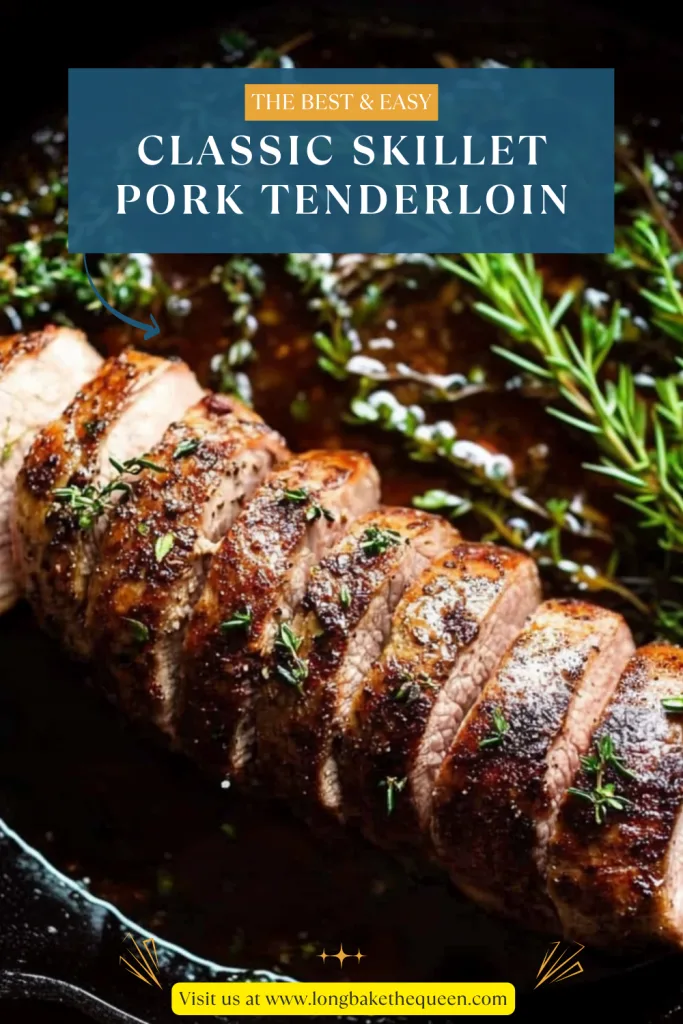
Why you’ll Love this Classic Skillet Pork Tenderloin?
There are plenty of pork recipes out there, and a lot of them are perfectly fine. Nice, even. But Classic Skillet Pork Tenderloin has a certain kind of charm that makes it feel more memorable than a lot of “fine” dinners. It’s juicy, herb-forward, lightly lemony, and finished with that gorgeous skillet sear that makes the whole thing look like more work than it really is. I’m always cheering for recipes that do that.
One of the best things about this Classic Skillet Pork Tenderloin recipe is the cooking method itself. You get the skillet hot, you sear the pork until the outside gets that lovely golden color, and then you let the oven finish the job. That combination is such a good one. The skillet builds flavor and gives you that crust, while the oven keeps the inside tender and even. It’s the kind of method that feels old-school in the best way. Not trendy. Just smart. I trust recipes like that more than I probably should.
The herb paste is another reason this pork tenderloin recipe really stands out. Fresh thyme, dried sage, tarragon, garlic powder, onion powder, lemon juice, olive oil… it all comes together into this fragrant, slightly rustic mixture that clings to the pork and gives every slice real flavor. Not just “seasoned” flavor. Actual, layered flavor. The lemon keeps it from feeling heavy, the herbs make it smell like you meant to do something lovely, and the whole thing somehow manages to taste cozy and fresh at the same time. That’s not always easy to pull off.
And then there’s the final look of it. Once you slice Classic Skillet Pork Tenderloin into medallions, it suddenly looks like one of those dinners you’d serve with a tiny pause before anyone eats, just so people can admire it for a second. Do you know what I mean? Not in a stiff, formal way. More in a “well, this turned out nicely” kind of way. I live for that moment.
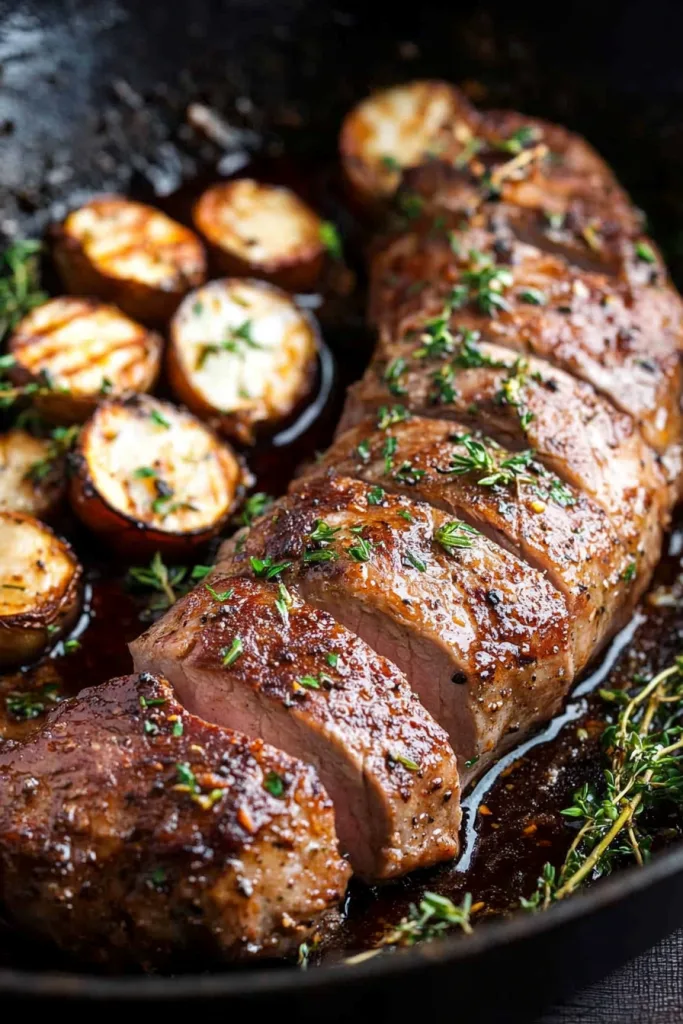
Ingredient Notes
The ingredient list for Classic Skillet Pork Tenderloin is refreshingly straightforward, and I mean that with real affection. Nothing here feels fussy or performative. It’s just a short, smart list of ingredients that know how to make pork taste like a much better idea than you maybe gave it credit for at first.
- Pork tenderloin: This is the star, and it’s worth saying clearly that pork tenderloin is not the same thing as pork loin. The names are annoyingly similar, I know. But tenderloin is smaller, leaner, and much quicker to cook. It’s perfect for a skillet-to-oven method like this one because it stays tender if you treat it right, and it slices into beautiful medallions that make dinner feel instantly more polished.
- Olive oil: You use olive oil in two places here, and both uses matter. In the herb rub, it helps the seasonings form a paste that actually sticks to the pork instead of falling off in little dry flakes. In the skillet, it helps you get that proper sear. So yes, olive oil is doing quiet but important work.
- Fresh thyme: Thyme is a huge part of what gives this Classic Skillet Pork Tenderloin recipe its character. It’s fresh, woodsy, and just a little elegant without trying too hard. If herbs had personalities, thyme would be the calm, dependable one who always shows up on time.
- Garlic powder: I know fresh garlic gets all the glory, but here I really like garlic powder. It blends smoothly into the rub and gives the pork that warm, savory base note without adding moisture or chunks that might burn.
- Onion powder: Same basic idea. It rounds out the flavor and adds depth in a very uncomplicated way. Not flashy, just useful.
- Dried sage: Sage is one of those ingredients that just belongs with pork. It has that earthy, comforting flavor that makes the whole dish feel a little more classic, a little more rooted.
- Dried tarragon: Tarragon adds something slightly different. Slightly sweet, slightly herbal, a bit unexpected. It keeps the herb mix from tasting too predictable, which I appreciate.
- Kosher salt: Pork really needs proper seasoning, so this is not the place to get shy. Salt helps bring out all the herb and lemon flavor and keeps the meat from tasting flat.
- Lemon juice: Lemon is one of the reasons this pork skillet dinner feels so balanced. It brightens everything and cuts through the richness without making the pork taste overly citrusy. Just fresher. Livelier.
- Fresh thyme sprig for garnish: Strictly optional in terms of flavor, but it does make the final plate look extra lovely, and I’m not above that sort of thing.
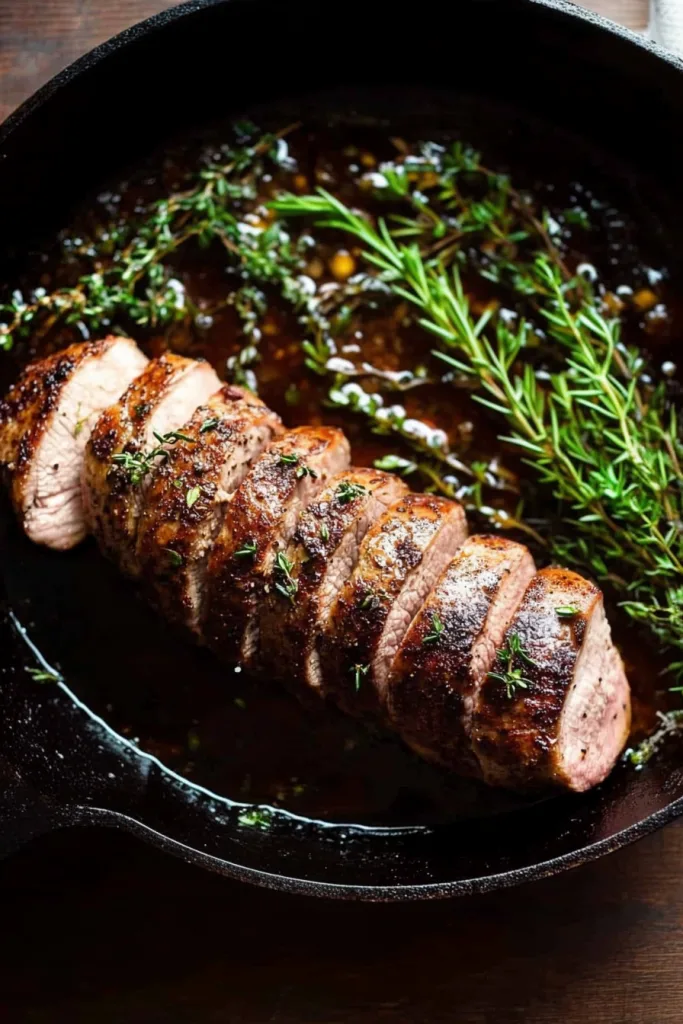
How to Make Classic Skillet Pork Tenderloin?
Making Classic Skillet Pork Tenderloin is one of those cooking processes that makes you feel very capable very quickly. You make a simple herb paste, rub it on the pork, sear it in a skillet, finish it in the oven, let it rest, and slice. That’s the whole story. No strange detours. No complicated sauce reductions. No moment where you suddenly realize you needed a kitchen torch for emotional effect.
Step 1: Preheat the oven
Start by preheating your oven to 400°F.
It’s not the most glamorous step, obviously, but it matters. Once the pork is seared, you want to be able to move it straight into the oven without standing around waiting while the meat starts cooling off and your confidence starts wobbling.
Step 2: Make the herb rub
In a medium mixing bowl, combine the thyme, garlic powder, onion powder, dried sage, dried tarragon, kosher salt, lemon juice, and 1 tablespoon of olive oil. Stir until it forms a thick paste.
This is one of my favorite moments in the whole Classic Skillet Pork Tenderloin recipe, because the smell is immediate and ridiculously encouraging. The herbs wake up, the lemon brightens everything, and suddenly you feel like you’re making a proper dinner. A real dinner. It’s a very nice little morale boost.
Step 3: Coat the pork
Rub the paste all over the pork tenderloin, making sure every side, including the ends, gets coated. Press it in gently so it sticks.
This is worth taking an extra minute for. You want flavor in every slice, not just on one side. It doesn’t need to be perfect, but it should feel like the pork got a fair amount of attention before it meets the pan.
Step 4: Sear the pork
Add the remaining olive oil to a large skillet over medium-high heat. Once hot, add the pork tenderloin and sear it for 4 to 5 minutes, turning it to brown all sides.
This step is where Classic Skillet Pork Tenderloin starts becoming visibly exciting. The outside gets golden, the herbs toast a little, and the skillet starts making all the right noises. You’re not cooking it through here, just building flavor and color. Think of it as the pork putting on a really good jacket before heading into the oven.
Step 5: Finish in the oven
Transfer the skillet to the oven, or move the pork to a roasting pan if needed, and bake for 20 to 25 minutes, until the pork is cooked through.
The oven is what keeps this skillet pork tenderloin juicy. The sear gave you crust, the oven gives you even cooking. I like checking a little early if I can, just because pork tenderloin goes from perfect to “well, that got away from me” faster than I’d prefer. It’s not difficult, just worth paying attention to.
Step 6: Rest the pork
Remove the pork from the pan and let it rest for 5 minutes before slicing.
I know resting meat can feel like one more mildly annoying delay when everyone is hungry, but it really does help. It lets the juices settle back into the meat instead of spilling out the second you cut it. And juicier pork is very much the goal here.
Step 7: Slice and garnish
Slice the pork tenderloin into 8 to 10 medallions, sprinkle with salt and pepper if you like, and garnish with fresh thyme.
This is the part where the whole Classic Skillet Pork Tenderloin recipe suddenly looks extra good. The medallions are neat, the herbs look fresh, and the plate has that quiet confidence I mentioned earlier. It’s a really satisfying finish.
Storage Options
One of the nice things about Classic Skillet Pork Tenderloin is that it stores pretty well, which is important because leftover pork can either be really useful or really disappointing depending on how it’s handled. This one leans useful, as long as you treat it gently and don’t reheat it like you’re trying to prove a point.
Store leftover pork in an airtight container in the refrigerator for up to 3 to 4 days. I usually slice it first because that makes it easier to reheat only what I need later. You can warm it gently in a skillet, the oven, or the microwave. I just go easy on the heat. Pork tenderloin is lean, so it really prefers a softer approach. I respect that. Some foods need gentleness.
You can also freeze Classic Skillet Pork Tenderloin for up to 2 months. Wrap it well or store it in a freezer-safe container, then thaw it in the fridge before reheating. I do think it’s at its best fresh, but leftovers can still make a very good second meal, especially sliced over rice, tucked into a sandwich, or added to a salad if you’re feeling unexpectedly organized.
Variations & Substitutions
One thing I really like about Classic Skillet Pork Tenderloin is that it’s classic without being rigid. It has a clear flavor direction, but it doesn’t fall apart emotionally if you tweak a few things. That’s a very attractive quality in a recipe, in my opinion.
- Use rosemary instead of thyme: Rosemary works beautifully with pork and gives the dish a slightly stronger, more woodsy feel.
- Swap lemon juice for Dijon mustard: This gives the rub a tangier, slightly sharper flavor, and it works especially well if you want a more savory edge.
- Add black pepper to the rub: The recipe has you finish with it later, but adding some right into the paste is a very good move too.
- Use fresh garlic instead of garlic powder: This works if you want a punchier garlic flavor. Just mince it very finely.
- Add crushed red pepper: If you want a little heat, this is an easy way to nudge the pork in that direction without changing the overall feel of the dish.
- Try a different herb blend: Parsley, rosemary, and thyme together would all be lovely if that’s what you have.
- Use a different cut carefully: This method is designed for pork tenderloin, and I do think that’s the best choice. Other cuts can work, but they’ll need different timing.
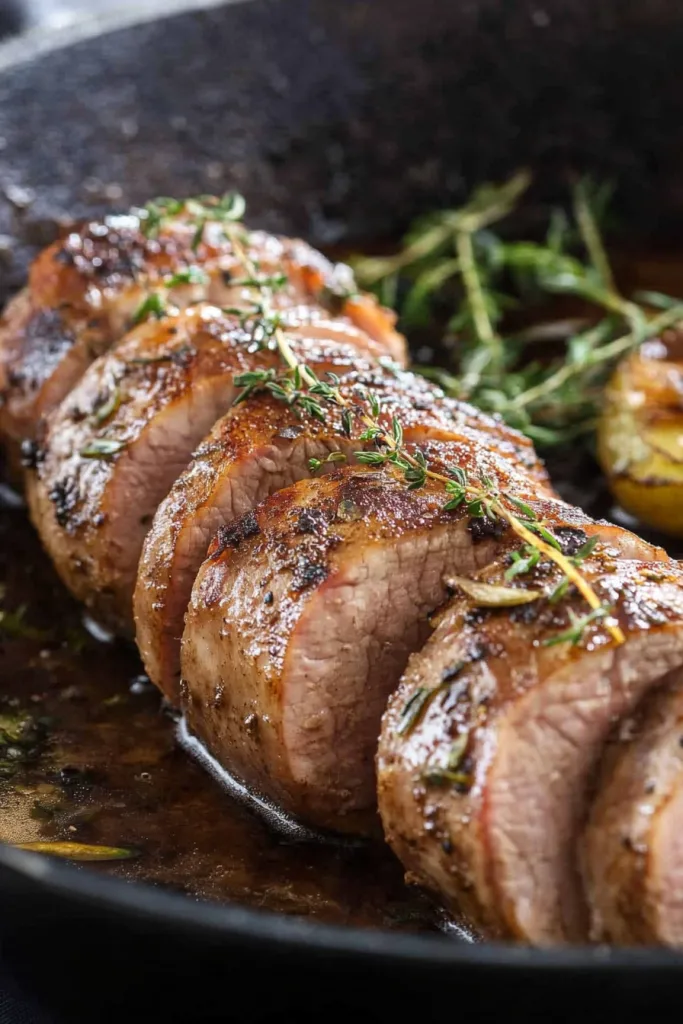
Do you usually leave a pork tenderloin recipe alone once it works, or are you the sort of person who can’t resist adjusting the herb mix every single time? I’m a little guilty of the second one, depending on what’s in the herb drawer.
What to Serve With Classic Skillet Pork Tenderloin?
Classic Skillet Pork Tenderloin is one of those dinners that can go a lot of different ways, which is part of why it’s so useful. It can feel cozy, simple, or just a bit dressed up depending on what you serve with it.
- Mashed potatoes: This is probably the most obvious answer, but it’s obvious for a reason. Creamy potatoes and sliced pork tenderloin just belong together.
- Roasted potatoes: A little crispier, a little easier, and still excellent.
- Green beans: A simple green side keeps the plate balanced and lets the pork stay the main event.
- Roasted carrots: Their sweetness works really nicely with the herbs and lemon in the pork.
- Rice or pilaf: Great if you want something easy that catches the juices well.
- A crisp salad: If you want the meal to feel a little lighter, a fresh salad with a lemony dressing is lovely.
- Crusty bread: Slightly extra maybe, but not a terrible idea if you want to make sure nothing flavorful gets left behind on the plate.
Do you go straight for potatoes with pork, or are you more of a roasted-vegetable person? I usually think I’ll choose the vegetables and then somehow end up making potatoes anyway.
FAQ
Why is my pork tenderloin dry?
Usually it cooked a little too long or got reheated too aggressively. Pork tenderloin is lean, so it really rewards careful cooking.
Can I use a different cut of pork?
You can, but this Classic Skillet Pork Tenderloin recipe is really built for tenderloin specifically, so other cuts will need different timing and may not cook the same way.
Do I really need to sear it first?
I really think so, yes. The sear adds flavor, color, and texture, and it makes the final dish so much better.
Can I cook it all on the stovetop?
You probably could, but I think the oven finish gives you more even cooking and a better chance of keeping the pork nice and tender.
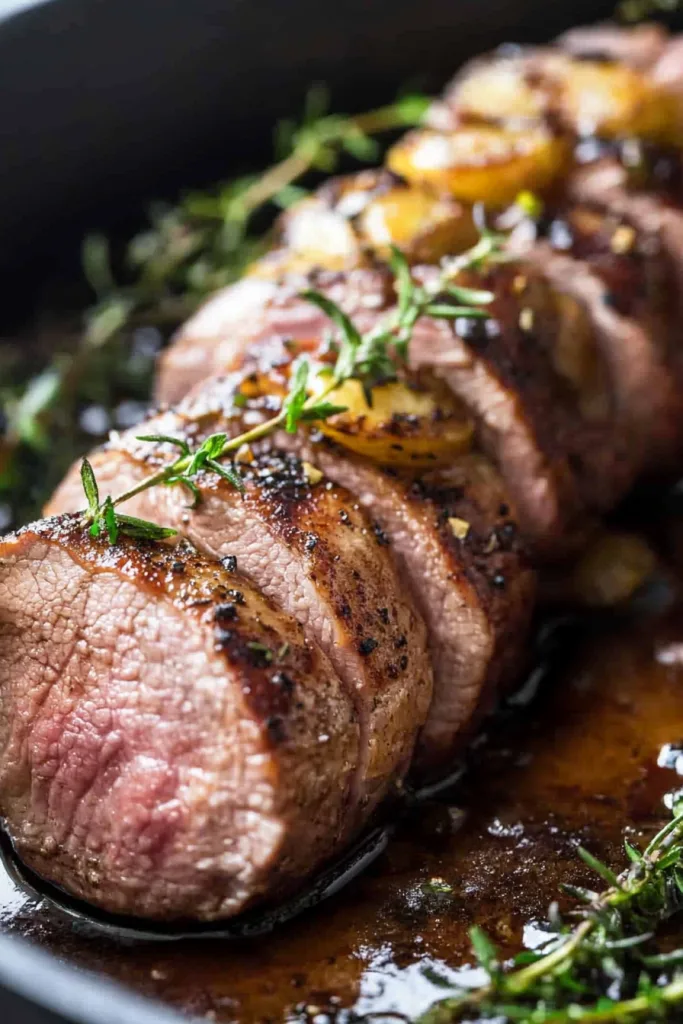
This Classic Skillet Pork Tenderloin is juicy, herby, simple, and exactly the kind of dinner that feels a little more special without becoming a huge project. It’s one of those meals that makes an ordinary evening feel more put together, and I really love that about it. I’d love to hear what side dish you’d serve with it first.
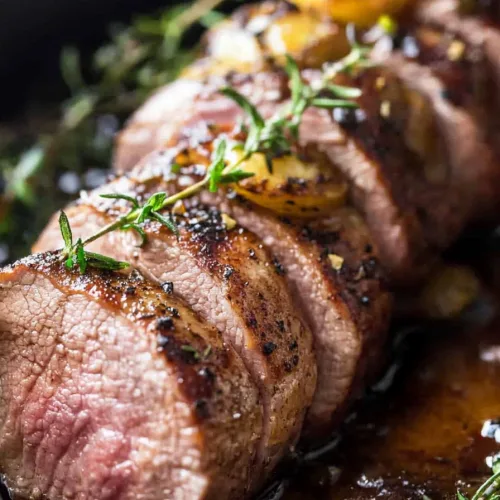
Classic Skillet Pork Tenderloin
Ingredients
- 1 pork tenderloin approximately 1.5 lbs
- 2 tbsp olive oil divided
- 2 tbsp fresh thyme finely chopped
- 2 tsp garlic powder
- 2 tsp onion powder
- 1 tsp dried sage
- 1 tsp dried tarragon
- 2 tsp kosher salt
- 1 to 2 tbsp lemon juice
- Fresh thyme sprig for garnish
Instructions
- Preheat the oven to 400°F.
- In a medium mixing bowl, combine the fresh thyme, garlic powder, onion powder, dried sage, dried tarragon, kosher salt, lemon juice, and 1 tablespoon of olive oil.
- Stir the mixture until a thick paste forms.
- Rub the seasoning mixture evenly over the entire pork tenderloin, including the ends, pressing it gently into the meat so it adheres well.
- Heat the remaining 1 tablespoon of olive oil in a large skillet over medium-high heat.
- Place the pork tenderloin in the hot skillet and sear for 4 to 5 minutes, turning as needed so all sides are evenly browned.
- Transfer the skillet to the oven, or move the pork tenderloin to a roasting pan if the skillet is not oven-safe.
- Roast for 20 to 25 minutes, or until the pork is cooked through and reaches the desired internal temperature.
- Remove the pork from the pan and let it rest for 5 minutes.
- Slice the pork tenderloin into 8 to 10 medallions.
- Garnish with a fresh thyme sprig before serving.
Notes