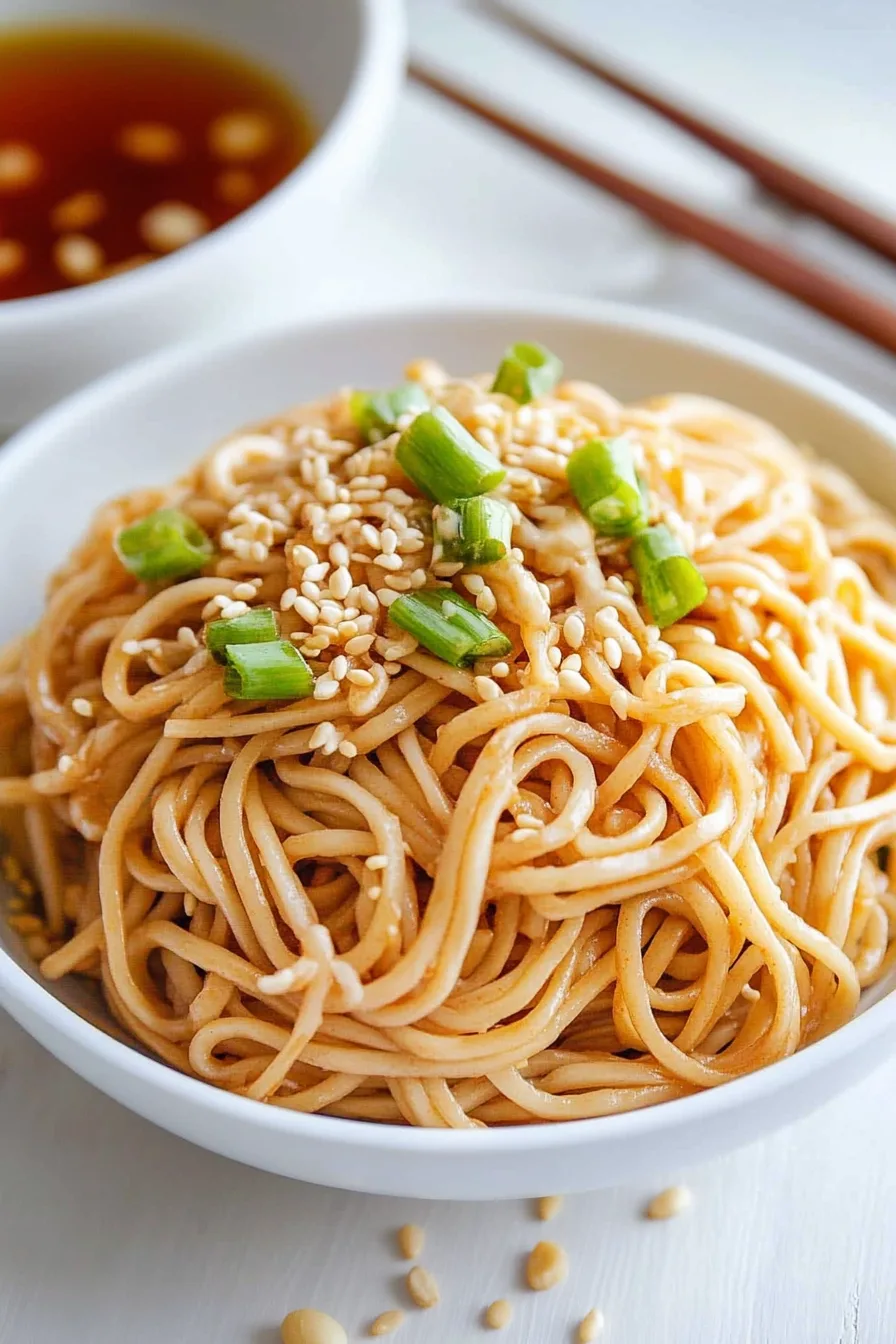
Beef roast, salt, pepper, olive oil, garlic, red cooking wine, beef broth, Worcestershire sauce, carrots, potatoes, and onions.
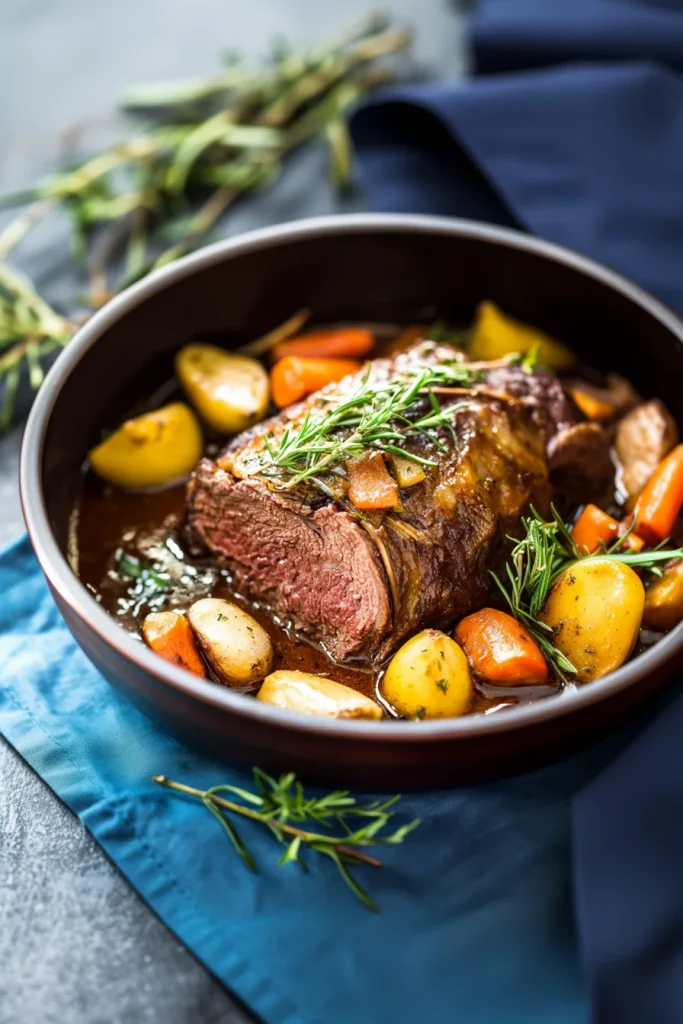
Some meals just feel like they know what kind of day you’ve had. This Beef Roast Pot is one of those meals. It’s warm, hearty, deeply savory, and the kind of dinner that makes the house smell like someone has been lovingly cooking all afternoon… even though you only did about 15 minutes of actual prep. I mean, that’s a pretty good deal, right?
This beef roast pot dinner is made with a 3 to 4 pound beef roast, baby carrots, red potatoes, onions, garlic, beef broth, Worcestershire sauce, red cooking wine, olive oil, salt, and pepper. It’s simple, but it doesn’t taste plain. The roast gets seared first, the vegetables go right into the same dish, and the sauce turns everything tender and cozy while it bakes.
I like this recipe because it feels old-school in the best way. Not old-school like complicated casseroles with mystery cans. More like Sunday dinner, rainy afternoon, “everybody come eat before it gets cold” kind of old-school. It’s comforting without being needy. And honestly, I appreciate that in a recipe.
I always think roast dinners have a little bit of magic in them. You put a big piece of beef in the oven with vegetables and a good savory sauce, then a few hours later it somehow feels like you’ve done something impressive. But really? The oven did most of the heavy lifting. I’m very happy to let the oven take credit when it means dinner turns out this good.
The first time I made a Beef Roast Pot like this, it was for one of those slow Sundays where the day felt too quiet, but in a good way. Laundry was half done, the kitchen counters were not exactly spotless, and I wanted dinner to feel comforting without me hovering over the stove forever. I had a beef roast, some red potatoes, baby carrots, and onions, and I remember thinking, this should work. Not a grand plan. Just hungry optimism.
Once the beef hit the hot skillet and started browning, everything changed. That smell of seared beef with salt and pepper is one of those kitchen moments that makes you feel like you know what you’re doing, even if you’re still reading the recipe twice. Then the garlic went into the skillet, followed by red cooking wine, beef broth, and Worcestershire sauce, and suddenly the whole thing smelled like Sunday dinner had officially clocked in for duty.
What I really love about this Beef Roast Pot is how the vegetables become part of the story. The baby carrots soften and turn sweet, the red potatoes soak up that rich broth, and the onions melt into the sauce until they’re tender and savory. I know the beef is the main event, technically, but sometimes I find myself going back for the potatoes first. Is that wrong? Maybe. But potatoes cooked in roast juices have a strong argument.
This recipe also reminds me of family-style meals where no one cares if the slices are perfect. You scoop the vegetables onto plates, spoon sauce over everything, and somebody asks for extra broth before you’ve even sat down. It’s not fancy restaurant food. It’s the kind of home-cooked beef roast that feels steady and familiar. A little messy. A little rustic. Very satisfying.
And the leftovers? That’s another reason I like this Beef Roast Pot. The beef tastes great hot, but it’s also delicious cold in sandwiches, tucked into wraps, or reheated with the vegetables and sauce. One roast can turn into more than one meal, which makes me feel a tiny bit organized. Even if the rest of the week says otherwise.

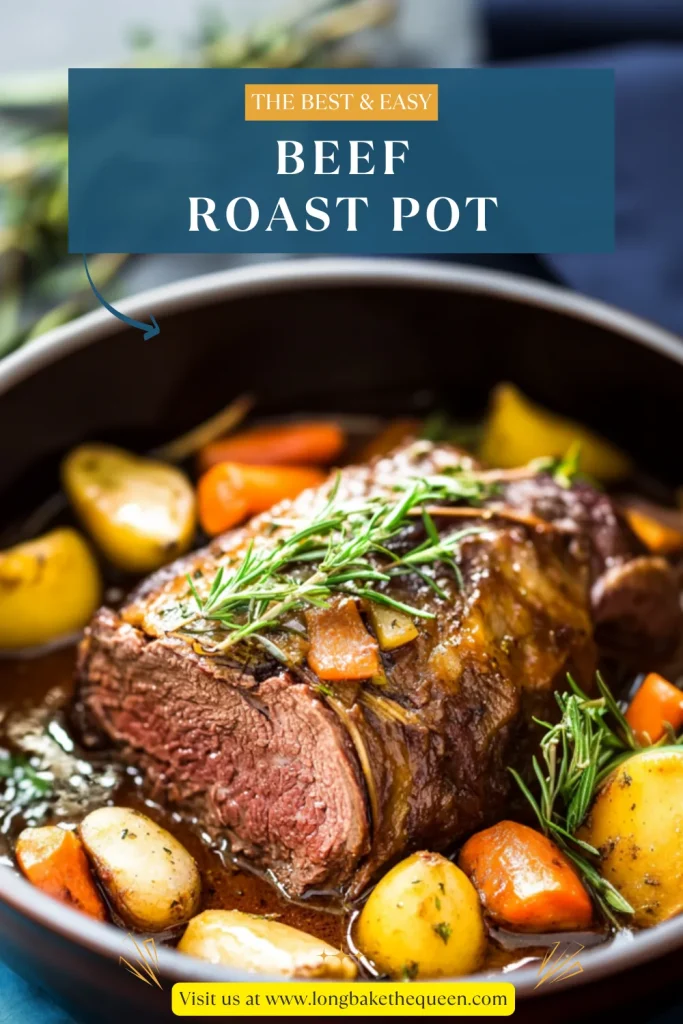
Why you’ll Love this Beef Roast Pot?
- It feels like true comfort food. This Beef Roast Pot gives you tender beef, soft red potatoes, sweet baby carrots, mellow onions, and a rich garlicky sauce all in one dish. It has that classic pot roast feeling, but with a name that sounds a little bolder, like it rode into dinner wearing boots. The flavors are familiar and cozy, which makes it perfect for lazy Sundays, chilly nights, family meals, or any evening when you want something hearty without too much fuss.
- The prep is short, but the payoff is big. You only need about 15 minutes to prep this beef roast pot recipe before it goes into the oven. You season and sear the roast, arrange the vegetables, make a quick sauce in the same skillet, and pour it over everything. After that, the oven takes over for about 3 hours. I love recipes like this because they make you look wonderfully capable without demanding your full attention. A little effort up front, lots of reward later. Very nice.
- Searing the beef adds real flavor. I know searing can feel like an extra step when you just want to get the roast in the oven, but it’s worth it here. Browning the outside of the beef creates a deeper flavor and leaves those tasty browned bits in the skillet. Then the garlic, wine, broth, and Worcestershire sauce pick up all that flavor and turn it into the sauce. Skipping it won’t ruin the meal, probably, but searing makes the finished Beef Roast Pot taste richer and more complete.
- The vegetables cook right beside the roast. Baby carrots, red potatoes, and onion wedges bake in the same dish as the beef, which means they absorb the sauce as everything cooks. This is one of my favorite things about a good beef roast dinner. You’re not making separate sides and juggling extra pans. The vegetables soften, sweeten, and become part of the meal naturally. Fewer dishes, more flavor. That’s a dinner strategy I can support.
- It works beautifully for leftovers and meal prep. This Beef Roast Pot makes about 8 servings, and the leftovers are genuinely useful. You can slice the beef for sandwiches, shred it into wraps, serve it over rice, tuck it into noodles, or reheat it with the vegetables and sauce for another cozy plate. It even tastes good cold, especially if you’re the kind of person who steals a slice from the fridge while “deciding what to eat.” No judgment. I’ve been there.
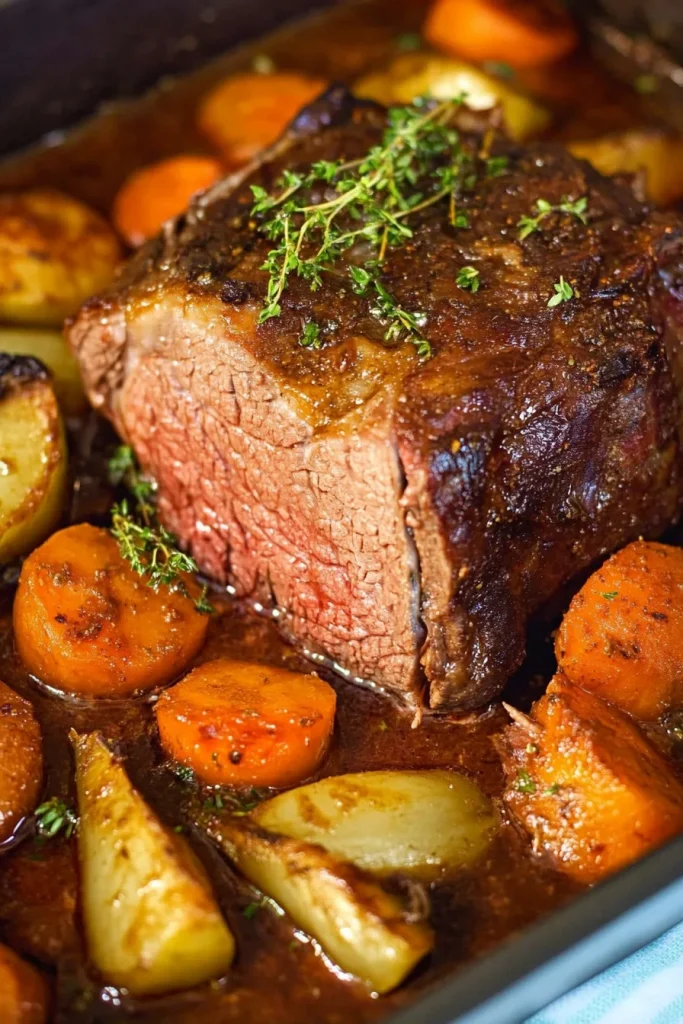
Ingredient Notes
The ingredients for this Beef Roast Pot are simple, but each one has a job. The beef roast brings the hearty center, the carrots and potatoes make it a full meal, and the onions add sweetness. Garlic, red cooking wine, beef broth, and Worcestershire sauce build a savory sauce that keeps the roast moist as it bakes. Nothing too complicated. Just a classic combination that works because, honestly, beef and potatoes rarely need much convincing.
- Beef Roast: A 3 to 4 pound beef roast is the star of this recipe. Chuck roast is one of my favorite choices because it has enough marbling to become tender during slow baking. Rump roast, bottom round, or shoulder roast can also work, though leaner cuts may slice nicely but feel a little firmer. If your roast isn’t fall-apart tender right at the 3-hour mark, don’t panic. Sometimes beef is stubborn and needs a little more time. Keep it covered, let it cook longer, and trust the process.
- Salt and Pepper: Salt and pepper may seem basic, but they matter a lot in this Beef Roast Pot. Since the ingredient list is simple, seasoning the beef properly helps bring out its natural flavor. Be sure to season all sides before searing. It doesn’t need to be complicated, but it should be even. Beef is a large piece of meat, and it appreciates not being seasoned in one lonely corner.
- Olive Oil: Olive oil helps sear the roast and brown the outside. It also catches all those flavorful browned bits in the skillet, which later become part of the sauce. You don’t need a huge amount, just enough to help the beef brown instead of stick. Once the sauce ingredients hit that skillet, all those little browned bits lift into the liquid. That’s where some of the best flavor hides.
- Minced Garlic: Garlic gives the sauce a bold, savory flavor. This recipe uses 6 teaspoons, which sounds like a lot at first, but remember, you’re flavoring a big roast, vegetables, and plenty of cooking liquid. The garlic only needs about 30 seconds in the skillet before adding the liquids. Don’t walk away during this step. Garlic goes from fragrant to burnt faster than a group chat can change topics.
- Red Cooking Wine: Red cooking wine adds richness and depth to the sauce. It gives the Beef Roast Pot a slightly more developed flavor, like it simmered with extra care. If you don’t cook with wine, you can use additional beef broth instead. A splash of balsamic vinegar or red wine vinegar can help add some depth, though the flavor will be slightly different. Still good. Just a different kind of good.
- Beef Broth: Beef broth is the main liquid in this beef roast pot recipe. It keeps the roast moist, gives the vegetables flavor, and becomes the base of the sauce. Use a broth you like because you’ll taste it in the finished dish. Low-sodium broth is a smart choice if you want more control over the salt. Some broths are very salty, and nobody wants roast that tastes like it fell into the ocean.
- Worcestershire Sauce: Worcestershire sauce adds a deep, savory, slightly tangy flavor that works beautifully with beef. It’s one of those ingredients that can be hard to explain, but you notice when it’s missing. In this recipe, 1/4 cup helps round out the sauce and gives the roast a richer flavor. It’s doing background work, but important background work.
- Baby Carrots: Baby carrots are easy, practical, and perfect for this Beef Roast Pot because they can go straight into the roasting dish. They soften as they cook and become a little sweet, which balances the savory beef and sauce. You can also use regular carrots cut into large chunks. Just keep them big enough so they don’t disappear into the sauce after 3 hours.
- Red Potatoes: Red potatoes hold their shape well during long cooking, which makes them a great choice here. Cut them into large pieces so they stay hearty and don’t fall apart too much. They soak up the beef broth and Worcestershire sauce as they bake, turning tender and flavorful. I’ll be honest, roast potatoes in beef juices may be one of the best parts of this whole dish.
- Onions: Large onions cut into wedges add sweetness and depth. As they bake, they soften into the sauce and help flavor everything around them. If you love onions, add an extra one. If you’re not an onion person, keep the pieces large so they’re easy to move aside. The onions will still do their quiet flavor work, and everyone can pretend not to notice.
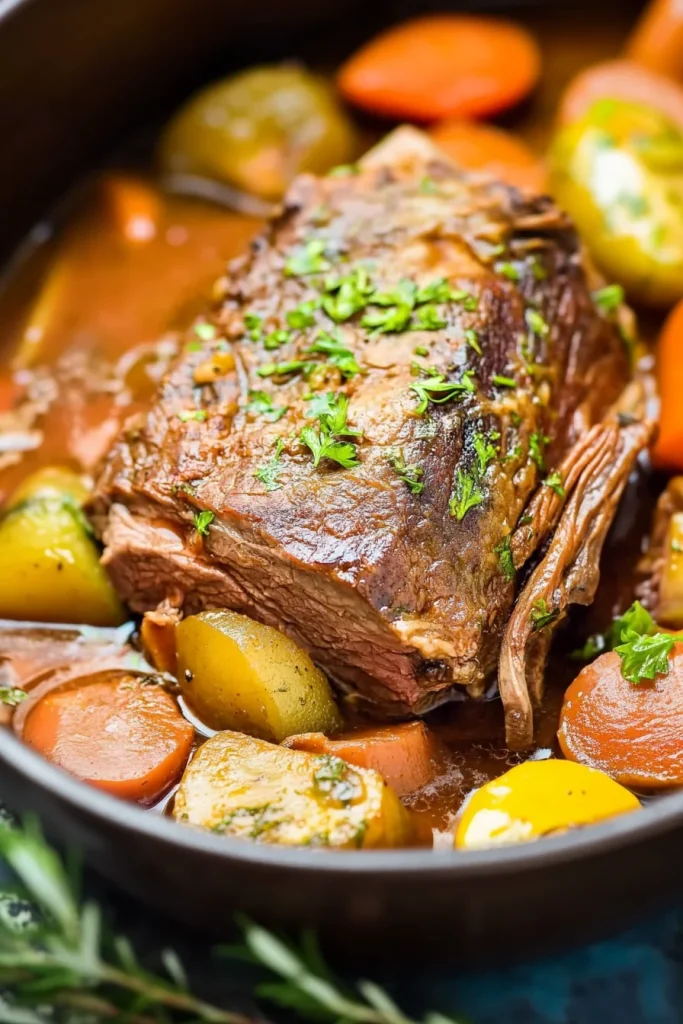
How to Make Beef Roast Pot?
Making Beef Roast Pot is pretty straightforward, and most of the time is hands-off. You’ll preheat the oven, sear the seasoned beef, arrange it with the vegetables, make a quick sauce in the same skillet, pour that sauce over the roast, cover everything tightly, and bake until tender. The hardest part may honestly be waiting while the kitchen smells amazing for three hours.
- Preheat the oven. Start by preheating the oven to 350°F. This gives the oven time to heat evenly before the roast goes in. Since this beef roast pot dinner cooks for several hours, steady heat helps the meat tenderize and gives the vegetables time to soften in the sauce. It’s a simple first step, but it sets everything up properly.
- Heat the skillet. Add olive oil to a large skillet and heat it over medium-high heat. You want the skillet hot enough to sear the beef. If the pan isn’t hot, the roast may steam instead of brown, and browning is where the flavor starts. Give the oil a moment to heat before adding the beef. A little patience here pays off later.
- Season the roast. Pat the beef dry if it seems wet, then season all sides with salt and pepper. Drying the surface helps the roast brown better in the skillet. Seasoning all sides matters because this is a large piece of meat, and you want flavor throughout. It’s not complicated, but it’s one of those steps that makes the finished Beef Roast Pot taste better.
- Sear the beef. Place the seasoned roast in the hot skillet and sear it on all sides until browned. You’re not cooking it through at this point, just building flavor on the outside. Turn it carefully so each side gets contact with the skillet. The roast should develop a browned crust before moving to the baking dish. It may splatter a bit, because beef likes drama sometimes. Just go carefully.
- Arrange the roast and vegetables. Place the seared roast in the center of a large roasting dish or baking dish. Arrange the baby carrots, red potato pieces, and onion wedges around it. Keep the vegetables in large pieces so they hold up during the long bake time. This is the moment when the dish starts looking like a proper roast dinner, and I always find that oddly satisfying.
- Sauté the garlic. In the same skillet, reduce the heat to medium and add the minced garlic to the remaining oil and browned bits. Sauté for about 30 seconds, stirring constantly. Garlic burns quickly, so stay close. You want it fragrant and warm, not bitter. This little step gives the sauce a lovely garlicky base.
- Make the sauce. Whisk in the red cooking wine, beef broth, and Worcestershire sauce. Stir well and scrape up the browned bits from the bottom of the skillet. Bring the mixture to a light boil. This sauce may look simple, but it carries the flavor from the skillet into the roasting dish. It becomes richer as it bakes with the beef and vegetables.
- Pour the sauce over everything. Carefully pour the sauce mixture over the roast and vegetables. Try to get the liquid around the beef and over some of the vegetables so everything gets a little flavor from the start. The sauce helps keep the roast moist while it cooks and gives the carrots, potatoes, and onions that savory, slow-roasted taste.
- Cover tightly. If you’re using a roasting dish with a lid, place the lid on top. If you’re using a baking dish, seal it tightly with aluminum foil. This step is important because covering traps moisture and helps the beef become tender instead of dry. Think of it like creating a little cozy steam room for dinner. Strange image, but accurate enough.
- Bake until tender. Bake the Beef Roast Pot for about 3 hours, or until the beef is tender and the vegetables are cooked through. Cooking time can vary depending on the cut of beef, so if the roast still feels tough, cover it again and bake a little longer. Tough roast usually means it needs more time, not that you failed. I think that reminder is important.
- Rest and serve. Remove the dish from the oven and let the roast rest for several minutes before slicing or shredding. Resting helps the juices settle back into the meat. Serve the beef with the carrots, potatoes, onions, and plenty of sauce spooned over the top. This is when people start drifting into the kitchen like they just happened to be nearby. Sure they did.
Storage Options
This Beef Roast Pot stores very well, which makes it perfect for leftovers and meal prep. The beef can be served hot, sliced cold for sandwiches, shredded into wraps, or reheated with the vegetables and sauce. The flavor may even deepen after a night in the fridge. I’m not saying leftovers are better than the first serving, but I’m also not not saying it.
- Refrigerator: Store leftover Beef Roast Pot in an airtight container in the refrigerator for up to 3 to 4 days. Keep the beef, vegetables, and sauce together if possible because the sauce helps the meat stay moist. Let everything cool before storing, but don’t leave it sitting out too long. When reheating, warm it gently so the beef doesn’t dry out.
- Freezer: You can freeze leftover roast beef for up to 3 months. Slice or shred the beef and store it with some sauce in freezer-safe containers or bags. The carrots and potatoes can also be frozen, though their texture may soften after thawing. If you care a lot about texture, freeze mostly the beef and sauce, then make fresh sides later. If you don’t care and just want easy food later, freeze it all. Real life rules apply.
- Reheating in the Oven: Place the beef and vegetables in an oven-safe dish with some sauce or a splash of broth. Cover with foil and reheat at 325°F until warmed through. This works well for larger portions because the covered dish helps keep everything moist. Add extra beef broth if the sauce looks too reduced or thick.
- Reheating on the Stovetop: For sliced or shredded leftovers, place the beef and sauce in a skillet or saucepan over low to medium-low heat. Warm gently, stirring occasionally. Add a splash of broth if needed. This is a great method if you plan to serve the beef over mashed potatoes, rice, noodles, or toasted bread. Basically, anything that wants sauce. Many things want sauce.
- Reheating in the Microwave: For individual portions, place the beef, vegetables, and sauce in a microwave-safe dish. Cover loosely and heat in short intervals, stirring or turning the meat between each one. Add a splash of broth if the beef seems dry. The microwave is convenient, but gentle reheating helps the texture stay better. Also, sauce splatters are real, so cover that bowl.
- Meal Prep Tip: Slice or shred the leftover beef and portion it with vegetables and sauce for easy lunches. You can also use cold sliced beef for sandwiches or wraps. This Beef Roast Pot is one of those recipes that keeps working after dinner is over. One roast, several meals, less thinking later. Beautiful.
Variations & Substitutions
This Beef Roast Pot is classic as written, but it can handle adjustments. You can change the cut of beef, swap the vegetables, skip the wine, add herbs, make the sauce thicker, or toss in mushrooms. It’s a forgiving recipe, which is helpful because real kitchens are not always perfectly stocked. Sometimes you have carrots but no potatoes. Sometimes you have mushrooms asking to be used. Dinner adapts.
- Use a different beef cut. Chuck roast, rump roast, bottom round, or shoulder roast can all work for this Beef Roast Pot. Chuck roast is often the most tender because it has more marbling. Leaner cuts may be a little firmer but still flavorful when cooked covered with sauce. If you use a leaner roast, make sure there is enough liquid and don’t rush the cooking time. Slow roast recipes like patience. Annoying, but true.
- Skip the wine. If you prefer not to use red cooking wine, replace it with more beef broth. For a bit of depth, add a small splash of balsamic vinegar, red wine vinegar, or even grape juice. The flavor will not be exactly the same, but it will still be rich and savory. I like the wine in this beef roast pot recipe, but I also understand that not every pantry or family dinner wants wine involved.
- Add fresh herbs. Rosemary, thyme, bay leaves, or parsley can add more aroma and flavor. Rosemary and thyme are especially good with beef, potatoes, and carrots. Add a few sprigs before baking, then remove any woody stems before serving. Herbs make the whole dish smell even more like a cozy Sunday dinner, which is never a bad thing.
- Change the vegetables. Baby carrots, red potatoes, and onions are classic, but you can also use celery, parsnips, turnips, mushrooms, or sweet potatoes. Keep the vegetables in large pieces so they don’t fall apart during the long cooking time. Softer vegetables may need to be added later if you want them to hold more texture. This Beef Roast Pot is flexible, so use what makes sense.
- Make it extra garlicky. If you love garlic, add a few whole garlic cloves around the roast before baking. They soften in the sauce and turn sweet and mellow. Garlic lovers will understand immediately. If you’re cooking for people who are less enthusiastic about garlic, maybe start with the recipe amount first. Not everyone wants dinner to announce itself from across the room.
- Thicken the sauce into gravy. If you want a thicker gravy-style sauce, remove the roast and vegetables after baking and pour the cooking liquid into a saucepan. Simmer it for a few minutes, then whisk a small amount of cornstarch with cold water and stir it into the sauce until thickened. This turns the cooking liquid into a richer sauce that’s perfect over potatoes, rice, or noodles. Very cozy. Very spoon-worthy.
- Add mushrooms. Mushrooms are a great addition to this Beef Roast Pot because they pair naturally with beef and soak up the sauce. Use whole or halved mushrooms so they hold up during baking. They add an earthy flavor that makes the dish taste even deeper. If you like mushrooms, they fit right in here. If not, just pretend this bullet never happened.
What to Serve With Beef Roast Pot?
This Beef Roast Pot already includes beef, potatoes, carrots, and onions, so it can absolutely stand alone. Still, a good side can make the meal feel extra complete. Crusty bread, mashed potatoes, green beans, salad, buttered noodles, rice, or roasted Brussels sprouts all work nicely. I’d choose something simple, because the roast is already doing a lot of delicious heavy lifting.
- Mashed Potatoes: Yes, there are already red potatoes in the dish. And yes, mashed potatoes still make sense if you want an extra cozy plate. The sauce from this Beef Roast Pot tastes wonderful spooned over creamy mashed potatoes. Potato on potato may sound excessive, but I don’t think comfort food needs to apologize for being comforting. Do you?
- Crusty Bread: Crusty bread is perfect for soaking up the garlicky beef broth and wine sauce. French bread, sourdough, dinner rolls, or rustic country bread all work well. A slice of bread on the side makes sure none of that sauce gets left behind. And sauce this good deserves a proper exit from the plate.
- Green Beans: Green beans add freshness and color beside the rich beef and potatoes. You can steam them, sauté them with garlic, or roast them. They help balance the meal without making it feel less comforting. A little green on the plate also makes dinner look more put together. We take small wins.
- Side Salad: A crisp salad adds brightness to this hearty beef roast dinner. Mixed greens, cucumber, tomatoes, red onion, and a simple vinaigrette work well. The acidity from the dressing helps cut through the richness of the beef and sauce. It’s simple, fresh, and makes the meal feel balanced-ish. That counts.
- Buttered Noodles: Buttered noodles are especially good with leftover Beef Roast Pot. Slice or shred the beef, spoon the sauce over noodles, and suddenly leftovers feel like a completely different dinner. Egg noodles, wide noodles, or simple pasta all work. It’s easy, cozy, and very practical. I love when leftovers have a second personality.
- Rice: White rice, brown rice, or seasoned rice can be served under the beef and sauce. Rice is a great way to stretch the meal or turn leftovers into bowls. The sauce soaks into the rice and makes every bite flavorful. This is a simple option, but it works beautifully.
- Roasted Brussels Sprouts: Roasted Brussels sprouts add a slightly crisp, earthy side that pairs well with the tender beef and soft vegetables. Their caramelized edges bring a nice contrast to the rich sauce. A little balsamic drizzle is lovely too, especially if you skipped the wine and still want a bit of tang on the plate.
FAQ
What cut of beef is best for Beef Roast Pot?
Chuck roast is one of the best choices for Beef Roast Pot because it becomes tender and flavorful when cooked slowly. Rump roast, bottom round, or shoulder roast can also work, though they may be a bit leaner and firmer. If the beef is not tender after 3 hours, continue baking it covered. It may just need more time.
Can I make Beef Roast Pot without wine?
Yes, you can make this beef roast pot recipe without red cooking wine. Replace the wine with additional beef broth. For extra depth, add a splash of balsamic vinegar, red wine vinegar, or grape juice. The flavor will be slightly different, but the roast will still be savory, hearty, and comforting.
How do I keep the roast from drying out?
Keep the dish tightly covered while baking. Use a roasting lid or seal the baking dish well with aluminum foil. Also make sure the roast has enough liquid around it. When storing leftovers, keep the beef with sauce so it stays moist. Dry roast is sad roast, and we’re avoiding that.
Can I cook Beef Roast Pot in a slow cooker?
Yes, you can adapt this Beef Roast Pot for a slow cooker. Sear the roast first, then place it in the slow cooker with the vegetables and sauce. Cook on low for about 8 hours or on high for about 4 to 5 hours, or until the beef is tender. Slow cookers vary a little, so check for tenderness rather than relying only on the clock.
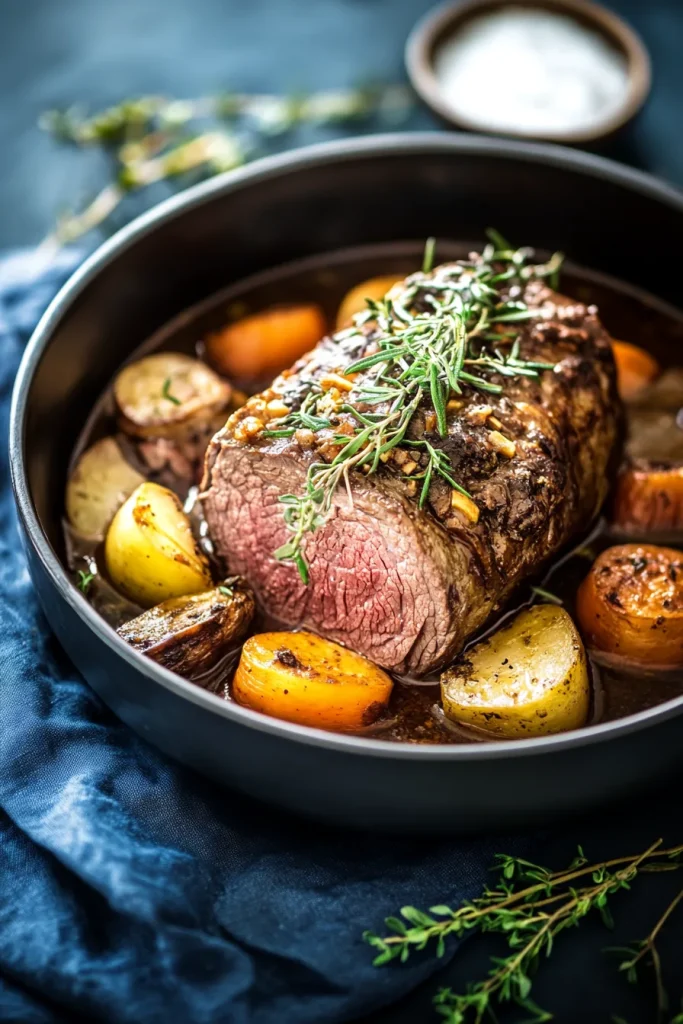
This Beef Roast Pot is hearty, cozy, and full of that slow-cooked comfort food feeling. It takes simple ingredients — beef roast, carrots, potatoes, onions, garlic, broth, Worcestershire sauce, and red cooking wine — and turns them into a full meal that tastes like it took more effort than it did. Those are the recipes I come back to, honestly.
Make this beef roast pot dinner for a lazy Sunday, a family meal, a cold evening, or a meal-prep kind of week. Serve it with crusty bread, mashed potatoes, green beans, rice, or buttered noodles, and don’t forget to spoon plenty of sauce over the top. Would you keep it classic with potatoes and carrots, or add mushrooms and extra garlic next time? Can’t wait to hear what you think!
Beef Roast Pot
Ingredients
- 3 to 4 lb beef roast
- 2 tsp salt
- 1 tsp ground black pepper
- 2 tbsp olive oil
- 6 tsp minced garlic
- 1 cup red cooking wine
- 2 cups beef broth
- 1/4 cup Worcestershire sauce
- 1 lb baby carrots
- 1 lb red potatoes cut into large pieces
- 2 large onions cut into wedges
Instructions
- Preheat the oven to 350°F.
- Heat the olive oil in a large skillet over medium-high heat.
- Season the beef roast evenly on all sides with the salt and ground black pepper.
- Place the seasoned roast in the heated skillet.
- Sear the roast on all sides until evenly browned.
- Transfer the seared roast to the center of a large baking dish or roasting dish.
- Arrange the baby carrots, red potato pieces, and onion wedges around the roast.
- In the same skillet, reduce the heat to medium.
- Add the minced garlic to the remaining oil and browned bits in the skillet.
- Sauté the garlic for approximately 30 seconds, stirring constantly to prevent burning.
- Whisk in the red cooking wine, beef broth, and Worcestershire sauce.
- Stir well to combine, scraping the bottom of the skillet to incorporate any browned bits.
- Bring the sauce mixture to a light boil.
- Carefully pour the sauce mixture over the roast and vegetables in the baking or roasting dish.
- If using a roasting dish, cover it with the lid.
- If using a baking dish, cover it tightly with aluminum foil.
- Bake for approximately 3 hours, or until the beef is tender and the vegetables are fully cooked.
- Remove the dish from the oven.
- Allow the roast to rest for several minutes before slicing or shredding.
- Serve the beef roast warm with the carrots, potatoes, onions, and sauce.
Notes