A rustic Tuscan Ribollita Soup made with olive oil, onion, carrot, celery, tomatoes, cannellini beans, kale, vegetable broth, and rustic bread.
I’ll tell you something funny about the first time I made Tuscan Ribollita Soup. I didn’t plan it. Not even a little.
It was one of those “clean out the fridge” evenings. You know the ones. A half bunch of kale that had seen better days, a carrot rolling around the vegetable drawer, celery that was this close to becoming compost, and a couple cans of cannellini beans sitting in the pantry like they’d been patiently waiting for their moment.
Sound familiar?
Somewhere in the back of my mind I remembered reading about Tuscan Ribollita Soup, this rustic Italian soup that’s basically designed for leftovers. Bread, beans, vegetables—nothing fancy. In fact, it was traditionally made the next day from whatever vegetables were left over. Honestly, that idea alone made me like the recipe.
So I grabbed a pot, started sautéing onion, carrot, and celery in olive oil, and hoped for the best.
And then the kitchen filled with that smell. Garlic and herbs warming in olive oil. Tomatoes bubbling. The kind of smell that makes someone wander into the kitchen asking, “What are you making?”
The real magic moment came when I poured the Tuscan Ribollita Soup over toasted garlic bread. The bread soaked up the broth, the beans made everything creamy, and suddenly the whole bowl felt hearty and comforting in a way I didn’t expect.
It reminded me a little of those tiny trattorias you stumble into while traveling. The ones where the soup tastes homemade and the waiter shrugs when you ask for the recipe.
Ever had a meal that felt simple but somehow… memorable? That’s what ribollita does.

Why you’ll Love this Tuscan Ribollita Soup?
There’s soup, and then there’s Tuscan Ribollita Soup, which kind of sits in its own cozy category. It’s hearty without being heavy. Rustic without trying too hard. And the flavor? Somehow bigger than the ingredients would suggest.
What makes ribollita so special is the way the beans and bread work together. The mashed cannellini beans thicken the broth naturally, giving it a creamy texture without cream. Then the toasted bread sits at the bottom of the bowl and absorbs everything. Suddenly the soup becomes thick, rich, and almost stew-like.
Another thing I love about this Tuscan Ribollita Soup recipe is that it actually improves overnight. The flavors settle, the broth thickens, and the vegetables get even more tender. It’s one of those rare recipes where leftovers feel like a bonus instead of an afterthought.
And honestly… it’s forgiving. Forgot a carrot? Added extra kale? Used slightly stale bread? The soup doesn’t mind. In fact, that’s kind of the point.
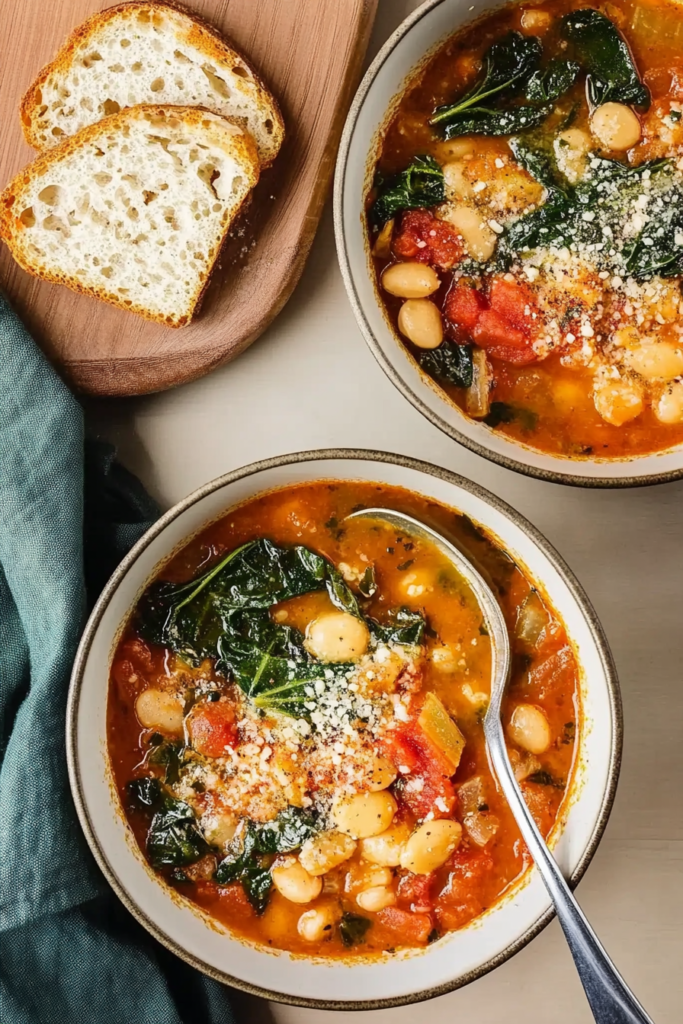
Ingredient Notes
Before we jump into making this Tuscan Ribollita Soup, let’s talk ingredients for a minute. Nothing complicated here—just a handful of pantry staples and vegetables that somehow come together beautifully.
- Olive Oil – A good drizzle of olive oil is the foundation of this soup. It carries the flavor of the herbs and vegetables and adds that silky richness that makes the broth feel comforting.
- Onion, Carrot, and Celery – These three vegetables are the classic base for many Italian soups. They cook down slowly and release natural sweetness that balances the tomatoes.
- Garlic – Garlic gives the soup that warm, savory aroma that fills the kitchen while everything simmers. If you’re like me, you might be tempted to add an extra clove. I usually do.
- Tomato Paste and Plum Tomatoes – The tomato paste deepens the flavor while the whole tomatoes bring brightness and body to the broth.
- Cannellini Beans – Creamy white beans are the backbone of Tuscan Ribollita Soup. Mashing some of them thickens the soup and gives it that signature texture.
- Tuscan Kale – Tuscan kale—sometimes called lacinato or dinosaur kale—holds up beautifully in soups. It softens but keeps enough texture to add interest.
- Rustic Bread – This is what truly makes ribollita unique. Instead of serving bread on the side, you place it at the bottom of the bowl so it absorbs the soup. The result? A bowl that’s thick, hearty, and incredibly satisfying.
- Fresh Herbs – Rosemary, thyme, oregano, or marjoram all work here. Even one small sprig adds that unmistakable Tuscan aroma.
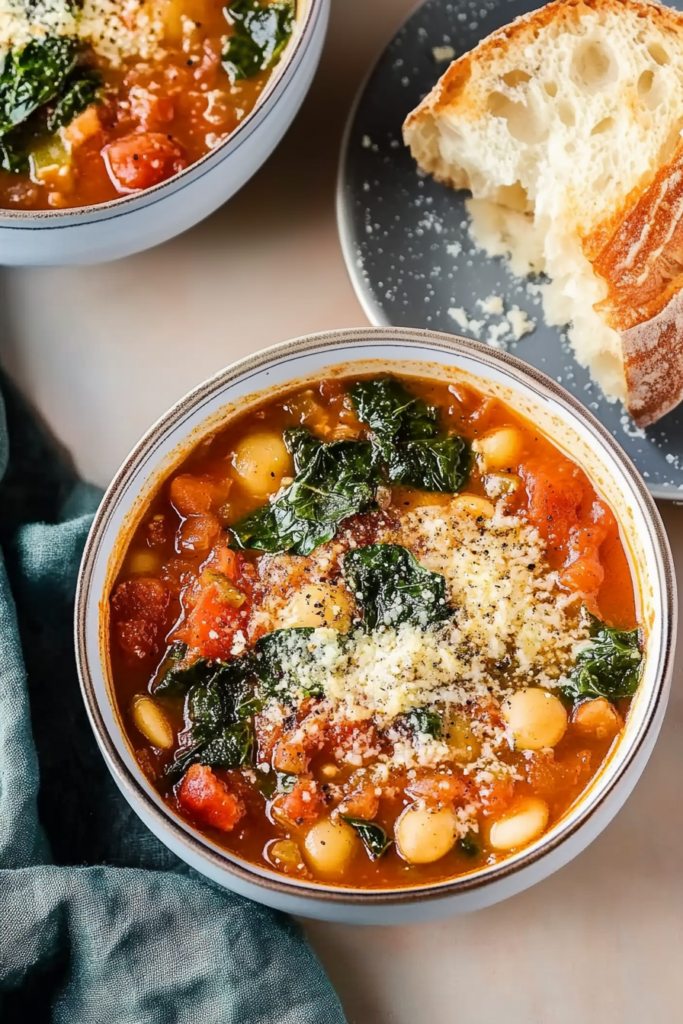
How to Make Tuscan Ribollita Soup?
Making Tuscan Ribollita Soup isn’t complicated, but it does feel a little special. It’s one of those recipes where the kitchen slowly fills with warm, comforting smells.
Step 1: Sauté the Vegetables
Start by heating olive oil in a large pot over medium-high heat.
Add the diced onion, carrot, celery, and salt. Let them cook for a couple minutes until the onion softens and turns slightly translucent.
Then add the garlic, pepper, herbs, bay leaf, and tomato paste. Stir everything together and let it cook until fragrant.
You might notice bits sticking to the bottom of the pot. Don’t panic—that’s actually flavor building.
Step 2: Add Tomatoes and Broth
Pour in the whole plum tomatoes and vegetable broth.
Use your spoon to gently press the tomatoes against the side of the pot so they break apart a little.
At this stage the soup starts smelling incredible—garlicky, herby, and deeply comforting.
Step 3: Add Beans and Kale
Mash about half of the cannellini beans with a fork until they form a thick paste.
Add both the mashed beans and the whole beans to the pot along with the chopped Tuscan kale.
Bring the soup to a gentle boil, then reduce the heat and let it simmer for about 20 minutes.
During this time the broth thickens and becomes slightly creamy.
Step 4: Make the Garlic Toast
While the soup simmers, toast your bread slices.
While they’re still warm, rub each slice with a clove of garlic. It sounds simple, but the flavor it adds is amazing.
Place a slice of this garlic toast in the bottom of each bowl.
Step 5: Finish and Serve
Taste the Tuscan Ribollita Soup and adjust the salt and pepper if needed.
If you have the patience, let the soup rest for about 10 minutes before serving. The flavors settle and the temperature becomes perfect for eating.
Remove the bay leaf and herb stems, then ladle the soup over the bread.
Finish with a drizzle of olive oil and freshly grated Parmesan.
And suddenly you’ve got a bowl of classic Tuscan comfort.
Storage Options
One of the best things about Tuscan Ribollita Soup is how well it stores.
In fact, ribollita literally means “reboiled.” Traditionally, the soup was reheated the next day, and many people swear it tastes even better that way.
Store leftover soup in the refrigerator for up to four days. Reheat gently on the stove and add a splash of broth if it becomes too thick.
It also freezes well for up to three months—just leave the bread out until serving.
Variations & Substitutions
Like many traditional dishes, Tuscan Ribollita Soup welcomes a little creativity.
- Extra Vegetables – Zucchini, potatoes, cabbage, or even spinach can easily be added.
- Different Beans – Great northern beans or navy beans work well if cannellini beans aren’t available.
- Vegan Version – Simply skip the Parmesan cheese or use a plant-based version.
- Different Greens – Swiss chard or collard greens can replace Tuscan kale.
- Add Sausage – Some modern versions include Italian sausage for a heartier twist.
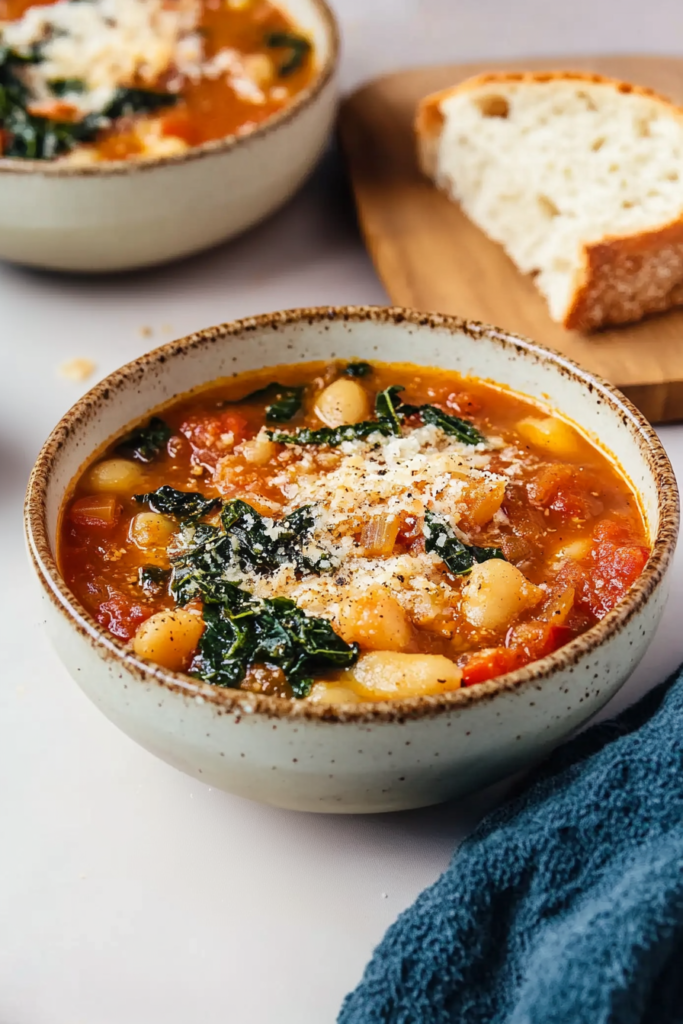
The beauty of this soup is that it adapts easily to whatever ingredients you have on hand.
What to Serve With Tuscan Ribollita Soup?
Even though Tuscan Ribollita Soup is hearty enough to stand on its own, a few sides make it even better.
- Extra Crusty Bread – You’ll want something to soak up the broth.
- Simple Italian Salad – A crisp salad with olive oil and vinegar balances the richness of the soup.
- Roasted Vegetables – Roasted zucchini or eggplant pair beautifully with the rustic flavors.
- A Glass of Red Wine – If you enjoy wine, a glass of Chianti complements ribollita perfectly.
Or honestly… just another bowl of soup.
FAQ
What does ribollita mean?
“Ribollita” translates to “reboiled.” The soup was traditionally reheated the next day, which made it thicker and even more flavorful.
Can I make Tuscan Ribollita Soup ahead of time?
Absolutely. In fact, many cooks prefer it that way because the flavors deepen overnight.
Do I have to include the bread?
Technically no—but the bread is a defining feature of Tuscan Ribollita Soup. It thickens the soup and adds texture.
Is Tuscan Ribollita Soup healthy?
Yes. It’s packed with vegetables, beans, and leafy greens, making it both nourishing and satisfying.
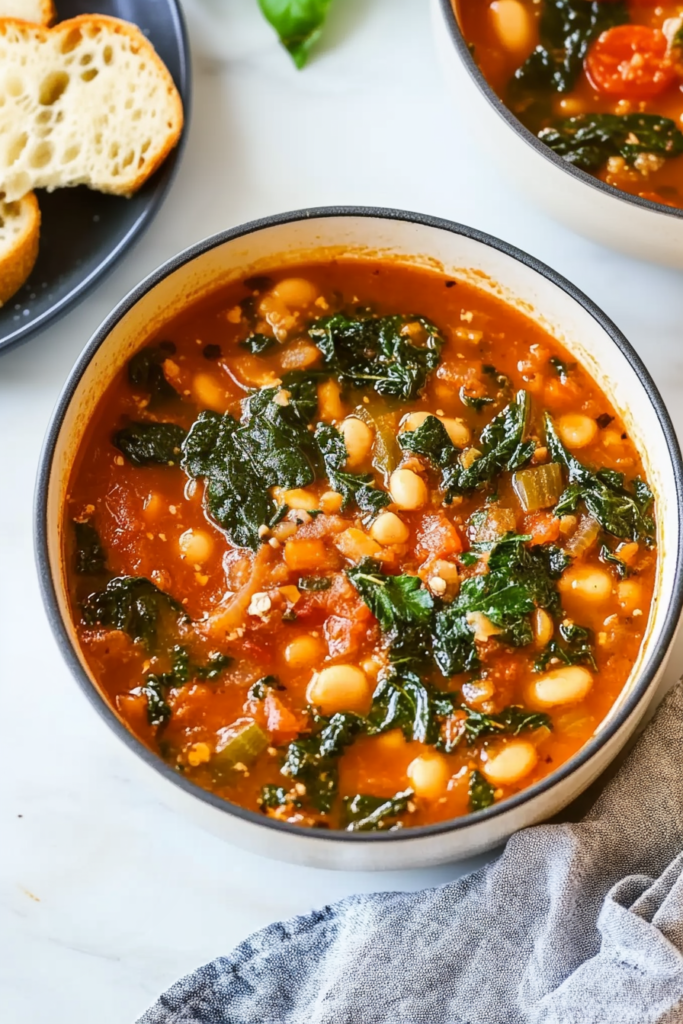
And that’s my version of Tuscan Ribollita Soup—a rustic Italian classic that turns simple ingredients into something cozy and deeply satisfying.
If you give this Tuscan soup recipe a try, I’d genuinely love to hear about it. Did you add extra vegetables? Did the bread soak up the broth perfectly?
Tell me—I’m always curious what happens in other kitchens.

Tuscan Ribollita Soup
Ingredients
For the Soup
- 3 tablespoons olive oil plus additional for serving
- 1 medium yellow onion diced
- 1 medium carrot peeled and diced
- 2 ribs celery diced
- 1 teaspoon kosher salt plus additional to taste
- ½ teaspoon freshly ground black pepper plus additional to taste
- 2 cloves garlic peeled and thinly sliced
- 1 bay leaf
- 1 sprig fresh rosemary thyme, oregano, or marjoram
- 1 tablespoon tomato paste
- 1 14-ounce can whole plum tomatoes
- 4¼ cups vegetable broth
- 2 14-ounce cans cannellini beans drained and rinsed
- 5 to 6 ounces 150 g Tuscan kale stems removed and leaves roughly chopped
- Freshly grated Parmesan cheese for serving
For the Toast
- 4 to 6 slices sourdough or rustic country bread
- 1 clove garlic peeled
Instructions
Sauté the Vegetables and Aromatics
- Heat the olive oil in a large pot over medium-high heat. Add the diced onion, carrot, celery, and salt. Sauté the vegetables for approximately 2 minutes, or until the onion begins to turn translucent and the vegetables start to soften.
- Add the black pepper, sliced garlic, bay leaf, fresh herbs, and tomato paste. Stir well and cook for an additional 3 minutes, allowing the tomato paste to deepen in color and the mixture to become fragrant.
Add the Tomatoes and Broth
- Add the canned whole plum tomatoes to the pot. Using a spoon, gently press the tomatoes against the side of the pot to break them apart slightly.
- Pour in the vegetable broth and stir to combine with the sautéed vegetables and aromatics.
Add the Beans and Kale
- In a small bowl, mash approximately half of the cannellini beans with a fork until a thick paste forms. This step helps naturally thicken the soup.
- Add both the mashed beans and the remaining whole beans to the pot along with the chopped Tuscan kale. Bring the soup to a gentle boil while stirring occasionally.
- Reduce the heat to low and allow the soup to simmer uncovered for about 20 minutes, or until the vegetables are tender and the broth becomes slightly thick and cloudy.
Prepare the Garlic Toast
- While the soup is simmering, toast the bread slices in a toaster or under a broiler until golden brown on both sides.
- While the bread is still warm, rub one side of each slice with the peeled garlic clove to impart a subtle garlic flavor.
- Place one slice of garlic toast in the bottom of each serving bowl.
Season and Serve
- Taste the soup and adjust the seasoning with additional salt and black pepper as needed.
- For best flavor, allow the soup to rest uncovered for 10 to 15 minutes before serving. This brief resting period allows the flavors to settle and develop.
- Remove the bay leaf and herb stems. Ladle the soup over the garlic toast in each bowl and finish with a drizzle of olive oil and freshly grated Parmesan cheese.
- Serve warm.
Notes