Spring roll papers, lettuce, cabbage, carrots, bell pepper, cucumber, cilantro, mint, chives, chickpeas, coconut milk, red curry paste, peanut butter, apple cider vinegar, brown sugar, salt, and water.
I have a real soft spot for Thai Spring Rolls With Homemade Peanut Sauce because they’re one of those recipes that make vegetables feel exciting instead of like something you’re politely forcing yourself to eat. You know what I mean? There’s lettuce, cabbage, carrots, cucumber, bell pepper, herbs, and chickpeas all tucked into soft spring roll papers, but then you dip the whole thing into creamy peanut sauce and suddenly it feels like a treat. A fresh, crunchy, colorful little treat. Honestly, peanut sauce could probably convince me to eat cardboard. Not that I recommend testing that.
The first time I made fresh spring rolls at home, I was convinced I was going to ruin every single wrapper. Rice paper can be a bit dramatic at first. Too dry and it won’t fold. Too wet and it clings to everything like it has abandonment issues. I remember soaking one wrapper too long and watching it collapse into a sticky little mess on the cutting board. Very humbling. But after a couple tries, I found the rhythm: quick soak, gentle hands, don’t overfill, and roll like you mean it but not like you’re wrestling it. By the third roll, I felt oddly proud. Like, look at me, making pretty food on a normal day.
What I love most about these Thai Spring Rolls With Homemade Peanut Sauce is the mix of textures. The lettuce and cabbage bring crunch, the carrots and bell pepper add color and sweetness, the cucumber keeps everything cool, and the cilantro, mint, and chives make each bite taste fresh and bright. Then the chickpeas give the rolls a little more body, so they don’t feel like you wrapped up a salad and called it lunch. And that peanut sauce? Creamy from the peanut butter and coconut milk, warm from the red curry paste, sweet from brown sugar, and tangy from apple cider vinegar. It’s the kind of sauce that makes you dip, pause, and then dip again because one time clearly wasn’t enough.
These Thai-inspired spring rolls are perfect for a light lunch, a colorful appetizer, a summer snack, or a fresh dinner when you want something that doesn’t feel heavy. I like making them when the kitchen feels too warm for a big cooked meal or when I want something pretty on the plate without doing anything too fussy. They don’t have to be perfect either. Some rolls might be tighter, some might look like they had a rough morning. That’s fine. Once they hit the peanut sauce, nobody cares. Sound familiar? Sometimes food just needs to taste good and feel fun.

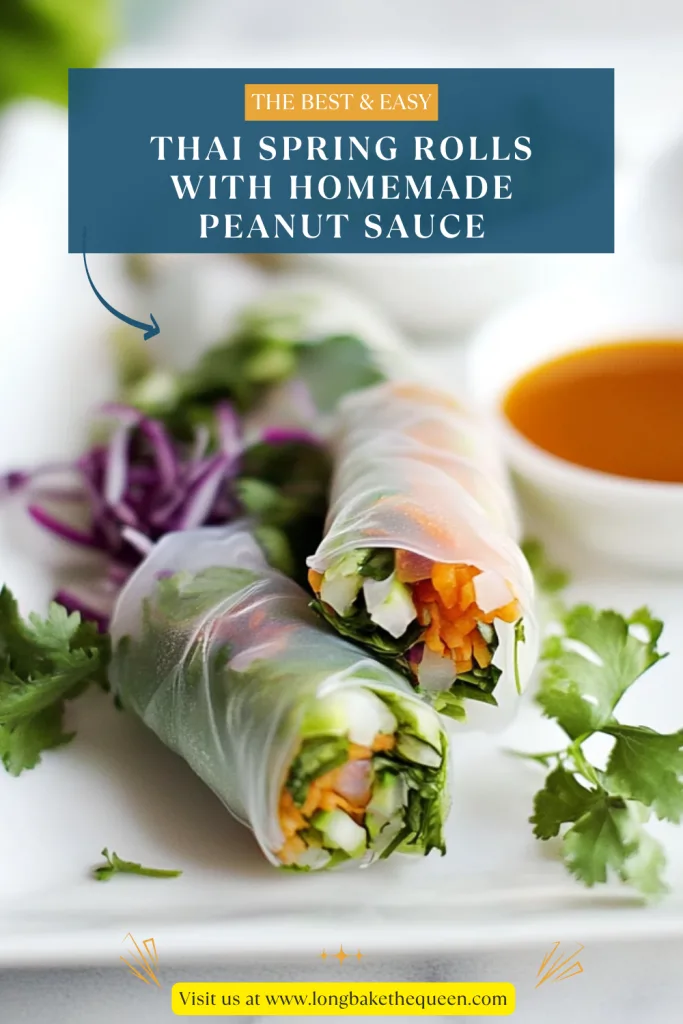
Why you’ll Love these Thai Spring Rolls With Homemade Peanut Sauce?
The best thing about Thai Spring Rolls With Homemade Peanut Sauce is how fresh they feel while still being satisfying. A lot of lighter recipes can leave you poking around the kitchen an hour later looking for “just a little something,” but these rolls have enough texture and flavor to hold their own. The vegetables bring crunch, the herbs bring brightness, and the chickpeas add a little heartiness. They’re light, yes, but not flimsy. There’s a difference.
Another reason this recipe is such a keeper is the homemade peanut sauce. The rolls are fresh and crisp on their own, but the sauce is where everything comes together. Coconut milk makes it creamy, red curry paste adds warmth, peanut butter gives it that rich nutty base, brown sugar adds sweetness, and apple cider vinegar brings a little tang. It tastes sweet, salty, creamy, and slightly spicy all at once. I don’t want to be dramatic, but this sauce could turn a plate of plain vegetables into an event.
I also love how flexible these Thai Spring Rolls With Homemade Peanut Sauce are. You can follow the recipe exactly, or you can treat it like a fresh-roll template. Add rice noodles if you want them more filling. Add tofu or shrimp if you want extra protein. Add mango if you want a sweet little surprise. Use purple cabbage if you want the rolls to look extra pretty. This is the kind of recipe that lets you clean out the vegetable drawer and still feel like you made something intentional. A rare and beautiful thing.
And there’s no frying or baking involved, which is always a relief on busy days. The only cooking happens with the peanut sauce, and that’s just a few minutes of whisking on the stove. The rolls stay cool and crisp, while the sauce adds warmth and richness. It’s a nice balance, especially when you want something fresh but not boring. Because let’s be real, “fresh” should not mean “sad and flavorless.”
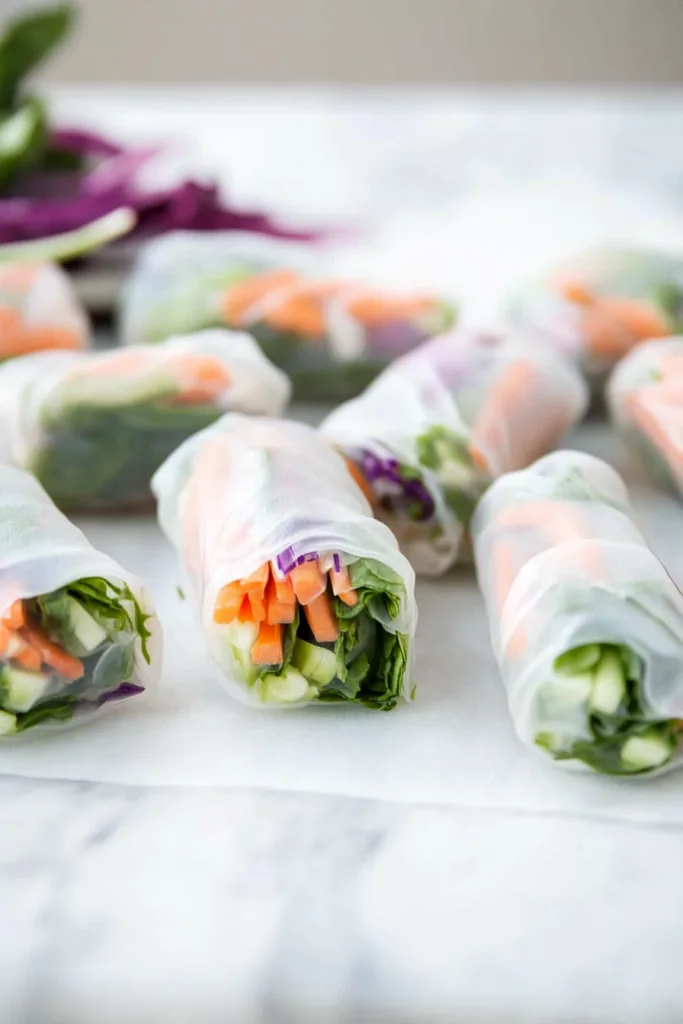
Ingredient Notes
Before making Thai Spring Rolls With Homemade Peanut Sauce, let’s talk through the ingredients. This recipe is really about balance. You want crisp vegetables, soft spring roll wrappers, bright herbs, hearty chickpeas, and a peanut sauce that ties everything together like the friend who organizes the group chat. Nothing here is complicated, but the small details make the rolls easier to assemble and much better to eat.
- Lettuce: Lettuce gives the spring rolls a fresh base and a gentle crunch. I like using crisp lettuce like romaine or green leaf because it holds up well and doesn’t get too watery. Chopped lettuce also helps keep the filling settled inside the wrapper, which is helpful because rice paper can be a little needy once it softens.
- Cabbage: Cabbage adds a firmer crunch and makes the rolls feel more substantial. Green cabbage works well, but purple cabbage is gorgeous if you want extra color. It also holds up better than softer greens, so it’s a good choice if the rolls need to sit for a little while before serving.
- Carrots: Carrots bring sweetness, crunch, and that bright orange color that makes the rolls look fresh and happy. Cut them into thin matchsticks so they roll neatly. Shredded carrots can work too, especially if you’re short on time, but matchsticks give the rolls a cleaner bite.
- Bell pepper: Bell pepper adds juicy crunch and color. Red, yellow, or orange peppers look especially pretty in the rolls, but use what you have. Slice them thinly so they don’t poke through the rice paper. Nothing ruins the mood like a rogue bell pepper spear tearing your wrapper.
- Cucumber: Cucumber gives these Thai spring rolls a cool, refreshing bite. Cut it into matchsticks, and if the center is very seedy, you can scoop some of that out so the rolls don’t get watery. It’s a small thing, but it helps.
- Cilantro: Cilantro adds a bright, citrusy flavor that works beautifully with peanut sauce. If you’re one of those people who thinks cilantro tastes like soap, I understand. Truly. Just use extra mint or chives instead and move on peacefully.
- Mint: Mint brings a fresh, cooling flavor that makes the rolls taste lively. A little goes a long way, so chop it finely and scatter it through the filling instead of clumping it all in one spot.
- Chives: Chives add a mild onion flavor without being sharp or overpowering. They’re fresh, pretty, and subtle, which makes them lovely in spring rolls.
- Spring roll papers: Spring roll papers are delicate, but once you get used to them, they’re not scary. Soak each one in warm water just until it softens, usually about 20 to 30 seconds. Don’t soak several at once unless you enjoy peeling sticky wrappers apart like a kitchen puzzle.
- Chickpeas: Chickpeas add a little plant-based protein and make the rolls more filling. They also bring a soft, creamy texture that balances all the crunchy vegetables. Rinse and drain them well so they don’t add extra liquid.
- Coconut milk: Coconut milk makes the peanut sauce rich and creamy. It also softens the heat from the red curry paste. Stir the coconut milk before measuring if it has separated in the can.
- Red curry paste: Red curry paste adds warmth, spice, and bold flavor to the sauce. Different brands can vary in heat, so if you’re cautious with spice, start with a little less. You can always add more next time. You cannot politely remove it once it’s in there. I’ve tried. Emotionally, at least.
- Natural peanut butter: Peanut butter is the heart of the sauce. It gives the sauce its nutty flavor and creamy texture. Natural peanut butter works well, but stir it first if the oil has separated. Smooth peanut butter gives the silkiest sauce, while crunchy peanut butter adds texture.
- Salt: Salt balances the sweetness and brings out the flavor of the peanut butter and curry paste. Without it, the sauce can taste a little flat.
- Water: Water helps thin the peanut sauce so it becomes easy to dip. If the sauce thickens while cooking or after chilling, add a splash more water and whisk until smooth.
- Apple cider vinegar: Apple cider vinegar adds tang and keeps the sauce from tasting too heavy. It balances the coconut milk, peanut butter, and brown sugar beautifully.
- Brown sugar: Brown sugar gives the sauce sweetness and a slightly deeper flavor. It balances the spice from the curry paste and the tang from the vinegar, which makes the sauce taste rounded and addictive.
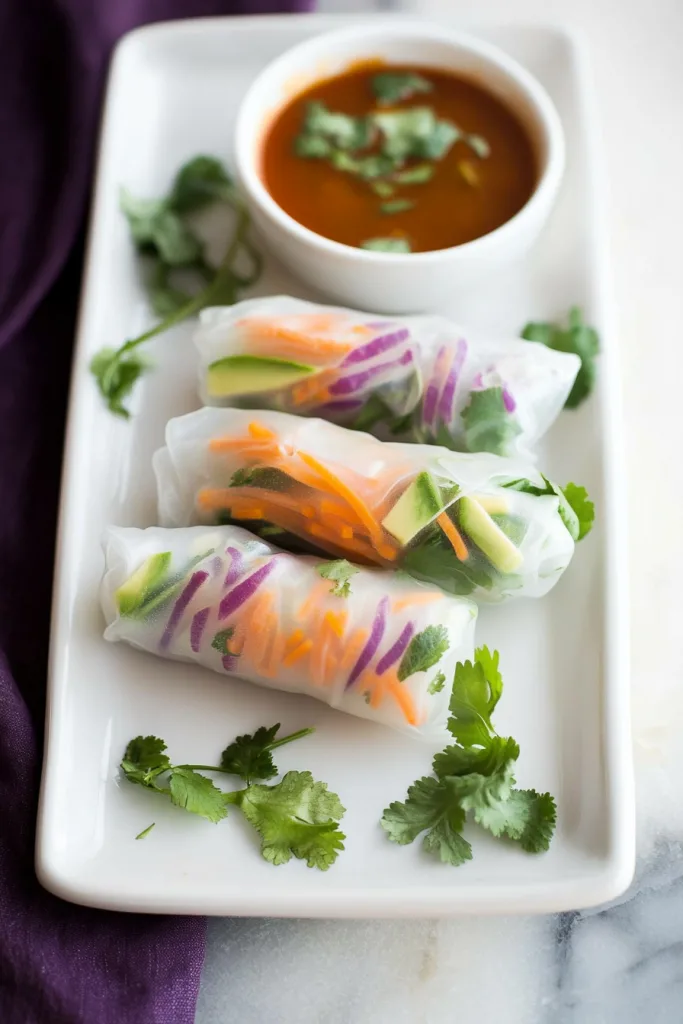
How to Make Thai Spring Rolls With Homemade Peanut Sauce?
Making Thai Spring Rolls With Homemade Peanut Sauce is mostly about prep. Once your vegetables are sliced, herbs are chopped, chickpeas are ready, and peanut sauce ingredients are measured, the rest goes pretty smoothly. The main thing is not to overfill the wrappers. I say this as someone who always wants to add “just a little more” and then regrets it when the wrapper gives up on me.
Step 1: Prepare the Vegetables
Cut the carrots, bell pepper, and cucumber into thin matchsticks.
Chop the lettuce and cabbage, then finely chop the cilantro, mint, and chives. I like setting everything out in little bowls or piles before rolling. It makes the whole process feel calmer and more organized, like a tiny spring roll assembly line. Very cute. Slightly fancy. Still doable.
Step 2: Soften the Spring Roll Paper
Fill a pie pan or shallow dish with warm water.
Dip one spring roll paper into the warm water for about 20 to 30 seconds, or just until it becomes soft and flexible. You should feel it loosen under your fingertips. Don’t let it sit too long, because it can turn fragile and tear easily. The wrapper should be bendy, not completely limp.
Step 3: Add the Filling
Lay the softened wrapper on a clean work surface.
Add a small amount of lettuce, cabbage, carrots, bell pepper, cucumber, herbs, and chickpeas to the center. Keep the filling compact. This is not the moment to build a vegetable mountain. A smaller bundle rolls neatly and is much less likely to burst open.
Step 4: Roll the Spring Roll
Fold the sides inward, then roll from the bottom up.
Use gentle pressure to keep everything tucked together without tearing the wrapper. If the first one looks messy, please don’t take it personally. The first spring roll is like the first pancake. It’s there to humble us and still taste good.
Step 5: Repeat with Remaining Wrappers
Continue soaking, filling, and rolling one wrapper at a time.
Rice paper becomes sticky once softened, so work slowly and give the finished rolls a little space on the plate. If they sit too close together, they can stick. Cover them lightly with a damp paper towel if you’re not serving right away.
Step 6: Make the Peanut Sauce
In a saucepan, combine the coconut milk, red curry paste, peanut butter, salt, water, apple cider vinegar, and brown sugar.
Heat the mixture over medium heat, whisking as it warms. At first, it might look like the peanut butter and coconut milk are not interested in becoming friends. Keep whisking. They’ll get there.
Step 7: Simmer the Sauce
Bring the sauce to a low boil.
Cook for another couple of minutes, whisking often, until the sauce is smooth and slightly thickened. If it gets too thick, add a splash of water until it reaches a good dipping consistency. You want it creamy enough to cling to the rolls, but not so thick that dipping feels like arm day.
Step 8: Serve
Serve the fresh spring rolls with the homemade peanut sauce on the side.
The rolls can be served cool or at room temperature, and the peanut sauce can be served warm or slightly cooled. Either way, the combo is fresh, creamy, crunchy, and so satisfying.
Storage Options
Thai Spring Rolls With Homemade Peanut Sauce are best eaten fresh, shortly after rolling. That’s when the vegetables are crisp, the herbs are bright, and the wrappers are soft without being sticky. If you need to store them, place the rolls in an airtight container with a damp paper towel over the top and refrigerate for up to 24 hours.
To keep the rolls from sticking together, leave a little space between them or place parchment paper between each one. Rice paper gets tacky as it sits, and if the rolls stick together, they may tear when you try to separate them. Ask me how I know. Actually, don’t. It involved torn wrappers and mild disappointment.
The peanut sauce stores really well. Let it cool completely, then transfer it to an airtight container and refrigerate for up to 5 days. It will likely thicken in the fridge, which is normal. Stir in a splash of warm water or gently reheat it while whisking until smooth again.
I don’t recommend freezing the spring rolls because the vegetables and rice paper don’t thaw nicely. The texture gets too soft and watery. The peanut sauce can be frozen if needed, but it may need a good whisk after thawing to bring it back together.
Variations & Substitutions
One of the best things about Thai Spring Rolls With Homemade Peanut Sauce is how easy they are to personalize. Once you learn the basic rolling method, you can swap vegetables, add protein, adjust the sauce, or sneak in whatever you have sitting in the fridge. It’s a forgiving recipe, which I appreciate because sometimes dinner is less “planned menu” and more “what can I use before it gets sad?”
- Add rice noodles: Thin rice noodles make the rolls more filling and give them a more classic fresh-roll texture. Cook and cool the noodles before adding them so they don’t make the wrappers warm or sticky.
- Use tofu: Baked or pan-seared tofu is a great plant-based protein. Slice it into thin strips so it fits neatly inside the rolls. It pairs beautifully with the peanut sauce and makes the rolls feel more like a meal.
- Add shrimp: Cooked shrimp is delicious with fresh herbs and peanut sauce. Slice the shrimp in half lengthwise if you want it to fit neatly and look pretty through the rice paper.
- Use different vegetables: Avocado, bean sprouts, purple cabbage, radish, snap peas, or mango all work well. Mango is especially nice if you like a sweet contrast with the spicy peanut sauce.
- Make the sauce milder: Use less red curry paste if you want a gentler peanut sauce. You can always increase the heat later, but it’s harder to calm it down once it gets too spicy.
- Make it sweeter or tangier: Add more brown sugar if you like a sweeter sauce, or a little more apple cider vinegar if you want more tang. Taste as you go and adjust until it feels right.
- Swap the peanut butter: Almond butter or sunflower seed butter can work if you need an alternative. The flavor will change, but the sauce will still be creamy and rich.
What to Serve With Thai Spring Rolls With Homemade Peanut Sauce?
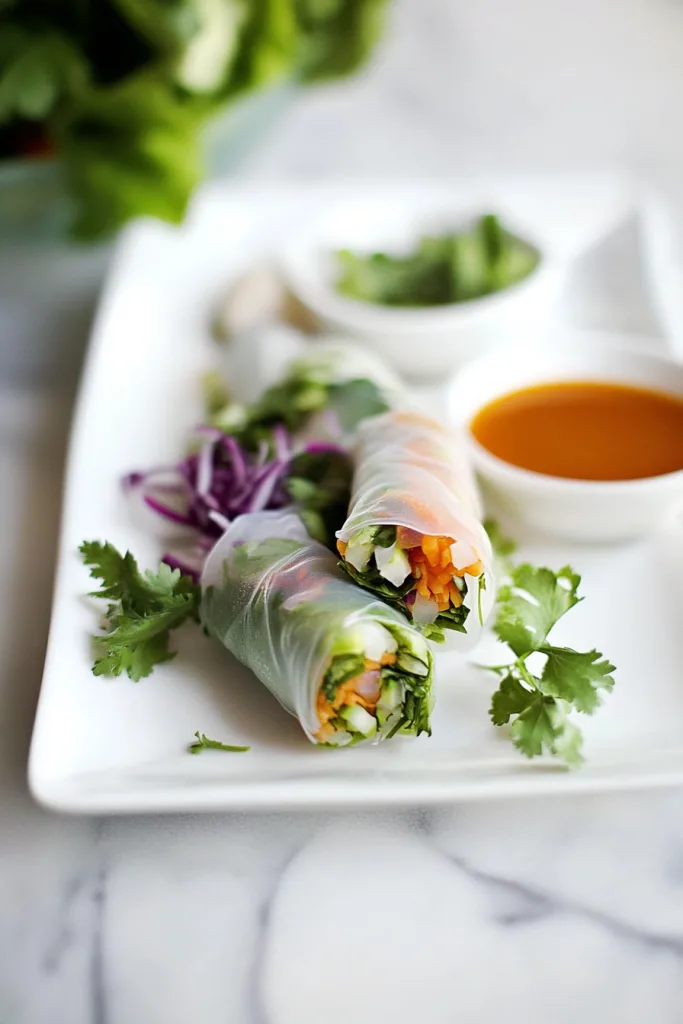
Thai Spring Rolls With Homemade Peanut Sauce can be served as an appetizer, light lunch, snack, or part of a bigger Thai-inspired meal. Since the rolls are fresh and crunchy, they pair nicely with warm dishes, soups, noodles, and simple proteins. They also look gorgeous on a platter, even if a few rolls are a little lopsided. Homemade charm, right?
- Pad Thai: Pad Thai is a classic pairing if you want a fuller meal. The fresh spring rolls add crunch and brightness beside the noodles, and the peanut sauce fits right in with the sweet-savory flavors.
- Thai coconut soup: A warm coconut soup pairs beautifully with cool spring rolls. The creamy soup and crisp rolls balance each other in a cozy but refreshing way.
- Fried rice: Vegetable fried rice or pineapple fried rice works well with spring rolls. It makes the meal more filling without making it feel too heavy.
- Grilled chicken or tofu: Serve the rolls with grilled chicken, tofu, or shrimp for extra protein. The peanut sauce works with all of them, so you don’t need to overthink it.
- Cucumber salad: A light cucumber salad adds even more freshness. It’s especially nice on warm days when you want something cool and crisp.
- Mango salad: Mango salad adds sweetness, color, and brightness. It pairs really well with the spicy peanut sauce and fresh herbs.
- Extra dipping sauces: Sweet chili sauce, soy dipping sauce, or lime vinaigrette can be served alongside the peanut sauce if you want variety. More sauces usually means happier snack people.
FAQ
Why are my spring roll papers tearing?
They may have soaked too long, been overfilled, or stretched too tightly while rolling. Soak each wrapper just until flexible and use a modest amount of filling.
Can I use crunchy peanut butter?
Yes, crunchy peanut butter works if you like texture in the sauce. Smooth peanut butter gives a silkier finish, but crunchy peanut butter adds little peanut bits, which can be fun.
Can I add protein to the rolls?
Yes. Chickpeas are included, but you can also add tofu, shrimp, chicken, or rice noodles to make the rolls more filling.
How do I keep spring rolls from sticking together?
Place them slightly apart on a plate or separate them with parchment paper. Cover with a damp paper towel to keep the wrappers from drying out.
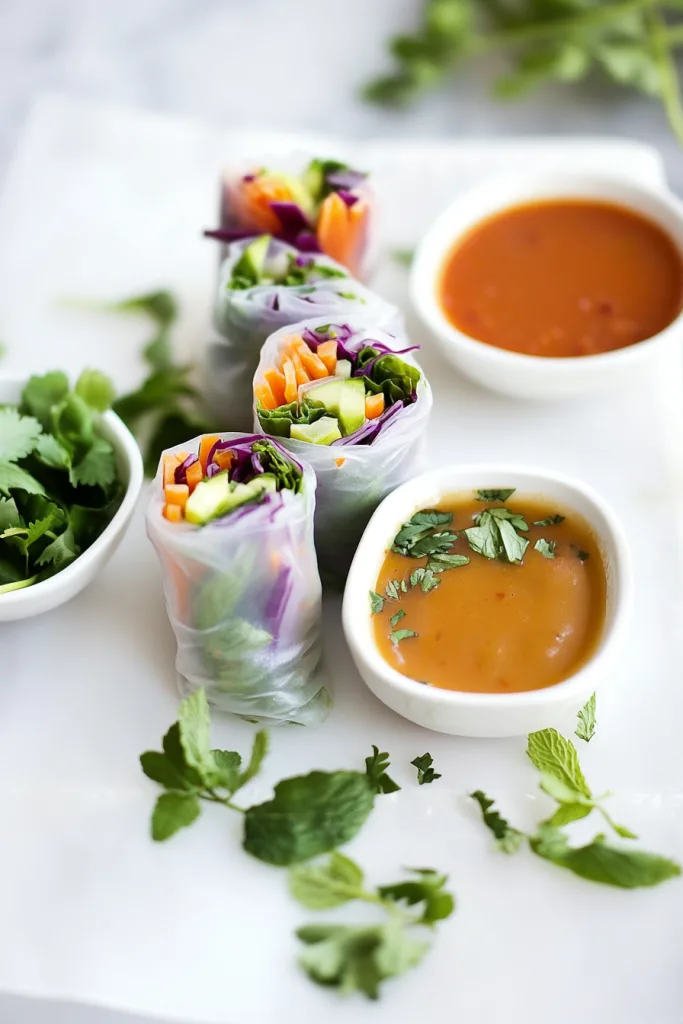
These Thai Spring Rolls With Homemade Peanut Sauce are fresh, colorful, crunchy, and full of flavor. You get crisp vegetables, soft spring roll papers, fresh herbs, chickpeas, and that creamy peanut sauce that makes everything taste a little more exciting.
I love that this recipe makes fresh food feel fun. Not forced. Not boring. Fun. And when that spicy-sweet peanut sauce is waiting on the side, even a big pile of vegetables suddenly feels like something you actually want to eat.
So tell me — would you keep these Thai Spring Rolls With Homemade Peanut Sauce veggie-packed, or would you add tofu, shrimp, rice noodles, or mango? I’d love to know how you’d make them your own.
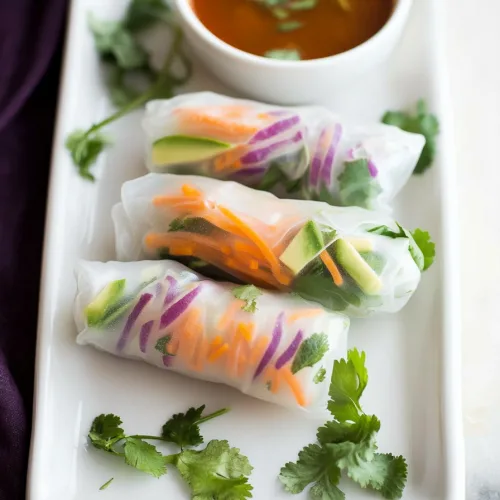
Thai Spring Rolls With Homemade Peanut Sauce
Ingredients
For the Spring Rolls
- Lettuce chopped
- Cabbage chopped
- Carrots cut into matchsticks
- Bell pepper cut into matchsticks
- Cucumber cut into matchsticks
- Cilantro finely chopped
- Mint finely chopped
- Chives finely chopped
- Spring roll papers
- Chickpeas rinsed and drained
For the Spicy Peanut Sauce
- ¾ c coconut milk approximately half a can
- 2 tbsp red curry paste
- ⅓ c natural peanut butter
- 1 tsp salt
- ¼ c water
- 1 tbsp apple cider vinegar
- ¼ c brown sugar packed
Instructions
Step 1: Prepare the Vegetables
- Cut the carrots, bell pepper, and cucumber into thin matchsticks.
- Chop the lettuce and cabbage.
- Finely chop the cilantro, mint, and chives.
- Rinse and drain the chickpeas.
- Set all prepared ingredients aside for assembly.
Step 2: Soften the Spring Roll Papers
- Fill a shallow dish or pie pan with warm water.
- Submerge one spring roll paper in the warm water for 20 to 30 seconds, or until softened and flexible.
- Do not soak the paper for too long, as it may tear during rolling.
Step 3: Fill the Spring Rolls
- Place the softened spring roll paper on a clean work surface.
- Add a small portion of lettuce, cabbage, carrots, bell pepper, cucumber, cilantro, mint, chives, and chickpeas to the center of the wrapper.
- Avoid overfilling to ensure the roll closes properly.
Step 4: Roll the Spring Rolls
- Fold the sides of the wrapper inward over the filling.
- Roll from the bottom upward, keeping the filling compact.
- Continue rolling until the spring roll is fully sealed.
- Repeat the process with the remaining wrappers and filling ingredients.
Step 5: Prepare the Peanut Sauce
- In a saucepan, combine the coconut milk, red curry paste, peanut butter, salt, water, apple cider vinegar, and packed brown sugar.
Step 6: Heat the Sauce
- Place the saucepan over medium heat.
- Whisk continuously as the mixture heats to combine the ingredients and dissolve the sugar.
- Bring the sauce to a low boil.
Step 7: Simmer the Sauce
- Continue cooking for an additional 2 to 3 minutes, whisking often, until the sauce is smooth and slightly thickened.
- If the sauce becomes too thick, add a small amount of water and whisk until the desired consistency is reached.
Step 8: Serve
- Serve the spring rolls fresh with the warm or cooled peanut sauce on the side.
Notes