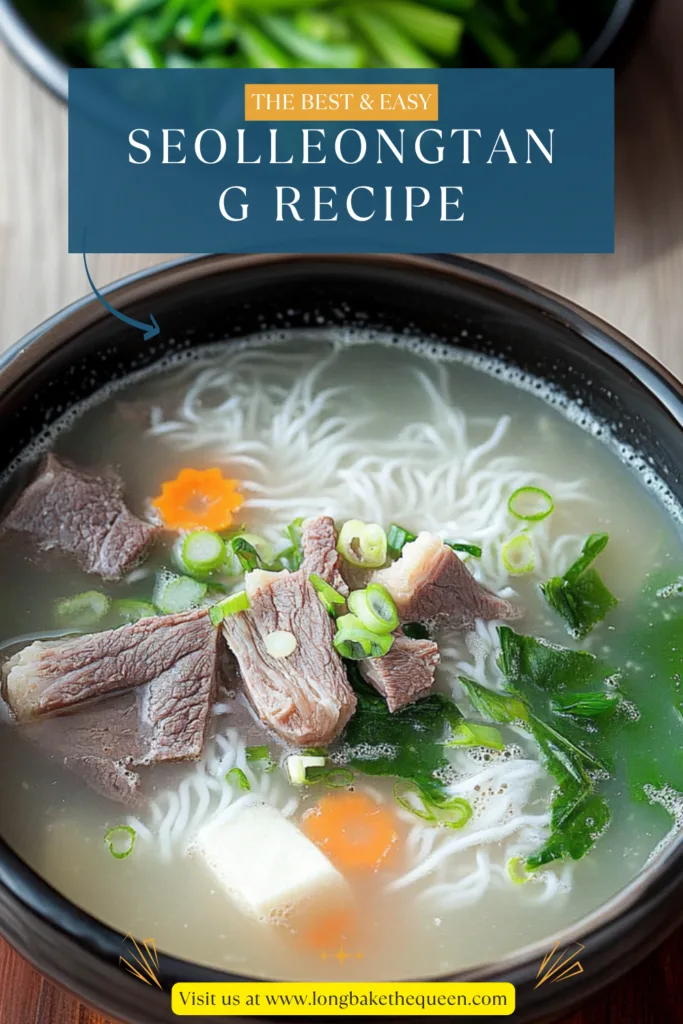
This Seolleongtang recipe uses beef marrow bones, brisket, rice, and scallions to create a deeply nourishing Korean bone broth soup.
The first time I ever ordered seolleongtang, I almost felt… underwhelmed? I remember staring at the bowl thinking, That’s it? No red oil. No drama. Just this pale, cloudy soup quietly steaming in front of me. It didn’t scream for attention. Which, honestly, made me suspicious.
But then I took a sip.
And yeah — I get it now.
This Seolleongtang Recipe grew on me in that slow, sneaky way. The kind of food that doesn’t punch you in the face with flavor but somehow sticks with you for days. It reminds me of cold mornings, stiff shoulders, and those weeks where everything feels a little heavy for no clear reason. You know those weeks.
There’s something comforting about a soup that doesn’t rush you. That doesn’t care about trends. That just simmers quietly while you go live your life. I didn’t fall in love with this recipe right away. It took time. And honestly, I trust food like that more.

Why you’ll Love this Seolleongtang?
This Seolleongtang Recipe is humble. Almost stubbornly so. A few bones, water, time. That’s the whole deal. And part of me still finds that kind of amazing — especially now, when everything feels complicated for no good reason.
What I love most is that the broth isn’t seasoned. At all. Some people hate that. I didn’t love it at first either, if I’m being honest. But now? I get why it’s done that way. It lets you decide. You salt it. You pepper it. You drown it in scallions or barely touch it.
It’s a soup that meets you where you’re at. Tired? Sick? Homesick for a place you can’t quite name? This one works. It’s not flashy. It’s steady. And sometimes that’s exactly what you want.
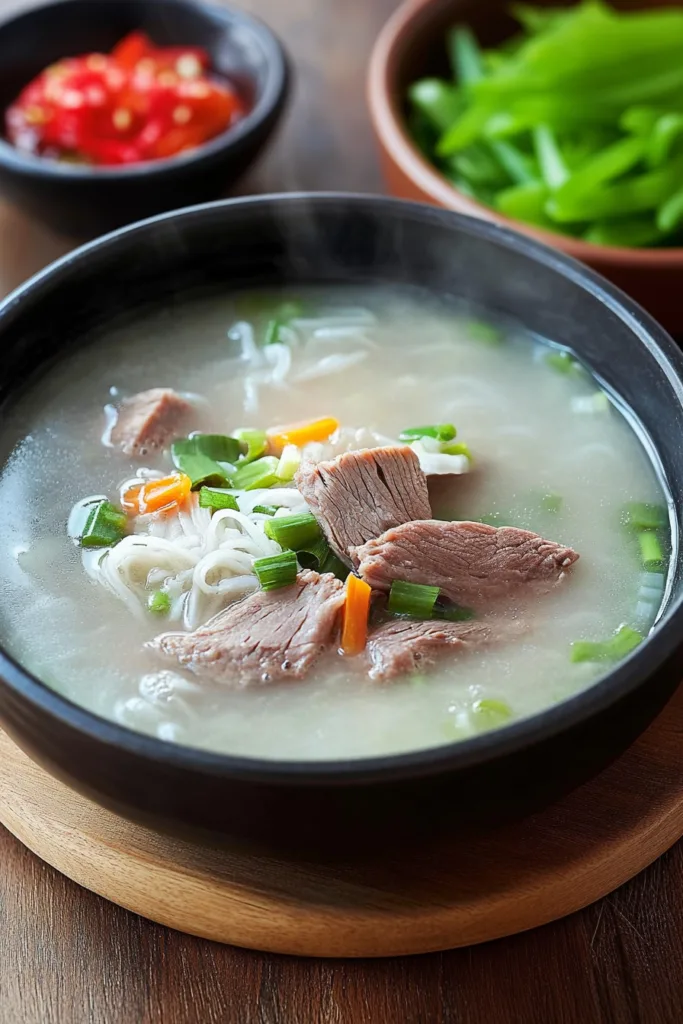
Ingredient Notes
The ingredient list is short enough to make you nervous — which is fair. But each piece pulls its weight.
- Beef marrow bones (sagol) – These are non-negotiable. They’re what give this Seolleongtang Recipe that signature milky color and silky texture. If you can add knuckles or foot bones, do it. I usually do when I can find them.
- Beef brisket or shank – This cooks alongside the bones and becomes tender enough to slice thin. It’s not the star, but it makes the bowl feel complete.
- Rice and noodles – Optional, technically. But… are they really? Rice turns this into a proper meal. Noodles make it feel extra cozy.
- Scallions, salt, pepper – These finish the soup. Everyone seasons their own bowl, which feels quietly personal in a way I really like.
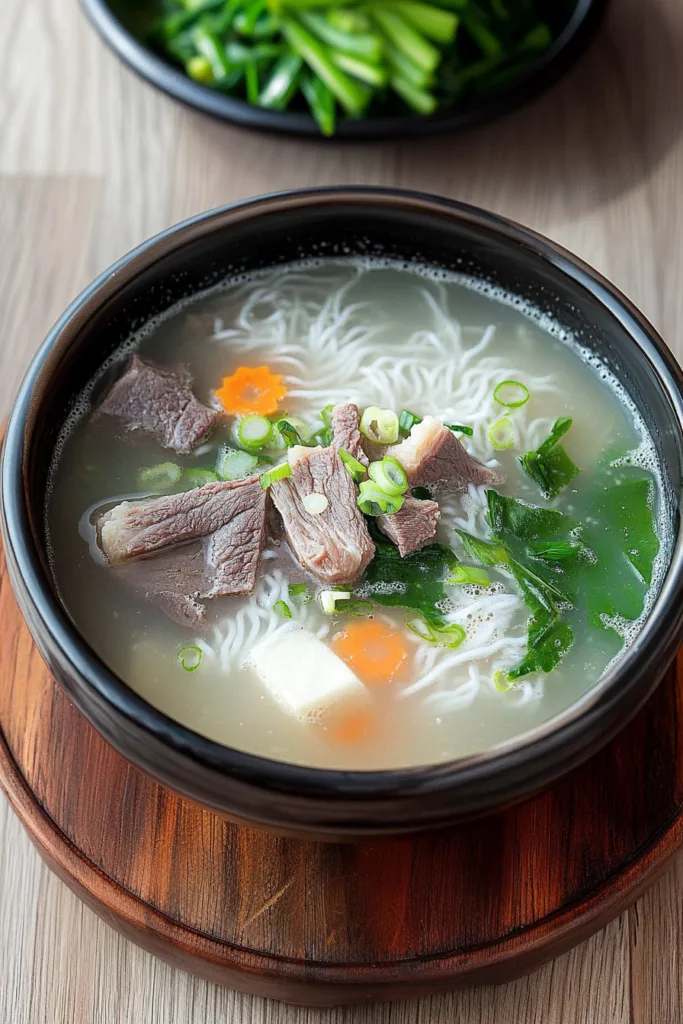
How to Make Seolleongtang Recipe?
Step 1: Start With the Soak
Soaking the bones and meat in cold water pulls out the blood. It’s not glamorous. It’s just something you do. I usually let it go longer than an hour if I’m around — no strict rules here.
Step 2: Parboil, Then Reset
A quick boil, a rinse, a clean pot. This step feels annoying until you skip it once and regret it. It makes the broth cleaner. Less murky. Worth the extra five minutes.
Step 3: The Long Simmer (Where the Magic Happens)
Now you let the bones do their thing. Hours pass. The broth changes slowly, almost imperceptibly, until suddenly it’s cloudy and rich and smells like something real is happening. This part asks for patience. If you rush it, the soup knows.
The meat goes in later, cooks until tender, then comes out to rest. I always sneak a slice at this point. Always.
Step 4: Optional Second Boil (But Honestly… Do It)
This extra boil deepens everything. More body. More richness. It’s technically optional, but it’s the difference between good and wow, this is comforting.
Step 5: Serving
Rice in the bowl. Maybe noodles. Sliced beef. Hot broth poured over the top. Scallions everywhere. Salt and pepper added slowly, tasting as you go. That’s it.
Storage Options
This soup gets better with time. Once chilled, the fat rises and solidifies, making it easy to remove if you want a lighter broth. Or leave it — I won’t judge.
It keeps in the fridge for about five days and freezes beautifully. I freeze mine in portions because there’s nothing better than finding homemade Seolleongtang Recipe in your freezer on a rough day.
Variations & Substitutions
This isn’t a recipe you “customize” so much as one you adjust over time.
- Different bone cuts = different richness
- Longer simmer = deeper flavor
- More scallions because why not
- Rice, noodles, or both depending on your mood
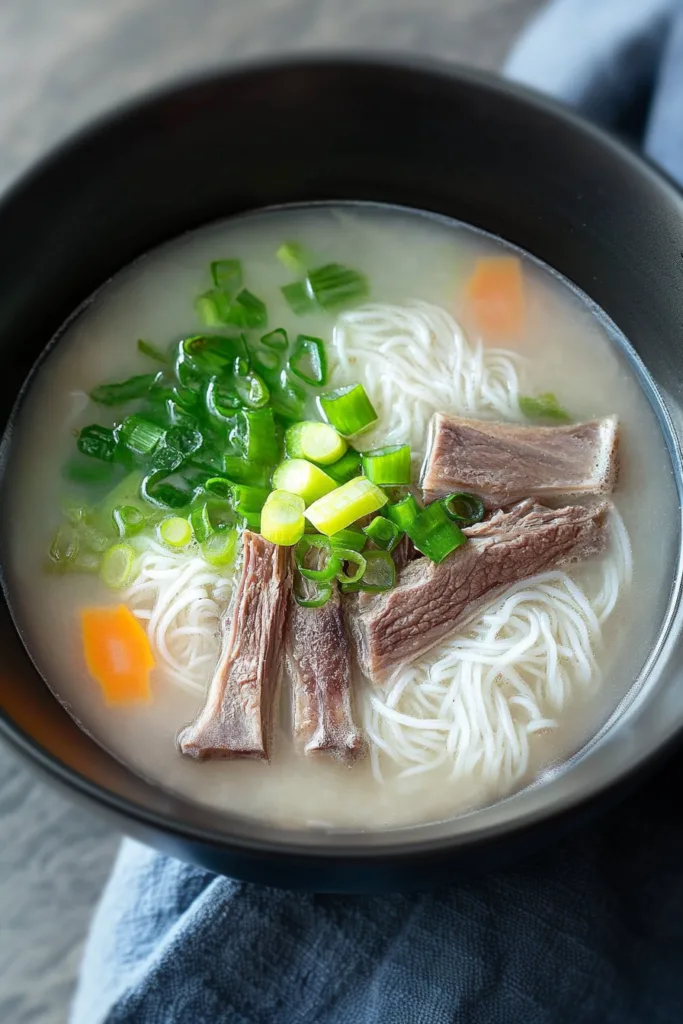
There’s no single right version. Just the one you end up loving.
What to Serve With Seolleongtang?
Kimchi. Always kimchi. That sharp, spicy bite against the gentle broth is everything. Add rice and maybe a small banchan or two, and you’re done. No extras needed.
FAQ:
Why isn’t it seasoned from the start?
Because everyone likes it different. And this way, you get control.
My broth isn’t milky — did I mess up?
Probably not. It usually just needs more time or a steadier boil.
Can I make it ahead?
Yes. And honestly, you should.
Is it supposed to be mild?
Yep. Until you decide otherwise.
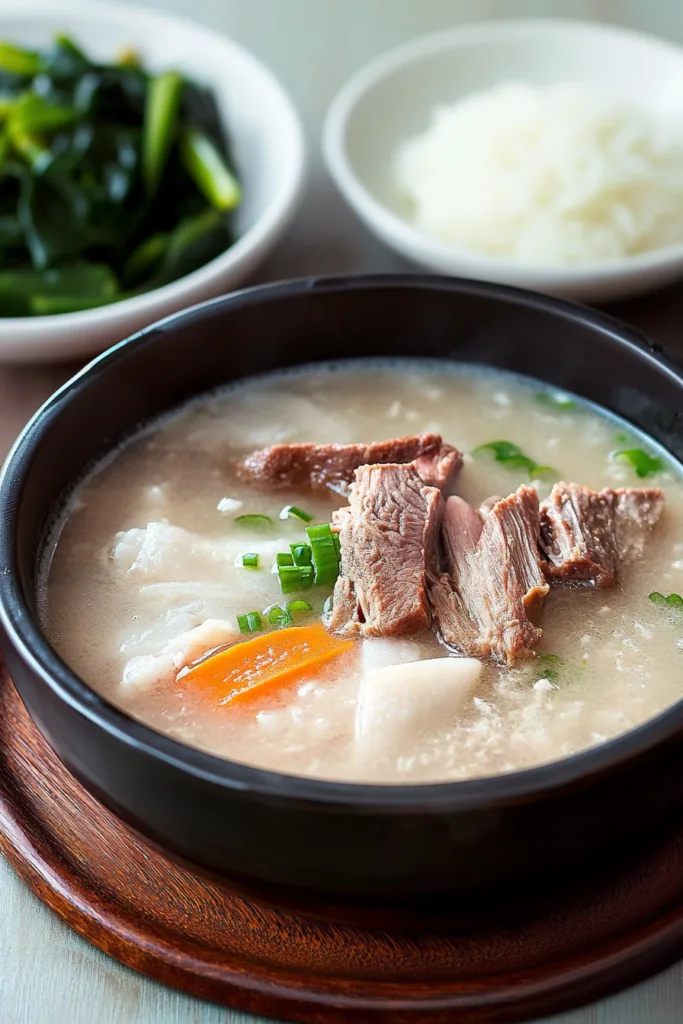
This Seolleongtang Recipe isn’t exciting in the loud way. It’s comforting in the quiet way. The kind of dish you come back to without really planning to. If you’ve never made Korean bone soup at home, this is such a gentle place to start.
Let it simmer. Let it take its time. Let it warm the house a little.
And when you do make it — I’d really love to hear how it felt, not just how it tasted.
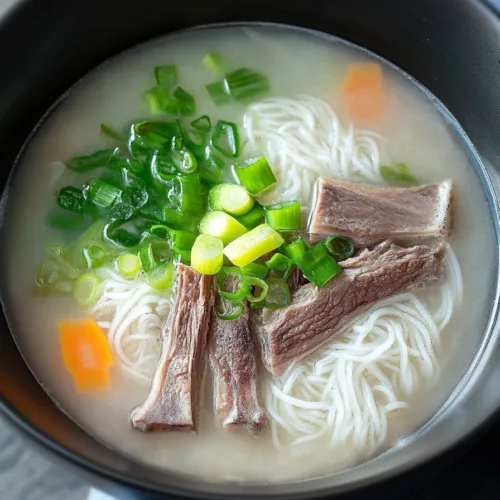
Seolleongtang Recipe
Ingredients
Soup Base
- 3 –4 lb beef marrow bones sagol, cut into pieces
- Cow knuckles and/or foot bones may be used in combination
- 1 –2 lb beef brisket or beef shank
- Cold water as needed
For Serving
- Cooked white rice
- Cooked somyeon or glass noodles optional
- Thinly sliced cooked beef from the soup
- Chopped scallions
- Salt to taste
- Ground black pepper to taste
Instructions
Preparation
- Place the beef bones in a large bowl and cover with cold water. Soak for approximately 1 hour to draw out impurities. Drain and rinse thoroughly.
- In a separate bowl, soak the beef brisket or shank in cold water for 1 hour. Drain and refrigerate until ready to use.
Parboiling the Bones
- Place the soaked bones in a large stockpot and add enough cold water to fully cover them.
- Bring to a boil over high heat. Reduce the heat to medium and boil for 5 minutes.
- Drain the bones, rinse thoroughly, and clean the pot to remove residue. Return the bones to the pot.
Main Boil
- Refill the pot with fresh cold water, leaving space for boiling.
- Bring to a boil over high heat, then reduce to medium. Cover and maintain a steady boil for approximately 5 hours, or until the broth becomes opaque and milky.
- Add additional boiling water as needed to keep the bones submerged.
Cooking the Meat
- Add the soaked beef brisket or shank to the pot. Add more hot water if necessary.
- Continue boiling for 1½ to 2 hours, or until the meat is tender.
- Remove the meat and allow it to cool. Slice thinly and reserve for serving.
- Strain the broth through a colander into a clean pot or large container.
Optional Additional Boil (Recommended)
- Return the bones to the pot, add fresh water, and repeat the boiling process for 3–5 hours.
- Strain and combine this broth with the first batch. This step may be repeated once more for a deeper flavor.
Removing Excess Fat
- Chill the broth until the fat solidifies on the surface. Remove and discard excess fat, if desired.
Serving
- Place cooked rice (and noodles, if using) into serving bowls.
- Add sliced beef and ladle the hot broth over the top.
- Garnish with chopped scallions. Season with salt and black pepper to taste.
- Serve hot, traditionally accompanied by kimchi.
Notes
- Use plain rice and rice-based noodles only.
- Avoid adding any seasoning blends or broths that contain wheat or soy sauce.
- Serve with gluten-free kimchi if applicable.