Rabbit, butter, shallots, garlic, Dijon mustard, white wine, chicken broth, thyme, rosemary, heavy cream, crème fraîche, parsley.
Alright… let’s talk about the Rabbit in Mustard Sauce Recipe without making it weird. Because yes, it’s rabbit. And yes, the first time I cooked it I had that tiny internal monologue that went: Is this going to be delicious… or am I about to feel guilty for the rest of the evening? (Not proud. Just honest.)
But here’s the thing—this is classic French comfort food. Not fussy-French, not “I own three copper pans” French. More like cozy bistro on a rainy night French. The rabbit gets braised until it’s tender, and then everything gets wrapped up in this tangy, creamy Dijon mustard sauce with herbs that tastes like you should be eating it with a candle nearby. Even if the “candle” is just your stove light because you forgot to replace the bulb in the dining room. Sound familiar?
If you’ve been craving a dish that feels special but still doable on a normal day, this Lapin à la Moutarde situation might be your next favorite “I can’t believe I made this” dinner.
The first time I tried a Rabbit in Mustard Sauce Recipe, it wasn’t even at home. It was on a trip where I’d promised myself I’d “eat like a local” (which is such a smug thing to say out loud, honestly). I ordered Lapin à la Moutarde at a small place that looked like it had been there forever—chalkboard menu, mismatched chairs, the kind of restaurant where you feel like you should whisper even if no one asked you to. I remember thinking, Okay, I’m either going to love this or regret being adventurous. And then the plate showed up with that creamy mustard sauce pooling around the meat, and one bite later I was fully in love. Not even subtle about it. I probably made a noise. The sauce was tangy and rich and herby and… I don’t know, comforting in a way that felt oddly nostalgic, like it reminded me of the cozy dinners my family used to drag out on Sunday nights when nobody wanted the weekend to end.
When I got home, I couldn’t stop thinking about it, so I went looking for a rabbit in mustard cream sauce recipe that didn’t require ten obscure ingredients and a French grandmother. The first time I cooked it myself, I was nervous—rabbit is lean, and lean meats can be unforgiving if you treat them like chicken breasts and hope for the best. But once I started browning the rabbit in butter and the shallots hit the pan, I relaxed. The kitchen smelled warm and savory, and I had that “okay, something good is happening” feeling. Then I stirred in Dijon, wine, broth, herbs… and by the time the cream went in at the end, I was standing there tasting the sauce like a cartoon character who just discovered a treasure chest. Now, when I make this Rabbit in Mustard Sauce Recipe, it feels like a little mini escape—like I’m borrowing a French bistro vibe for one night and pretending my life is more put-together than it is. Do you do that with food too?
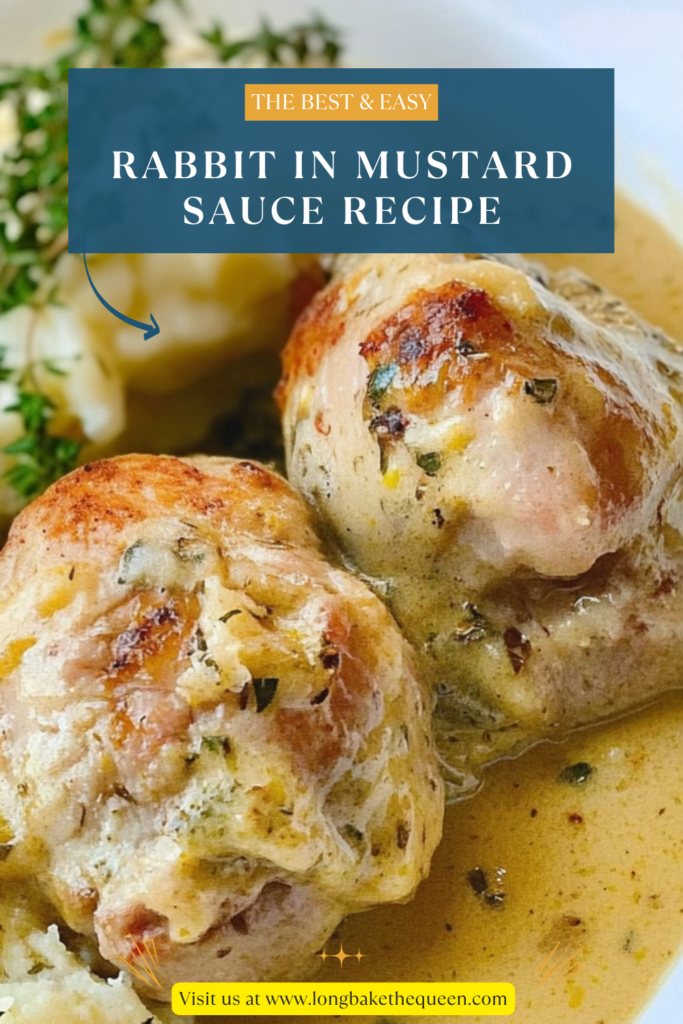
Why you’ll Love this Rabbit in Mustard Sauce Recipe?
What makes this Rabbit in Mustard Sauce Recipe so lovable is that it’s dramatic in flavor, not dramatic in effort. You brown the rabbit, build the sauce in the same pot, and let it simmer gently until everything turns tender and cozy—so the process feels calm, not chaotic. The Dijon mustard gives the sauce a bold, tangy backbone, but it’s softened by heavy cream and crème fraîche so it doesn’t taste sharp or aggressive. It’s more like… a warm hug with good boundaries. The wine and broth add depth so the sauce tastes layered, not one-note, and the herbs make it feel rustic and French without being perfume-y. Also, rabbit is naturally lean and mild, and braising is basically the perfect method because it keeps the meat from drying out while it absorbs all that mustardy, herby goodness. And let’s be real: serving Lapin à la Moutarde sounds wildly impressive, like you own linen napkins, even if you’re actually wiping your hands on a paper towel while the dog stares at you.
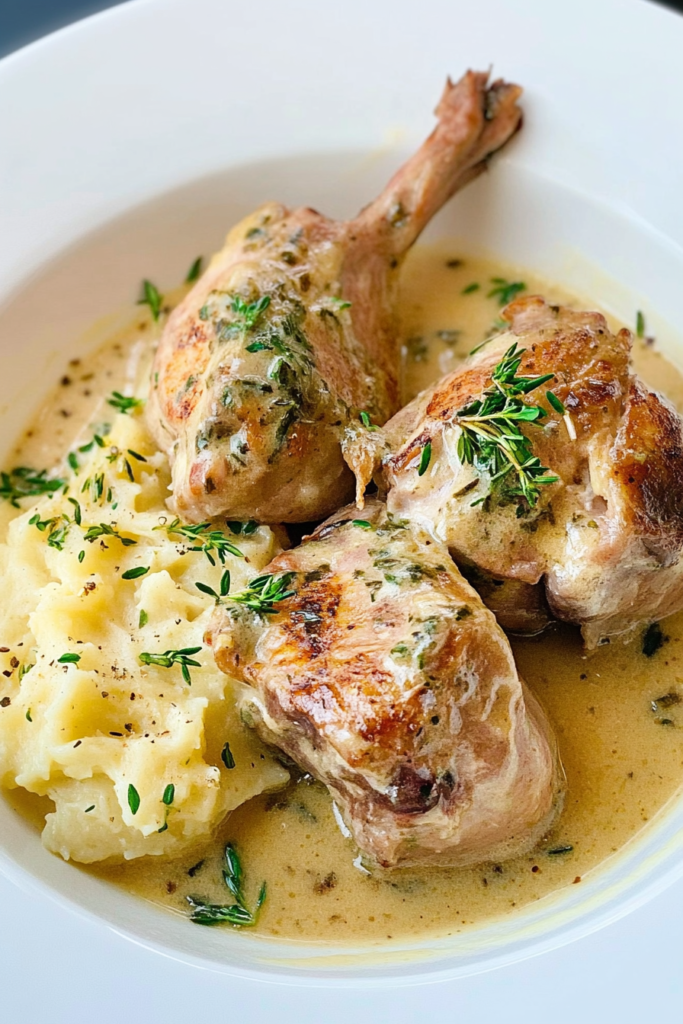
Ingredient Notes
Before you start this Rabbit in Mustard Sauce Recipe, I want you to think of the ingredients like a little team: rabbit brings the mild, delicate protein; mustard brings the personality; butter and shallots bring the cozy foundation; and the cream finishes it off like a soft blanket. None of this is complicated, but the quality of a couple ingredients—especially mustard—really does matter, because you will taste them, front and center, in the final sauce.
- Rabbit (3–4 lb, cut into pieces): Rabbit is mild and lean, not aggressively “gamey” like people sometimes fear. The key is gentle braising so it stays tender and doesn’t dry out, because rabbit can go from lovely to chewy if you rush it.
- Butter: This is your flavor builder. It helps brown the meat and makes the base taste rich; it’s one of those ingredients that quietly makes everything better without asking for credit.
- Shallots: Shallots are sweeter and softer than onions and melt into the sauce so it tastes rounded and a little elegant.
- Garlic: You don’t need much—just enough to add warmth and depth under the mustard.
- Flour: A small amount thickens the sauce so it coats the rabbit instead of acting like soup on your plate.
- Dry white wine: Adds brightness and a little acidity. If the wine tastes terrible in the glass, it will not magically taste amazing in the pot. (Ask me how I know.)
- Chicken broth: Gives savory depth and keeps the sauce balanced so the mustard doesn’t run the whole show.
- Dijon mustard: The star of any rabbit in mustard sauce recipe. Choose one you actually like—smooth, sharp, classic Dijon.
- Thyme + rosemary: These herbs make it taste rustic and comforting. Dried works perfectly here, which I appreciate because I don’t always have fresh herbs living their best life in my fridge.
- Heavy cream + crème fraîche: This makes the sauce silky and rich, but still a little tangy and fresh. Crème fraîche adds that subtle cultured note that makes the sauce taste “restaurant-y.”
- Parsley: Adds brightness at the end so the whole dish doesn’t feel heavy.
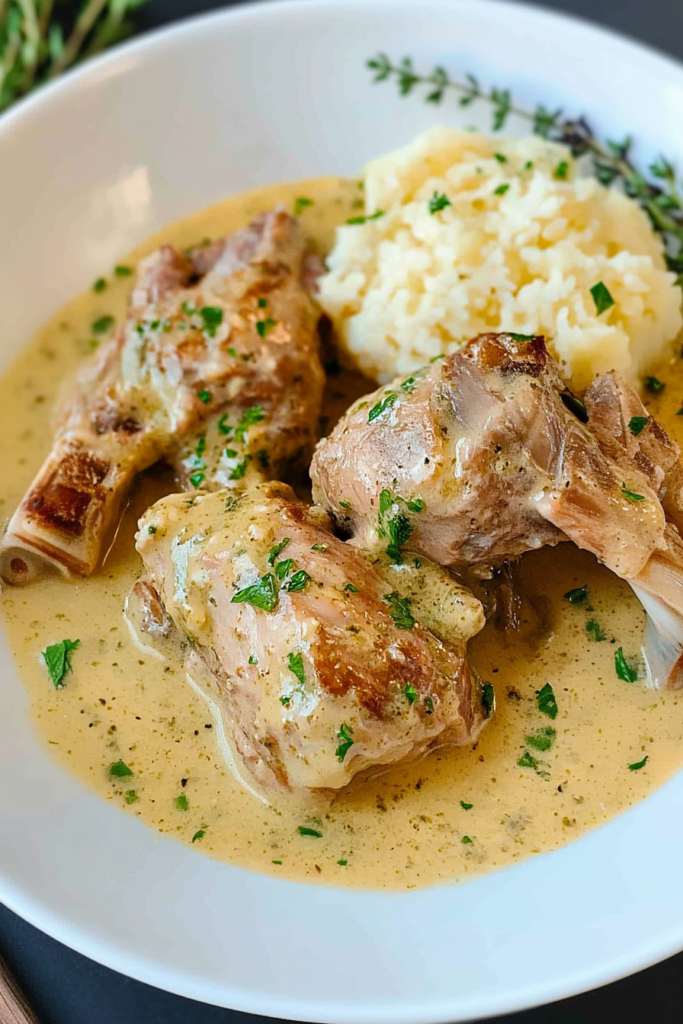
How to Make Rabbit in Mustard Sauce Recipe?
This Rabbit in Mustard Sauce Recipe is basically “one pot, steady heat, don’t rush it.” If you can brown meat and stir a sauce, you can make Lapin à la Moutarde. The only real trick is letting the rabbit simmer gently long enough to become tender, because rabbit doesn’t like being hurried. Honestly, same.
Step 1: Let the rabbit sit out briefly and season
Let the rabbit pieces sit at room temperature for about 30 minutes. This helps them cook more evenly, and it’s especially helpful when you’re browning because cold meat tends to seize and cook unevenly. Season the rabbit lightly with salt and pepper—just enough to start building flavor from the inside out.
Step 2: Brown the rabbit in butter
Heat the butter in a heavy pot or Dutch oven over medium to medium-high heat, then brown the rabbit pieces. Don’t cram them in like you’re trying to win a storage challenge—give them space so they brown instead of steam. You’re aiming for a nice golden color on the outside; the meat won’t be cooked through yet, and that’s totally fine. Transfer the browned rabbit to a plate and set it aside while you build the sauce.
Step 3: Cook the shallots and garlic
Add the chopped shallots to the same pot and cook until tender, about 4–5 minutes, stirring so they soften without burning. Add the minced garlic and cook for another minute. At this point the kitchen smells like you know what you’re doing. Let that confidence settle in for a second.
Step 4: Stir in flour
Sprinkle in the flour and stir it into the shallots and fat in the pot. Cook for about one minute. This helps thicken the sauce later and prevents it from feeling watery. You’re not trying to create a thick gravy—just enough body so the sauce clings.
Step 5: Add wine and boil briefly
Pour in the white wine and bring it to a boil for about a minute. This step is doing two things: cooking off some harsh alcohol notes and loosening the browned bits from the bottom of the pot. Those little bits are packed with flavor—don’t waste them.
Step 6: Build the mustard sauce base
Add the chicken broth, Dijon mustard, thyme, rosemary, and salt. Stir until the mustard fully blends into the liquid and the sauce looks smooth. This is where it starts smelling like a French bistro, and if you’re anything like me, you’ll lean over the pot and go, Ohhhh okay. I get it now.
Step 7: Braise the rabbit gently
Nestle the rabbit pieces back into the pot. Bring everything to a boil, then immediately reduce the heat to low, cover, and simmer for about one hour, or until the rabbit is tender. Keep it gentle—this isn’t a rolling boil situation. The slow simmer is what turns lean rabbit into tender rabbit, and nobody wants to chew through dinner like it’s a workout.
Step 8: Finish with cream, crème fraîche, and parsley
Stir in the heavy cream, crème fraîche, and parsley, then warm everything through. Keep the heat low here—cream sauces don’t love being bullied. Taste the sauce and adjust with a little more salt, pepper, or mustard if you want it tangier. I usually add a tiny dab more mustard because I like that bold mustardy edge… but sometimes I don’t. Depends on my mood. (That’s the honest truth.)
Storage Options
This Rabbit in Mustard Sauce Recipe actually holds up really well for leftovers, which surprised me the first time. Store it in an airtight container in the fridge for up to 3 days. When reheating, do it gently on the stovetop over low heat so the cream sauce stays smooth instead of separating. If the sauce thickens in the fridge (it will), add a small splash of broth or water and stir until it loosens back up. Freezing is possible, but I’ll be real with you—cream sauces can get a little weird after freezing and thawing, sometimes grainy or separated. Not inedible, just… not as dreamy. If you do freeze it, reheat slowly and whisk/stir patiently like you’re coaxing it back to life.
Variations & Substitutions
The heart of a Rabbit in Mustard Sauce Recipe is the braised meat + mustard cream sauce combo, and you can absolutely make small changes without losing the vibe. Think of it like keeping the melody but changing the playlist a little.
- Use grainy mustard: This adds texture and a slightly gentler mustard bite; mixing Dijon + grainy is honestly a great middle ground.
- No wine: Replace the wine with extra broth and add a small splash of lemon juice or white wine vinegar at the end for brightness (go easy; you can add more, but you can’t un-add it).
- No crème fraîche: Full-fat sour cream works; stir it in at the end on low heat to avoid curdling.
- Add mushrooms: Sauté sliced mushrooms after the shallots for a more “bistro” feel.
- Herb swaps: Tarragon is gorgeous with mustard and cream if you like that slightly anise-like note; fresh thyme is also lovely.
- Substitute chicken: If rabbit isn’t available, chicken thighs work beautifully with this mustard cream sauce method—still cozy, still delicious, just less “French countryside.”
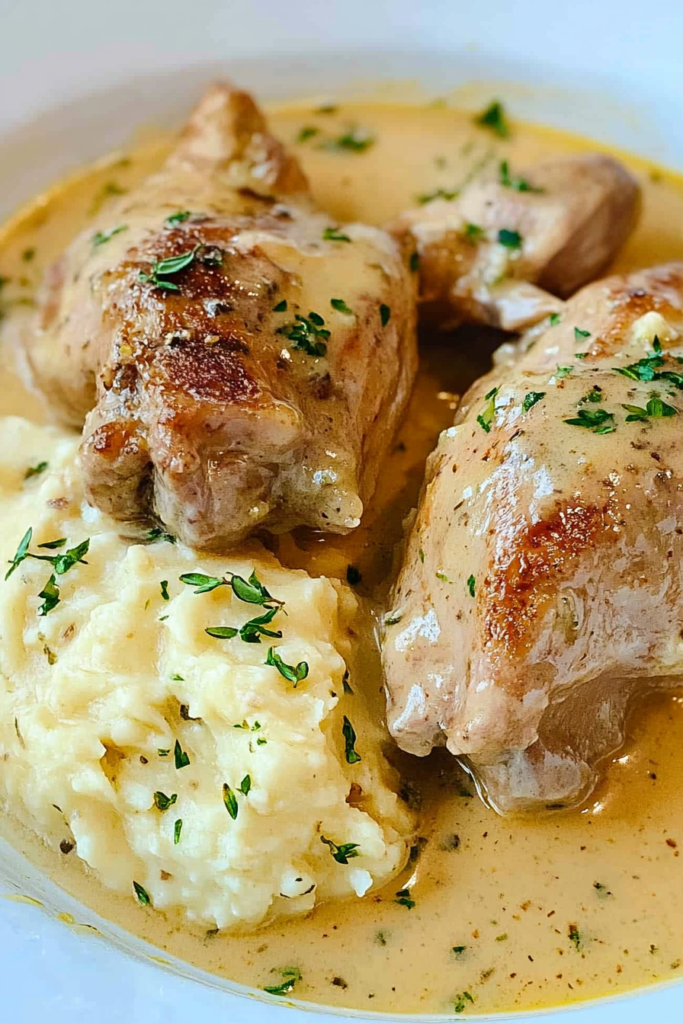
What to Serve With Rabbit in Mustard Sauce?
This is the kind of meal where the side dish has one job: carry sauce into your mouth efficiently. Because the mustard cream sauce is the star, and letting it sit on the plate unused feels… wrong. Like leaving your favorite song before the chorus.
- Creamy mashed potatoes: The classic pairing for Lapin à la Moutarde, and for good reason—the sauce melts right into the potatoes.
- Buttered egg noodles: Simple, cozy, and great at catching sauce in all the little curves.
- Crusty bread: For dipping, swiping, and “accidentally” cleaning the plate when no one’s watching.
- Roasted carrots or green beans: A fresh, slightly sweet vegetable balances the richness.
- Simple salad with vinaigrette: A bright, tangy salad cuts through the creamy sauce so the meal feels lighter.
- Steamed asparagus: Elegant and easy, especially if you want the whole plate to look a little fancy.
FAQ
Does rabbit taste gamey?
Most rabbit is mild and delicate—more like chicken than people expect. If you’re nervous, this Rabbit in Mustard Sauce Recipe is a great entry point because the mustard cream sauce adds richness and tang that complements rabbit without overpowering it. That said, taste is personal; if you’re very sensitive to “wild” flavors, buying farmed rabbit from a reputable source helps.
How do I know when the rabbit is tender?
You’ll know because it stops fighting you. The meat should be tender and easier to pull from the bone, not tight or chewy. If it’s still a little firm after an hour, let it go longer on a gentle simmer. Braising is patient cooking, and rabbit rewards patience.
Can I make Lapin à la Moutarde ahead of time?
Yes—and honestly, it often tastes even better the next day. You can braise the rabbit, cool it, refrigerate, then reheat gently and finish with the cream/crème fraîche at the end for the smoothest sauce.
How do I keep the cream sauce from separating?
Keep the heat gentle after adding dairy. No aggressive boiling. Low heat, slow stirring, and if you need to reheat leftovers, do it patiently on the stovetop rather than blasting it in the microwave on full power.
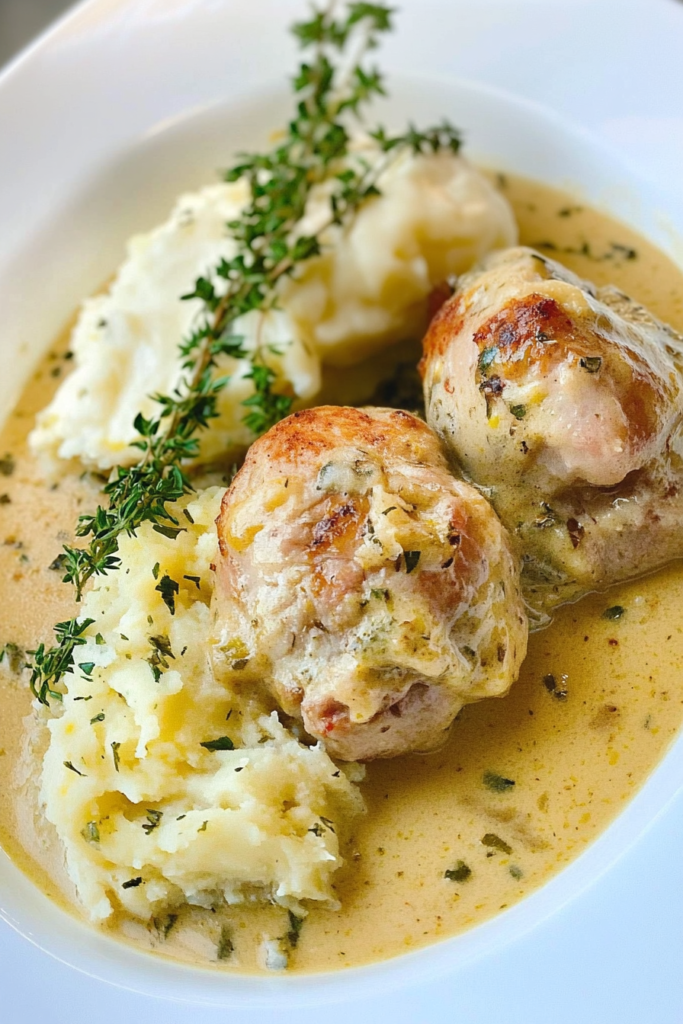
If you try this Rabbit in Mustard Sauce Recipe, tell me what you served it with—mashed potatoes, egg noodles, crusty bread… or did you go rogue and do something totally different? I’m genuinely curious. What would you pair with that mustard cream sauce?
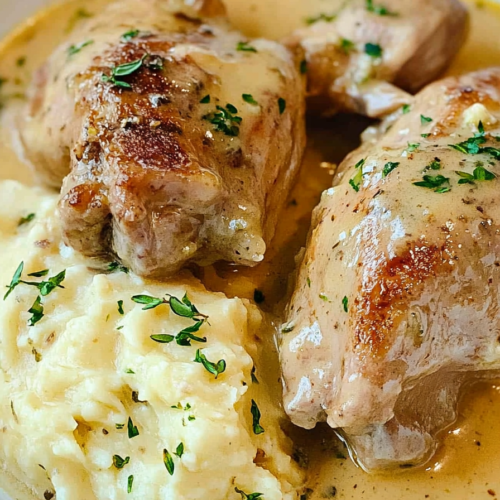
Rabbit in Mustard Sauce Recipe
Ingredients
- 1 rabbit 3–4 lb, cut into serving pieces
- Salt and freshly ground black pepper to season
- 4 tbsp butter
- 3 shallots chopped
- 1 clove garlic minced
- 1 tbsp all-purpose flour
- 1/2 c dry white wine
- 1/2 c chicken broth
- 2 –3 tbsp Dijon mustard plus more to taste
- 3/4 tsp dried thyme
- 1/4 tsp dried rosemary
- 1/2 tsp salt adjust to taste
- 1/2 c heavy cream
- 2 tbsp crème fraîche
- 3 tbsp fresh parsley chopped
Instructions
Prepare and season the rabbit:
- Allow the rabbit pieces to sit at room temperature for approximately 30 minutes. Season lightly with salt and pepper.
Brown the rabbit:
- In a heavy saucepan or Dutch oven over medium-high heat, melt the butter. Add the rabbit pieces and brown on all sides. Transfer the browned rabbit to a plate and reserve.
Sauté aromatics:
- Add the chopped shallots to the pot and cook until softened, approximately 4–5 minutes. Add the minced garlic and cook for 1 minute more, stirring frequently.
Incorporate the flour:
- Stir in the flour and cook for 1 minute, stirring continuously to coat the aromatics and remove the raw flour taste.
Deglaze with wine:
- Add the white wine and bring to a boil for 1 minute, scraping the bottom of the pot to release any browned bits.
Build the sauce:
- Add the chicken broth, Dijon mustard, thyme, rosemary, and salt. Stir to combine.
Braise the rabbit:
- Return the rabbit pieces to the pot, ensuring they are nestled into the liquid. Bring the mixture to a boil, then reduce the heat to low. Cover and simmer for 1 hour, or until the rabbit is tender.
Finish the sauce:
- Stir in the heavy cream, crème fraîche, and chopped parsley. Heat gently until warmed through. Adjust seasoning with additional salt, pepper, and mustard to taste.
Serve:
- Serve immediately, traditionally with creamy mashed potatoes or buttered egg noodles.
Notes