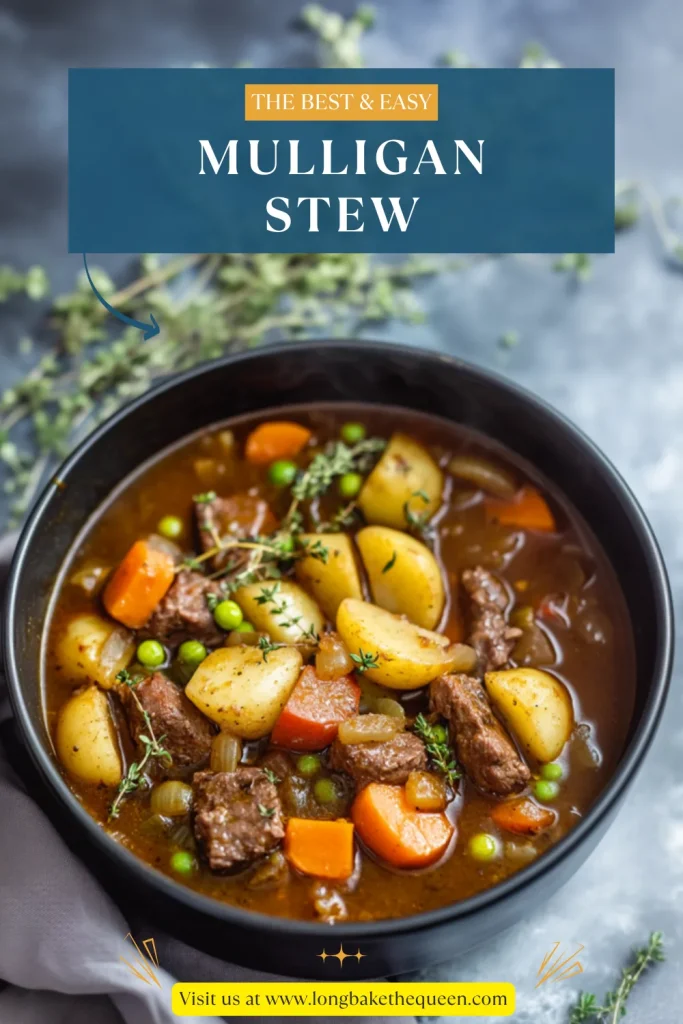
Mulligan stew made with beef stew meat, potatoes, corn, carrots, peas, green beans, onion, beef broth, flour, and herbs.
There’s something about Mulligan stew that feels like it belongs on a chilly evening, right when the windows start fogging up a little and everyone suddenly remembers they’re hungry. It’s not a fancy dinner. It’s not trying to win a beauty contest. But wow, does it know how to make a kitchen smell like home. This easy beef stew is loaded with tender beef, gold potatoes, corn, carrots, peas, green beans, and a savory gravy that pulls everything together in the most comforting way.
I kind of think of Mulligan stew as the dinner version of an old sweater. Maybe it’s not glamorous, maybe it has a little “seen some things” energy, but you reach for it because it works. It’s warm. It’s dependable. And it makes you feel better after a long day. You know what I mean? This stew has that same feeling. The beef browns in a Dutch oven, the onion softens, the broth turns into a simple gravy, and then the oven quietly does its thing while you get a tiny break. Or fold laundry. Or pretend to fold laundry. No judgment here.
This Mulligan stew recipe is especially nice because it uses regular ingredients you don’t have to overthink. Beef stew meat, flour, onion, beef broth, dried herbs, potatoes, and frozen mixed vegetables. That’s it. No dramatic shopping list. No ingredient that makes you stand in the grocery aisle wondering if you’re even in the right section. Just simple, cozy food. And honestly, some nights that’s exactly what I want.
The first time I made Mulligan stew, I didn’t have high expectations. That sounds a little rude to the stew, I know, but it’s true. I had beef stew meat, potatoes, a bag of frozen vegetables, and one of those evenings where dinner needed to be hearty but not complicated. You know those days when you open the fridge, stare for a minute, close it, then open it again like something new will magically appear? That was me. Very glamorous. Very food blogger.
But then something happened. The beef started browning, and those little browned bits stuck to the bottom of the pot. The onion went in, and the smell changed from “I’m making dinner” to “oh, this might actually be really good.” Then the herbs hit the pan, the broth went in, and suddenly the whole kitchen had that slow-cooked, old-fashioned stew smell. It reminded me of the kind of meal you’d find at a family gathering where someone’s aunt is guarding the bread basket and someone else is asking if there’s more gravy. Sound familiar?
I think that’s why I like this Mulligan stew so much. It feels practical, but also a little nostalgic. It reminds me of those simple dinners where nobody is trying too hard, but somehow everyone ends up happy. A pot of stew on the table, a few slices of bread nearby, maybe someone complaining that it’s too hot and then immediately taking another bite anyway. That’s real dinner to me. Not perfect. Not staged. Just warm, filling, and honestly kind of lovely.
And here’s the thing: I don’t always want a complicated recipe. Sometimes I want something that forgives me if my potato cubes aren’t all the same size. Sometimes I want to use frozen vegetables and not feel bad about it. Sometimes I want dinner to taste like I had my life together, even if the sink says otherwise. This hearty beef and vegetable stew gives me that. It’s humble, yes, but in the best way.

Why you’ll Love this Mulligan stew?
It tastes like comfort without making you work too hard. This Mulligan stew has all the cozy flavor of a classic beef stew, but it doesn’t ask you to babysit the pot all afternoon. You brown the beef, cook the onion, stir together a simple gravy, and then let the oven take over. I love that part because it gives the stew a slow-cooked feeling without you standing at the stove like a tired kitchen statue. The result is tender beef, soft potatoes, and vegetables tucked into a savory gravy that feels like it has been quietly building flavor while you were off doing something else.
It uses simple, normal ingredients. There’s a certain relief in recipes that don’t need a whole scavenger hunt at the store. This easy Mulligan stew recipe uses beef stew meat, gold potatoes, frozen mixed vegetables, beef broth, onion, flour, and dried herbs. That’s pretty much pantry and freezer comfort food. Nothing too precious. Nothing that makes you think, “Will I ever use this again?” And I appreciate that. Especially when grocery prices are doing their little dramatic performance lately. A good, hearty stew that stretches simple ingredients feels like a win.
It has that old-fashioned dinner feeling. I don’t know exactly how to explain it, but some recipes just feel like they’ve been around forever. Mulligan stew has that quality. It’s not polished or trendy. It’s more like something someone’s grandparent might have made with whatever was on hand, and somehow it tasted amazing because they knew how to coax flavor out of basic ingredients. There’s something really comforting about that. It’s food with common sense, which sounds funny, but you know what I mean.
The gravy is simple but satisfying. The flour coating on the beef helps create the base for the gravy, and then the beef broth, onion, oregano, basil, and marjoram turn it into something savory and warm. It’s not a super thick, heavy gravy that sits in the bowl like cement. It’s more of a cozy, spoonable gravy that clings to the beef and vegetables just enough. I like that balance. It feels rich without being too much. Though, if you’re like me, you’ll still want bread for dipping because leaving gravy behind feels almost disrespectful.
It’s flexible in a very real-life way. This homemade Mulligan stew is forgiving. If you have red potatoes instead of gold potatoes, use them. If your bag of frozen vegetables has lima beans, well… proceed based on your personal feelings about lima beans. I won’t interfere. You can add extra carrots, toss in celery, or make it a little thicker if that’s your thing. It’s the kind of stew that adjusts to your kitchen instead of demanding perfection. And honestly, I need more recipes like that.
Ingredient Notes
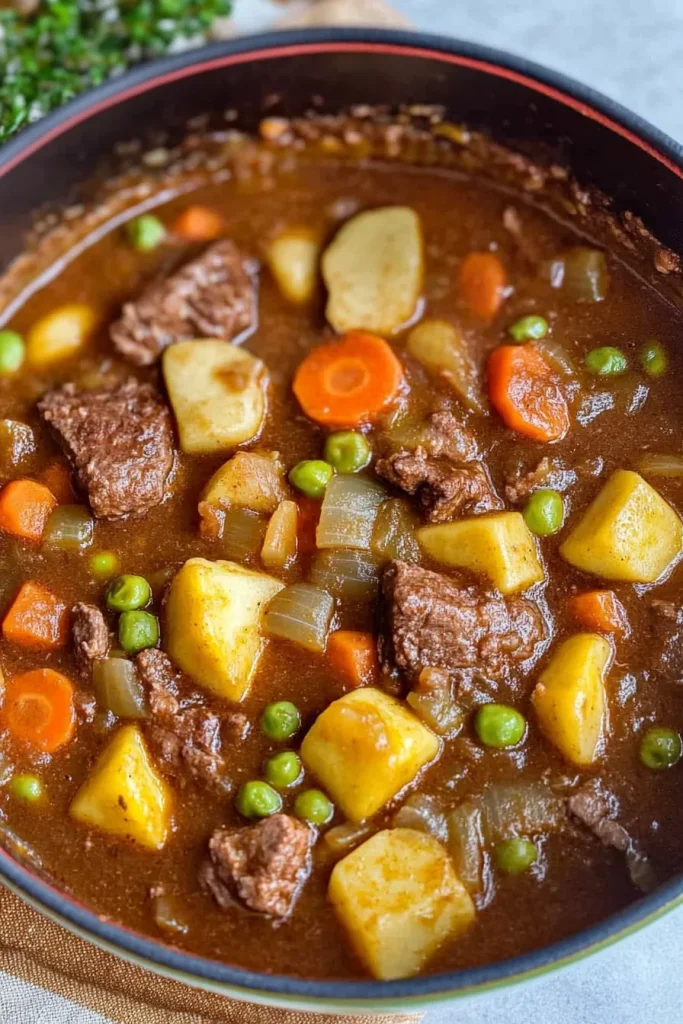
The ingredients in this Mulligan stew are simple, but they work together in a really satisfying way. The beef brings richness, the potatoes add body, the mixed vegetables bring color and sweetness, and the broth turns into a savory gravy that makes the whole pot feel complete. It’s not complicated, but that’s sort of the point. Sometimes simple food is the food that hits the hardest, especially when it’s warm, filling, and served in a big bowl.
- All-purpose flour: The flour does more than just coat the beef. It helps the meat brown and gives the gravy its body later on. When the beef gets tossed in the flour mixture, it creates a light coating that grabs onto flavor as it cooks. Then, when you use a little of the reserved flour in the pot, it helps thicken the broth into that cozy stew gravy. It’s one of those small steps that doesn’t seem too exciting, but if you skip it, you’ll notice something is missing. Kind of like forgetting the blanket during movie night.
- Onion powder, garlic powder, and black pepper: These seasonings are simple, but they give the beef a good savory start. The onion powder and garlic powder add background flavor without needing extra chopping, and the black pepper adds a little warmth. Not heat, really. Just a gentle kick that keeps the stew from tasting flat. I like that the seasoning is built into the flour coating because every piece of beef gets a little bit of flavor before it even hits the pot.
- Beef stew meat: Beef stew meat is what makes this Mulligan stew hearty and satisfying. It needs time to become tender, which is why the oven method works so well. Browning it first is important, even if you’re tempted to rush. I get it. Browning meat feels like one of those steps that takes forever when you’re hungry. But those browned edges add real flavor, and the bits left behind in the Dutch oven help build the gravy. Tiny kitchen patience, big payoff.
- Vegetable oil: Vegetable oil helps brown the beef and soften the onion. You use it in two stages, and that keeps everything cooking properly instead of sticking or burning. You don’t need anything fancy here. A neutral oil is perfect because it lets the beef, herbs, and broth be the main flavors. It’s a supporting actor, basically. Not glamorous, but necessary.
- Chopped onion: Onion brings sweetness and depth to the stew. As it cooks, it softens and picks up the browned bits left from the beef. That’s where so much good flavor comes from. I always think onion is one of those ingredients you miss more when it’s not there. You might not point to it and say, “Wow, onion!” but without it, the stew just doesn’t feel as full.
- Low-sodium beef broth: Beef broth creates the base of the gravy. I prefer low-sodium broth because it gives you more control over the final taste. Some broths are very salty, and once stew gets too salty, it’s hard to bring it back without adding half the pantry. Low-sodium broth keeps the flavor savory without going overboard. It also blends with the flour, herbs, onion, and beef juices to make the whole stew taste more connected.
- Dried oregano, basil, and marjoram: These herbs give this beef Mulligan stew a gentle, cozy flavor. Oregano adds earthiness, basil brings a soft herbal note, and marjoram adds warmth that works really nicely with beef. They’re not loud seasonings, and I like that. They sit in the background and make everything taste better without announcing themselves every five seconds. Cooking them briefly before the broth goes in helps bring out their flavor, which is a small but useful little trick.
- Gold potatoes: Gold potatoes are creamy and tender, but they still hold their shape well in stew. They make the dish more filling and help turn it from “soup-ish” into a proper meal. Cut them into cubes that are roughly the same size, but don’t stress too much. This isn’t a cooking competition. If one cube is a little chunky and another is smaller, life will continue. The stew will be fine.
- Frozen mixed vegetables: The frozen vegetable blend keeps this Mulligan stew recipe easy and practical. Corn, carrots, peas, and green beans add color, texture, and a little sweetness. I love frozen vegetables for recipes like this because they save time and reduce prep work. No peeling carrots. No trimming green beans. No tiny pile of vegetable scraps taking over the counter. Just open the bag and move on with your life.
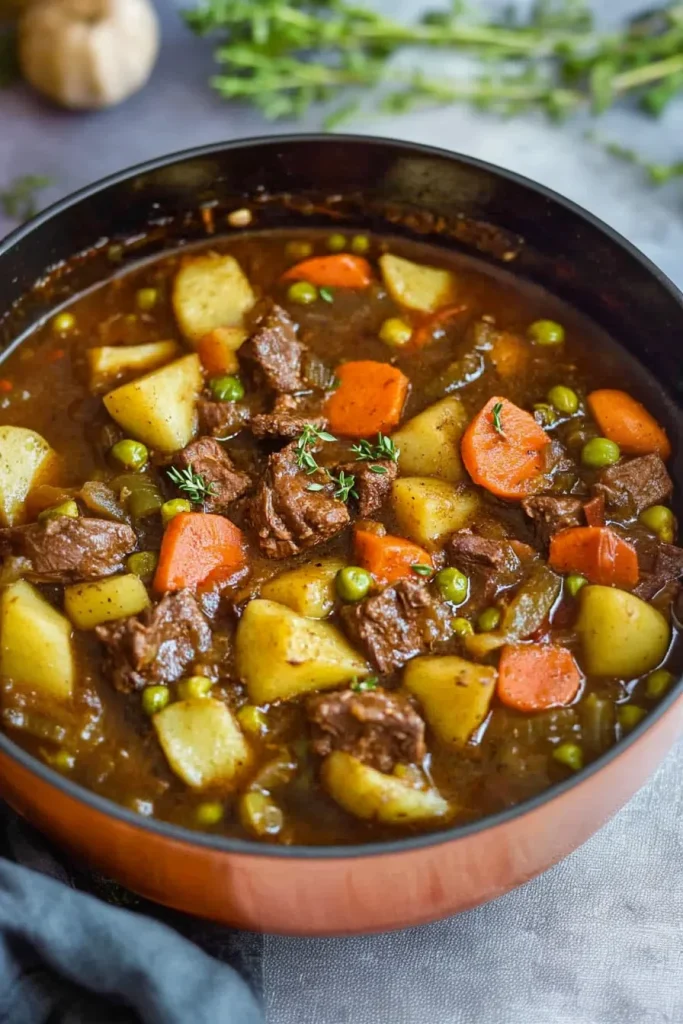
How to Make Mulligan stew?
Making Mulligan stew is not hard, but it does build flavor in stages. First, the beef gets coated in seasoned flour. Then it’s browned so it develops rich flavor. After that, the onion, flour, herbs, and broth turn into a simple gravy. The beef cooks in the oven until it starts to soften, and then the potatoes and mixed vegetables go in near the end. It’s a steady, cozy process. Nothing wild. Nothing stressful. Just a good pot of stew coming together little by little.
Step 1: Preheat the oven. Start by preheating your oven to 350°F. Since this Mulligan stew finishes in the oven, you want the heat ready when the Dutch oven goes in. The oven gives the stew steady warmth, which helps the beef cook gently. I like this method because it feels less fussy than stovetop simmering. You’re not constantly checking the burner or worrying that the bottom is sticking. The oven does the slow work, and we simply accept the help.
Step 2: Coat the beef in seasoned flour. Add the all-purpose flour, onion powder, garlic powder, and freshly ground black pepper to a large zipper seal bag. Shake it around until the seasoning is mixed into the flour, then add the beef stew meat and shake again until each piece is coated. This step is a little messy in spirit, but in a good way because the bag keeps most of it contained. The flour helps the beef brown and later helps thicken the gravy. Save the extra flour mixture because you’ll use a little of it soon.
Step 3: Brown the beef. Heat 1 tablespoon of vegetable oil in a Dutch oven over medium heat. Use tongs to pull the beef from the bag and place it in the pan. Brown the beef on all sides, then move it to a plate. Try not to crowd the pot too much because crowded beef tends to steam instead of brown. And steamed beef? Not exactly the vibe we’re going for. Browning gives the stew deeper flavor and makes the finished dish taste like you took your time, even though the recipe is still pretty simple.
Step 4: Cook the onion. Add the remaining 1 tablespoon of vegetable oil to the Dutch oven, then stir in the chopped onion. Cook it for about 3 to 4 minutes, just until it softens and starts smelling sweet and savory. This is one of my favorite little cooking moments because the onion picks up all those browned bits from the beef. The bottom of the pot may look a bit rough at this stage, but don’t worry. That’s not mess. That’s flavor waiting for broth.
Step 5: Add the reserved flour and herbs. Sprinkle in about 1 1/2 tablespoons of the reserved flour mixture and cook it for 2 minutes, stirring constantly. This helps remove the raw flour taste and begins thickening the base of the stew. Then add the oregano, basil, and marjoram and stir for about 30 seconds. This quick step wakes up the dried herbs a bit. Do herbs actually wake up? Not really, but you get the idea. They smell better once they hit the warm pot.
Step 6: Stir in the beef broth. Slowly add the low-sodium beef broth, stirring as you pour. Scrape up the browned bits from the bottom of the Dutch oven because those bits are packed with flavor. Let the mixture cook for about 2 minutes, stirring a few times, until it starts to smooth out. It may not look perfectly thick yet, and that’s okay. This old-fashioned Mulligan stew continues to develop as it bakes. Stew takes its time. That’s kind of its whole personality.
Step 7: Add the beef back and bake. Return the browned beef to the Dutch oven and stir it into the gravy. Cover the pot and place it in the oven for 1 hour. During this time, the beef starts becoming tender, and the gravy takes on more flavor. This is when your kitchen begins to smell like someone knows what they’re doing. Even if, five minutes ago, you were wondering where the lid to the Dutch oven went. Again, no judgment.
Step 8: Add the potatoes and mixed vegetables. After 1 hour, carefully remove the Dutch oven from the oven and stir in the cubed gold potatoes and frozen mixed vegetables. The potatoes add heartiness, while the corn, carrots, peas, and green beans bring sweetness and color. Adding them after the beef has already cooked keeps them from getting too soft. I like vegetables in stew to be tender, but not so mushy they’ve lost their will to live.
Step 9: Bake until everything is tender. Cover the pot again and return it to the oven for another 30 minutes, or until the beef, potatoes, and vegetables are tender. Check the potatoes with a fork. If they need a little more time, give them a few extra minutes. Every oven is a tiny bit different, and stew meat can have its own stubborn personality too. So don’t panic if it needs a touch longer. It’s done when it tastes tender and cozy.
Step 10: Let it rest and serve warm. Once the Mulligan stew is ready, let it sit for a few minutes before ladling it into bowls. The gravy thickens slightly as it rests, and everything settles into itself. Serve it warm with bread, biscuits, crackers, or whatever makes you happy. If you sneak a bite straight from the pot before serving, well, I think that’s just quality control.
Storage Options
Refrigerator storage: Let the Mulligan stew cool before transferring it to an airtight container. Store it in the refrigerator for 3 to 4 days. I actually think this stew tastes even better the next day, though maybe that’s just me being a leftover person. The beef, potatoes, vegetables, herbs, and gravy have more time to blend together, and the flavor gets a little deeper. It’s one of those lunches that makes you feel weirdly proud of yourself when you remember it’s waiting in the fridge.
Freezer storage: You can freeze this beef and vegetable stew for up to 3 months, but I’ll be honest: potatoes can change texture after freezing. They may get a little softer or slightly grainy when reheated. It’s not a dealbreaker for me, especially if the stew still tastes good, but it’s worth knowing. Let the stew cool completely, then freeze it in freezer-safe containers or bags. Leave a little room at the top because liquids expand as they freeze, and nobody needs a stew explosion in the freezer.
Reheating on the stovetop: To reheat, place the stew in a saucepan or Dutch oven over medium-low heat and warm it gently, stirring now and then. If the gravy has thickened too much, add a splash of beef broth or water. Don’t crank the heat too high because the gravy can stick and the vegetables can break down. Slow reheating keeps the texture much nicer. Plus, the smell comes back, and that’s half the joy.
Reheating in the microwave: For a quick serving, place the Mulligan stew in a microwave-safe bowl and cover it loosely. Heat in short intervals, stirring between each one, until it’s hot all the way through. This helps avoid the classic microwave leftover problem where one carrot is still cold and one potato could heat a small village. Stirring matters. Annoying, yes. Worth it, also yes.
Variations & Substitutions
One reason Mulligan stew has stuck around as a comfort food classic is that it’s flexible. It has that “use what you have” feeling, which makes it feel very real-life. You don’t have to follow every little thing with military precision. You can swap vegetables, adjust the thickness, add more herbs, or use different potatoes. The basic idea stays the same: beef, vegetables, potatoes, and savory gravy. Everything else has a little wiggle room.
- Use different potatoes: Gold potatoes are creamy and hold their shape well, but red potatoes and russet potatoes can also work in this Mulligan stew recipe. Red potatoes stay a bit firmer, while russets soften more and can make the gravy feel thicker. If you use russets, you can peel them or leave the skins on if they’re clean. I usually leave skins on when I can because, honestly, peeling potatoes is not my favorite hobby.
- Swap the vegetables: Frozen mixed vegetables make this stew easy, but you can absolutely use fresh vegetables. Fresh carrots, celery, green beans, corn, peas, mushrooms, or parsnips would all fit nicely. Just add harder vegetables earlier and softer ones later so everything cooks properly. If you have a random half-bag of vegetables in the freezer, this is a very good place to use it. Mulligan stew is not here to judge your freezer situation.
- Add a richer flavor: If you want the gravy to taste a little deeper, add a splash of Worcestershire sauce or a spoonful of tomato paste when you stir in the broth. A bay leaf can also go in while the beef bakes, then come out before serving. These additions aren’t necessary, but they can make the stew feel more layered. I wouldn’t overdo it, though. Part of the charm of homemade Mulligan stew is that it stays simple.
- Make it thicker: If you like a thicker stew, let it rest uncovered for a few minutes after baking. You can also mash a few of the potato cubes into the gravy to naturally thicken it. I love that trick because it doesn’t require another bowl or ingredient. A small cornstarch slurry also works if you want more thickness, but add it gradually. There is a thin line between “rich stew” and “why is my spoon standing up?”
- Make it a little lighter: To lighten up this beef stew with potatoes and vegetables, trim excess fat from the beef and add extra vegetables. You can also use a leaner cut of beef, though it may not be quite as tender or rich. Low-sodium beef broth is already helpful because it keeps the salt level more balanced. This stew is hearty no matter what, but small changes can make it feel a bit lighter.
- Try another protein: Beef is the classic choice for this Mulligan stew, but you could make a different version with cooked roast, ground beef, or even chicken. Just remember that different proteins need different cooking times. If the meat is already cooked, it won’t need an hour in the oven to tenderize. Still, I’d try the beef version first if you can, because it gives the stew that classic, cozy flavor.
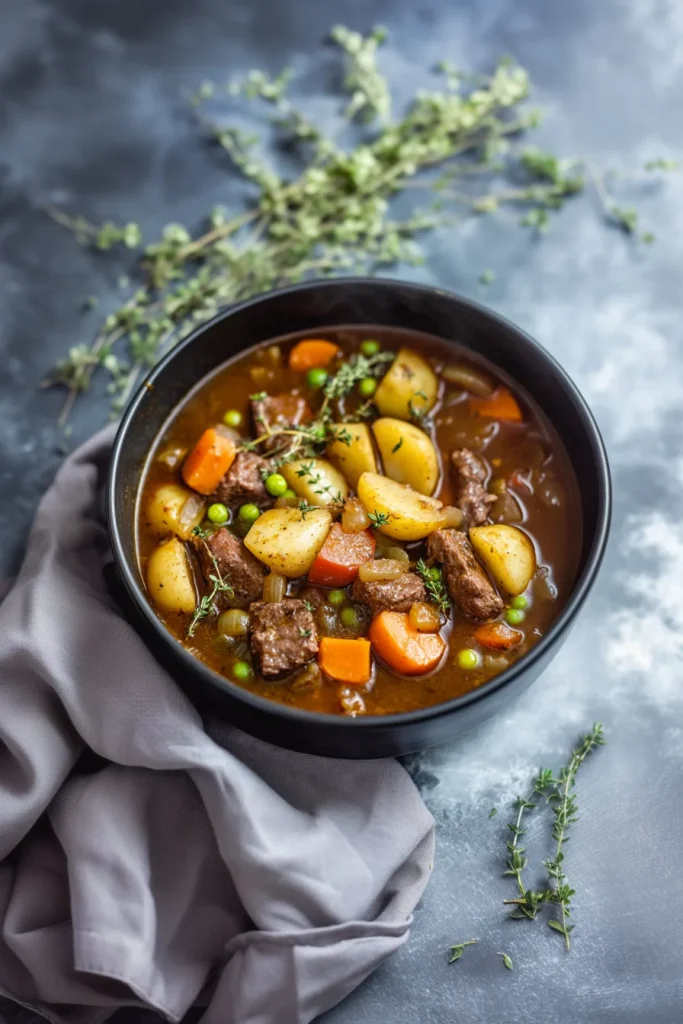
What to Serve With Mulligan stew?
This Mulligan stew can stand alone as a full meal, but I’m not going to pretend I don’t want something on the side. The gravy is too good to leave behind. A piece of bread, a biscuit, or even a handful of crackers can turn a bowl of stew into the kind of dinner where people go quiet for a few minutes. And you know what that means. Either the food is good, or everyone is very tired. Sometimes both.
- Crusty bread: Crusty bread is probably my favorite thing to serve with Mulligan stew. It soaks up the gravy, adds texture, and makes the whole meal feel more complete. Sourdough, French bread, or a rustic loaf all work beautifully. Warm it up and add butter if you want to make the whole thing feel extra cozy. I mean, if we’re making stew, we might as well lean in.
- Biscuits: Buttery biscuits are a very good match for this hearty beef stew. You can serve them on the side or split one open and spoon the stew right over it. It’s not fancy, but it is delicious. There’s something very comforting about biscuits and gravy-style meals, and this stew gives you that same feeling without needing a separate sauce.
- Cornbread: Cornbread brings a little sweetness that pairs well with the savory gravy. Since the stew already has corn in the mixed vegetables, the flavors feel right together. A warm square of cornbread with butter next to a bowl of Mulligan stew is the kind of meal that makes a regular weeknight feel like someone cared. Even if that someone was you, tired and wearing mismatched socks.
- Simple green salad: If you want something fresh next to the stew, a simple green salad works nicely. Lettuce, cucumber, tomato, and a light vinaigrette are enough. The stew is rich and filling, so the salad keeps things balanced without making the meal complicated. Nothing too fancy needed. This isn’t the moment for a salad with seventeen toppings unless you’re feeling ambitious.
- Crackers: Crackers are easy, quick, and very nostalgic with stew. Oyster crackers, saltines, or buttery round crackers add a little crunch and make the bowl feel even more comforting. This is especially nice with leftovers at lunch. Sometimes a bowl of reheated stew and a sleeve of crackers is exactly the meal the day needs.
- Something tangy: A tangy side might sound a little unexpected, but it works. Pickles, pickled onions, or a vinegar-based slaw can cut through the richness of the stew and brighten the meal. I wouldn’t say everyone will choose this pairing, but if you like a little sharpness with hearty food, try it. It’s the tiny zing that wakes everything up.
FAQ
Can I make Mulligan stew on the stovetop instead of in the oven?
Yes, you can make this Mulligan stew recipe on the stovetop. Follow the same steps for coating and browning the beef, cooking the onion, adding the flour and herbs, and stirring in the broth. Then cover the pot and simmer gently over low heat until the beef starts to become tender. Add the potatoes and vegetables during the last part of cooking. Just keep the heat low and stir occasionally so the gravy doesn’t stick to the bottom.
Can I use fresh vegetables instead of frozen mixed vegetables?
Yes, fresh vegetables work well in Mulligan stew. You can use fresh carrots, green beans, peas, corn, celery, mushrooms, or parsnips. The only thing to watch is cooking time. Harder vegetables need more time, while softer ones should go in later. Frozen vegetables are convenient, and I love them for that, but fresh vegetables can make the stew feel a little more garden-style if you have them.
Why is my beef still tough?
If the beef in your Mulligan stew is still tough, it probably needs more cooking time. Beef stew meat comes from tougher cuts that soften slowly. Cover the pot and cook it a bit longer until the beef is tender. It’s a little annoying when you’re hungry, I know, but giving it more time usually fixes the problem. Stew meat is stubborn until suddenly it isn’t.
How do I thicken Mulligan stew?
The flour coating and reserved flour mixture help thicken the gravy, but if you want it thicker, you have options. Let the stew rest uncovered for a few minutes, mash a few potato pieces into the gravy, or stir in a small cornstarch slurry near the end. Add any thickener slowly so you don’t overdo it. A good stew should be rich and spoonable, not stiff like it’s trying to become a casserole.
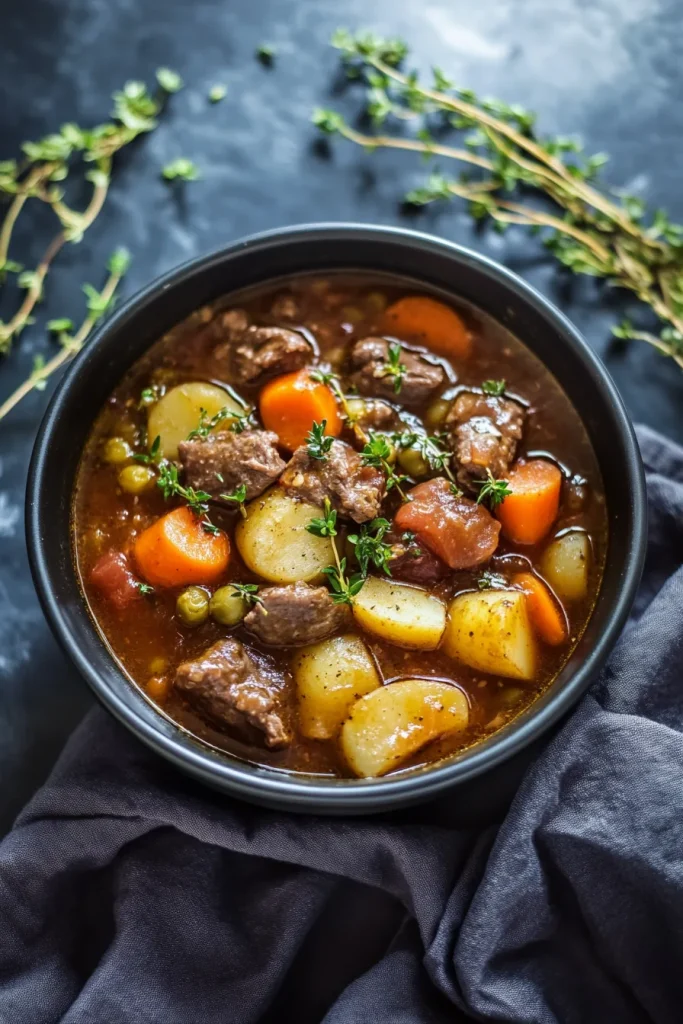
This Mulligan stew is the kind of recipe that feels like it belongs in a real kitchen on a real day. The kind of day where you want dinner to be warm, filling, and not too fussy. It has tender beef, soft potatoes, colorful vegetables, and a savory gravy that makes you want to drag bread through the bowl until every last bit is gone.
It’s simple, but not boring. Cozy, but not heavy in a bad way. And maybe that’s why I keep coming back to recipes like this. They don’t need fireworks. They just show up, feed everybody, and make the evening feel a little softer around the edges. So grab your Dutch oven, make a pot of Mulligan stew, and tell me—doesn’t this feel like exactly the kind of dinner you want waiting at the end of a long day?
Mulligan Stew
Ingredients
- 1/3 cup all-purpose flour
- 1/2 tsp onion powder
- 1/2 tsp garlic powder
- 1/4 tsp freshly ground black pepper
- 1 lb beef stew meat
- 2 tbsp vegetable oil divided
- 1 medium onion chopped
- 2 cups low-sodium beef broth
- 1/2 tsp dried oregano
- 1/4 tsp dried basil
- 1/4 tsp dried marjoram
- 2 medium gold potatoes cubed
- 1 bag frozen mixed vegetables 19 oz, containing corn, carrots, peas, and green beans
Instructions
- Preheat the oven to 350°F.
- In a large zipper-seal bag, combine the all-purpose flour, onion powder, garlic powder, and freshly ground black pepper.
- Seal the bag and shake until the flour mixture is evenly combined.
- Add the beef stew meat to the bag.
- Seal the bag again and shake until the beef pieces are evenly coated with the seasoned flour mixture.
- Reserve any remaining flour mixture in the bag for later use.
- Heat 1 tbsp vegetable oil in a Dutch oven over medium heat.
- Using tongs, remove the coated beef from the bag and place it in the Dutch oven.
- Brown the beef on all sides, working in batches if necessary to avoid overcrowding the pan.
- Once browned, transfer the beef to a plate and set aside.
- Add the remaining 1 tbsp vegetable oil to the Dutch oven over medium heat.
- Add the chopped onion and cook for 3 to 4 minutes, stirring occasionally, until softened.
- Sprinkle in approximately 1 1/2 tbsp of the reserved flour mixture.
- Cook for 2 minutes, stirring constantly, to remove the raw flour taste.
- Add the dried oregano, dried basil, and dried marjoram.
- Cook for 30 seconds, stirring continuously, until fragrant.
- Gradually stir in the low-sodium beef broth.
- Cook for 2 minutes, stirring several times and scraping the bottom of the Dutch oven to loosen any browned bits.
- Return the browned beef to the Dutch oven.
- Stir gently to combine the beef with the gravy mixture.
- Cover the Dutch oven with a lid.
- Transfer the covered Dutch oven to the preheated oven.
- Bake for 1 hour.
- Carefully remove the Dutch oven from the oven.
- Add the cubed gold potatoes and frozen mixed vegetables to the pot.
- Stir gently until the potatoes and vegetables are evenly distributed.
- Cover the Dutch oven again and return it to the oven.
- Bake for an additional 30 minutes, or until the beef, potatoes, and vegetables are tender.
- Remove the stew from the oven and allow it to rest for several minutes before serving.
- Serve warm.
Notes