Lotus seeds, peanut oil, salt, sugar, honey, golden syrup, lye water, flour, salted duck egg yolks, egg yolk, and milk.
There’s something about making mooncakes at home that feels a little magical and a little intimidating at the same time. I mean, let’s be honest. Those patterned tops look so perfect that it’s easy to think, Nope, that’s bakery-level work. I’ll just admire them from a safe distance. But this Mooncake Recipe breaks everything down in a way that feels much more doable, even if your first mooncake comes out slightly wonky. Mine did. More than one, actually.
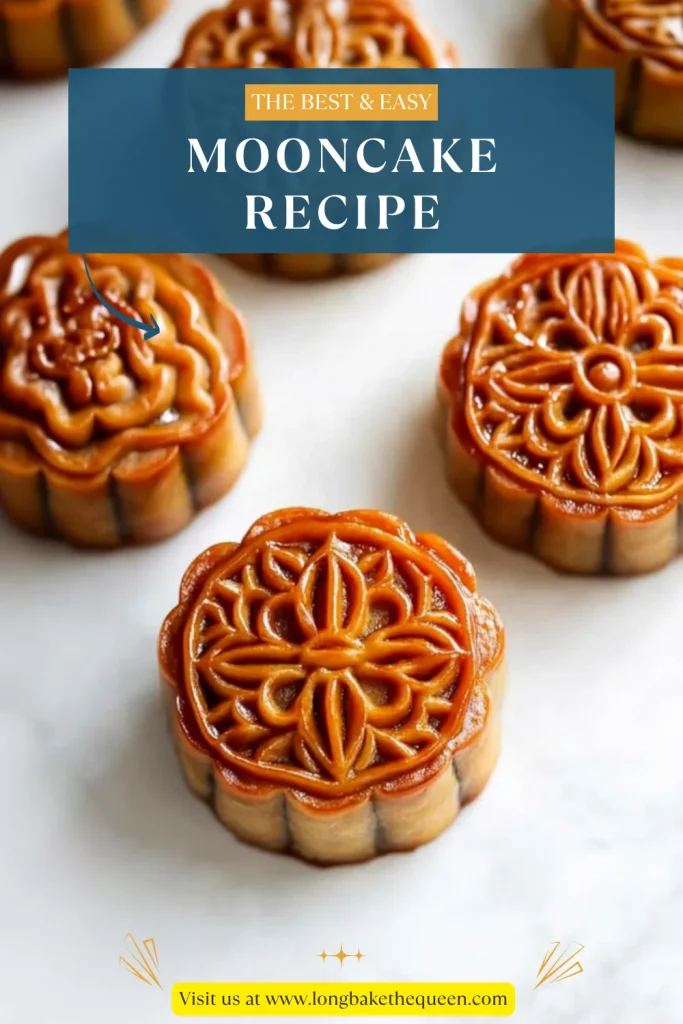
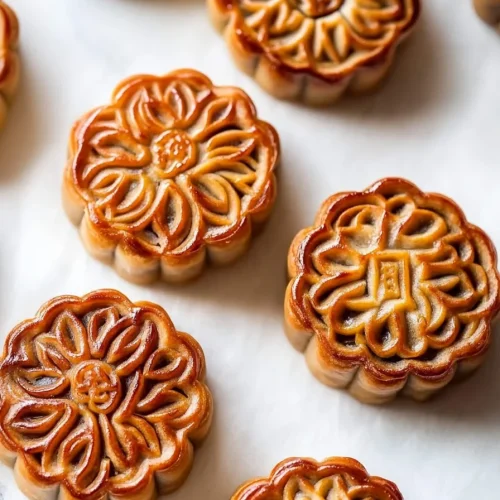
This homemade Mooncake Recipe uses smooth lotus paste, soft mooncake skin, optional salted duck egg yolks, and a light egg wash for that golden finish. The filling is sweet and rich, the salted yolk adds that classic savory bite, and the pastry softens beautifully after resting. It’s the kind of recipe that asks for patience, but not perfection. Which is nice, because perfection and I are not always on speaking terms in the kitchen.
Mooncakes are especially meaningful during the Mid-Autumn Festival, when families gather, share tea, admire the moon, and enjoy little slices of something sweet. Even if you didn’t grow up making mooncakes from scratch, there’s something lovely about joining that tradition in your own kitchen. Maybe your mold sticks a little. Maybe the egg wash gets too enthusiastic on one corner. It’s fine. Homemade mooncakes have personality, and honestly, that’s part of the charm.
The first time I tried a Mooncake Recipe at home, I was excited in the way you get excited before a big kitchen project… and also slightly suspicious. You know that feeling? Like, This looks beautiful, but am I about to spend three hours arguing with dough? I had the lotus seeds soaking, the mold sitting on the counter, and a little voice in my head saying, “Please don’t embarrass us.”
Mooncakes always felt special to me because they’re not just dessert. They carry memory, family, gifting, and that cozy Mid-Autumn Festival mood where everyone shares small slices with tea. There’s something so gentle about it. You don’t usually eat a whole mooncake in one go. You cut it, share it, pass it around, and suddenly a small pastry feels like part of a bigger moment. That’s the kind of food I love most, honestly.
Making this Mooncake Recipe reminded me of those slow kitchen days when the house is quiet, the counter is a mess, and you’re trying to convince yourself that sticky golden syrup is “part of the process.” The lotus paste takes time. You soak the seeds overnight, simmer them until soft, blend them, strain them, cook them down, and stir until your arm starts asking questions. It’s not hard exactly, but it is a little patient. A bit like making jam, except the filling eventually becomes this thick, smooth paste that feels very satisfying to shape.
The salted duck egg yolk part might be surprising if you’re new to traditional mooncakes. Sweet lotus paste wrapped around a salty egg yolk? I know, it sounds like something you need to taste before fully understanding. But once you try it, the contrast makes sense. The sweet paste is smooth and mellow, and the yolk gives this rich salty center that keeps each bite from feeling too sweet. I wouldn’t say everyone falls in love with salted yolks immediately, but if you like sweet-and-savory flavors, this part is pretty special.
And then there’s the mold. Oh, the mold. Pressing the mooncake into the mold and seeing the pattern come out clean feels like a tiny festival miracle. The first one may not be perfect. Mine looked like it had been through a mild emotional event. But by the third or fourth one, your hands start to understand the dough. You dust the mold lightly, press firmly, lift, push, and there it is: a little patterned mooncake that makes you feel weirdly proud.
That’s why I love this homemade Mooncake Recipe. It’s not a quick snack recipe. It’s a thoughtful one. You make it slowly, maybe over two days, and you get to enjoy the little rituals: weighing the filling, wrapping the dough, brushing on egg wash, waiting 24 hours before eating. Yes, the waiting is rude. But it’s worth it. The mooncake skin softens, the flavor settles, and the whole thing tastes more balanced the next day.

Why you’ll Love this Mooncake Recipe?
- It feels meaningful, not just delicious. This Mooncake Recipe is more than a dessert project. It’s tied to the Mid-Autumn Festival, family gatherings, tea, gifting, and that beautiful tradition of sharing mooncakes in small wedges. Even if you’re making them in a regular kitchen with flour on your shirt and dishes in the sink, the process still feels special. There’s a quiet joy in making something that people usually receive in a pretty box. And when you make it yourself? It feels even more personal, even if the edges aren’t bakery-perfect.
- The lotus paste is made from scratch. Homemade lotus paste gives this traditional mooncake recipe a smooth, gently sweet filling that tastes fresh and rich. You start with dried lotus seeds, soak them overnight, simmer them until tender, then blend, strain, and cook them down with peanut oil, sugar, honey, and salt. It takes some time, yes, and you’ll probably wonder halfway through if the mixture will ever thicken. It will. Eventually. And when it starts pulling away from the pan like a real paste, you’ll feel like you accomplished something important. Small kitchen victory, but still.
- The salted duck egg yolks add that classic sweet-salty flavor. If you love traditional lotus mooncakes, the salted duck egg yolk is the part that makes each bite feel familiar and festive. The yolk is rich, salty, and savory, which balances the sweet lotus paste beautifully. If you’re not sure about it, you can make a few mooncakes without yolks and a few with them. I actually like doing that because everyone has different preferences. Some people want the yolk. Some people politely avoid it. Both are allowed at my table.
- The step-by-step method makes it less intimidating. A Mooncake Recipe can look like a lot when you read it all at once, but it becomes much easier when you break it into stages. First you make the lotus paste. Then the mooncake skin. Then you weigh, wrap, mold, chill, bake, brush, bake again, and rest. Okay, yes, written like that it still sounds like a lot. But each step is simple on its own. It’s like assembling tiny edible gifts. One little stage at a time.
- Weighing helps the mooncakes look neat. Using a kitchen scale might feel fussy, but it really helps this Mooncake Recipe turn out evenly. The filling should be 30 grams, and the full mooncake with skin should be 50 grams total. That ratio helps the mooncakes fit the mold and bake properly. Without weighing, one mooncake may end up looking like a tiny button and another like it has been lifting weights. Cute, maybe, but not ideal.
- The mold gives you that beautiful patterned top. The mold is where the mooncake magic happens. You press the wrapped dough inside, push it onto the baking sheet, and suddenly there’s a patterned pastry sitting there like it came from a gift box. Chilling the shaped mooncakes helps the pattern stay clear in the oven, and brushing the egg wash lightly keeps the design from getting blurred. It’s such a satisfying step. Slightly nerve-wracking, but satisfying.
- They get better after resting. This is one of those old-school baking details I really like, even though I complain about it every time. After baking, mooncakes taste best after resting for 24 hours. The skin softens, the color settles, and the filling and pastry become more balanced. Freshly baked mooncakes are tempting, but next-day mooncakes are better. Annoying truth, but truth.
Ingredient Notes
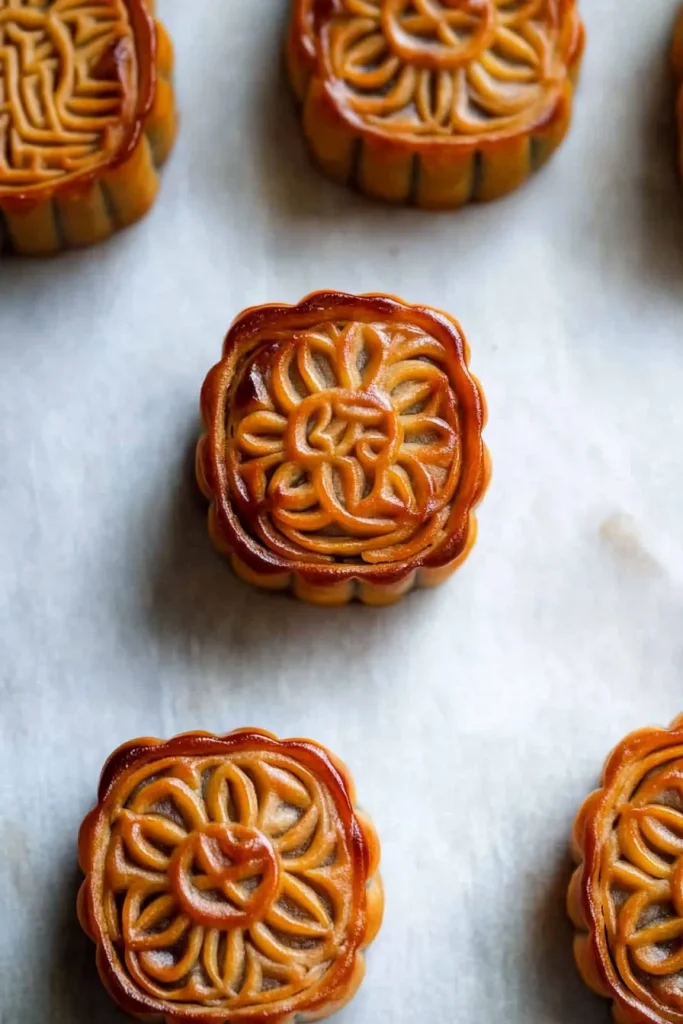
The ingredients in this Mooncake Recipe are split into the lotus paste, mooncake skin, optional salted duck egg yolks, and egg wash. Some ingredients might feel a little unfamiliar if this is your first time making traditional mooncakes, especially golden syrup and lye water. Don’t worry. They each have a role. Once you understand what they do, the recipe feels much less mysterious and much more like, “Okay, I can handle this.”
- Dried Lotus Seeds: Dried lotus seeds are the heart of the homemade lotus paste. They need to be soaked overnight so they soften before cooking. The next day, you’ll remove the little green buds from the centers because they can taste bitter. I know, it’s a tiny bit tedious. It’s not the glamorous part of mooncake making. But it helps the filling taste smooth and clean instead of having a surprise bitter note. Once cooked and blended, the lotus seeds turn into the creamy base for the filling.
- Peanut Oil: Peanut oil adds richness to both the lotus paste and the mooncake dough. In the lotus paste, you add it 1 tablespoon at a time, stirring after each addition so the oil blends in properly. This step matters because the paste needs to become smooth, not greasy. Peanut oil also gives a gentle nutty flavor that works beautifully with lotus seeds. If you’ve ever wondered why traditional mooncakes taste so rich, this is one of the reasons.
- Salt: Salt may look like a tiny ingredient here, but it balances the sweetness in the lotus paste. You only need 1/4 teaspoon, and it doesn’t make the filling salty. It just makes the flavor feel more complete. Sweet fillings without salt can taste a little flat, like something is missing but you can’t quite name it. Salt quietly fixes that.
- Granulated Sugar: Granulated sugar sweetens the lotus paste and helps create that classic mooncake filling flavor. This recipe uses 1/3 cup, which gives sweetness without making the filling feel too heavy. You can adjust slightly if needed, but I wouldn’t reduce it too much because sugar also helps the paste texture. Mooncake filling needs to taste good and hold its shape. It has responsibilities.
- Honey: Honey adds a softer sweetness and a little depth to the lotus paste. It makes the filling taste warmer and rounder, if that makes sense. The recipe uses 1 1/2 tablespoons, so it supports the sugar instead of taking over. I like honey in this Mooncake Recipe because it gives the paste a more homemade feel. Maybe that’s sentimental, but I stand by it.
- Golden Syrup: Golden syrup is essential for the mooncake skin. It gives the dough sweetness, color, and that traditional tender texture. It’s thick, amber, sticky, and somehow always finds its way onto your fingers even when you’re careful. Golden syrup also helps the mooncake skin deepen in color after baking and resting. It’s one of those ingredients that looks simple but does a lot behind the scenes.
- Lye Water: Lye water helps create the traditional color, texture, and structure of baked mooncake skin. It may sound unusual if you haven’t used it before, but it’s common in mooncake recipes. You only need 1 teaspoon, so measure carefully and mix it well with the golden syrup and peanut oil before adding flour. It’s a small ingredient, but it helps the mooncake skin bake up properly.
- All-Purpose Flour: All-purpose flour forms the body of the mooncake skin dough. When mixed with golden syrup, peanut oil, and lye water, it becomes a soft dough that needs to rest in the fridge before shaping. It may not feel like cookie dough or pie dough, and that’s okay. Mooncake dough has its own little personality. After chilling, it becomes easier to handle and wrap around the filling.
- Salted Duck Egg Yolks: Salted duck egg yolks are optional, but they give this Mooncake Recipe that traditional rich, savory center. If you love classic lotus seed mooncakes, you’ll probably want to include them. If you prefer a fully sweet mooncake, skip the yolks and use 30 grams of lotus paste per mooncake instead. There’s no shame in either version. Food traditions can still leave room for personal taste.
- Egg Yolk: The egg yolk is used for the egg wash, which gives the mooncakes a glossy golden finish. It’s brushed on after the mooncakes bake for the first 5 minutes. That first short bake helps set the pattern before the egg wash goes on. Without it, the design can blur more easily. Mooncake patterns are delicate little divas, apparently.
- Whole Milk: Whole milk thins the egg yolk and makes the egg wash easier to brush on lightly. Lightly is important. If the egg wash is too thick or heavy, it can settle into the pattern and blur those pretty details. You want a gentle golden glow, not an egg wash flood. Very different vibes.
How to Make Mooncake Recipe?
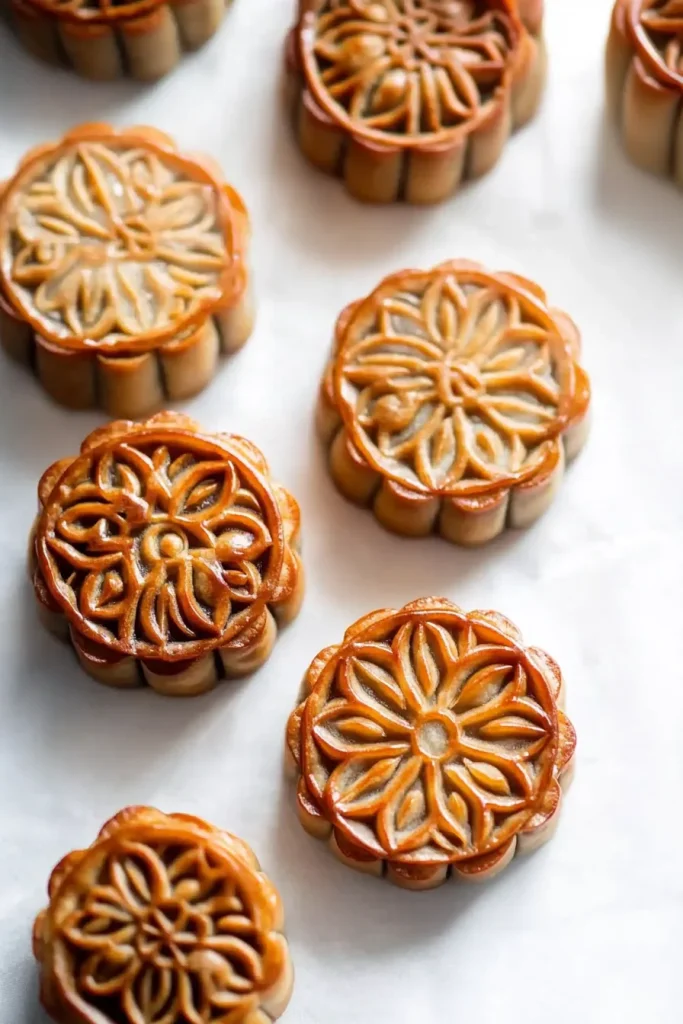
Making this Mooncake Recipe is easiest when you treat it like a calm kitchen project instead of a rushed dessert. You’ll soak and cook the lotus seeds, turn them into paste, make the mooncake skin, weigh and wrap the filling, press each mooncake into a mold, chill them, then bake in two stages. It sounds detailed, but take it one piece at a time. Put on music. Clear the counter. Maybe make tea. This is that kind of recipe.
- Soak the lotus seeds overnight. Place the dried lotus seeds in water and let them soak overnight. This helps them soften so they cook properly the next day. I love a step that does its work while I sleep. It makes the recipe feel a little less demanding, like the lotus seeds are meeting you halfway.
- Drain and clean the lotus seeds. The next day, drain the soaked lotus seeds and check the centers. Remove the green buds from the middle because they can taste bitter. This part takes a few minutes, and yes, it’s a little fiddly. But it’s worth it for smooth, sweet lotus paste. Nobody wants bitterness sneaking into a festival dessert like an uninvited guest.
- Simmer the lotus seeds. Add the cleaned lotus seeds to a saucepan with fresh water, using just enough water to cover them. Simmer for about 2 hours, or until they’re very soft. Keep an eye on the water level and add a little more if needed. The seeds should be tender enough to blend smoothly. If they’re still firm, give them more time. Lotus seeds cannot be rushed into softness, apparently.
- Blend the lotus seeds into a puree. Once the lotus seeds are soft, blend them with the cooking water until the texture is smooth. This puree becomes the base of your lotus paste, so try to get it as silky as possible. If you see chunks, keep blending. Smooth filling makes a big difference in homemade mooncakes, especially when you slice them open.
- Strain the puree. Pour the lotus seed puree through a fine mesh sieve into a sauté pan. I know, another dish to wash. I’m sorry. But this step helps remove any stubborn bits and gives the lotus paste a smoother texture. For a Mooncake Recipe, smooth filling is worth the extra minute. It makes the final bite softer and more polished.
- Cook down the lotus mixture. Cook the lotus mixture over medium heat until it reduces to about 2/3 of its original amount and becomes as thick as a very thick soup. Stir consistently so the moisture evaporates evenly and the paste doesn’t stick. This is a slow step, not a hard one. You’re basically encouraging the puree to become filling. Gentle persuasion, with a spatula.
- Add the peanut oil gradually. Add the peanut oil 1 tablespoon at a time, stirring well after each addition. Let the oil absorb before adding more. If you rush this part, the mixture may look oily or separated. Slow stirring helps the paste become smooth and cohesive. Your arm might get a tiny workout. Consider it mooncake cardio.
- Add the salt, sugar, and honey. Stir in the salt, granulated sugar, and honey. Keep stirring and flipping the mixture as it thickens. The lotus paste is ready when it starts pulling away from the pan and holds its shape. This is the moment when it finally stops looking like soup and starts looking like something you can roll. Very satisfying. Maybe even oddly emotional if you’ve been stirring for a while.
- Chill the lotus paste. Transfer the finished lotus paste to a container and chill it in the refrigerator for at least 1 hour. Cold paste is much easier to shape around the salted duck egg yolks. Warm paste is sticky and slippery and frankly not interested in cooperating. Let it cool down, emotionally and literally.
- Make the mooncake skin dough. While the lotus paste chills, combine the golden syrup, peanut oil, and lye water in a small bowl. Mix until incorporated, then add the all-purpose flour and stir until a dough forms. Cover and chill the dough for 30 minutes. This resting time helps the dough firm up and become easier to wrap around the filling.
- Prepare everything for shaping. Once the paste and dough are chilled, gather the lotus paste, mooncake skin dough, salted duck egg yolks if using, a kitchen scale, your mold, and a parchment-lined baking sheet. Having everything ready makes the shaping process feel much calmer. Otherwise, you’ll be halfway through wrapping a mooncake and suddenly searching for the mold with sticky hands. Not ideal. Been there.
- Weigh the filling. For each mooncake, place one salted duck egg yolk and some lotus paste on the scale. Together, they should weigh 30 grams. Adjust the lotus paste as needed. If you’re skipping the egg yolk, use 30 grams of lotus paste. This keeps the filling consistent and helps every mooncake fit the mold properly.
- Weigh the mooncake skin dough. Add mooncake skin dough to the scale so the total weight of filling plus dough equals 50 grams. Adjust the dough if needed. This ratio gives you enough skin to wrap the filling without making the pastry too thick. The first one might take a little fiddling, but after that, you’ll get into a rhythm.
- Wrap the salted yolk with lotus paste. Roll the lotus paste into a ball, then flatten it into a disk. Place the salted duck egg yolk in the center and wrap the paste around it until fully enclosed. Roll gently between your hands to smooth it out. If you’re making the no-yolk version, simply roll the lotus paste into a smooth ball and move to the next step.
- Wrap the lotus filling with mooncake skin. Roll the mooncake dough into a ball and flatten it into a disk. Place the lotus paste ball in the center. The dough won’t cover the filling completely at first, so gently stretch and press it upward around the filling. The motion is a little like easing a rubber band around a ball. Slowly, carefully, no panic. Once covered, roll it gently until smooth.
- Repeat with the remaining mooncakes. Continue weighing, wrapping, and rolling until you run out of lotus paste or dough. The first mooncake may feel clumsy. That’s normal. The second will feel better. By the third, you may start acting like you’ve always done this. Homemade mooncakes are a confidence-building exercise, apparently.
- Prepare the mold and baking sheet. Line a baking sheet with parchment paper. Lightly coat the mooncake mold with flour, then shake out the excess. You want just enough flour to help the mooncake release, not a snowy layer that hides the pattern. Too much flour can make the finished tops look dusty.
- Press the mooncakes into the mold. Place one mooncake ball into the mold and press it firmly onto the parchment-lined baking sheet. Lift the mold slightly and push the mooncake out. Brush away any excess flour from the top. When the pattern releases cleanly, it feels so good. Like a tiny pastry stamp of approval.
- Chill the shaped mooncakes. Refrigerate the shaped mooncakes for 30 minutes to 1 hour. I prefer the full hour because it helps the pattern hold better in the oven. This step is especially helpful if your kitchen is warm or the dough has softened during shaping. Chilled mooncakes behave better. Don’t we all?
- Preheat the oven. Preheat the oven to 350°F / 177°C. Make sure the oven is fully heated before baking. Mooncakes are small and detailed, so steady heat helps them bake evenly and keeps the pattern more defined.
- Bake the mooncakes for 5 minutes first. Bake the mooncakes for 5 minutes. This short first bake sets the surface before you add the egg wash. It helps protect the pattern so it doesn’t blur as much. Think of it as giving the design a little head start.
- Make the egg wash. Whisk together 1 egg yolk and 3 tablespoons whole milk until smooth. The milk thins the yolk so it brushes on lightly. You don’t want a thick egg wash sitting in the details of the mold pattern. Light and smooth is the goal.
- Brush lightly with egg wash. Remove the mooncakes from the oven and brush the tops gently with the egg wash. Use a light hand. Too much egg wash can pool in the pattern and soften the design. This is not the time for enthusiasm. This is the time for restraint, which is not always my strength, but we try.
- Bake again until golden. Return the mooncakes to the oven and bake for another 10 to 12 minutes, or until golden and set. Keep an eye on them near the end because ovens vary. The mooncakes should look lightly glossy and golden, with the pattern still visible.
- Cool and rest before eating. Let the mooncakes cool on the baking sheet for 5 minutes, then transfer them to a cooling rack to cool completely. For the best texture, refrigerate them and let them rest for 24 hours before eating. I know waiting feels unreasonable after all that work, but this step matters. The mooncake skin softens and the flavors settle. Tomorrow’s mooncake is better. It just is.
Storage Options
Homemade mooncakes store well, especially after they’ve had time to rest. Since this Mooncake Recipe uses homemade lotus paste and optional salted duck egg yolks, I prefer storing them in the refrigerator. It’s safer, and it helps protect the texture. Keep them covered so they don’t dry out or absorb fridge smells. A mooncake should taste like lotus paste, not last night’s garlic leftovers.
- Refrigerator: Store cooled mooncakes in an airtight container in the refrigerator for up to 5 to 7 days. For the best texture, let them rest for 24 hours before eating. The skin softens, the filling settles, and the flavor becomes more balanced. If you stack them, place parchment paper between layers so the pretty patterns don’t get damaged. After all that molding work, we protect the art.
- Room Temperature: If your mooncakes do not contain salted duck egg yolks and your kitchen is cool, you can keep them at room temperature for about 1 day. That said, homemade fillings can vary in moisture, so refrigeration is usually the safer choice. If your kitchen is warm or humid, definitely refrigerate them. Mooncakes do not need to be brave on the counter.
- Freezer: You can freeze homemade mooncakes for up to 1 month, though the texture may change slightly after thawing. Wrap each mooncake tightly, then place them in a freezer-safe container or bag. Thaw overnight in the refrigerator before serving. Fresh mooncakes are best, but freezing works if you make a larger batch or want to save some for later.
- Make-Ahead Lotus Paste: The lotus paste can be made 2 to 3 days ahead and stored in the refrigerator in an airtight container. This is one of my favorite ways to make the whole Mooncake Recipe feel less overwhelming. Make the filling one day, then shape and bake another day. Breaking it up makes the process much calmer, especially if your kitchen attention span is like mine on busy weeks.
- Make-Ahead Dough: The mooncake skin dough can be made ahead and chilled for several hours before shaping. If it gets too firm, let it sit at room temperature briefly until it becomes workable. You want it soft enough to stretch around the filling, but not so soft that it sticks to everything. There is a sweet spot, and your hands will know when you find it.
- Serving After Storage: Mooncakes can be served chilled or closer to room temperature. I personally like letting them sit out for a short time before serving because the texture softens slightly. Slice them into small wedges, especially if they have salted duck egg yolks. Mooncakes are rich, and small slices make them easier to share. Plus, sharing is kind of the whole mood.
Variations & Substitutions
This Mooncake Recipe uses classic lotus paste and optional salted duck egg yolks, but you can adjust it depending on your taste, time, and comfort level. You can skip the yolks, use store-bought paste, try red bean or black sesame filling, make mini mooncakes, or adjust the sweetness slightly. Traditional recipes are meaningful, but homemade versions can still make a little room for real-life kitchen needs.
- Make mooncakes without salted duck egg yolks. If you prefer a fully sweet mooncake, skip the salted duck egg yolks and use 30 grams of lotus paste for each filling. This version is smooth, simple, and great for people who are new to mooncakes. The sweet-salty yolk center is classic, but it’s not required for everyone. I like having both versions on the plate because then people can choose their own adventure.
- Use store-bought lotus paste. Store-bought lotus paste is a helpful shortcut if you want to focus on wrapping, molding, and baking instead of making filling from scratch. Homemade lotus paste is satisfying, but it takes time. Some days you want the full slow project. Some days you want to skip straight to the pretty mold part. Both are completely fair. This Mooncake Recipe can handle either approach.
- Try red bean paste. Red bean paste is a classic mooncake filling with a sweet, earthy flavor. You can use it in place of lotus paste while keeping the same weight guide: 30 grams filling and 50 grams total including the skin. Red bean mooncakes feel cozy and familiar, especially if you already enjoy red bean buns, mochi, or other Asian desserts.
- Use black sesame paste. Black sesame paste gives mooncakes a deeper, nuttier flavor and a dramatic dark filling. It’s richer and more intense than lotus paste, so it’s great if you love sesame desserts. Just make sure the paste is firm enough to hold its shape before wrapping. If it’s too soft, chill it first. Soft filling and thin mooncake skin can become a tiny wrestling match.
- Make mini mooncakes. If you have smaller molds, you can make mini mooncakes by adjusting the filling and dough weights to fit your mold. Keep the ratio balanced so the skin isn’t too thick or too thin. Mini mooncakes are adorable for gifting and easier to serve in small portions. Also, tiny desserts always make people smile. I don’t know why, but they do.
- Use a neutral oil if needed. Peanut oil gives the lotus paste and mooncake skin a gentle nutty flavor, but you can use a mild neutral oil if needed. Choose an oil that won’t overpower the filling. If peanut allergy is a concern, use a safe alternative and be careful with cross-contact. The flavor may change slightly, but the recipe can still work.
- Adjust the sweetness carefully. Since the lotus paste is homemade, you can adjust the sweetness a little. I wouldn’t reduce the sugar too much because it helps with both flavor and texture, but small adjustments are fine. Honey adds warmth, while sugar gives the filling its classic sweetness. Taste as you cook, but remember the paste will taste slightly different once cooled and wrapped in mooncake skin.
- Brush the egg wash lightly. If you want a lighter finish, brush on a very thin layer of egg wash. If you want a deeper golden color, you can brush slightly more, but be careful. Too much egg wash can blur the pattern. This step is one of those small things that makes a big difference. Mooncakes reward gentle hands.
What to Serve With Mooncake Recipe?
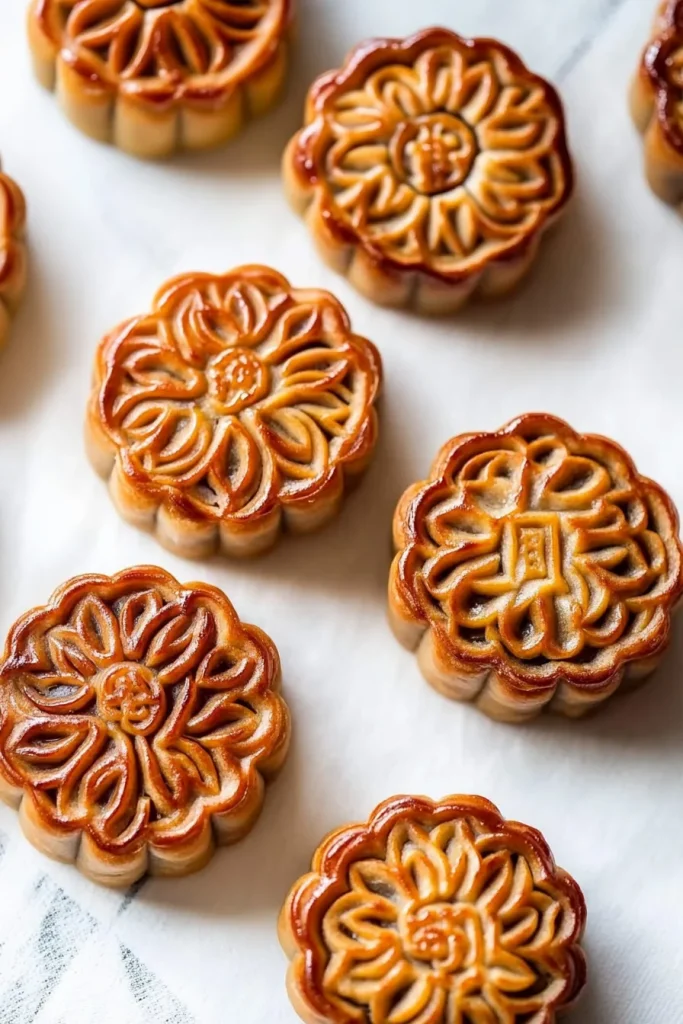
Mooncakes are rich, sweet, and traditionally served in small wedges, so this Mooncake Recipe pairs best with drinks and sides that balance that richness. Tea is the classic choice, especially during the Mid-Autumn Festival, but fruit, nuts, and even coffee can work beautifully too. The goal is to create a little sharing moment, not a huge complicated spread.
- Hot Chinese Tea: Hot tea is the classic pairing for mooncakes. Oolong, pu-erh, jasmine, green tea, or black tea all work well. The warmth and slight bitterness of tea balance the sweet lotus paste and rich salted duck egg yolk. Serve the mooncakes in small wedges and sip slowly. It feels calm, traditional, and a little ceremonial in the nicest way.
- Jasmine Tea: Jasmine tea is light, floral, and lovely with lotus paste mooncakes. It adds fragrance without overpowering the filling. If you’re serving this Mooncake Recipe to guests, jasmine tea is a gentle choice because it’s easy to enjoy. It makes the whole table feel softer and more relaxed, like the dessert version of opening a window on a cool evening.
- Oolong Tea: Oolong tea has a deeper roasted flavor that pairs beautifully with traditional mooncakes, especially ones with salted duck egg yolks. It cuts through the richness and balances the sweetness. If mooncakes sometimes feel too heavy for you, try them with oolong. It helps each bite feel more balanced and less overwhelming.
- Fresh Fruit: Fresh fruit like pomelo, oranges, grapes, berries, or sliced apples adds brightness to a mooncake platter. Pomelo is especially fitting for the Mid-Autumn Festival, and it looks beautiful on the table. Fruit gives everyone something fresh between rich bites of lotus paste and pastry. A little juicy freshness goes a long way.
- Nuts and Seeds: Roasted nuts, pumpkin seeds, sesame snacks, or small nut mixes can pair nicely with mooncakes. Keep the portions small because mooncakes are already filling. The crunch adds variety and makes the dessert spread feel more festive without making it too heavy.
- Light Soup or Savory Snacks: If you’re serving mooncakes after a meal, keep the meal lighter if you can. Simple soup, steamed vegetables, dumplings, or savory snacks work well before dessert. Of course, during holidays, families often put out a full table anyway. That’s just how celebrations go sometimes. You plan “simple,” and suddenly there are twelve dishes. Relatable.
- Coffee: Tea is traditional, but coffee can be surprisingly good with mooncakes. Black coffee or espresso balances the sweet lotus paste nicely. Is it the classic pairing? Not really. But if you’re having a slice of mooncake in the afternoon and coffee is calling your name, I support it. Some food rules are flexible, especially when caffeine is involved.
- A Mid-Autumn Festival Dessert Platter: Serve this homemade Mooncake Recipe as part of a dessert platter with sliced mooncakes, fruit, tea, sesame treats, nuts, and maybe a few small candies. It creates a pretty sharing board without too much extra work. Mooncakes are meant to be admired first, then sliced, shared, and enjoyed. That little pause before cutting into them? Very worth it.
FAQ
Can I make this Mooncake Recipe without salted duck egg yolks?
Yes, you can make this Mooncake Recipe without salted duck egg yolks. Use 30 grams of lotus paste for each mooncake filling instead. This gives you a fully sweet lotus paste mooncake without the salty center. It’s a great option if you’re serving people who are new to mooncakes or prefer a simpler filling.
Can I use store-bought lotus paste?
Yes, you can use store-bought lotus paste to save time. Use the same weight guide: 30 grams of filling per mooncake and 50 grams total including the dough. This shortcut is helpful if you want to practice shaping and baking without making the filling from scratch.
Why did my mooncake pattern disappear while baking?
The pattern may soften if the dough was too warm, the mooncakes were not chilled long enough, the mold had too much flour, or the egg wash was brushed on too heavily. Chill the molded mooncakes for 30 minutes to 1 hour, and brush the egg wash lightly. A gentle hand helps the design stay visible.
Why is my lotus paste too soft?
Your lotus paste may be too soft if it wasn’t cooked down long enough. Keep cooking and stirring until it pulls away from the pan and holds its shape. Once chilled, it should be firm enough to roll. If it spreads after cooling, it probably needed more time on the stove.
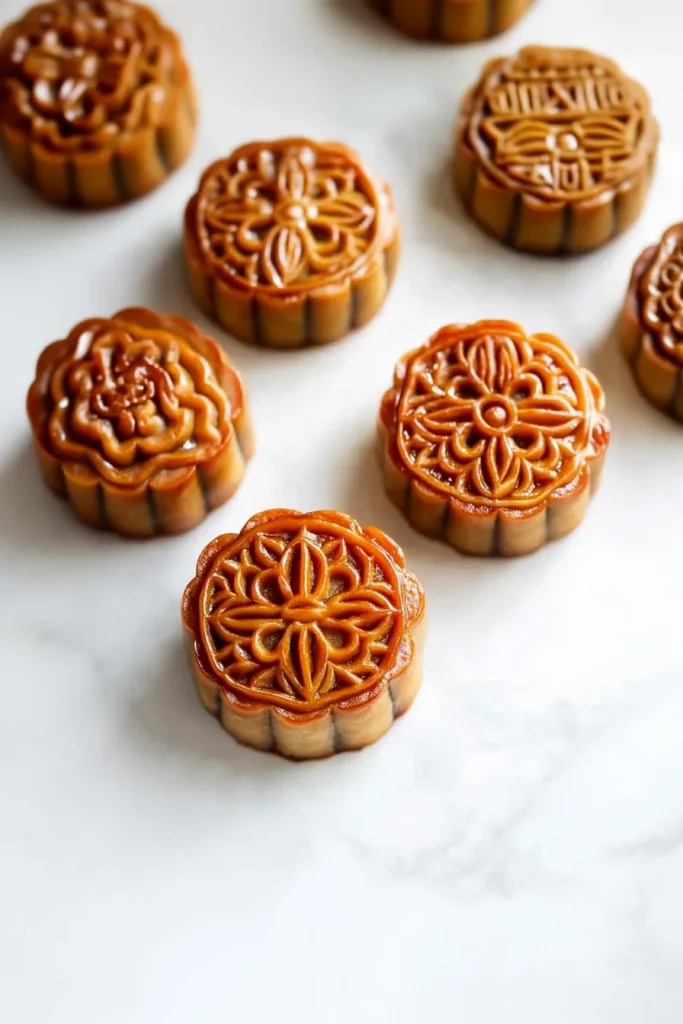
This Mooncake Recipe is a beautiful little kitchen project for the Mid-Autumn Festival, gifting season, or any time you want to make something meaningful from scratch. With homemade lotus paste, tender mooncake skin, optional salted duck egg yolks, and a glossy golden finish, these mooncakes feel special in a way that simple desserts don’t always do.
They take patience, yes. You’ll soak, simmer, blend, stir, chill, weigh, wrap, mold, bake, and then wait before eating. It sounds like a lot because, well, it is a bit. But it’s also slow and satisfying and kind of peaceful once you get into it. And if your first batch has a few soft patterns or imperfect edges? That’s okay. Homemade mooncakes should look like they were made by human hands.
So make this Mooncake Recipe, slice the mooncakes into small wedges, pour some tea, and share them with someone who will appreciate the effort. Would you make yours with salted duck egg yolks, or keep them all sweet with lotus paste only? Can’t wait to hear what you think!
Mooncake Recipe
Ingredients
For the Lotus Paste
- 3/4 cup dried lotus seeds
- 3 tbsp peanut oil
- 1/4 tsp salt
- 1/3 cup granulated sugar
- 1 1/2 tbsp honey
For the Mooncake Skin
- 84 g golden syrup / 1/4 cup
- 25 g peanut oil / 2 tbsp
- 7 g lye water / 1 tsp
- 120 g all-purpose flour / 1 cup
Other Ingredients
- 10 salted duck egg yolks optional
- 1 egg yolk
- 3 tbsp whole milk
Instructions
Prepare the Lotus Paste
- Place the dried lotus seeds in a bowl and cover them with water.
- Soak the lotus seeds overnight.
- The next day, drain the soaked lotus seeds.
- Check the centers of the lotus seeds and remove any green buds, as they may have a bitter taste.
- Transfer the cleaned lotus seeds to a saucepan.
- Add enough fresh water to just cover the lotus seeds.
- Simmer the lotus seeds for approximately 2 hours, or until tender.
- Once cooked, blend the lotus seeds with the cooking water until smooth.
- Pour the lotus seed puree through a fine mesh sieve into a sauté pan.
- Place the sauté pan over medium heat.
- Cook the lotus mixture, stirring regularly, until it reduces to approximately 2/3 of its original amount and becomes as thick as a very thick soup.
- Add the peanut oil 1 tablespoon at a time, stirring thoroughly after each addition.
- Continue stirring consistently so the moisture evaporates evenly from the lotus paste.
- Add the salt, granulated sugar, and honey.
- Continue stirring and folding the mixture until it thickens into a paste.
- Cook until the paste begins to pull away from the pan and holds its shape.
- Remove the lotus paste from the heat.
- Transfer it to a container and refrigerate for at least 1 hour, or until cooled and firm enough to handle.
Prepare the Mooncake Skin
- In a small bowl, combine the golden syrup, peanut oil, and lye water.
- Mix until fully incorporated.
- Add the all-purpose flour.
- Mix until a soft dough forms.
- Cover the dough and refrigerate for 30 minutes.
Form the Mooncakes
- Once the lotus paste and dough have cooled, prepare the lotus paste, mooncake skin dough, and salted duck egg yolks, if using.
- Using a kitchen scale, weigh the filling for each mooncake.
- If using a salted duck egg yolk, place one yolk and enough lotus paste on the scale so the combined weight is 30 g.
- Adjust the amount of lotus paste as needed to reach the correct weight.
- If omitting the salted duck egg yolk, use 30 g of lotus paste for each mooncake.
- Weigh the mooncake skin dough with the filling.
- The total weight of the filling and mooncake skin dough should be 50 g.
- Adjust the amount of dough as needed.
- Roll the lotus paste into a smooth ball.
- Flatten the lotus paste into a disk.
- Place the salted duck egg yolk in the center of the disk, if using.
- Enclose the salted duck egg yolk completely with the lotus paste.
- Roll gently between the palms of the hands to form a smooth ball.
- If using only lotus paste, roll the measured lotus paste directly into a smooth ball.
- Roll the mooncake skin dough into a ball.
- Flatten the dough into a disk.
- Place the lotus paste ball in the center of the dough disk.
- Gently stretch and press the dough around the lotus paste filling until fully enclosed.
- Roll gently between the palms of the hands until smooth.
- Repeat the process with the remaining lotus paste, dough, and salted duck egg yolks.
Mold the Mooncakes
- Line a baking sheet with parchment paper.
- Lightly coat the mooncake mold with flour.
- Shake out any excess flour.
- Place one filled mooncake ball into the mold.
- Press the mold firmly onto the prepared baking sheet.
- Lift the mold slightly and release the mooncake onto the baking sheet.
- Repeat with the remaining mooncakes.
- Gently brush off any excess flour from the tops of the mooncakes.
- Refrigerate the molded mooncakes for 30 minutes to 1 hour to help the pattern hold during baking.
Bake the Mooncakes
- Preheat the oven to 350°F / 177°C.
- Bake the mooncakes for 5 minutes.
- While the mooncakes bake, prepare the egg wash.
- In a small bowl, combine the egg yolk and whole milk.
- Whisk until smooth.
- Remove the mooncakes from the oven after the initial 5-minute bake.
- Lightly brush the tops of the mooncakes with the egg wash.
- Return the mooncakes to the oven.
- Bake for an additional 10 to 12 minutes, or until lightly golden and set.
- Remove the mooncakes from the oven.
- Allow them to cool on the baking sheet for 5 minutes.
- Transfer the mooncakes to a cooling rack and cool completely.
- For the best texture and flavor, refrigerate the mooncakes and allow them to rest for 24 hours before serving.
Notes