Hot peppers, distilled white vinegar, canning salt, yellow mustard, granulated sugar, water, Clear Jel.
I’ll be honest, the first time I heard about an Amish Hot Pepper Mustard Recipe, I wasn’t completely sure what to expect. Mustard? Hot peppers? Sugar? Vinegar? It sounded like one of those old-fashioned pantry recipes where you look at the ingredient list and think, Hmm… somebody’s grandma definitely knew something I don’t. And, well, she probably did. Because once you taste this spicy, tangy, slightly sweet mustard, it makes perfect sense.
This Amish hot pepper mustard has that funny way of sneaking up on you. At first, you taste the mustard and vinegar. Then comes the sweetness. Then the peppers tap you on the shoulder like, “Oh, hi, we’re here too.” It’s not just heat for the sake of heat. I’m not usually a fan of condiments that act like a dare, you know? This one has balance. It’s bold, yes, but it still lets you enjoy your sandwich without needing a rescue glass of milk beside you.
I remember trying a spoonful of hot pepper mustard at a small country-style market once, the kind of place where the shelves are crowded with jams, relishes, pickles, chow chow, apple butter, and jars with handwritten-looking labels. You know the vibe? Nothing overly polished, just cozy and practical. I tasted it on a cracker with a little cheese, and I had that little pause where your brain goes, Wait, why is this so good? It had the tang of a pickle relish, the bite of yellow mustard, and the heat of peppers all rolled into one bright little spread.
That’s what I love about this Amish Hot Pepper Mustard Recipe. It doesn’t try to be fancy. It’s not delicate. It’s not whispering. It’s a pantry condiment with personality. The kind you pull out for hot dogs, ham sandwiches, grilled sausage, burgers, pretzels, or a snack board when everything on the plate needs a little spark. It turns plain food into “oh, what’s on this?” food. And honestly, I think that’s a pretty important job.
This recipe makes 7 pints, so yes, it’s a real canning project. Not a tiny “make one jar and feel cute” situation. You’ll chop hot peppers, simmer them with vinegar, mustard, salt, and sugar, thicken everything with Clear Jel, then process the jars in a boiling water bath. It takes a little focus, especially if you’re new to canning, but it’s not scary. Just follow the steps, keep your jars clean, and maybe don’t rub your eyes after handling peppers. Please. I learned that one the annoying way.

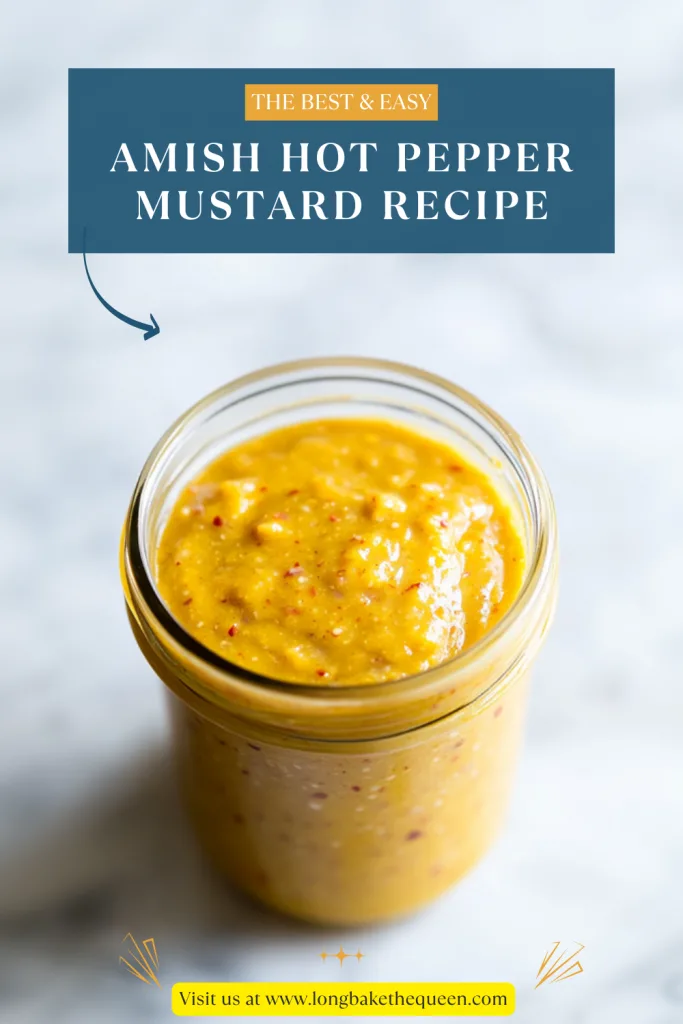
Why you’ll Love this Amish Hot Pepper Mustard Recipe?
You’ll love this Amish Hot Pepper Mustard Recipe because it hits that sweet spot between spicy, tangy, sweet, and savory. It’s not just “hot mustard.” It has texture from the chopped peppers, brightness from the vinegar, sharpness from the yellow mustard, and just enough sugar to calm everything down a bit. I’d call it bold, but not rude. It has manners. Spicy manners, but still.
One of the best things about this homemade hot pepper mustard is that you can control the heat, at least to a point. If you remove most of the seeds and pith from the peppers, the mustard will be milder. If you leave more in, it’ll have more bite. The type of pepper matters too. Jalapeños are usually friendly enough, banana peppers keep things gentler, and hotter peppers like serranos or habaneros will definitely wake everybody up. I wouldn’t use all super-hot peppers on the first batch unless your family treats spicy food like a competitive sport.
This Amish pepper mustard recipe is also great because it’s useful. Some homemade preserves are lovely but sit on the shelf waiting for their “special moment.” Not this one. This mustard wants to work. It belongs on ham sandwiches, roast beef sandwiches, sausages, burgers, hot dogs, soft pretzels, cheese boards, and even deviled eggs if you like a little sass. It’s the jar you open once and then somehow keep reaching for all week. Sound familiar?
Another thing I appreciate is the texture. The recipe uses Clear Jel, which helps thicken the mustard into a smooth, spoonable spread that holds up well for canning. It doesn’t run all over your plate, but it’s not stiff either. It spreads nicely, dips nicely, and sits on a cracker without sliding off like it has somewhere better to be. Small detail, yes, but texture matters more than we admit sometimes.
And because this Amish Hot Pepper Mustard Recipe makes several jars, it’s wonderful for sharing. A jar of homemade hot pepper mustard makes a great gift for spice-loving friends, neighbors, or that one person in the family who puts hot sauce on absolutely everything. Add a label, maybe a little ribbon if you’re feeling crafty, and suddenly you’re the person who gives charming homemade gifts. Never mind the pepper seeds stuck to the cutting board. That’s between you and the kitchen.
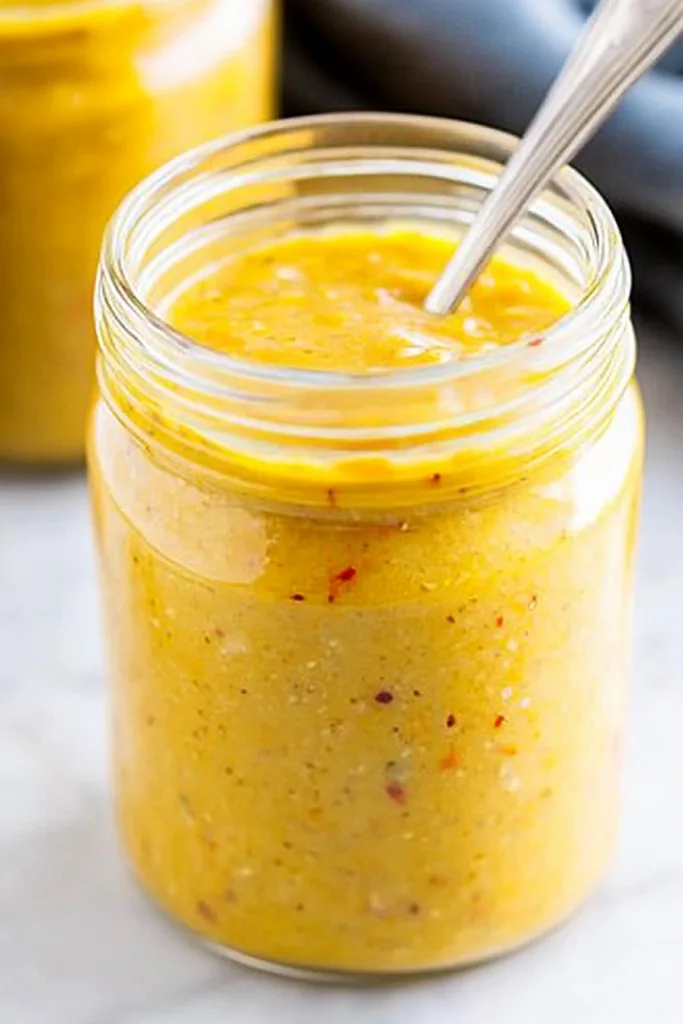
Ingredient Notes
The ingredients in this Amish Hot Pepper Mustard Recipe are simple, but they all matter. This isn’t a recipe with twenty spices hiding in the background. The peppers bring heat and texture, the vinegar brings tang, the mustard gives that familiar bright flavor, the sugar balances the sharpness, and the Clear Jel thickens everything into a spreadable condiment. It’s a little unusual, maybe, but that’s part of why it works.
- Hot peppers: The peppers are the heart of this Amish Hot Pepper Mustard Recipe, so choose them based on how much heat you want. You’ll need 6 cups finely chopped hot peppers. Cut off the stems first, then remove most of the seeds and pith if you want a milder mustard. Leave some in if you want extra heat. I strongly recommend wearing gloves, especially if you’re using hotter peppers. Pepper hands are sneaky. You think you’re fine, then you touch your nose three hours later and regret every decision.
- Distilled white vinegar: Distilled white vinegar gives the mustard its tang and helps make the recipe safe for water bath canning. Use vinegar labeled 5% acidity. This is one of those details that sounds boring but really matters. Don’t use a weaker vinegar for canning. The vinegar also gives this hot pepper mustard recipe that slightly pickle-like brightness that keeps it from tasting flat.
- Canning salt: Canning salt seasons the mustard without adding extra ingredients that can cloud the mixture. The recipe uses 3 tsp canning salt, or 4 tsp kosher salt if that’s what you have. I’d skip iodized table salt for canning if possible. It can sometimes affect the look or flavor, and after all that chopping, nobody wants weird-looking mustard.
- Prepared yellow mustard: Prepared yellow mustard gives this Amish hot pepper mustard its classic mustard flavor and sunny color. Use regular yellow mustard, not anything too fancy. I know spicy brown mustard and Dijon are tempting, but for the canned version, the simple yellow mustard keeps the flavor traditional and balanced.
- Granulated sugar: Sugar softens the sharp vinegar and pepper heat. This recipe uses ½ cup granulated sugar, which adds sweetness without turning the mustard into candy. Monk fruit sugar can also be used, though the finished flavor may be a little different. I don’t mind a small sweetness here because it helps the heat feel rounder, not harsh.
- Water: Water is used to mix with the Clear Jel before it goes into the hot mustard mixture. It helps the thickener blend smoothly. It’s a small step, but it keeps the mustard from clumping up and becoming dramatic. And nobody invited drama to the canning pot.
- Clear Jel: Clear Jel thickens the mustard and is the recommended choice for canning. It holds up better during processing and gives the finished spicy mustard spread a smooth, scoopable texture. Cornstarch can work for a refrigerator-only version, but for canning, Clear Jel is the better option.
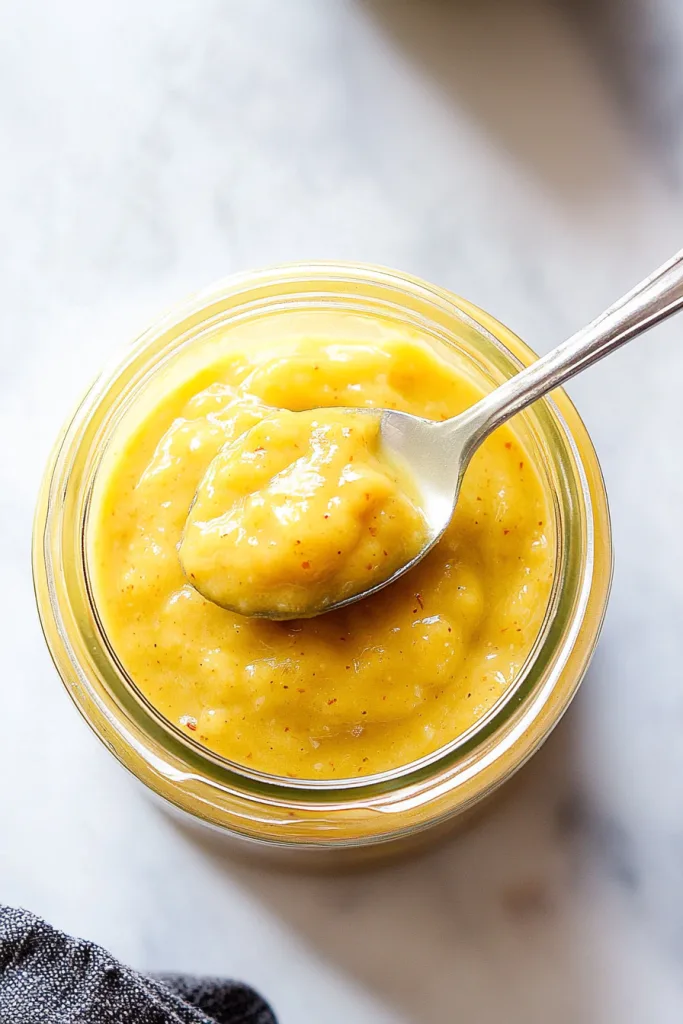
How to Make Amish Hot Pepper Mustard Recipe?
Making this Amish Hot Pepper Mustard Recipe is easiest when you think of it as a few simple stages. First, you prep and chop the peppers. Then you cook them with vinegar, mustard, salt, and sugar. After that, you thicken the mixture with Clear Jel, fill the jars, and process everything in a boiling water bath. It’s not complicated, but it is a canning recipe, so you want to pay attention. Put on music, clear the counter, and don’t rush it too much.
Step 1: Prepare the Peppers
Start by cutting off the stem ends of the hot peppers. Remove most of the seeds and pith if you want the mustard to be milder, or leave some in if you want more heat. Then chop the peppers finely in a food processor until the pieces are small and fairly even. Try not to blend them into a full puree. You want tiny pepper pieces, not a spicy smoothie. Pour the chopped peppers into a heavy-bottomed 8-quart stockpot.
Step 2: Add the Vinegar, Salt, Mustard, and Sugar
Stir the distilled white vinegar, canning salt, prepared yellow mustard, and granulated sugar into the chopped peppers. At this point, the mixture may look a little odd. Bright mustard, chopped peppers, vinegar… it’s not exactly glamorous yet. But this is where the flavor starts coming together. The vinegar adds tang, the mustard adds sharpness, the sugar softens the bite, and the peppers bring the heat.
Step 3: Bring the Mixture to a Boil
Place the pot over heat and bring the mixture to a rolling boil. Once it reaches a rolling boil, reduce it to a low boil and cook for 10 minutes. Stir often enough to keep the mixture from sticking to the bottom of the pot. This step softens the peppers and helps the flavors blend. It also makes the kitchen smell very mustardy and peppery, so maybe open a window if your peppers are extra feisty.
Step 4: Make the Clear Jel Slurry
While the pepper mixture is cooking, whisk together the water and Clear Jel in a separate bowl. Mix until smooth. This is called a slurry, but really it’s just a thickener mixed with liquid so it won’t clump. If you add Clear Jel straight into the hot pot, it can seize up into little lumps, and that’s not the texture we want in this Amish Hot Pepper Mustard Recipe.
Step 5: Remove the Pot from the Heat
After the pepper mixture has cooked for 10 minutes, remove the pot from the heat. This gives you better control when adding the Clear Jel mixture. Hot thickened mixtures can change quickly, and if you’ve ever watched a sauce go from “fine” to “what happened?” in about twelve seconds, you know why this step helps.
Step 6: Whisk in the Clear Jel Mixture
Slowly whisk the Clear Jel slurry into the hot pepper mixture. Keep whisking as you add it so the thickener spreads evenly through the mustard. The mixture will begin to thicken, but it still needs to return to a boil to fully activate the Clear Jel. Don’t worry if it looks a little loose at first. It gets there.
Step 7: Return the Mustard to a Boil
Place the pot back on the heat and bring the mustard back to a boil. Continue whisking until the mixture boils throughout and thickens evenly. This step activates the Clear Jel and gives the mustard its spreadable texture. Once the homemade hot pepper mustard is thick, glossy, and spoonable, remove it from the heat.
Step 8: Fill the Sterilized Jars
Carefully ladle or pour the hot mustard into prepared sterilized pint canning jars. Leave about ¼ inch headspace, unless your trusted canning guide instructs otherwise. Wipe the rims of the jars very well. Mustard on the rim can interfere with sealing, and after all this work, we are not letting a tiny smear cause trouble.
Step 9: Add Lids and Rings
Place lids on the jars and screw on the rings until they are finger tight. Don’t crank them down too hard. Air needs to escape during processing. Canning rules can feel strangely picky at first, but they do have a reason. Usually.
Step 10: Process in a Boiling Water Bath
Place the jars in a boiling water bath, making sure they are covered by at least 1 inch of water. Return the water to a boil, then process the jars for 25 minutes. Start timing only after the water returns to a full boil. This step is what helps make the jars shelf-stable when sealed correctly.
Step 11: Cool the Jars
Remove the jars from the water bath and place them on a rack or towel-covered surface. Let them cool undisturbed for 24 hours. Try not to poke at the lids every five minutes, even though I know it’s tempting. That little sealing ping is one of the best sounds in the kitchen.
Step 12: Check the Seals
After the jars have cooled, check each lid. The center should be pulled down and should not flex when pressed. If any jar did not seal, refrigerate it and use it first. Properly sealed jars of Amish hot pepper mustard can be stored in a cool, dark place.
Storage Options
This Amish Hot Pepper Mustard Recipe stores well when the jars are processed and sealed correctly. Since it’s a canned condiment, the seal matters more than anything. Once the jars cool, check each lid before storing. If something didn’t seal, don’t panic. It just becomes the jar you use first from the refrigerator.
- Properly canned jars: Store sealed jars of Amish hot pepper mustard in a cool, dark place for up to 1 year. A pantry, cupboard, or basement shelf works well. Keep the jars away from heat and sunlight so the flavor and color stay at their best.
- After opening: Once opened, refrigerate the jar and use it within 2 to 3 months for best quality. Always use a clean spoon or knife. I know it’s tempting to swipe with the same sandwich knife, but crumbs in the jar are not invited.
- Unsealed jars: If a jar does not seal after processing, place it in the refrigerator right away and use it first. Do not store unsealed jars at room temperature.
- Refrigerator-only option: If you do not want to can this Amish Hot Pepper Mustard Recipe, you can spoon it into clean jars and store it in the refrigerator. Use within 2 to 3 weeks. It will still be delicious, but it will not be shelf-stable.
- Freezer option: Freezing is not my favorite option for this mustard. Thickened condiments can turn a little odd after thawing, texture-wise. It may still be usable, but canning or refrigeration gives better results.
- Gift storage tip: If you give jars as gifts, label them with the name and date. You can also add a tiny serving suggestion tag, like “try on ham sandwiches or pretzels.” Not everyone immediately knows what to do with hot pepper mustard, but once they taste it, they usually catch on fast.
Variations & Substitutions
This Amish Hot Pepper Mustard Recipe can be adjusted a little, especially with the type of peppers you use, but be careful with major changes if you plan to can it. Canning recipes depend on acidity, ratios, and safe thickeners. I know, not the most exciting sentence in the world, but it matters. For refrigerator-only batches, you have more room to play.
- Use milder peppers: For a milder hot pepper mustard, use banana peppers, mild jalapeños, or a mix of sweet and hot peppers. Remove most of the seeds and pith to tone down the heat. This is a good choice if you want flavor without making anyone sweat at the picnic table.
- Use hotter peppers: If you love heat, use serranos, hot jalapeños, Hungarian hot wax peppers, or a small amount of habanero mixed with milder peppers. I’d go slowly with very hot peppers. They can take over fast, like that one loud guest at a potluck.
- Use mixed peppers: A mix of hot and sweet peppers gives the mustard a more balanced flavor. You get color, texture, and heat without making the whole batch too intense. This is probably my favorite direction if I’m making it for sharing.
- Use monk fruit sugar: Monk fruit sugar can replace granulated sugar if you want a lower-sugar option. The flavor and texture may vary slightly, but it can work. The sugar’s job is mostly to balance the vinegar and heat, so don’t skip that balancing idea entirely.
- Use kosher salt: If you don’t have canning salt, use 4 tsp kosher salt instead of 3 tsp canning salt. Avoid regular table salt for canning when possible, since it can affect the look and sometimes the flavor.
- Adjust the texture: Chop the peppers very fine for a smoother spicy mustard spread, or leave them a little chunkier if you want more texture. Just keep the pieces small enough that the mustard is easy to spoon and spread.
- Make a fresh version: If you don’t plan to can the mustard, you can make a smaller refrigerator batch. Cornstarch may work for a fresh version, but Clear Jel is still the better option for canning.
- Add garlic for a refrigerator batch: A little garlic would taste great in a fresh refrigerator-only batch. For canned mustard, avoid adding extra low-acid ingredients unless you’re following a tested recipe. I know garlic is tempting. Garlic is always tempting.
- Try different mustard styles for a refrigerator batch: Yellow mustard keeps this Amish Hot Pepper Mustard Recipe classic, but Dijon or spicy brown mustard can work in a refrigerator-only version. The flavor will be different, but that can be fun.
- Make it sweeter: For a refrigerator-only batch, you can add a little more sugar to taste. For a canned batch, avoid changing ingredient ratios too much unless you are using a tested adjustment.
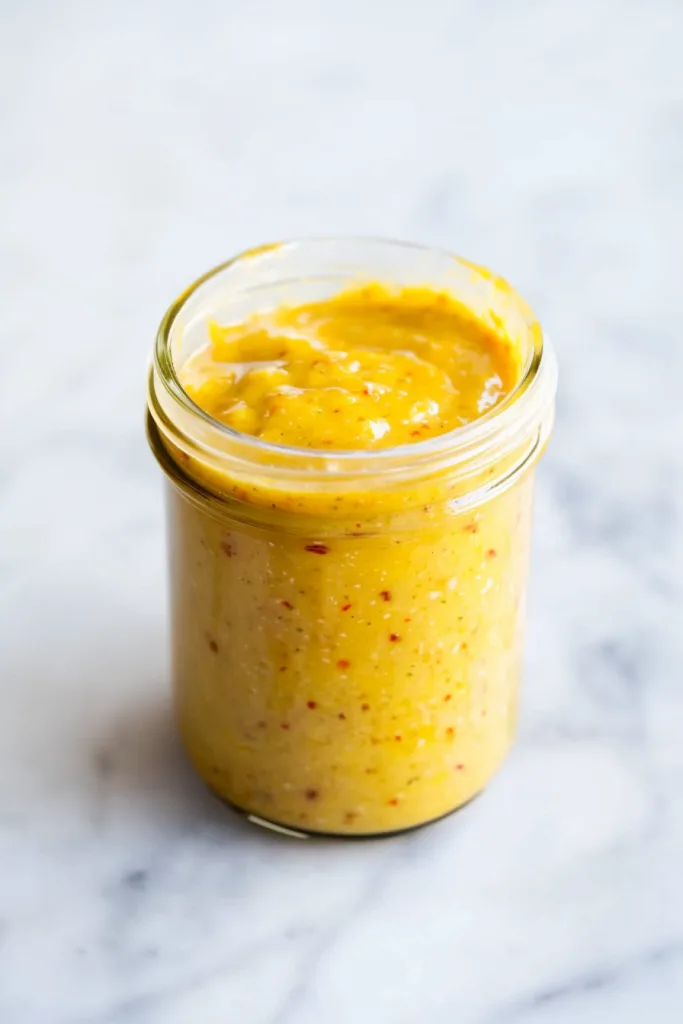
What to Serve With Amish Hot Pepper Mustard Recipe?
This Amish Hot Pepper Mustard Recipe is spicy, tangy, slightly sweet, and very good at waking up plain food. It pairs especially well with rich meats, salty snacks, sandwiches, and appetizer boards. Think of it as the condiment you bring out when something tastes fine but needs a little “hello there.”
- Ham sandwiches: Hot pepper mustard is wonderful on ham sandwiches. The sweet heat balances the salty ham, and the mustard adds enough tang to keep every bite interesting. Add cheese and you’re really in business.
- Roast beef sandwiches: Spread this Amish hot pepper mustard on roast beef sandwiches for brightness and spice. It cuts through the richness of the meat and makes the sandwich taste less heavy.
- Turkey sandwiches: Turkey can be a little mild, especially leftover turkey. This mustard gives it a needed kick and makes a simple sandwich taste much more exciting.
- Hot dogs: Spoon this spicy mustard spread over hot dogs for a sweet-hot twist. It’s bolder than plain mustard and more interesting than ketchup, though ketchup fans may disagree with me there.
- Sausage: Serve it with grilled, smoked, or pan-fried sausage. The vinegar and heat balance the richness beautifully. This is one of those pairings that just makes sense after the first bite.
- Burgers: Add a thin layer to burgers for extra tang and heat. It works especially well with cheddar, bacon, caramelized onions, or grilled onions. Basically, anything that loves mustard will love this too.
- Pretzels: Hot pepper mustard is fantastic with soft pretzels or pretzel bites. The salty pretzel and spicy mustard combo is hard to stop eating. Dangerous in the best snacky way.
- Cheese and crackers: Add a small bowl of Amish Hot Pepper Mustard Recipe to a cheese board with sharp cheddar, smoked cheese, cream cheese, and crackers. It brings color, heat, and a sweet tang that makes the board feel more special.
- Eggs: Try a little with deviled eggs, egg salad, or breakfast eggs if you like spicy condiments. It adds a punchy flavor that makes eggs feel less basic.
- Glazed meats: Use it as a glaze or sauce for pork chops, meatloaf, or baked chicken. It gives sweet heat and tang without needing a bunch of extra ingredients.
FAQ
Is hot pepper mustard very spicy?
It depends on the peppers you use and how much seed and pith you leave in. Removing most of the seeds makes it milder. Leaving more in makes it hotter. So yes, it can be gentle or fiery, depending on your pepper choices.
What peppers are best for Amish Hot Pepper Mustard Recipe?
Jalapeños, banana peppers, Hungarian hot wax peppers, serranos, and mixed hot peppers can all work. Choose peppers based on your preferred heat level. A mix of mild and hot peppers is a good option if you want balance.
Why do I need 5% vinegar?
The vinegar provides tangy flavor and helps create the acidity needed for water bath canning. Use distilled white vinegar labeled 5% acidity. Do not use a weaker vinegar for canning.
Can I make this mustard less sweet?
For canning, avoid changing the ingredient ratios unless you’re using a tested recipe. For a refrigerator-only batch, you can adjust the sugar slightly to taste.
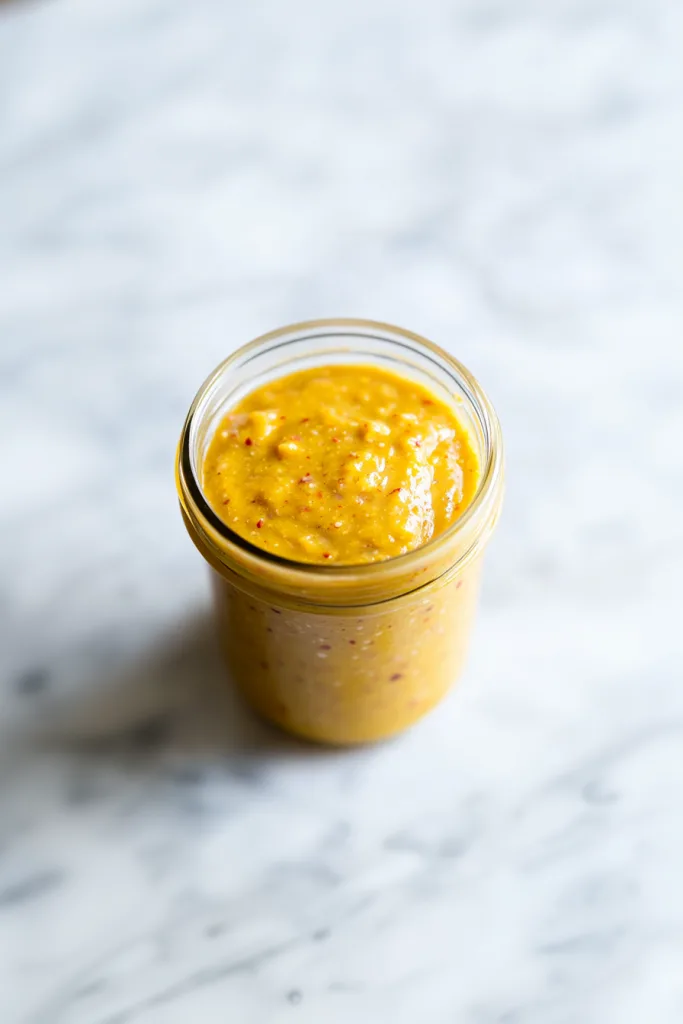
This Amish Hot Pepper Mustard Recipe is spicy, tangy, sweet, bold, and a little bit addictive in that “just one more cracker” kind of way. It takes hot peppers, vinegar, yellow mustard, sugar, salt, water, and Clear Jel and turns them into a thick homemade condiment that actually earns its spot in the pantry.
If you like homemade spreads with personality, this Amish hot pepper mustard is such a fun recipe to try. Make a batch, save a few jars, share some with spice-loving friends, and pull it out whenever sandwiches, hot dogs, pretzels, or cheese boards need a little wake-up call. Can’t wait to hear what you think!
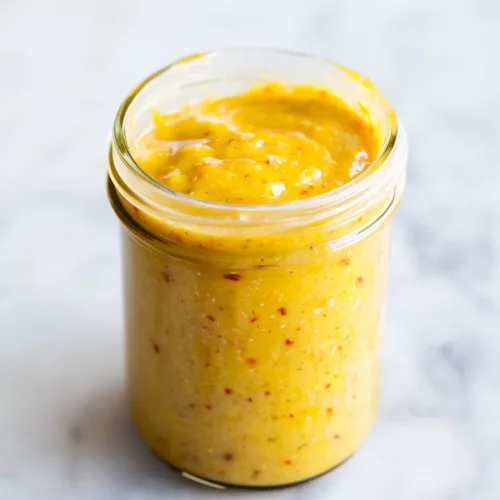
Amish Hot Pepper Mustard Recipe
Ingredients
- 6 cups finely chopped hot peppers
- 4 cups distilled white vinegar 5% acidity
- 3 tsp canning salt or 4 tsp kosher salt
- 2 cups prepared yellow mustard
- 1/2 cup granulated sugar or monk fruit sugar
- 1 cup water
- 7 tbsp Clear Jel
Instructions
- Wash the hot peppers thoroughly.
- Cut off and discard the stem ends.
- Remove most of the seeds and pith, depending on the desired heat level.
- Finely chop the peppers in a food processor until they are uniform and small in size.
- Transfer the chopped peppers to a heavy-bottomed 8-quart stockpot.
- Add the distilled white vinegar, canning salt, prepared yellow mustard, and granulated sugar.
- Stir until the ingredients are fully combined.
- Place the stockpot over medium-high heat.
- Bring the mixture to a rolling boil.
- Reduce the heat to maintain a low boil.
- Cook for 10 minutes, stirring frequently to prevent sticking.
- While the pepper mixture cooks, whisk the water and Clear Jel together in a separate bowl until smooth.
- After the pepper mixture has cooked for 10 minutes, remove the stockpot from the heat.
- Slowly whisk the Clear Jel mixture into the hot pepper mixture.
- Continue whisking until the slurry is evenly incorporated.
- Return the stockpot to the heat.
- Bring the mixture back to a boil.
- Continue whisking until the mixture boils throughout and thickens evenly.
- Remove the thickened mustard mixture from the heat.
- Carefully ladle the hot mustard into prepared sterilized pint canning jars.
- Leave approximately 1/4 inch of headspace in each jar.
- Wipe the rims of the jars clean with a damp cloth.
- Place lids on the jars.
- Apply rings and tighten until fingertip-tight.
- Place the jars in a boiling water bath canner.
- Ensure the jars are covered by at least 1 inch of water.
- Return the water to a full boil.
- Process the jars for 25 minutes.
- Remove the jars from the water bath and place them on a rack or towel-lined surface.
- Allow the jars to cool undisturbed for 24 hours.
- After cooling, check each lid to ensure it has sealed properly.
- Store sealed jars in a cool, dark place.
- Refrigerate any jars that do not seal and use them first.
Notes