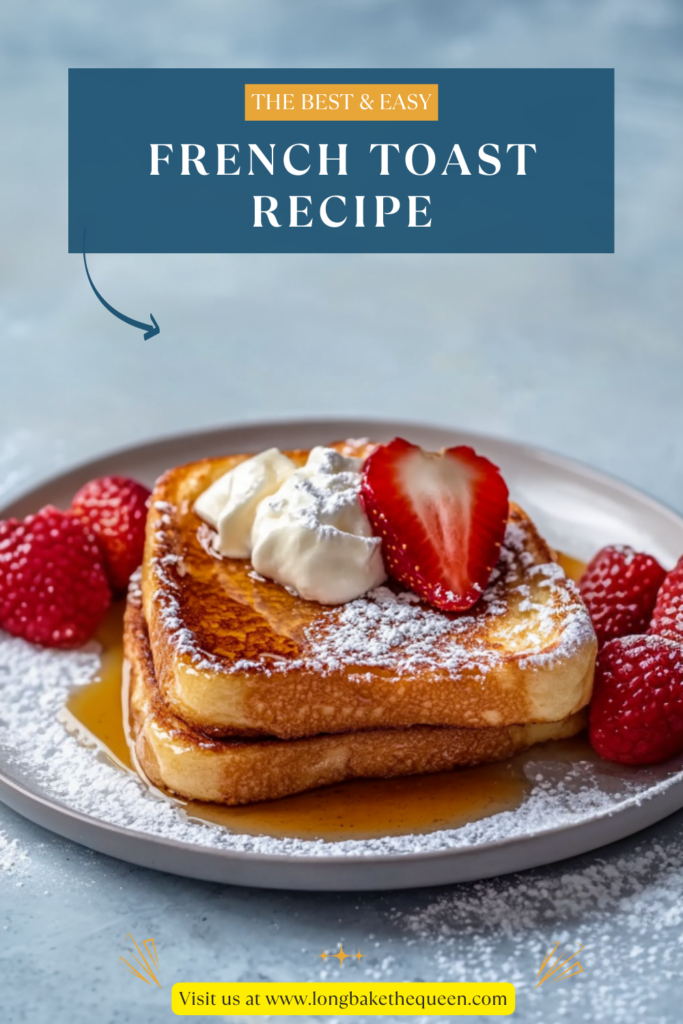
This French Toast Recipe uses thick bread, eggs, milk, sugar, vanilla, cinnamon, butter, and maple syrup for a golden, custardy breakfast classic.
The breakfast that makes an ordinary morning feel a little less ordinary
There are some breakfasts that feel practical. A piece of toast, maybe a yogurt, coffee if you’re lucky. And then there’s French Toast Recipe energy, which is something else entirely. It’s softer. Slower. A little indulgent in that harmless, deeply necessary way. The kind of breakfast that makes the kitchen smell like vanilla and butter and suddenly everyone appears, acting casual, even though they’re clearly hoping you made extra.
I’ve made a lot of French toast over the years. Some batches were perfect. Some were… educational. A little too pale, a little too soggy, a little too “why does this taste like sweet scrambled bread?” You know? But when a French Toast Recipe hits the sweet spot—golden outside, custardy in the center, edges just crisp enough—it feels almost unfairly good for something made from such simple ingredients.
And maybe that’s part of the charm. It’s humble. It’s familiar. But when it’s done well, it feels like a tiny celebration on a plate.
I think my love for a really good French Toast Recipe started because it always felt like a weekend thing growing up. Not every weekend, not with any strict schedule, but often enough that it felt special. It was the breakfast equivalent of hearing rain outside and realizing you don’t actually have to go anywhere. That same sort of relief.
The first time I made French toast by myself and actually got it right, I remember feeling absurdly proud. Like, why am I this emotionally invested in bread and eggs? But I was. I had used thick slices of challah, and for once I didn’t rush the soaking or blast the pan with too much heat. I let the butter foam. I waited for the color to deepen. I actually paid attention.
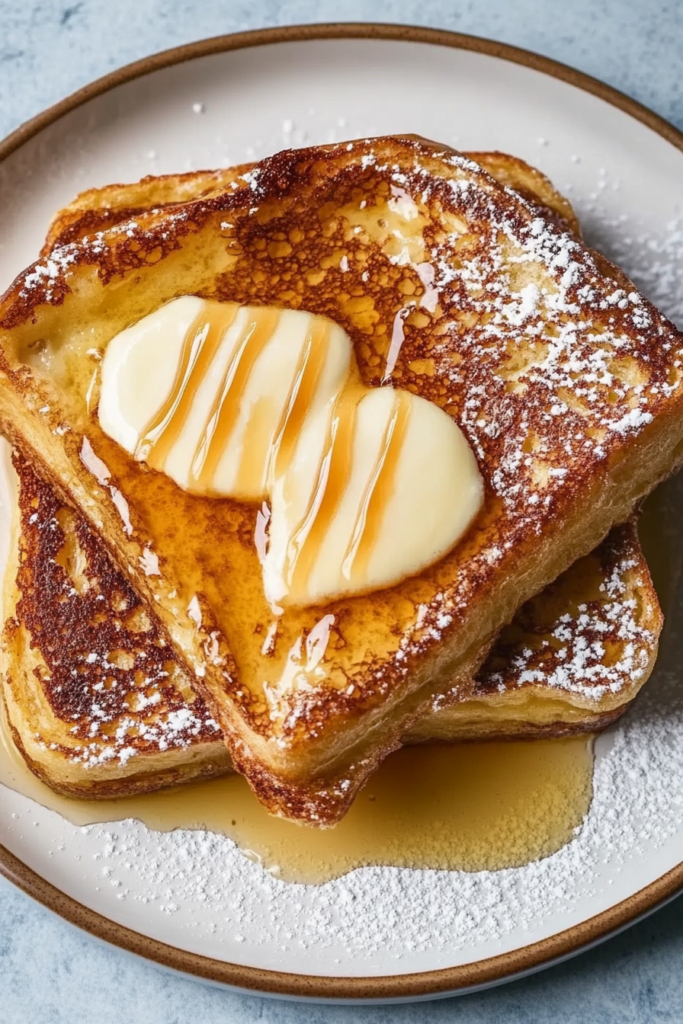
And then there it was. That golden-brown French toast with the soft middle and the buttery edges. The kind that smells like a brunch place you almost don’t want to recommend because then it’ll get too crowded.
I served it on a lazy Sunday, and my husband took one bite and did that thing people do when they’re still chewing but already trying to compliment the food. That’s always a good sign. Slightly chaotic, but good.
Now this French Toast Recipe is one of those breakfasts I come back to when I want something comforting but not complicated. Birthdays, holidays, random gloomy mornings, mornings when I want the house to feel warm and lived-in. It fits all of them.
Sound familiar? Some recipes just become part of the emotional furniture of your home.
Why you’ll Love this French Toast Recipe?
There are a lot of French toast recipes out there. Some are too eggy. Some are too sweet. Some somehow manage to be both dry and soggy, which honestly takes talent. But this French Toast Recipe gets the balance right.
First, the bread is thick enough to absorb the custard without collapsing. That matters more than people think. Thin bread can work in a pinch, sure, but thick slices give you that dreamy contrast between the crisp outside and the soft, almost creamy inside.
Second, the custard itself is rich without going overboard. The eggs, milk or cream, sugar, vanilla, cinnamon, and salt all work together instead of fighting for attention. Nothing too loud. Nothing too fussy. Just enough sweetness, just enough spice, just enough richness.
And third, this recipe is practical. You can keep the cooked slices warm in the oven while the rest finish in the pan, which means nobody has to eat alone while standing over the stove like a breakfast goblin. We’ve all done it, but still.
What I love most about this French Toast Recipe is that it feels generous. It looks impressive. It tastes cozy and a little indulgent. But it doesn’t ask for much beyond a loaf of bread and a little patience.
Do you agree? The best recipes are often the ones that feel like more effort than they really are.
Ingredient Notes
This French Toast Recipe is built on everyday ingredients, but they each pull more weight than you’d expect. When a recipe is this simple, the details matter.
- Bread – Bread is the whole foundation here, obviously, and it makes a huge difference. Challah and brioche are my favorites because they’re rich and tender and soak up the custard beautifully. A hearty white sandwich loaf also works well. The main thing is to cut thick slices. Thin slices can get floppy and sad fast, and French toast deserves better than that.
- Eggs – Eggs are what turn this into actual French toast instead of toasted bread with a sugar problem. They create the custard texture and help everything set up beautifully in the pan.
- Milk, Half-and-Half, or Cream – Whole milk works great. Half-and-half makes it richer. Heavy cream makes it feel a little luxurious in a “yes, I did deserve this breakfast” kind of way. I often use a mix, depending on what’s hanging around in the fridge.
- Sugar – A little sugar sweetens the custard and helps with browning. Not enough to make it dessert. Just enough to round it out.
- Vanilla Extract – Vanilla makes the entire kitchen smell incredible, which should not be underestimated. It adds warmth and that unmistakable French-toast-shop aroma.
- Cinnamon – Cinnamon brings that cozy breakfast flavor everyone expects. It doesn’t need to be aggressive. Just present.
- Kosher Salt – A tiny bit of salt keeps everything balanced and prevents the sweetness from tasting flat.
- Butter – Butter is what gives the outside of this French Toast Recipe that deep golden color and those crisp little edges. It also makes the pan smell amazing, which is always encouraging.
- Maple Syrup or Powdered Sugar – This is where you choose your mood. Maple syrup feels classic and a little rustic. Powdered sugar feels café-ish. Both are right.
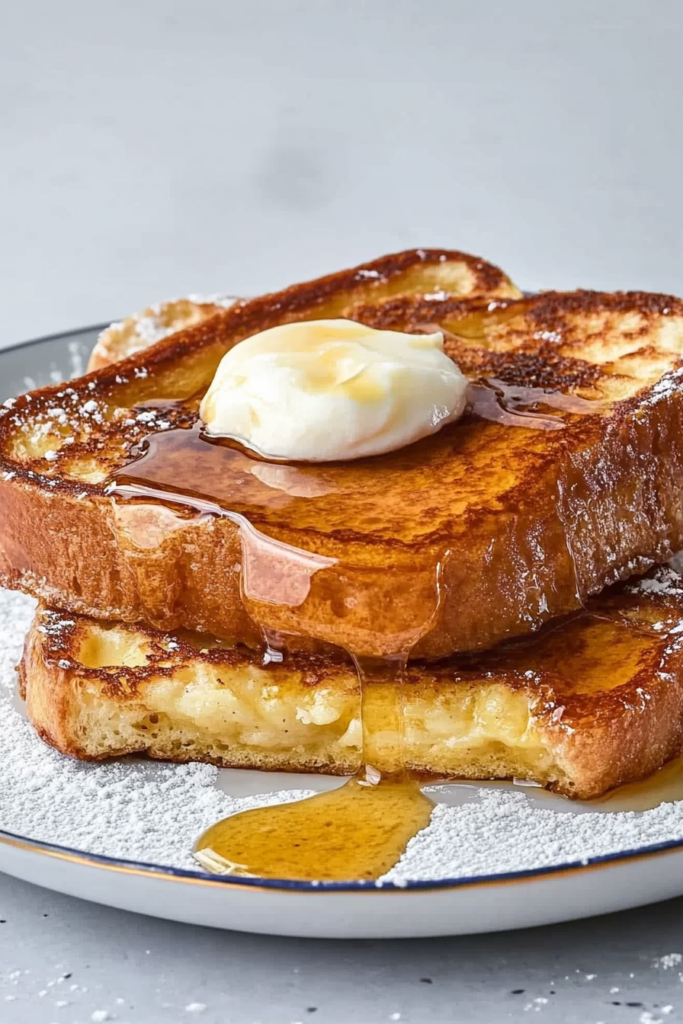
How to Make French Toast Recipe?
Making this French Toast Recipe isn’t difficult, but it does reward attention. Not obsessive attention. Just enough to notice what’s happening.
Step 1: Warm the Oven
Start by heating your oven to 200ºF. Set a wire rack inside a rimmed baking sheet. This lets you keep finished French toast warm without trapping steam underneath it, which helps the slices stay crisp instead of going soft while they wait.
It’s a small step, but one of those very satisfying ones. The sort that makes you feel slightly more organized than you really are.
Step 2: Slice the Bread
Cut the loaf into slices about 3/4-inch to 1-inch thick. Thick slices really are the sweet spot for this French Toast Recipe. They hold the custard, cook evenly, and don’t fall apart the second you try to flip them.
Step 3: Make the Custard
In a 9×13-inch baking dish, whisk together the eggs, dairy, sugar, vanilla, cinnamon, and salt until completely smooth. No streaks of egg. No clumps of cinnamon floating around like tiny rafts. You want one unified, silky mixture.
This is also the point where it starts smelling like breakfast instead of ingredients.
Step 4: Soak the Bread
Place as many slices as fit in a single layer into the custard. Let them soak for about 15 seconds per side. Enough to absorb the mixture, not so much that they start disintegrating and making you feel stressed.
This part matters. Too short and the inside stays dry. Too long and the bread turns limp and dramatic. Fifteen seconds per side is usually just right.
Transfer the soaked slices to the wire rack and repeat with the rest.
Step 5: Cook in Butter
Melt 1 tablespoon of butter in a large nonstick skillet over medium heat. Once it’s melted and just starting to foam, add the bread in a single layer with space around each piece.
Cook until the bottoms are deeply golden and crisp, about 3 to 4 minutes. Flip and cook the second side for 2 to 3 minutes more.
If the color is racing ahead of you, lower the heat slightly. French toast gets moody when rushed.
Transfer the cooked slices to the baking sheet in the oven to stay warm, then repeat with the remaining bread, adding more butter before each batch.
Step 6: Serve Warm
Serve the French Toast Recipe hot, with maple syrup, powdered sugar, extra butter, berries, sliced bananas, sautéed apples, or whatever sounds good to you.
There’s no wrong move here. Well, maybe ketchup. But otherwise, you’re safe.
Storage Options
If you somehow have leftovers from this French Toast Recipe, they keep surprisingly well. Let the slices cool completely, then store them in an airtight container in the refrigerator for up to 3 days.
To reheat, use a skillet, toaster oven, or regular oven if you want to bring back some of that crispness. The microwave works, technically, but it makes the texture softer, and I’m just not emotionally attached to that method.
You can also freeze French toast for up to 2 months. Freeze the slices in a single layer first, then stack them once solid. It’s one of those small life wins when future-you opens the freezer and realizes breakfast is basically already handled.
Variations & Substitutions
A good French Toast Recipe is classic, but it’s also flexible. That’s part of why I love it.
If you don’t have challah or brioche, use a sturdy white loaf. If you only have milk, use milk. If you’ve got half-and-half and want breakfast to feel a little fancier, even better. You can swap the cinnamon for nutmeg, add a bit of orange zest, or try almond extract instead of vanilla for something a little different.
For toppings, you’ve got room to play too. Fresh berries, peaches, bananas, jam, whipped cream, toasted pecans, honey, even a spoonful of lemon curd if you’re feeling adventurous. French toast is surprisingly easygoing that way.
Some mornings call for classic maple syrup. Other mornings call for whatever feels a little extra. I support both.
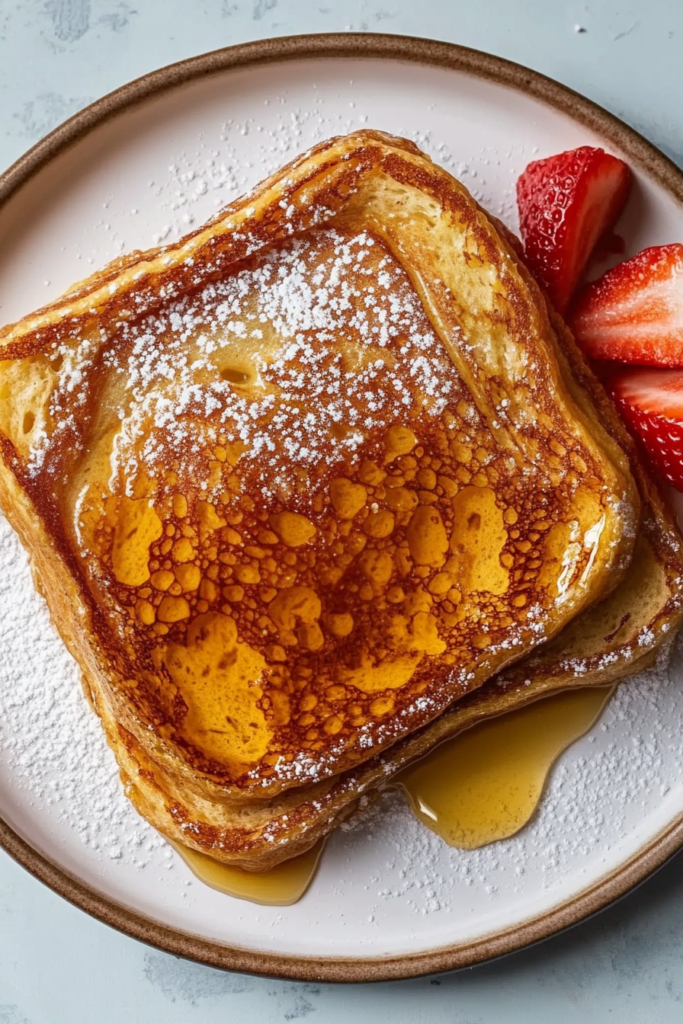
What to Serve With French Toast?
This French Toast Recipe can absolutely be the main event, but it also pairs beautifully with a few savory sides.
Bacon or sausage adds that salty contrast that works so well with the sweet custardy toast. Scrambled eggs are always a good idea. Fresh fruit helps brighten the plate and makes breakfast feel more complete, even if you’re still in pajamas and not making eye contact with the clock.
For brunch, I love serving this with strong coffee and something savory nearby, because the whole meal feels more balanced that way. Not that I’m above eating a giant stack of French toast on its own, because I absolutely am not.
FAQ
What bread is best for French toast?
Challah and brioche are my favorites for this French Toast Recipe because they’re rich, sturdy, and absorb the custard beautifully. But a hearty white loaf works too.
Why is my French toast soggy?
Usually it soaked too long, the bread was too thin, or the pan heat was too low. It needs enough heat to set the custard and brown the outside.
Can I use non-dairy milk?
Yes, you can. The richness changes a bit, but it still works.
Do I have to use cinnamon?
Nope. Cinnamon adds warmth, but the recipe is still delicious without it.
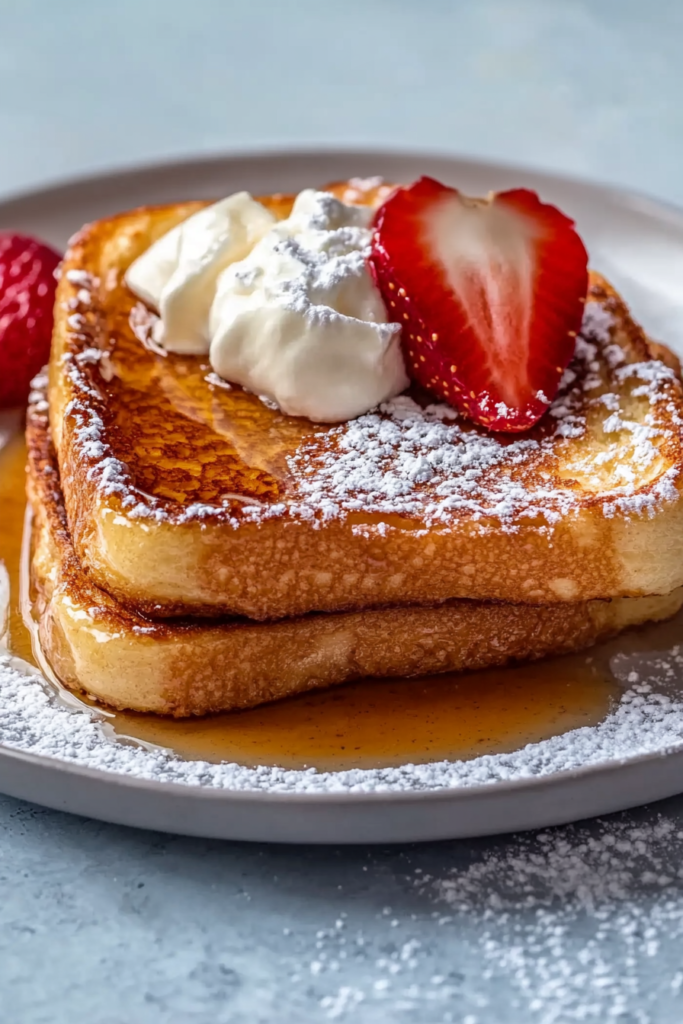
This French Toast Recipe is one of those breakfasts that feels like a little act of kindness. Warm, golden, comforting, and just indulgent enough to make the morning feel softer around the edges.
If you make it, I’d love to know—what are you topping yours with? Maple syrup, powdered sugar, berries… or are you one of those people doing something unexpectedly genius?
French Toast Recipe
Ingredients
- 1 1-pound uncut loaf hearty white sandwich bread, challah, or brioche
- 5 large eggs
- 1 3/4 cups whole milk half-and-half, heavy cream, or a combination
- 1/4 cup granulated sugar
- 2 teaspoons vanilla extract
- 1/2 teaspoon ground cinnamon
- 1/4 teaspoon kosher salt
- 3 to 4 tablespoons unsalted butter divided, plus more for serving
- Maple syrup or powdered sugar for serving
Instructions
Prepare the Oven
- Arrange a rack in the center of the oven and preheat the oven to 200°F (93°C). Place a wire rack inside a rimmed baking sheet and set aside. This will be used to keep the cooked French toast warm while the remaining slices are prepared.
Slice the Bread
- Using a serrated knife, cut the loaf crosswise into slices approximately 3/4 inch to 1 inch thick. Thick slices are preferred, as they absorb the custard well while maintaining their structure during cooking.
Prepare the Custard
- In a 9×13-inch baking dish, combine the eggs, milk or cream, granulated sugar, vanilla extract, ground cinnamon, and kosher salt. Whisk thoroughly until the mixture is smooth, the sugar is dissolved, and no streaks of egg remain.
Soak the Bread
- Place as many bread slices as will fit in a single layer into the custard mixture. Allow the bread to soak for approximately 15 seconds per side, turning once, until fully coated but not overly saturated.
- Transfer the soaked slices to the prepared wire rack. Repeat the process with the remaining bread slices.
Cook the French Toast
- Heat 1 tablespoon of unsalted butter in a large nonstick skillet over medium heat until melted.
- Place as many soaked bread slices as will fit in the skillet in a single layer, leaving a small amount of space between each slice. Cook for 3 to 4 minutes, or until the underside is golden brown and crisp.
- Turn the slices and cook for an additional 2 to 3 minutes, or until the second side is evenly browned. If the toast begins to brown too quickly, reduce the heat to medium-low.
- Transfer the cooked slices to the prepared baking sheet and keep warm in the oven.
- Repeat with the remaining slices, adding another tablespoon of butter to the skillet before each batch.
Serve
- Serve the French toast warm, with additional butter, maple syrup, or powdered sugar as desired.
Notes