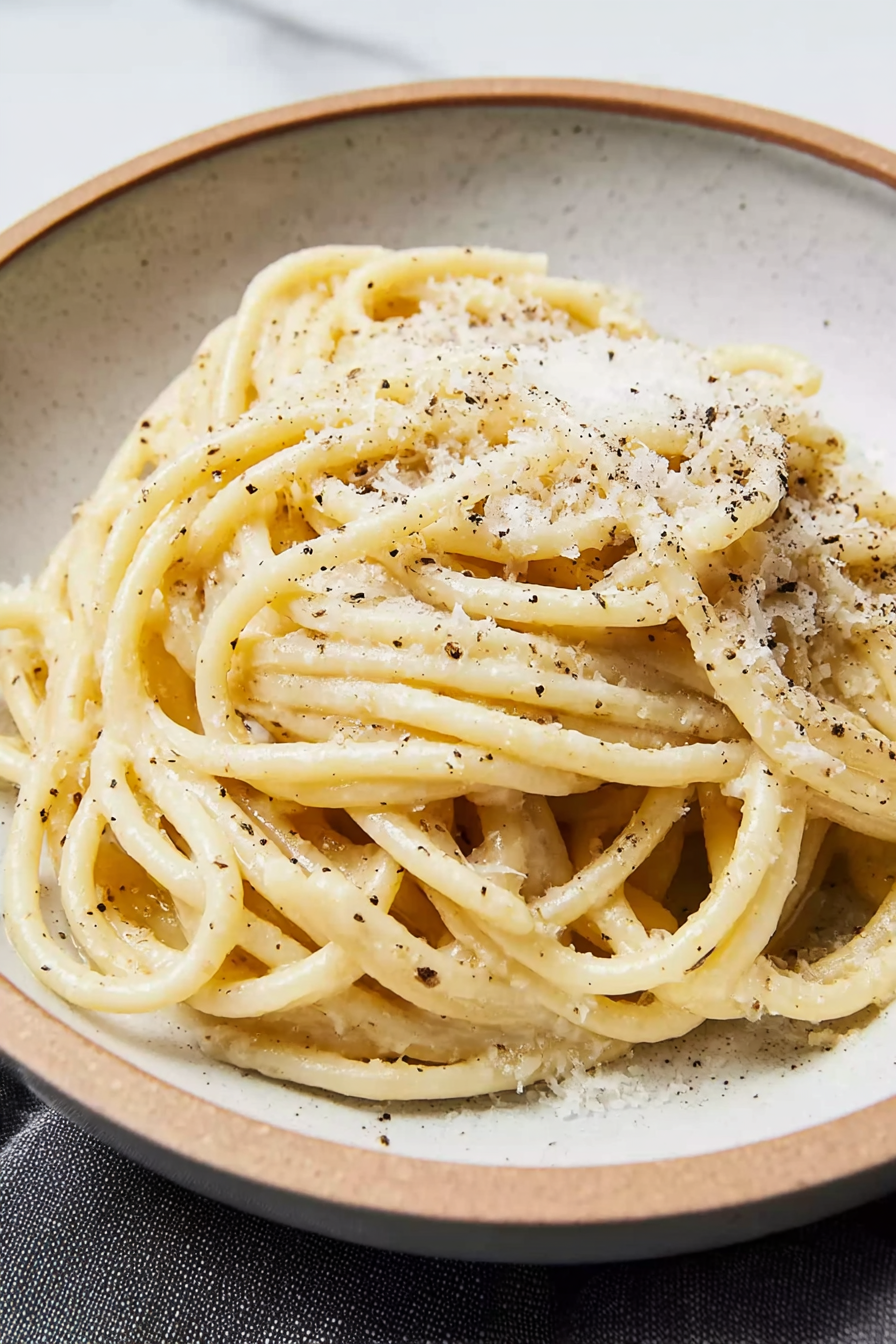
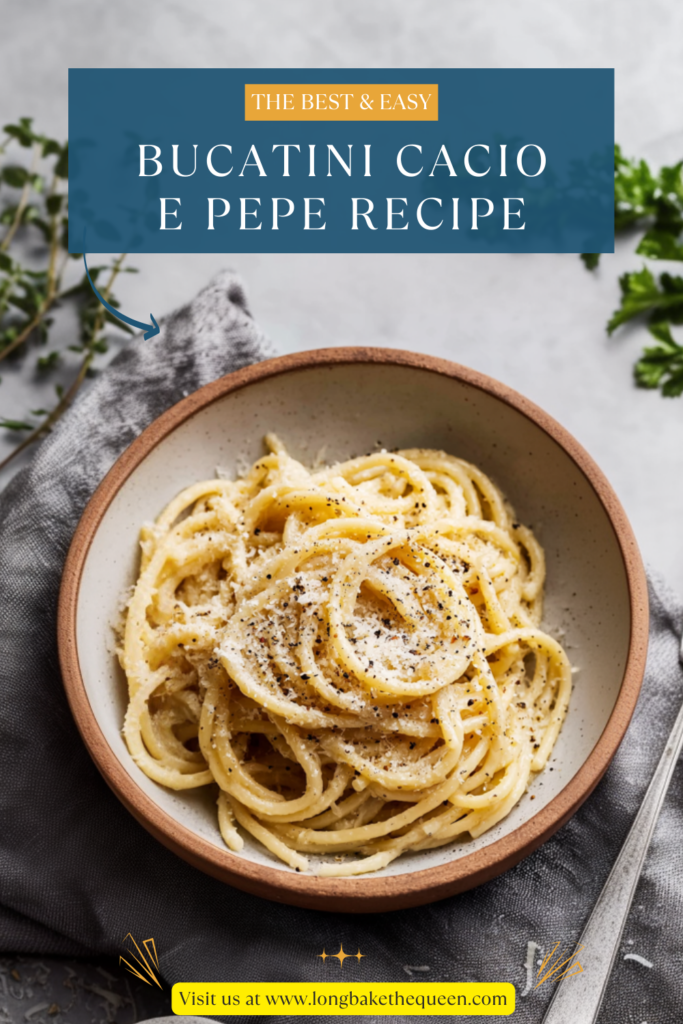
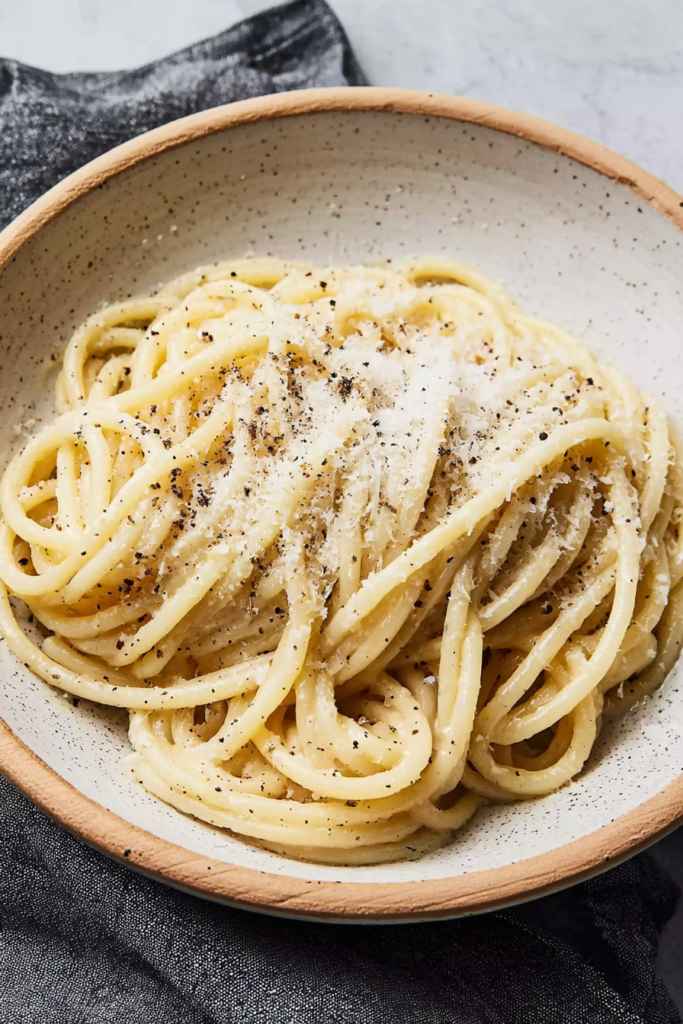
Bucatini pasta, Pecorino Romano cheese, black pepper, and salt tossed with starchy pasta water to create a creamy Roman classic.
There are nights when I want a full cooking project. Music on, wine poured, sauce simmering for hours.
And then there are nights when I stare into my pantry like it personally offended me.
That’s when this Bucatini Cacio e Pepe Recipe saves the day.
Four ingredients. No cream. No garlic. No butter. Just pasta, cheese, pepper, and salt. It almost sounds like a joke, right? But somehow this simple Roman pasta turns into something that feels… kind of profound. I know that sounds dramatic for noodles, but stay with me.
The first time I had cacio e pepe was in Rome. Tiny trattoria. Plastic chairs. A fan that looked like it hadn’t been cleaned since 1998. I ordered it because it was the cheapest thing on the menu and I was pretending to be budget-conscious.
When it arrived, I remember thinking, That’s it? No sauce pooling. No parsley confetti. Just glossy bucatini with black pepper everywhere.
Then I took a bite.
It was creamy without being heavy. Sharp from the Pecorino Romano. Peppery in a way that made my nose tingle a little. I actually laughed because it felt like a culinary prank. How can something this basic taste this good?
When I got home, I tried recreating that Bucatini Cacio e Pepe experience. The first attempt? A clumpy cheese disaster. The second? Too watery. The third? Almost there. It took a few tries (and some stubbornness), but once it clicked, this Bucatini Cacio e Pepe Recipe became my weeknight secret weapon.
Do I make it perfectly every single time? Honestly… almost. But sometimes the cheese protests. And I adjust. That’s part of the charm.
Why you’ll Love this Bucatini Cacio e Pepe Recipe?
Here’s what I love about this Roman pasta recipe: it forces you to respect the basics.
There’s nowhere to hide. No garlic to distract you. No cream to smooth over mistakes. Just technique. The starch in the pasta water meets finely grated Pecorino Romano and suddenly — magically — you have a creamy sauce without cream. It feels like chemistry class, but tastier.
And using bucatini instead of spaghetti? Game changer. Those thick, hollow strands trap the cheese and pepper inside like little flavor tunnels. Spaghetti works, sure. But bucatini makes this cacio e pepe feel intentional. Slightly dramatic. In a good way.
Is it the easiest pasta recipe in the world? Maybe not at first. Is it the most satisfying once you nail it? Absolutely.
Ingredient Notes
With a Bucatini Cacio e Pepe Recipe, every ingredient matters. There’s no backup plan.
- Bucatini – Thick, hollow pasta that holds onto the sauce beautifully. It’s traditional in many Roman kitchens. If you can’t find it, spaghetti or tonnarelli will work. But if you can grab bucatini? Do it.
- Pecorino Romano – Sharp, salty sheep’s milk cheese. Finely grated. Not pre-shredded. Not chunky. The finer the better so it melts smoothly.
- Freshly Ground Black Pepper – This is not the time for pre-ground pepper dust. Crack it fresh. Be generous. Pepper isn’t decoration here — it’s half the flavor.
- Salt – For the pasta water. Under-salted pasta water equals bland pasta. And bland cacio e pepe is… well. Sad.
How to Make Bucatini Cacio e Pepe Recipe?
Okay. Deep breath.
- Bring a large pot of salted water to a boil. Taste it. It should taste like the sea — but not like you swallowed seawater at the beach. Add the bucatini and cook until al dente. Stir occasionally so it doesn’t clump together like awkward party guests.
- While it cooks, put your finely grated Pecorino Romano into a large glass bowl. Fluff it with a fork. Breaking up clumps now saves frustration later. Trust me.
- When the pasta is ready, don’t drain it completely. Lift the bucatini directly into the bowl with tongs. You want some of that starchy water clinging to it. That starch is the unsung hero of this Bucatini Cacio e Pepe Recipe.
- Add one ladle of hot pasta water and start stirring. It might look clumpy at first. This is the part where people panic. Don’t. Keep stirring. Add more pasta water slowly, a little at a time, until the cheese melts into a smooth, creamy coating.
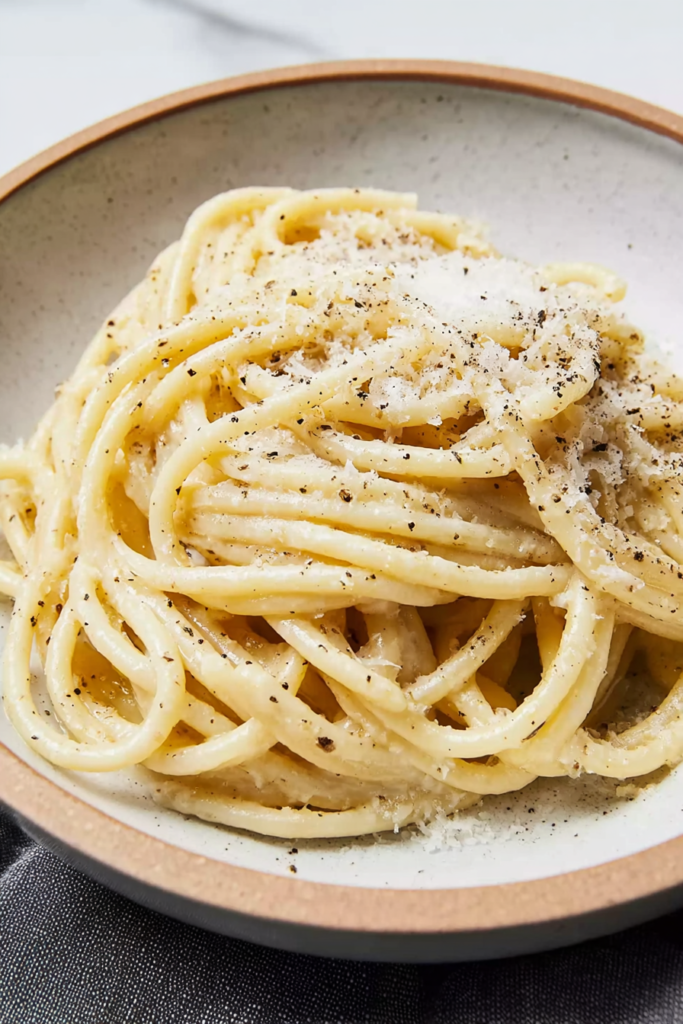
- You’re aiming for glossy and silky. Not soupy. Not sticky.
- Then shower it with freshly cracked black pepper. Toss again. Taste. Adjust. Serve immediately because this pasta waits for absolutely no one.
Storage Options
Cacio e pepe is best fresh. Period.
If you do have leftovers, store them in the fridge for up to two days. When reheating, add a splash of water and warm gently. It won’t be exactly the same as that first glossy bowl — but it’ll still be good. Just slightly more mellow.
Variations & Substitutions
Purists may gasp, but here are some ideas:
- Mix in a small amount of Parmigiano Reggiano to soften the sharpness.
- Add a tiny knob of butter for extra richness.
- Sprinkle lemon zest for brightness.
- Toss in crispy pancetta if you’re feeling rebellious.
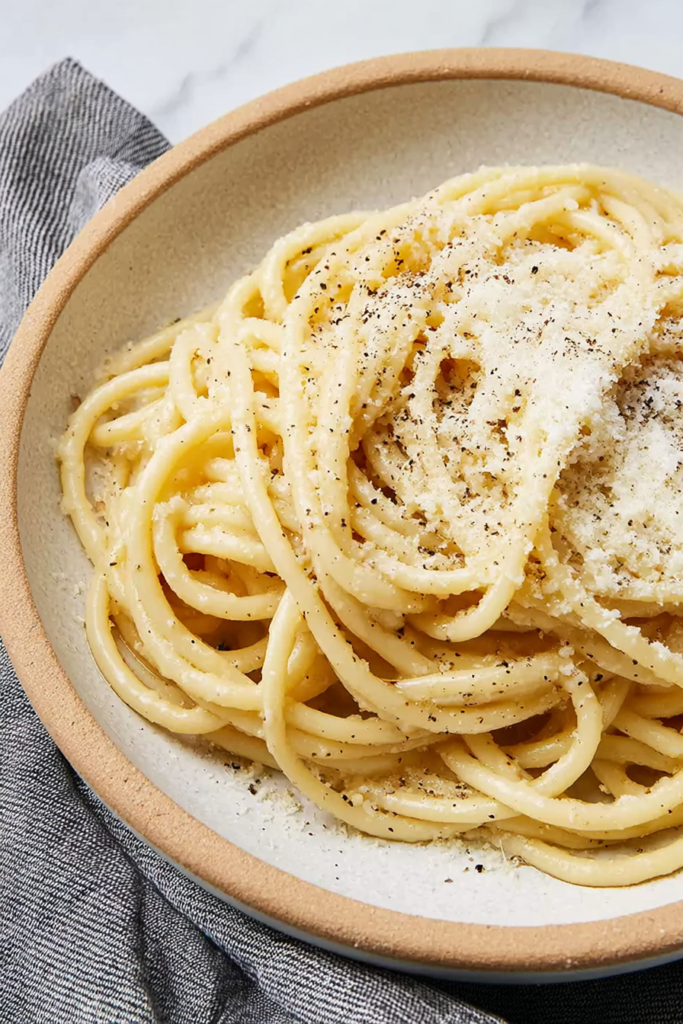
Is that still technically traditional cacio e pepe? Not really. But cooking evolves. And honestly… sometimes rules bend.
What to Serve With Bucatini Cacio e Pepe?
This Roman pasta dish is rich and salty, so it loves simple sides.
A peppery arugula salad with lemon.
Roasted zucchini.
A crisp glass of white wine.
Or just a quiet table and someone who appreciates good food.
Sometimes less really is more. (I say that, but I also own too many kitchen gadgets.)
FAQ
Why did my cheese clump?
The water may have been too hot, or you didn’t add it gradually. Stirring constantly helps the emulsion form.
Can I use Parmesan instead of Pecorino?
Yes, but it’ll be milder and less sharp. Still good. Just different.
Is this authentic?
It’s rooted in tradition. And it respects the spirit of the Roman shepherd dish — simple, practical, bold.
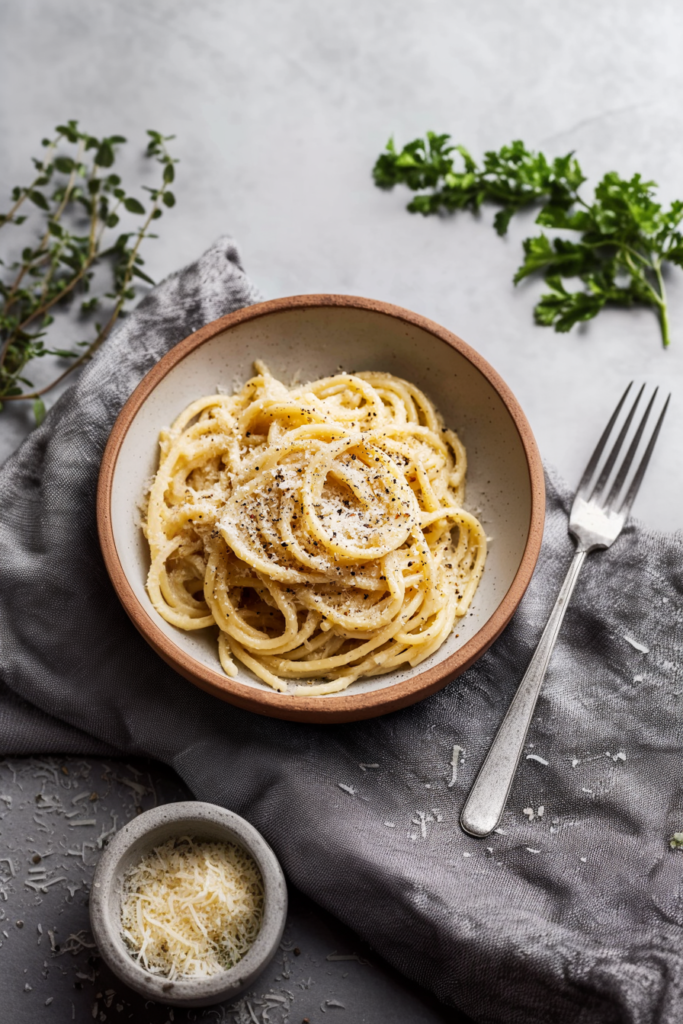
There’s something humbling about a Bucatini Cacio e Pepe Recipe. It reminds you that good food doesn’t need layers and layers of ingredients. Sometimes it just needs patience… and freshly cracked pepper.
If you try it, tell me — are you heavy-handed with the pepper like I am, or do you play it safe? I’m genuinely curious.
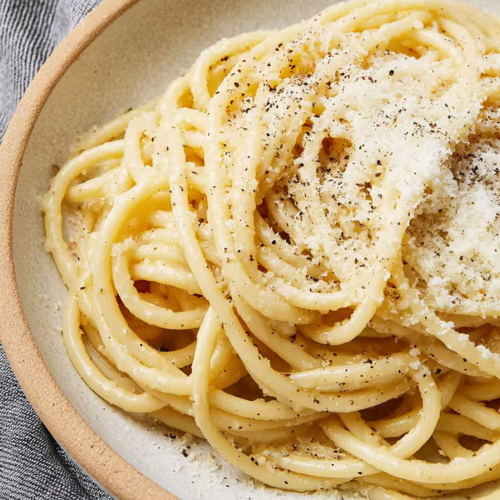
Bucatini Cacio e Pepe Recipe
Ingredients
- 1 teaspoon salt for pasta water
- 1 pound dry bucatini
- 2 cups finely grated Pecorino Romano cheese
- 1½ tablespoons freshly ground black pepper or to taste
Instructions
- Gather all ingredients and ensure the Pecorino Romano cheese is finely grated to facilitate smooth melting.
- Bring a large pot of water to a rolling boil. Add the salt and stir to dissolve.
- Add the bucatini to the boiling water and cook, stirring occasionally, until al dente, approximately 8 to 10 minutes.
- While the pasta is cooking, place the grated Pecorino Romano cheese into a large heatproof glass bowl. Use a fork to break apart any clumps and ensure an even texture.
- Once the bucatini is cooked to al dente, use tongs or a pasta fork to transfer the pasta directly from the pot into the bowl containing the cheese. Allow a small amount of pasta water to cling to the noodles; do not drain thoroughly.
- Add one ladle of hot pasta cooking water to the bowl. Stir continuously until the cheese begins to melt and form a creamy sauce.
- Gradually add additional pasta water, a small amount at a time, stirring constantly, until a smooth, thick, and glossy sauce coats the pasta.
- Sprinkle freshly ground black pepper over the pasta and toss thoroughly to combine.
- Serve immediately while hot.
Notes