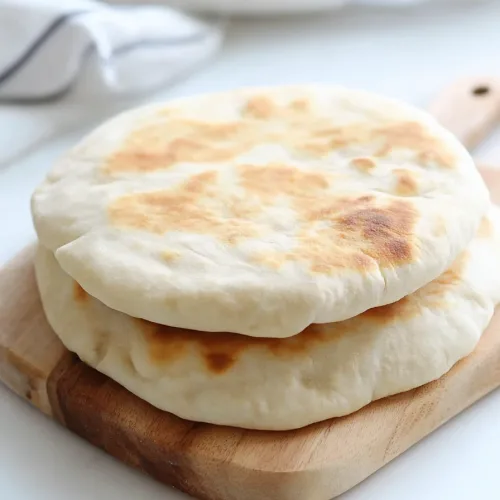
Pita Bread
This Pita Bread is soft, chewy, and made with simple pantry ingredients, then baked at high heat until beautifully puffed for a warm homemade bread perfect for dipping, stuffing, or serving with meals.
Print
Pin
Ingredients
- 4 c all-purpose flour
- 1/2 tsp salt
- 2 tbsp extra virgin olive oil
- 2 envelopes 1/2 oz total active dry yeast
- 1/2 c warm water
- 2 tsp sugar
- 1 1/4 c warm water about 110°F
Instructions
Activate the yeast.
- In a 2-cup measuring cup, combine 1/2 cup warm water, the active dry yeast, and sugar. Let stand for 10 minutes, or until the mixture becomes foamy.
Prepare the dough.
- In the bowl of a stand mixer fitted with the paddle attachment, combine the flour, salt, and olive oil. Mix until incorporated. Make a well in the center of the mixture.
Add the liquids.
- Pour the yeast mixture and 1 1/4 cups warm water into the well.
Knead the dough.
- Switch to the dough hook attachment and knead the dough until it is smooth and elastic, about 6 to 8 minutes.
First rise.
- Transfer the dough to a lightly oiled bowl. Cover and allow it to rise until doubled in size, about 1 1/2 hours.
Divide the dough.
- Portion the dough into 12 equal pieces, each about the size of a small orange. Roll each portion into a ball and place them on a rimmed baking sheet.
Second rise.
- Cover the dough balls with a towel and allow them to rise for 30 minutes.
Shape the pitas.
- On a lightly floured surface, roll each dough ball into a circle approximately 1/4 inch thick.
Rest again.
- Cover the dough circles with a towel and allow them to rest for 30 minutes.
Preheat the oven.
- Preheat the oven to 500°F.
Bake the pita bread.
- Place the dough circles directly on the oven rack and bake for 5 to 7 minutes, or until puffed and lightly golden.
Notes
To make this Pita Bread gluten free, replace the all-purpose flour with a gluten-free bread flour blend or a certified gluten-free 1:1 flour blend designed for yeast baking. Also confirm that the active dry yeast is certified gluten free if needed for strict dietary requirements. Because gluten-free dough behaves differently, you may need to add xanthan gum if your blend does not already include it, and the finished texture may be slightly less chewy and less likely to form a full pocket than traditional pita bread.