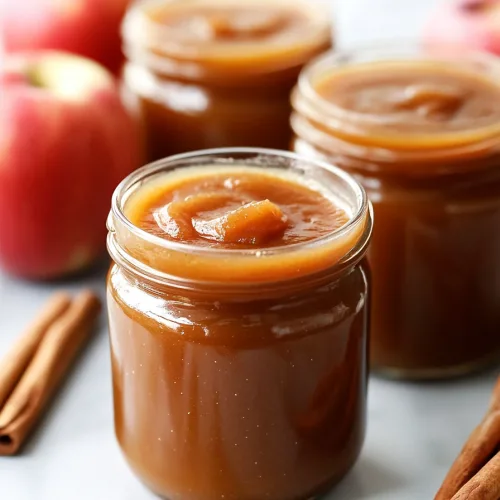
Old Fashioned Apple Butter Recipe
This Old Fashioned Apple Butter Recipe is made with apples, apple cider, apple cider vinegar, cinnamon, and nutmeg for a thick, spiced fall spread.
Print
Pin
Servings: 256
Ingredients
- 12 lb apples peeled, cored, and quartered
- 3 cups apple cider
- 1/4 cup apple cider vinegar
- 1 tbsp ground cinnamon
- 1 tsp ground nutmeg
Instructions
Prepare the Apple Butter
- Peel, core, and quarter the apples.
- Place the prepared apples and apple cider in a slow cooker or large stock pot.
- For the slow cooker method, cook the apples on high for 3 to 4 hours, or until very soft.
- For the stovetop method, bring the apples and cider to a boil over medium-high heat.
- Reduce the heat and simmer, stirring frequently, until the apples are very soft.
- Use a potato masher to break up the softened apples.
- Working in batches, pass the apple pulp through a food mill, sieve, or chinois for a smooth texture.
- Alternatively, use an immersion blender to puree the apples until smooth.
- Return the apple puree to the slow cooker or cooking pot.
- Add the apple cider vinegar, cinnamon, and nutmeg.
- Stir until the spices and vinegar are fully incorporated.
- For the slow cooker method, place the lid slightly tilted to allow steam to escape.
- Cook on low for 6 to 8 hours, or until the apple butter is thick and holds its shape on a spoon.
- For the stovetop method, simmer the apple puree over low heat, stirring frequently, until thickened.
- Continue cooking until the apple butter is glossy, concentrated, and thick enough to hold its shape on a spoon.
Prepare the Jars for Canning
- Wash the jars thoroughly, ensuring each jar is clean and free of chips or nicks along the rim.
- Wash the lids and rings in hot soapy water.
- If using lids from a brand with specific preparation instructions, follow the manufacturer’s directions.
- Place the empty jars in a canning pot or large stock pot.
- Add enough water to cover the jars by 1 to 2 inches.
- Cover the pot and bring the water to a boil.
Can the Apple Butter
- Remove the warmed jars from the canner and drain them.
- Ladle the hot apple butter into pint-sized jars, leaving 1/4 inch headspace.
- Use a canning funnel, if available, to keep the jar rims clean.
- Wipe each jar rim thoroughly to remove any apple butter residue.
- Place the lids centered on the jar rims.
- Screw the bands on until finger tight.
- Using a jar lifter, carefully lower the filled jars into the boiling water in the canning pot.
- Ensure the water covers the tops of the jars by at least 1 inch.
- Return the water to a simmer before beginning the processing time.
- Process pint jars for 15 minutes at 0 to 1,000 feet altitude.
- Process pint jars for 20 minutes at 1,001 to 6,000 feet altitude.
- Process pint jars for 25 minutes at over 6,000 feet altitude.
- Remove the jars from the water using a jar lifter.
- Transfer the jars to a solid, towel-covered surface.
- Allow the jars to cool undisturbed for 24 hours.
- After cooling, check the seals.
- The lids should be pulled down tightly and should not flex when pressed.
- If any lid flexes or pops, the jar did not seal properly.
- Refrigerate any unsealed jars and use them first.
- Remove the rings from properly sealed jars.
- Wash the outside of the jars if needed.
- Store sealed jars in a cool, dark place.
Notes
This Old Fashioned Apple Butter Recipe is naturally gluten free when prepared with gluten-free ingredients.
Confirm that the apple cider, apple cider vinegar, cinnamon, and nutmeg are labeled gluten free, especially if they are processed in shared facilities.
Use fresh, whole apples without added coatings or flavorings.
If serving the apple butter with bread, biscuits, pancakes, waffles, or crackers, choose certified gluten-free options.
Use clean knives, cutting boards, jars, lids, rings, pots, utensils, funnels, and work surfaces to prevent cross-contamination.
If serving someone with celiac disease, use certified gluten-free spices and pantry ingredients whenever possible.