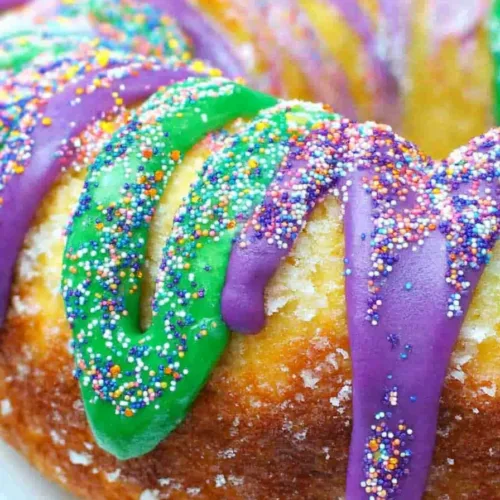
King Cake Recipe
A traditional King Cake Recipe made with enriched yeast dough, a cinnamon-sugar filling, and finished with lemon icing and festive colored sugars. Soft, aromatic, and perfect for celebratory gatherings.
Print
Pin
Ingredients
For the Dough
- 1 tablespoon active dry yeast
- 1 cup warm water approximately 105–110°F
- ½ cup granulated sugar plus 1 tablespoon
- ½ cup warm milk approximately 105–110°F
- 4¾ cups all-purpose flour plus additional for kneading
- 2 teaspoons salt
- 1 teaspoon ground nutmeg
- 1 teaspoon ground cinnamon
- 1 teaspoon finely grated lemon zest
- ½ cup 1 stick unsalted butter, softened
- 5 large egg yolks
- 1 large egg white
- 1 tablespoon milk
- 1 small approximately 1-inch plastic baby optional, for tradition
For the Filling
- 1 cup packed brown sugar
- 2½ tablespoons ground cinnamon
- ⅓ cup unsalted butter softened
For the Lemon Icing
- 4 cups confectioners’ sugar
- ½ cup 1 stick unsalted butter softened
- ½ cup fresh lemon juice
- 1½ teaspoons finely grated lemon zest
- 1 tablespoon each purple green, and gold colored sugars
Instructions
- Begin by activating the yeast. In a two-cup measuring vessel, combine the warm water, yeast, and one tablespoon of the granulated sugar. Add the warm milk and allow the mixture to stand for approximately 10 minutes, or until foamy and fully activated.
- In a large mixing bowl, whisk together the flour, salt, nutmeg, cinnamon, and lemon zest until evenly combined. Set aside.
- In the bowl of a stand mixer fitted with the paddle attachment, cream the softened butter and remaining granulated sugar until light and fluffy. Add the egg yolks one at a time, mixing thoroughly after each addition. Gradually incorporate the flour mixture, mixing until a coarse dough forms. Add the yeast mixture and mix until combined.
- Replace the paddle attachment with the dough hook and knead the dough on medium-low speed for 5 to 8 minutes, or until smooth and elastic. The dough should pull away from the sides of the bowl. If necessary, add additional flour sparingly to prevent sticking.
- Transfer the dough to a lightly oiled bowl, turning once to coat. Cover and allow the dough to rise in a warm, draft-free environment until doubled in size, approximately 2 hours.
- Once risen, gently punch down the dough and transfer it to a lightly floured surface. Allow it to rest for 10 minutes. Line a baking sheet with parchment paper.
- Roll the dough into a 16 × 21-inch rectangle. Spread the softened butter evenly over the surface, then sprinkle with the brown sugar and cinnamon mixture. If using, place the plastic baby in the center of the dough. Starting from the long edge, roll the dough tightly into a log and pinch the seam to seal.
- Form the dough into a ring, placing it seam-side down on the prepared baking sheet. Position a well-greased oven-safe can in the center to maintain the shape during baking. Cover loosely and allow the dough to rise for 45 minutes, or until doubled in volume.
- Preheat the oven to 350°F (175°C). In a small bowl, whisk together the egg white and milk. Brush the risen dough evenly with the egg wash. Bake for 35 to 40 minutes, or until golden brown and an internal temperature of 200–210°F is reached. Transfer to a wire rack and allow to cool completely.
- To prepare the icing, cream the confectioners’ sugar and butter until smooth. Add the lemon juice and lemon zest, mixing until fully incorporated. Drizzle or pipe the icing over the cooled cake and immediately decorate with the colored sugars. Allow the icing to set before serving.
Notes
To make this King Cake Recipe gluten free, substitute the all-purpose flour with a high-quality gluten-free 1:1 baking flour that contains xanthan gum. Ensure all other ingredients, including yeast and confectioners’ sugar, are certified gluten free. Expect a slightly softer dough; handle gently and avoid over-kneading, as gluten-free dough relies on structure from binders rather than elasticity.